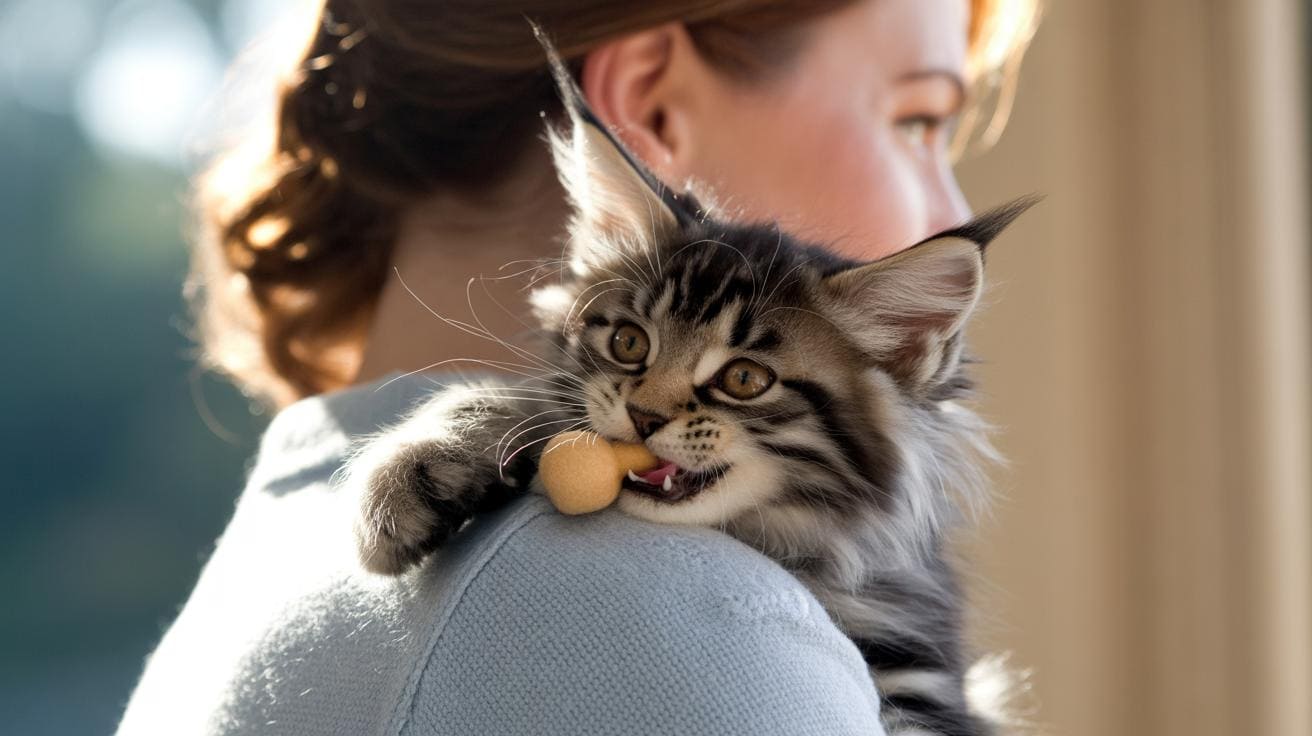
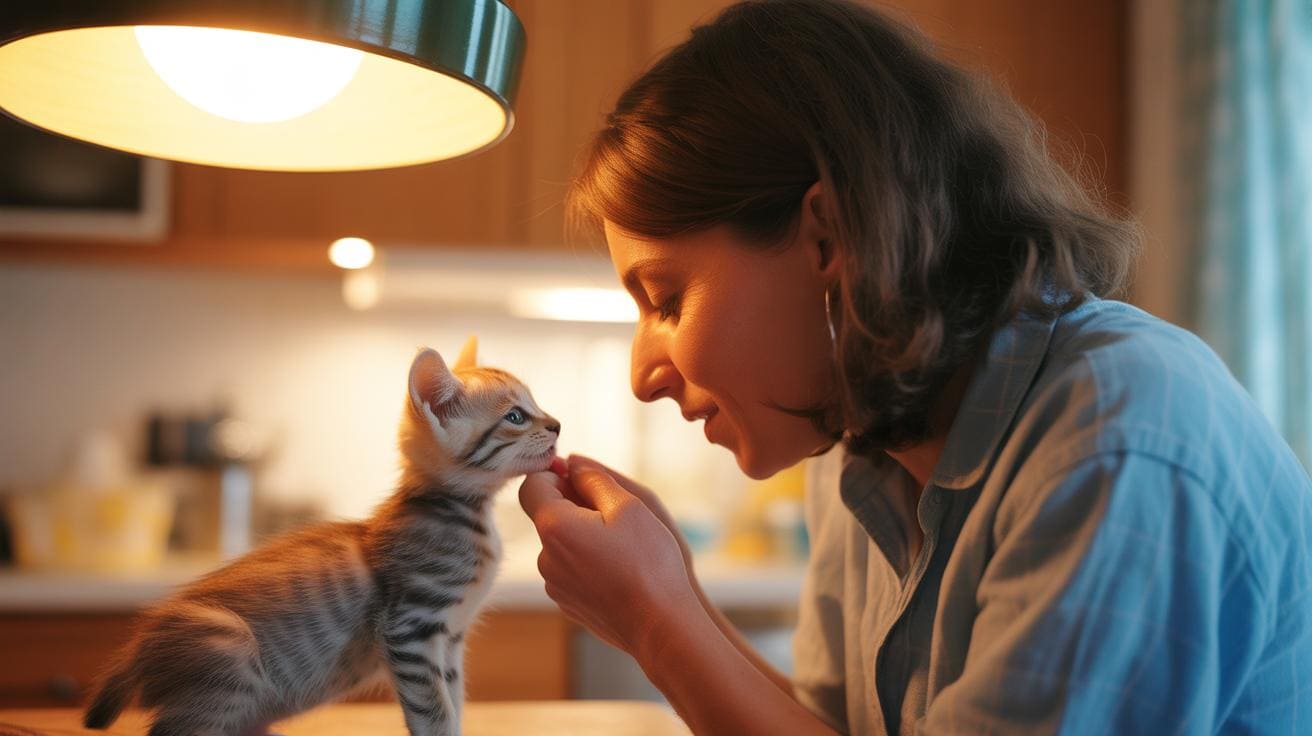
Think kitten teething is quick and harmless? Think again. Maine Coon kittens often take their sweet time, so you’ll see more fuss and more chewing than with a tiny kitty.
Baby teeth start coming in at about 3 weeks, and adult teeth begin pushing through around 3 to 4 months. Expect some gum soreness (inflamed, tender gums) that can hang around from roughly 5 months up to a year. Yup, that long.
Kittens get 26 baby teeth, deciduous (baby teeth), and later end up with 30 adult teeth. Since Maine Coons are a large breed, their whole dental timeline stretches out longer than smaller cats. Bigger mouth, slower schedule.
So what should you do? Calm, simple stuff helps. Offer chilled, soft toys or a cold wet cloth for them to chew on, cold soothes the gums. Swap dry kibble for softer food if they seem picky. And try a short play session to distract them; the satisfying chomp and chase really helps some kitties.
When should you call the vet? If you see heavy bleeding, swelling that won’t go down, a kitten refusing to eat for more than a day, or signs of infection like pus or fever, get medical help. Also check in if adult teeth aren’t coming in by 6 months or if baby teeth stay loose and never fall out. Better safe than sorry.
Watching those giant kitten jaws grow is kind of magical, and, uh, hilarious too. Keep a gentle hand, a cold toy nearby, and enjoy the pounces, your Maine Coon will thank you later with epic snuggles.
Teething Timeline for Maine Coon Kittens (Start-to-Finish guide)
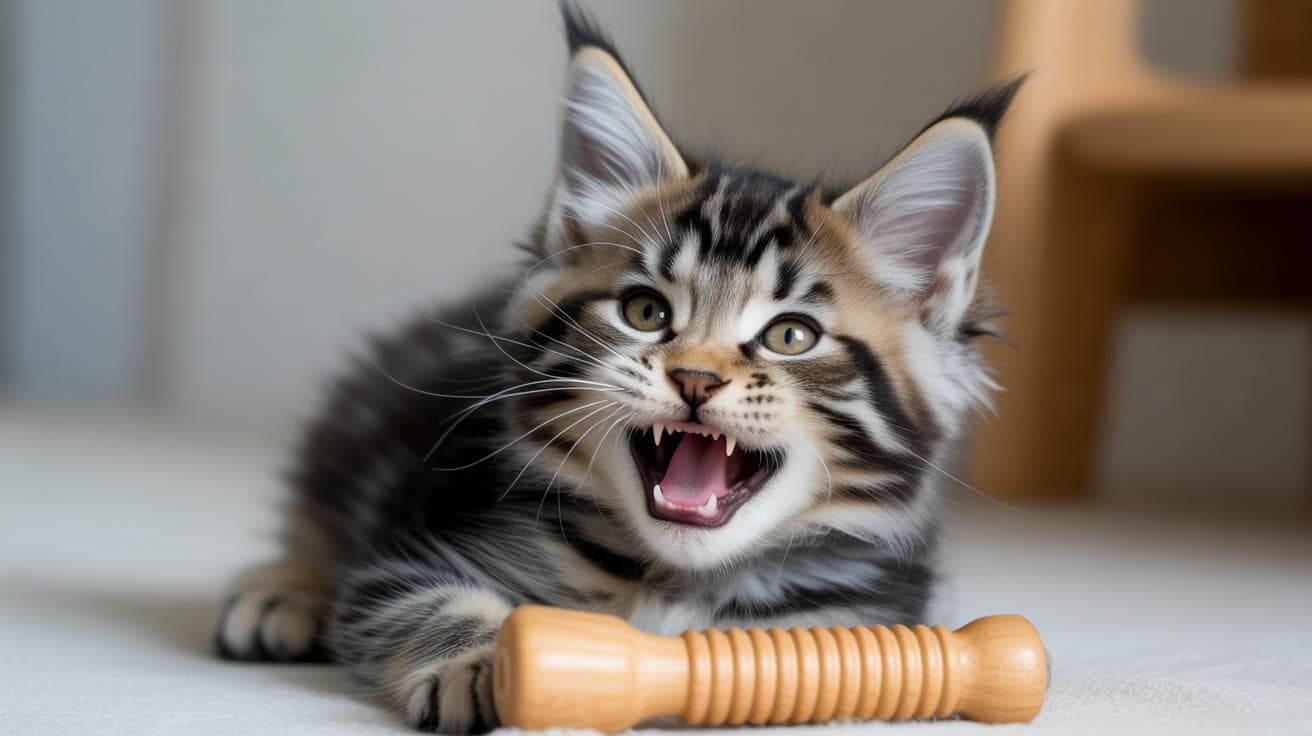
Most Maine Coon kittens start showing baby teeth at about 3 weeks. Their adult teeth usually begin coming in around 3 to 4 months. Kittens have 26 baby (deciduous) teeth and grow 30 adult teeth. Expect some gum soreness from about 5 months up to a year.
Big-breed kittens like Maine Coons follow the same schedule as smaller cats, but things run a bit slower. Around 3 months you’ll see lots more chomping and loose baby teeth as adults push through. Middle incisors (front biting teeth) often appear near 14 weeks, with the other incisors by 15–16 weeks. Canines (pointed fangs) and the back molars tend to finish erupting over the next 6 to 12 months. Ever watch a kitten stop mid-bite because a new tooth popped in? Cute. A little dramatic, too.
Remember, the full adult dentition (your cat’s full set of grown-up teeth) comes in gradually, and Maine Coons keep filling out physically until about 4 to 5 years old. That means the dental picture can look stretched out compared with small breeds. If teeth don’t show up on schedule or gums are very swollen or bleeding, call your veterinarian (See Symptoms and Red Flags section for when to contact your veterinarian).
Worth every paw-print.
| Age (weeks/months) | Baby teeth event | Permanent teeth event | Notes |
|---|---|---|---|
| Newborn | Born without teeth. | ||
| 2–3 weeks | Baby (deciduous) teeth begin to appear. | First deciduous incisors (small front teeth) erupt. | |
| 6–8 weeks | Kittens normally have a full set of 26 baby teeth. | All baby teeth usually in place by then. | |
| 3–4 months | Start losing baby teeth as adults push through. | Permanent teeth begin erupting around 3–4 months. | Big jump in chewing and mouthing , toys get a workout. |
| 14–16 weeks | Middle incisors often appear about 14 weeks; the rest by 15–16 weeks. | Incisors usually finish by about 16 weeks. | |
| 5 months–1 year | Most remaining baby teeth are lost. | Teething-related gum swelling and discomfort can happen anytime in this window. | |
| 6–12 months / full dentition | Canines and molars finish coming in during this period. | Full adult teeth arrive gradually; overall growth continues to 4–5 years in Maine Coons. |
Symptoms and Red Flags
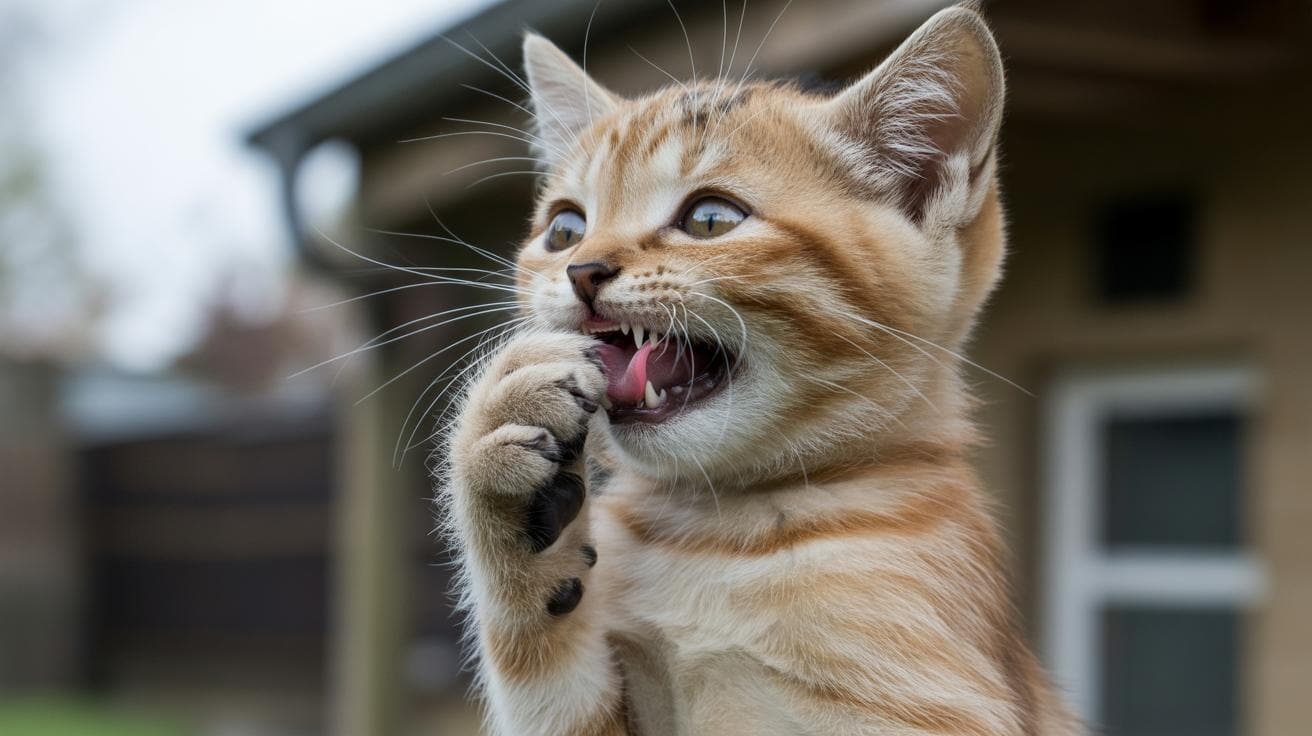
Teething kittens often chew more, mouth things, give tiny nips, drool a little, paw at their mouths, eat a bit less, and act a touch grumpy. That’s usually normal while baby teeth loosen and adult teeth push through. A few days of extra chewing is fine. Enjoy the cute chaos.
Look closely for clinical gum signs though. Gingivitis (gum inflammation that makes gums look red or swollen and can cause bad breath) is common , about 8 out of 10 cats show some gum issue at some point. Stomatitis, called Feline Chronic Gingivostomatitis (severe, painful inflammation of gums and mouth tissues), is much less common but a lot worse; in Maine Coons it affects roughly 2% and often brings poor appetite and drooling.
A vet dental exam usually includes an oral check and dental radiographs (x-rays that show tooth roots and hidden problems). Treatments can include antibiotics and anti-inflammatories (meds that reduce infection, swelling, and pain). In bad stomatitis cases extractions may be needed to stop the cycle of inflammation. Get x-rays before any surgery, and if someone suggests elective extractions for a young kitten, ask for a second opinion from a veterinary dentist. For follow-up scheduling, treatment plans, and what to watch for at home, see Dental Care & Owner Checklist (Checklist section).
Some signs need fast action. Refusing to eat is a red flag that needs prompt attention. Ongoing weight loss is serious and shouldn’t be ignored. Persistent mouth bleeding, severe drooling with trouble swallowing, or a sudden jump in bad breath all mean see the vet soon. If your kitten stops grooming, hides, or growls at food, that’s a strong clue they’re in pain and need help.
Worth every paw-print to catch problems early.
Soothing Techniques and Safe Chew Toys for Teething Maine Coon Kittens
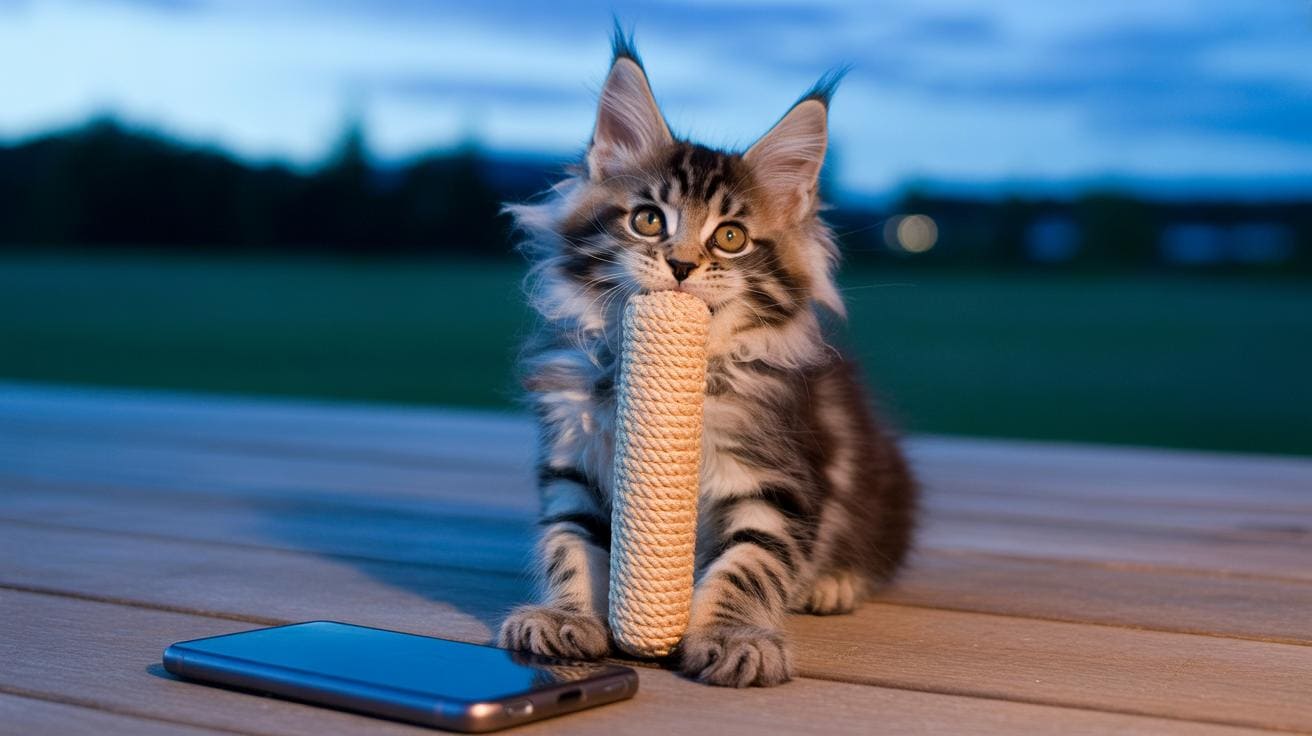
Cold toys and chilled chews give the quickest relief. Pop a soft rubber chew or a safe toy in the fridge or freezer for a few hours and your kitten will get a few minutes of cool, numbing comfort , picture tiny teeth on a frosty rubber ear. Keep sessions short and supervised so the toy doesn’t get chewed into bits. It’s simple, and your kitten will thank you with tiny, satisfied nibbles.
Big-breed mouths need bigger, tougher toys. Pick items that match a Maine Coon’s jaw size so they can chew without swallowing a chunk. Durable, plain shapes hold up to heavy mouthing and save your socks from becoming chew toys, honestly.
Vet-safe chew toy materials
Good choices include:
- Food-grade silicone (soft, non-toxic rubber-like material).
- Hard rubber (tough, non-toxic rubber).
- Textile options (woven fabric that resists shredding).
Each of these resists quick breakdown, but if you’re unsure about a brand, ask your vet. For the full safety checklist and when to toss a toy, see Dental Care & Owner Checklist (Checklist section).
DIY and chilled/frozen toy remedies
Try this easy trick: wet a clean washcloth, seal it in a freezer bag, and chill it for a few hours. Or stick a vet-safe silicone toy in the fridge briefly. Offer chilled items for short 5–10 minute sessions while you watch, then take the toy away. Never leave frozen or small DIY bits unsupervised , safety first, and fewer emergency vet calls, phew.
A quick personal note: my cat Luna once went nuts for a chilled washcloth and then flopped down for a nap. Worth every paw-print.
Diet and Feeding Adjustments During Maine Coon Teething
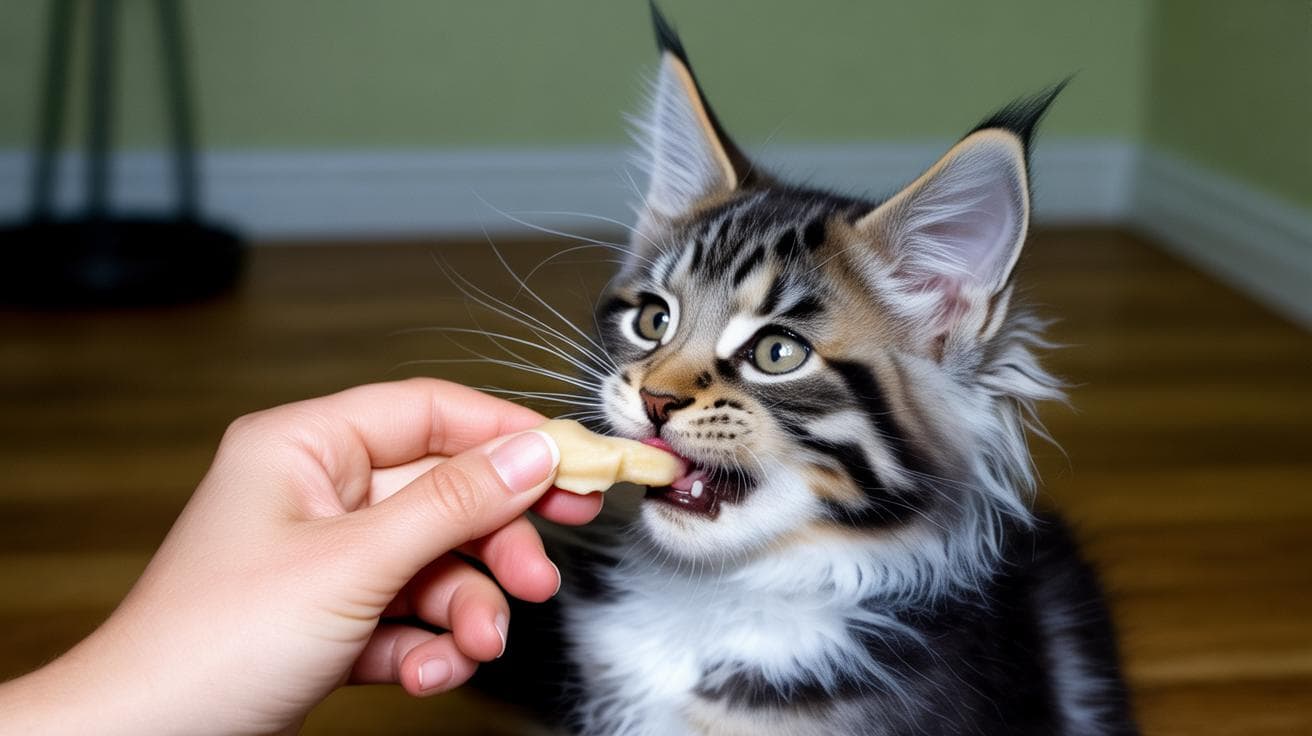
Teething can make a kitten eat less for a little while. Try softer food or wet meals so your kitten still gets enough calories (caloric intake = how many calories they get). Give smaller, moister portions more often. Warm the food a bit to make it smell extra tempting, and try gentle hand-feeding for picky moments. If your kitten refuses food for 48 to 72 hours, contact your veterinarian (See Symptoms and Red Flags).
Transitioning to adult food usually lines up with the arrival of permanent teeth. Big-breed kittens like Maine Coons often need a slower, milestone-based switch that matches their dental and growth pace. For short-term relief, swap one or two meals a day to wet food or moistened kibble and keep a close eye on weight. For safe texture ideas and typical diet guidance, see what do maine coon cats eat.
When you’re ready to move to adult formulas, time the change to permanent tooth eruption and steady growth markers rather than a calendar date. Pick a high-protein, large-breed formula that supports joints and size (large-breed = made for bigger, heavier cats). If appetite or weight loss sticks around, get veterinary help and bring a simple feeding log so they can see what and when your kitten has been eating.
Weaning and soft-food options
Offer wet food, moistened kibbles, and smaller, frequent portions so each bite is easy on sore gums. Watch for choking with very thick gruels; supervise the first few offers and pull back if it seems hard for them.
Timing the switch to adult food for large-breed kittens
Match the change to the arrival of permanent teeth and steady weight gain, not just age alone. Think growth and dental milestones first, this helps big kittens grow into strong adults without getting over or underfed.