Think a raised cat bowl fixes every feeding problem? Not quite. It helps a lot of cats, but not all of them, um, claw-tastic solved.
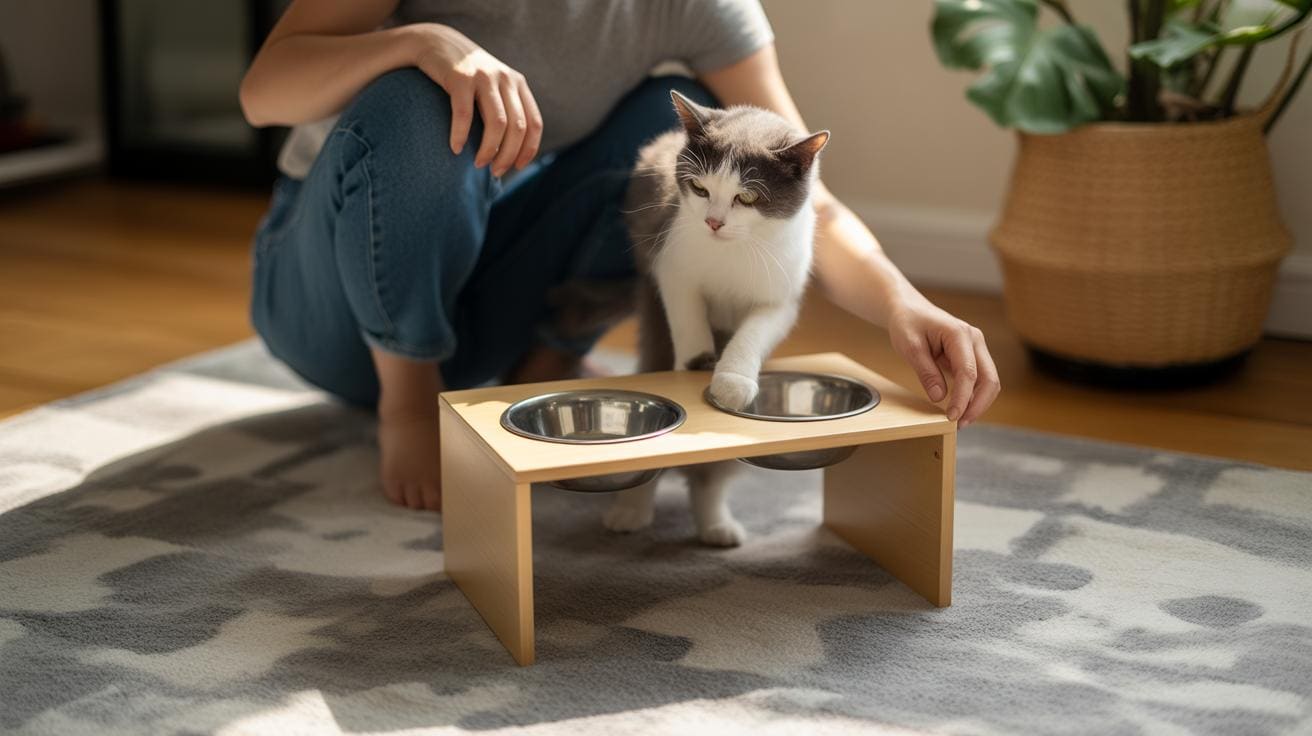
If your cat is older, has arthritis (joint inflammation that makes moving painful), or gags or vomits after meals, a raised bowl (also called an elevated feeder) can make mealtime easier. It reduces neck and joint strain. It can cut down on post-meal vomiting. And it eases whisker fatigue (when whiskers keep rubbing the bowl sides and stress your cat), so meals stay calmer and cleaner.
For a healthy, spry young cat, though, a raised bowl usually gives little benefit. Ever watch a kitten eat like a tiny gymnast? They’re fine on the floor.
Next, I’ll walk you through the clear pros and cons and give a quick verdict so you can decide fast. Quick tip: if mobility or gagging is an issue, it’s worth trying; if not, you might save your money.
Raised Cat Bowls: Pros and Cons
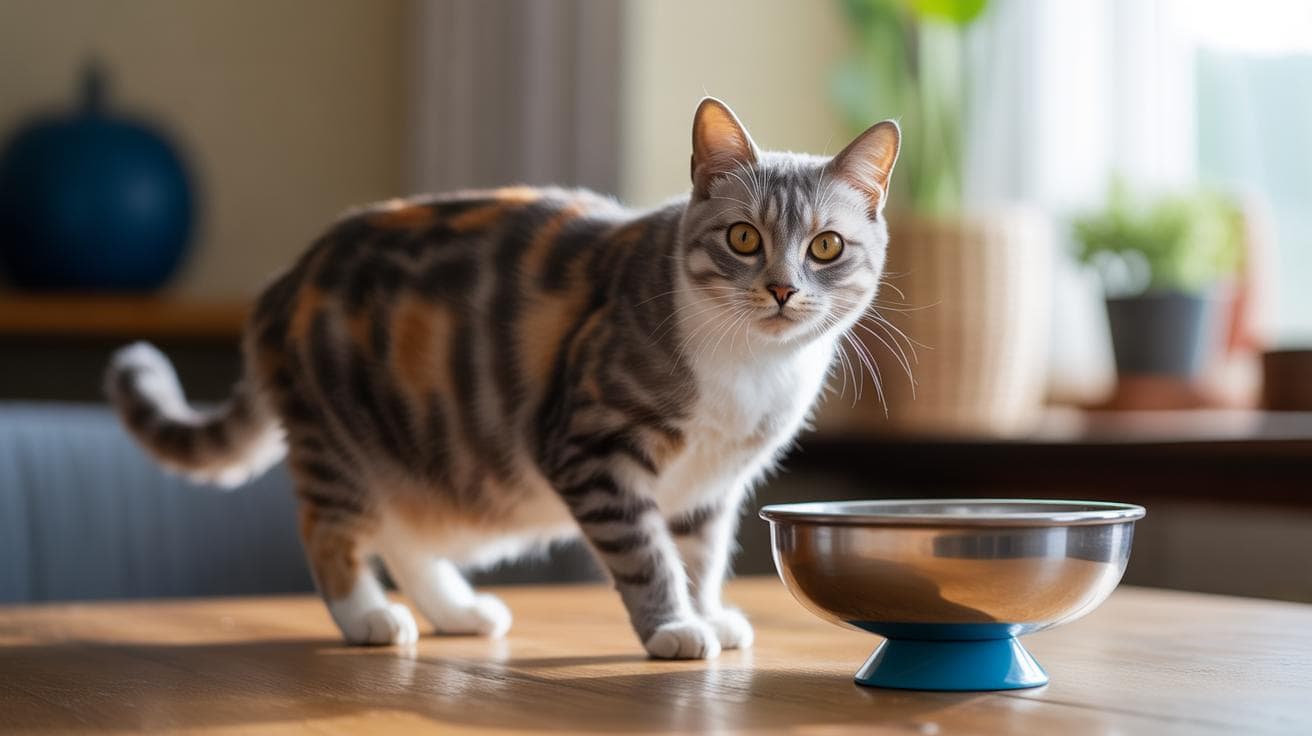
Raised cat bowls are great for older cats, kitties with arthritis or mobility limits, and cats that gag or vomit after eating. Healthy young cats often don’t get much practical benefit, so you might skip them for a spry kitten.
Quick verdict: this is a short decision-first snapshot to help you decide fast. More detail follows below.
Pros
- They lift the bowl to a gentler angle that can ease neck and joint strain for arthritic or senior cats. Your cat may eat with less hunching and more comfort.
- Some vets and owners notice fewer post-meal vomiting episodes when food is raised, so it can help tummy trouble in some cats.
- Pairing a raised feeder with a wide, shallow dish reduces whisker contact and whisker fatigue (when whiskers keep hitting bowl sides and stress the cat). Sensitive kitties often prefer it.
- Elevating the dish keeps food off the floor, so there’s less spilled kibble and fewer crunchy trails through the house.
- Many raised stands are adjustable, so you can set rim height to your cat’s measured chin position for a custom fit. Ever tried measuring your cat’s chin height? It’s easier than you think.
- A stand makes floor cleaning simpler since the bowl sits on a platform instead of directly on the ground. Less scooting, more sparkle.
- Choose a good bowl material and it’ll last. Stainless steel (rust-resistant metal) is hygienic, and silicone (flexible, non-slip rubber-like material) is durable and soft on paws.
Cons
- Some cats refuse a new elevated spot at first and need time to adapt. Patience and treats help, but a stubborn kitty might hold out.
- For picky eaters a raised posture can slow them down, and that change might annoy some cats. If your cat eats fast, watch for stress.
- If the height is wrong it can make swallowing awkward for some cats, so proper measurement matters.
- Deep or narrow bowls on a stand can still cause whisker contact if the design is poor, so pick a wide, shallow dish when possible.
- Lightweight or wobbly stands can tip if they’re not weighted or anti-slip, and nobody likes a toppled bowl.
- You might spend extra on adjustable stands and replacement parts that a healthy young cat doesn’t need, so consider cost vs benefit.
- If your cat gags or vomits after switching, stop the trial. The raised bowl may simply not suit that cat.
Worth every paw-print.
Read the deeper guides on Measuring and choosing height, How elevated bowls work, Whisker fatigue, Materials, stability, and cleaning, and Risks and transition checklist to pick and trial the right raised feeder.
How elevated cat bowls work: mechanism, clinical evidence, and vet guidance
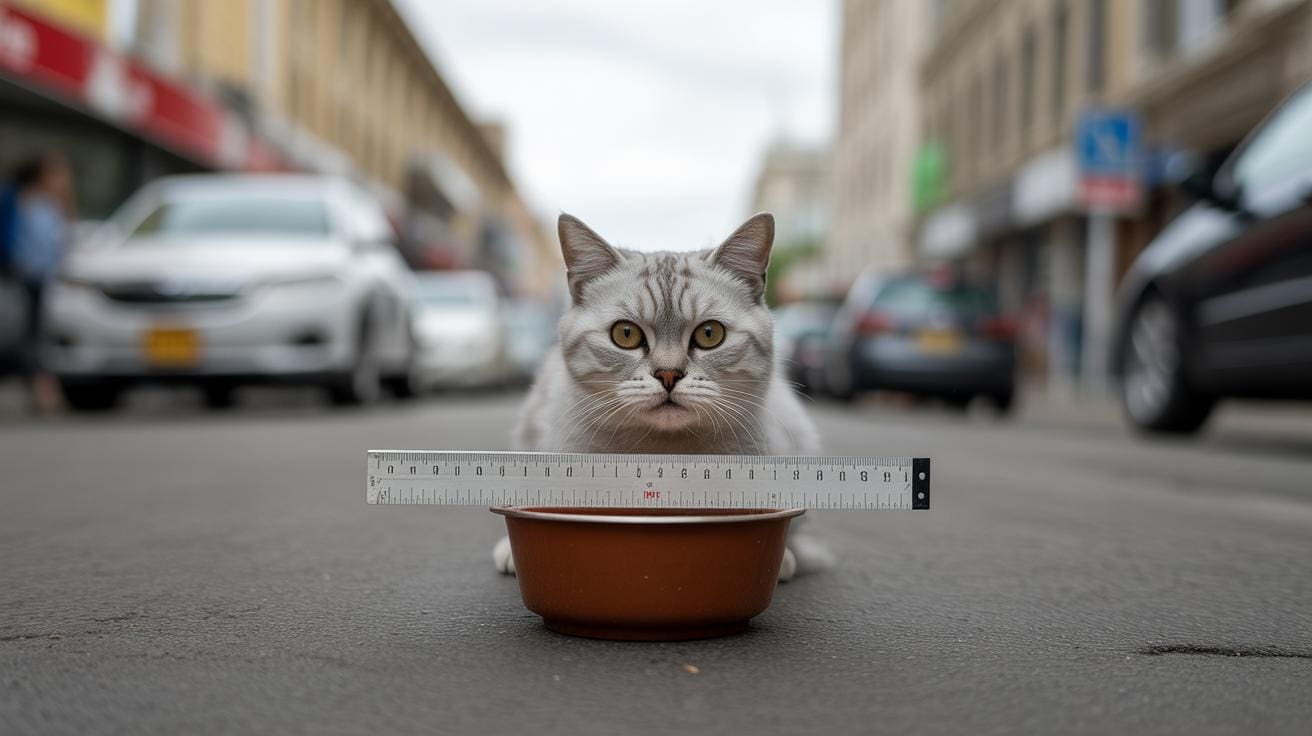
Elevated bowls change the angle between your cat’s head, neck, and torso so the bowl rim sits closer to the chest. That reduces neck flexion (how much the neck bends) and lessens throat compression. When the rim is closer to the chest it can straighten the line of the esophagus (the food tube), so eating is less of a stretch for stiff or sore kitties. Picture your cat lowering its head less and taking food with an easier, more natural swallow.
Some vets and studies report fewer post-meal vomiting episodes with raised feeders, but results aren’t the same for every cat. In plain terms: it helps some cats, doesn’t change others, and in a few cases there’s no clear difference. Think of the evidence as suggestive, not conclusive. Factors like age, neck stiffness, dental pain, or underlying illnesses can change the outcome.
Vets recommend an individualized assessment and a careful trial. Before you try a raised bowl, measure your cat’s standing chin height – floor to bottom of chin – in centimeters and inches (for example, 20 cm / 7.9 in). Note baseline meal duration (how long each meal takes), count any vomiting or regurgitation events (regurgitation is food that comes up without forceful vomiting), and watch normal feeding posture. If your cat has a history of aspiration (food or liquid getting into the lungs) or reflux (acid or stomach contents coming back up), talk with your veterinarian first.
During a trial, compare meal time and vomiting frequency to your baseline and make small adjustments to rim height. Start with the rim about level with the standing chin or a little lower, then raise or lower in small steps while tracking results for a week or two at each height. Look for signs like coughing, extra pawing at the mouth, or harder chewing , if those show up, stop the trial and call your vet. Keep notes, and you’ll see if the change feels like relief or just a new way to play with food.
Quick tip: for busy days, try the raised bowl for a few meals before committing. Sometimes your cat’s reaction tells the whole story. Worth a try for stiff or older cats , could be claw-tastic for comfort.
Whisker fatigue and bowl design for flat-faced and whisker-sensitive cats
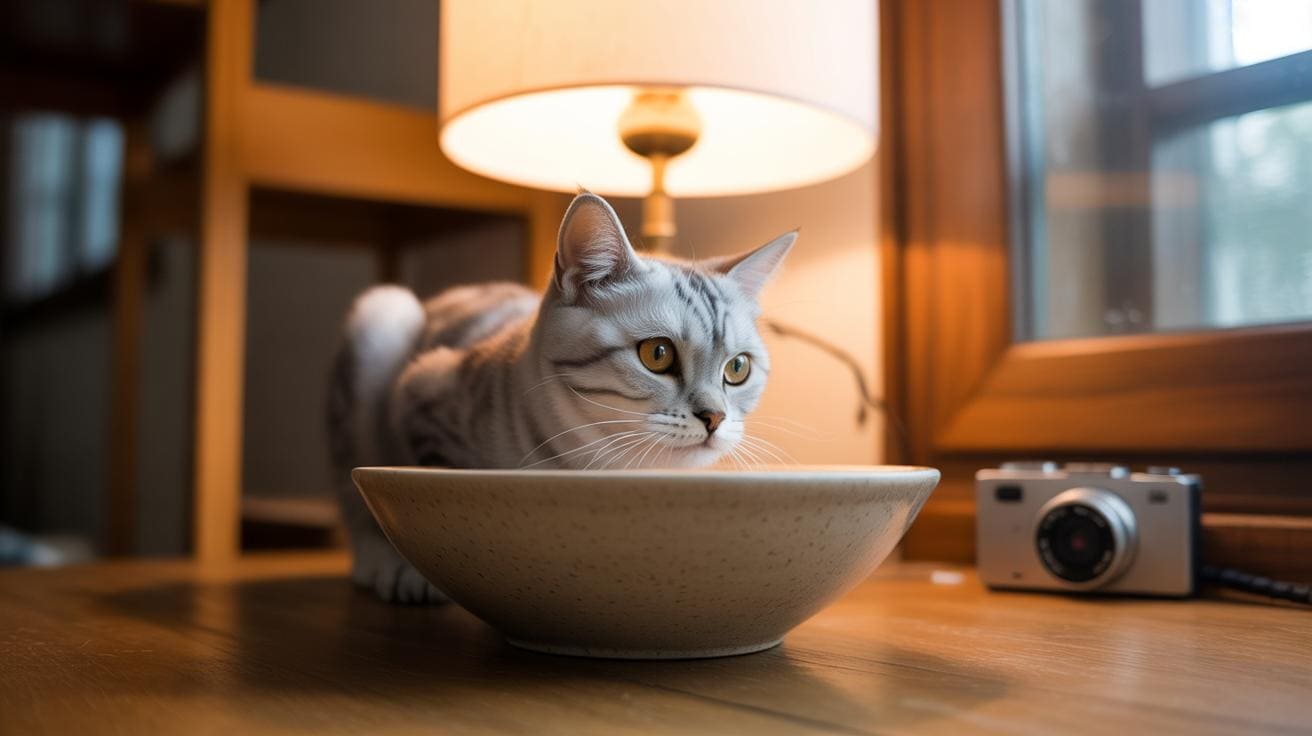
Whisker fatigue happens when your cat’s long facial whiskers brush or press against a narrow or deep bowl rim over and over. It can feel like tiny pokes around the muzzle and make eating fussy or stressful. Whiskers grow and shed in cycles, so small changes in how the rim touches them can change comfort over weeks as whiskers wear or get replaced. how often do cat whiskers fall out
When you pick a raised bowl, pay attention to three simple measurements: bowl diameter, rim depth, and rim-to-food distance. Aim for a bowl diameter at least 1–2 cm (about 0.4–0.8 in) wider than your cat’s whisker span (the distance from whisker tip to whisker tip) so whiskers don’t rub the sides. Choose a shallow rim under 2 cm (0.8 in). And keep the rim-to-palate distance small. By rim-to-palate distance I mean the gap from the bowl lip to the roof of the mouth. That way your cat doesn’t have to shove its nose into the dish.
Flat-faced breeds, called brachycephalic (flat-faced breeds like Persians or Exotics), need the shallowest and widest dishes so they can reach food without jamming their nose into the rim. Long-whiskered cats want extra side room so those lovely whiskers can splay out without brushing the bowl. Think of it as giving them breathing room while they eat.
Test a bowl by watching your cat from the side and the front. Whiskers should spread naturally and not touch the rim. The head should stay relaxed while your kitty eats. Ever watched your cat’s whiskers twitch as a morsel rolls away? That’s the moment you’ll know the fit is right.
Worth every paw-print.
Measuring and choosing the right raised cat bowl height (step-by-step, metric and imperial)
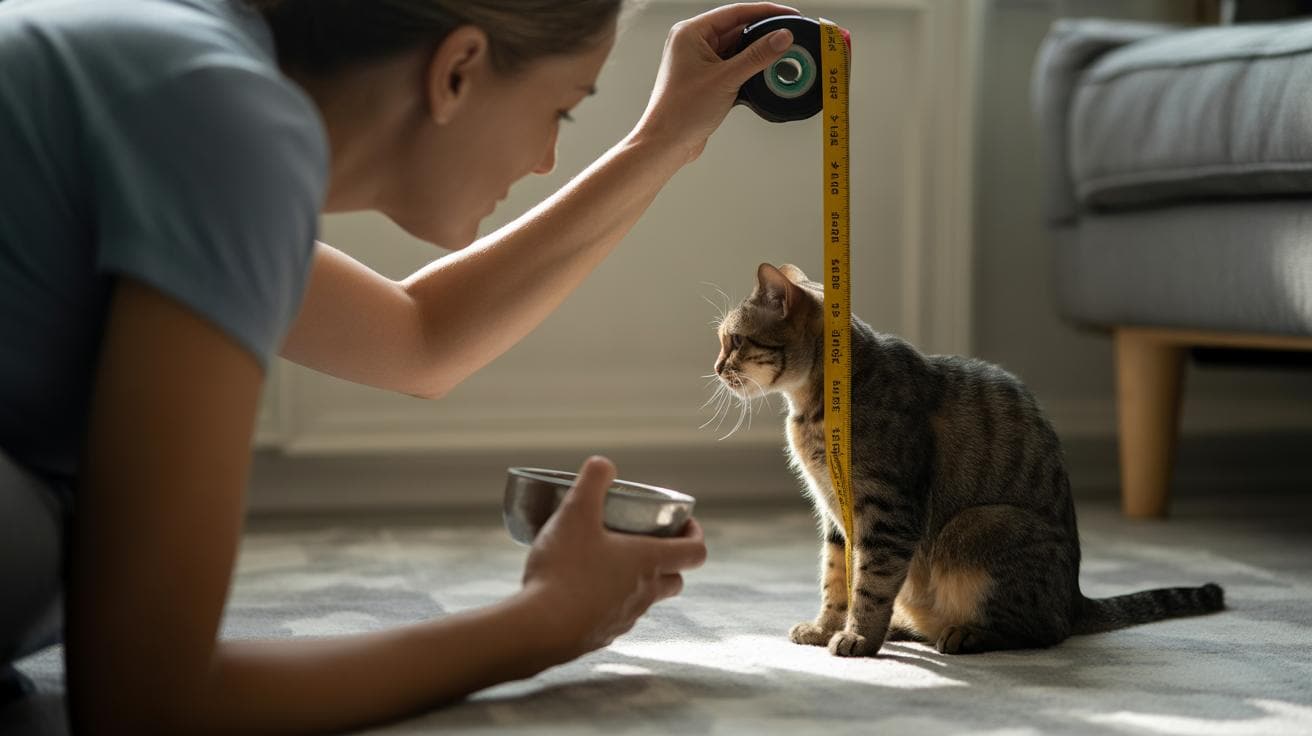
Start by measuring – it’s the baseline for any change and helps you pick a stand that actually fits your cat. Simple, honest measurement saves you a lot of trial and error later.
Small and kitten sizing
Have the kitten stand naturally on a flat floor and gently hold its chin level while you measure from the floor to the bottom of the chin with a tape measure or ruler. Record the number in centimeters (cm – metric unit) and inches (in – imperial unit) and note the date. For tiny kittens, try an initial low elevation of about 5-8 cm (2.0-3.1 in) above the floor so the rim doesn’t force the head up. Watch how the kitten reaches and chews during the first few meals and jot down any awkward stretching or pawing.
Average adult cats
Measure floor-to-chin while the cat stands relaxed, and record to the nearest 0.5 cm or 1/8 in. (Quick conversion: 1 in = 2.54 cm.) Pick a stand that lets you set the rim at the recorded chin height, or up to 2 cm (about 3/4 in) lower if the cat seems to prefer a slight downward angle. Test it at mealtime – the head should stay neutral, not tipped back or hunched forward. Write the measured values and your chosen rim position in a log so you can compare later.
Large breeds and seniors
Big breeds and older cats with stiff necks need a bit more fine-tuning. Start at the recorded chin height and then adjust in small steps of 1-2 cm (1/8-1/4 in) while watching chewing and swallowing. Raise or lower until the cat eats without pawing at the mouth or stretching the neck. Test during a meal, tweak in those small increments, and keep your notes. Worth every paw-print.
Ever watched your kitty suddenly have an easier bite after a tiny change? Yeah, me too.