Safe Play Behaviors for Indoor Cats Spark Joy

Ever imagine your cat pouncing on a harmless yarn ball, only to swallow a sneaky thread? That soft little puff can turn into a swallow hazard before you know it. Playtime should be all joy – not a trip to the vet.

Let’s pick claw-tastic toys that last. Look for organic cotton (soft natural fiber) or tear-resistant linen (strong plant cloth) – they stand up to sharp claws and wild pounces. You’ll hear the satisfying swoosh as your kitty bats them across the floor.

Next, inspect every toy for loose bits before you toss it. A quick check for fraying threads or tiny pieces can save a lot of worries. And hey, safe play is part of the fun.

Follow these simple steps and you’ll see whisker twitches of pure delight. You’ll sleep easy knowing playtime’s safe and your feline friend is bouncing with joy.

Top 5 Indoor Play Activities for Safe, Engaging Fun
- Top 5 Indoor Play Activities for Safe, Engaging Fun.jpg

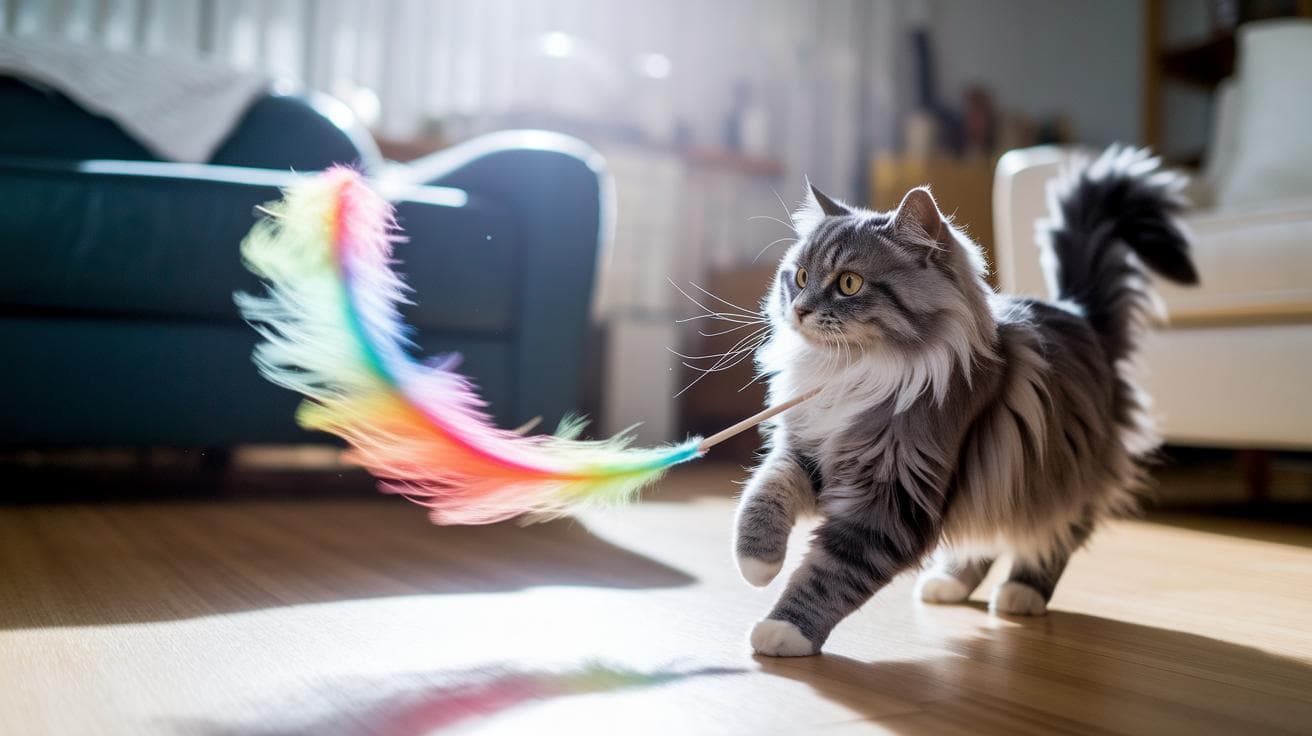
Hey there, cat lovers! Indoor kitties still crave a little hunt-time, you know? Mixing quick dashes with brain teasers keeps them curious and calm. Ever watched your cat’s whiskers twitch when a toy zooms by? That’s the magic of play that taps into stalking, chasing, and catching instincts right in your living room. Oops, let me rephrase that… it’s all about safe, risk-free fun that stops boredom in its tracks.

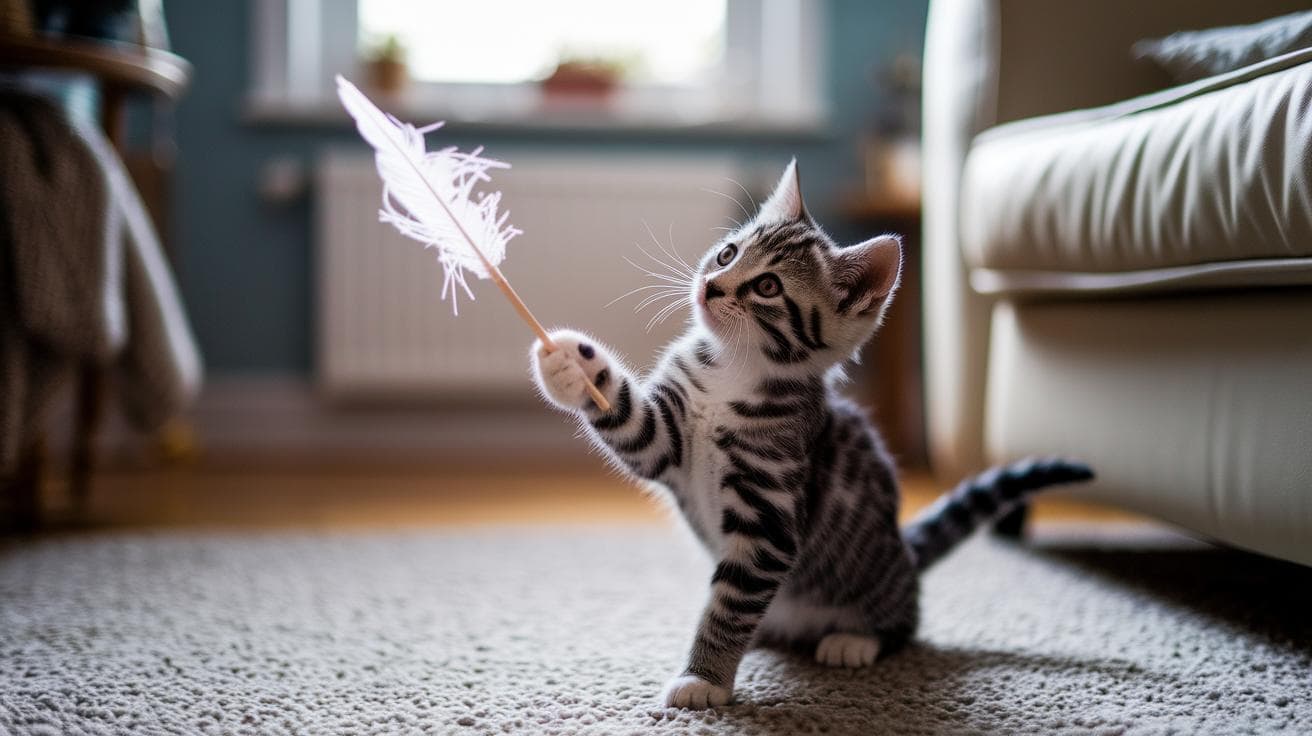
  • Wand-and-feather chases: Wave a fluffy feather wand like a fishing rod for cats. Soft fluttering feathers, surprise speed changes, and epic leaps.
  • Laser-pointer sessions ending in a toy catch: Dash a red dot across walls for high-speed sprints. Then drop a toy mouse so your cat can snag something real (no frustrated paws).
  • Puzzle feeders for mental challenge: Stuff kibble into a treat bowl maze so your cat “hunts” dinner. Shifting puzzles or sliding lids keep it fresh.
  • Ball-track toys for solo chase: A small ball trapped in a plastic track makes a click-clack as it rolls. Your cat bats and races on its own, which can be uh, oddly mesmerizing.
  • Catnip-filled mice for sensory play: Soft plush mice scented with catnip invite gentle nibbles and kicking hind legs. Bonus squeaks or crinkles add extra thrill.

Switch these games up every few days to keep things new and exciting. Next, let’s pick super-tough toys and tuck away anything breakable so your home stays safe and playful. Worth every paw-print.

Safe Play Behaviors for Indoor Cats Spark Joy
- Toy Selection  Safety.jpg

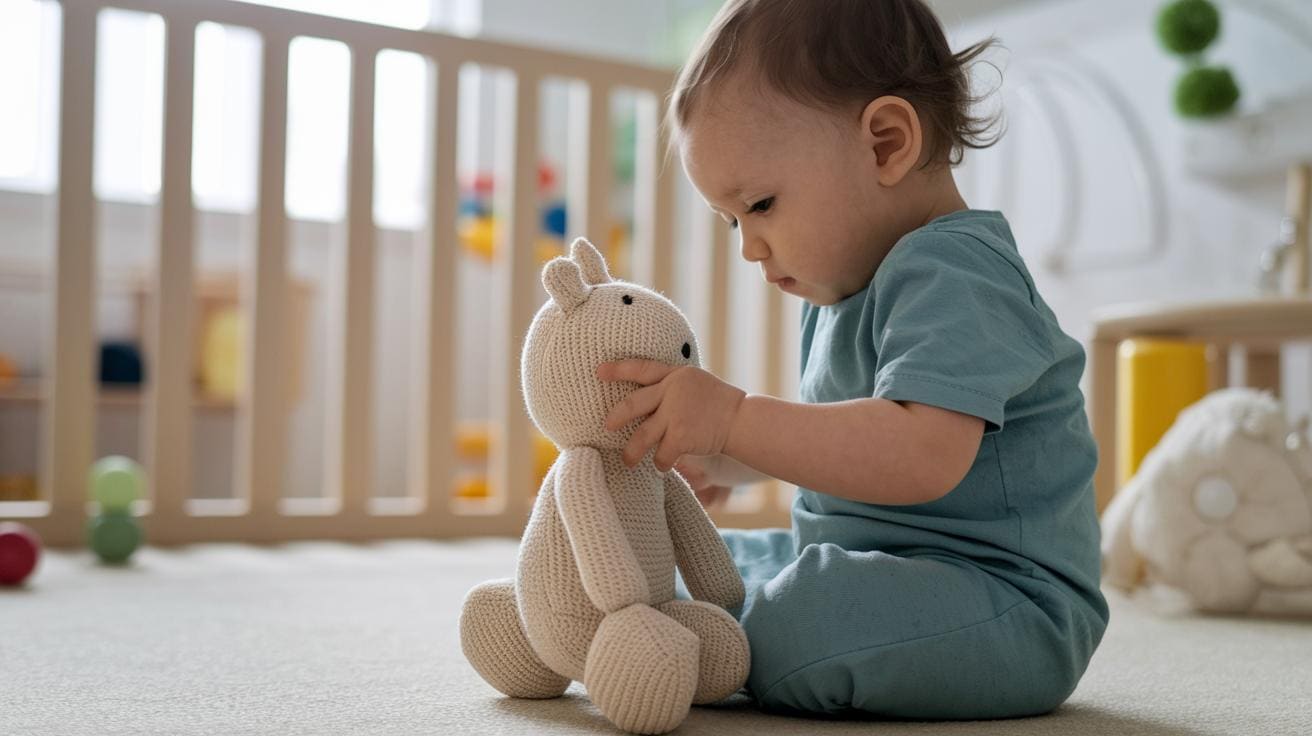
I always reach for toys made from organic cotton (soft natural fiber), linen (a tough plant cloth), or BPA-free plastic (no-chemical, bite-safe). They’re built to handle those sharp little claws. Look for double-stitched seams (extra thread around the edges) and pet-safe adhesives (glue without toxins). And watch out for tiny bits, loose beads or little bells can disappear into a curious mouth.

Next, let’s cat-proof your play zone. Ever seen kitty bat at a loose cord? Uh oh. Slip chew-proof sleeves (cord covers) over wires so you avoid a trip to the vet. Secure windows with sturdy guards or snap-in screens that stay put, even during a zoom session. Push heavy furniture against walls and anchor wobbly shelves, no books raining down mid-pounce. A non-slip mat (grippy base) under rugs or tunnels gives your acrobat sure footing.

  • Double-stitched seams to prevent fraying when your cat hammers a toy
  • Fabrics free of dyes or yucky chemicals (non-toxic materials)
  • No dangly ribbons or beads that spell choke hazard
  • BPA-free labels on plastic parts for safe chewing
  • Window guards on lower sills to stop surprise tumbles
  • Chew-proof cord covers to block shocking discoveries
  • Anchored furniture and shelves, books stay put, paws stay happy
  • Non-skid mats under tunnels or play rugs to avoid skid slides

Oops, don’t skip routine checkups. If you spot loose bits or frayed seams, retire that toy. Your kitty will reward you with purrs and zoomies. Worth every paw-print.

Interactive Play Techniques for Indoor Cats
- Interactive Play Techniques for Indoor Cats.jpg

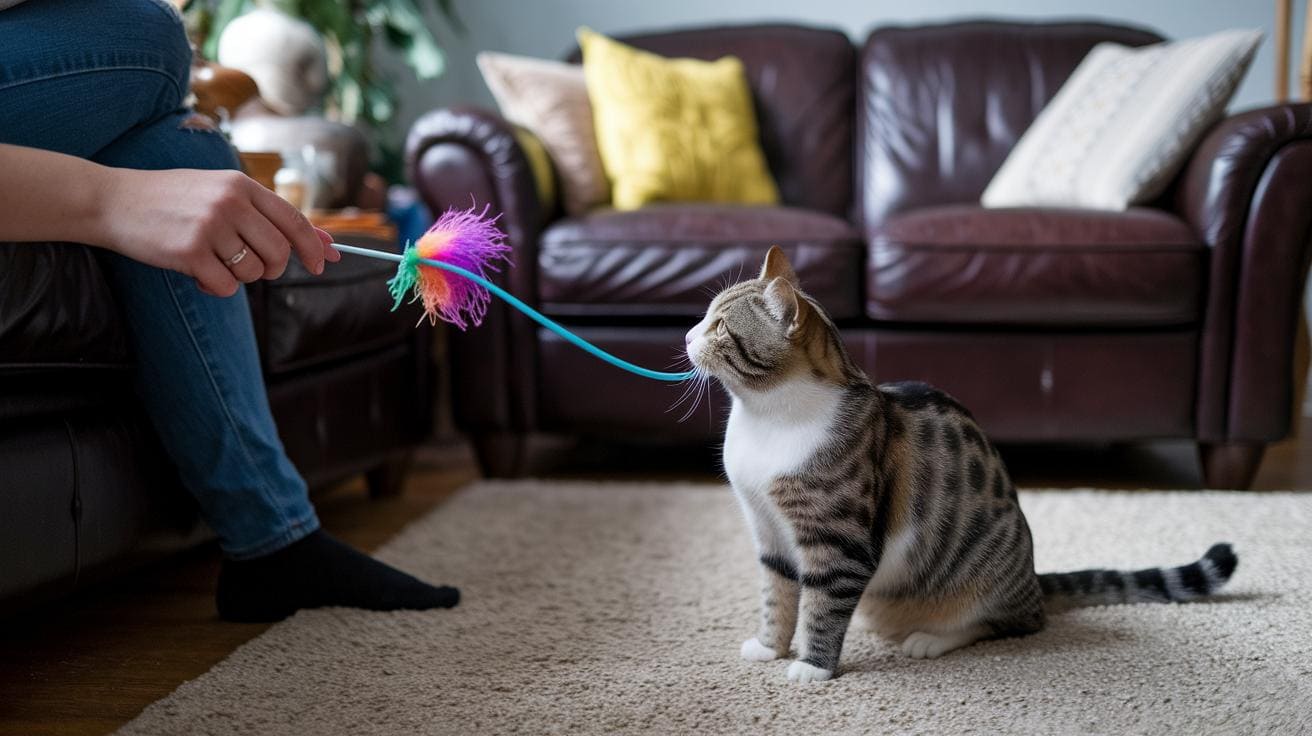
Ever watched your kitty chase shadows? Try two quick 10-15 minute sessions each day – morning and evening are purrfect. It’s like a fun mini workout to zap those zoomies before nap time.

When you see a tail tip twitch or ears flattening, your cat is saying “time out please.” Pause the fun. Let them catch their breath and maybe toss in a quick snack.

Then switch to gentle petting or drop in a puzzle feeder treat (a snack release toy). This little combo turns all that excitement into a happy calm.

Do this twice a day and you’ll soon have a zen kitty purring with delight.

Worth every paw print.
Solo Play Strategies and Mental Stimulation Games for Indoor Cats

- Solo Play Strategies and Mental Stimulation Games for Indoor Cats.jpg

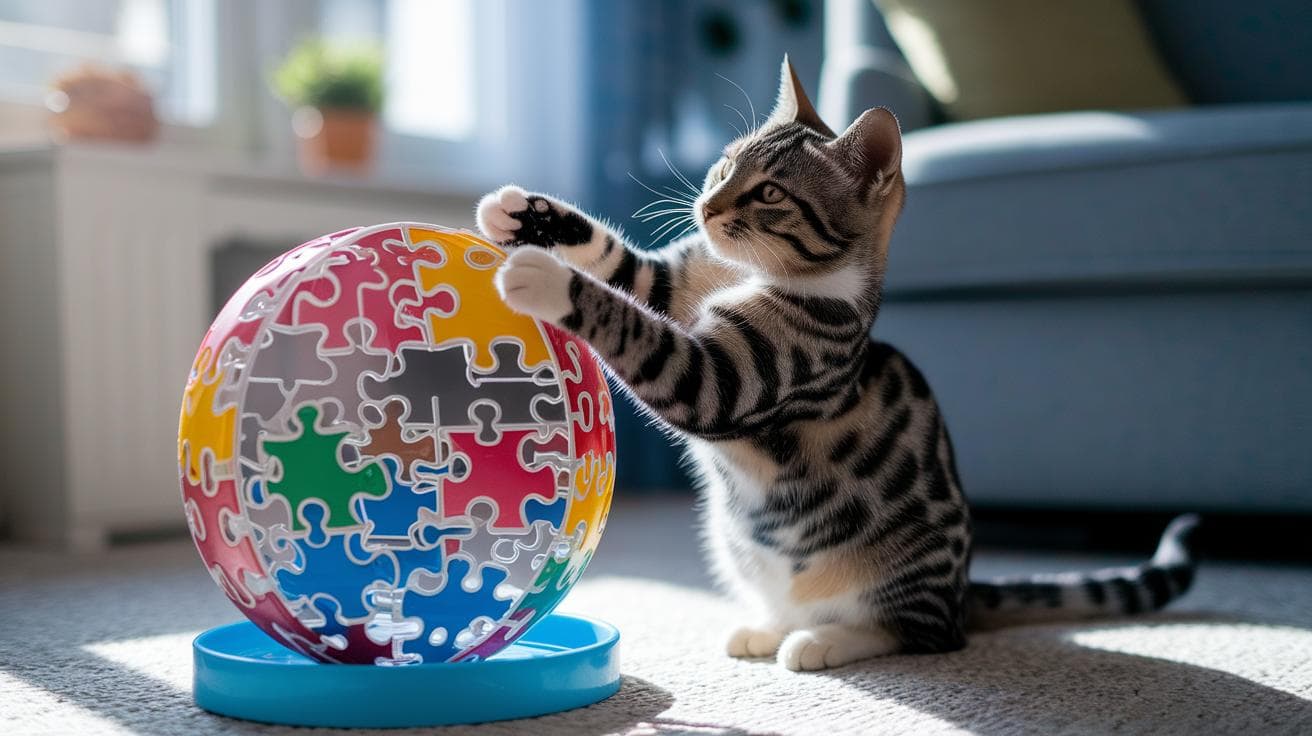
Ever watch your kitty stare at the blank wall and wonder, “Are you even paying attention?” Oops, that sounded harsh. But seriously, cats left alone can get pretty bored. So let’s fix that.

Puzzle feeders (food puzzles) turn snack time into a brain game. Imagine your cat’s whiskers twitch as it works out each treat. Motorized tracks (battery-powered loops) send a little mouse or ball zooming across the floor. Rolling balls let your kitty feel that satisfying thud with every bat. Treat dispensers (snack puzzles) hide tiny bites inside for a fun nose hunt. Tunnels (tube toys) offer secret ambush spots. And catnip toys (plush toys stuffed with a plant that makes cats go wild) add a burst of scent adventure. Even if you’re tied up, these toys let your fur baby hunt, swipe, and puzzle-solve for hours.

Toy Type What It Does Safety Tips
Puzzle Feeder
(food puzzle)
Slows eating; mental workout Look for loose bits that could break off
Motorized Track
(battery-powered loop)
Keeps kitty chasing; self-moving Remove small loose parts; secure battery cover
Treat Dispenser
(snack puzzle)
Nose work; reward play Clean often to prevent mold
Rolling Ball
(lightweight ball)
Solo bat and chase fun Avoid balls small enough to swallow
Tunnel
(tube toy)
Hide and ambush space Check for tears and sharp wires
Catnip Toy
(plush toys with catnip herb)
Scent stimulation; kick games Replace when stuffing wears thin

Um, switch out toys each week so your cat never gets bored. A quick sprinkle of fresh catnip or silver vine (an alternative cat plant) brings back the claw-some fun. Move that tunnel to a new corner, hide treats under a soft rug, or pop a window perch with bird sounds playing low. Mixing up sights, smells, and textures keeps indoor play as thrilling as the real hunt.

Adapting Play for Kittens, Adult, and Senior Cats

- Adapting Play for Kittens, Adult, and Senior Cats.jpg

Kittens go nuts for quick play, just 5 to 10 minutes with a tiny plush mouse (a soft toy) or a feather wand (stick with feathers). Those brief chase bursts sharpen tiny hunters’ reflexes without stressing growing joints. It’s like a mini sprint, fun but easy on bones. Swap in new toys every few days so those paws stay curious and claws stay strong. Ever watched a kitten bunny-hop after a feather? It’s pure joy!

Older cats and chubby adults need a slower pace. Um, puzzle feeders (toys that hide treats inside) turn snack time into a gentle brain teaser, no big leaps required. Slow wand toys that crawl along the floor invite lazy pounces instead of sky-high jumps. Overweight kitties love rolling treat-dispensing balls (balls that drop a nibble when they spin); each snack gives a little shimmy workout.

In a multi-cat home, playtime can turn into a furball free-for-all. So do one-on-one sessions: bring one cat into the living room with a dancing ribbon toy while the others chill elsewhere, then swap. Always watch group chases to avoid toy theft or scrapes. You can also do turn-taking games with a teaser rod (stick with a dangly toy) so each cat gets their moment in the spotlight and no one feels left out.

Worth every paw-print.

Final Words

In the action, we kicked off with five interactive activities: wand chases, laser fun, puzzle treats, rolling tracks, and catnip mice.

Then we dug into picking sturdy toys, non-toxic materials, and setting up a safe play zone.

Next, we covered owner-led sessions, solo puzzles, and tips for kittens through seniors.

Keep rotating toys, watch for wear, and tune in to your cats’ cues.

With these tools, you’re all set to boost energy, curb boredom, and master safe play behaviors for indoor cats.

Enjoy every pounce!

FAQ

Signs your cat wants to play?

The signs your cat wants to play include tail twitching, perked ears, gentle paw taps and short bursts of energy as they stalk toys, shadows or moving fingers.

What safe play behaviors for indoor cats should I encourage?

Safe play behaviors for indoor cats include supervised sessions, soft non-toxic toys, padded play areas and sturdy scratchers that mimic hunting without risking injury or swallowed parts.

How do I play with or entertain my indoor cat?

Playing with or entertaining your indoor cat means offering wand-chase games, puzzle feeders, feather teasers and rolling balls that mimic prey. Rotate toys often for fresh excitement and mental challenge.

How often does an indoor cat need to play?

Indoor cats need supervised play at least twice daily for 10–15 minutes each. That boosts exercise, mental enrichment and stress relief while preventing boredom and unwanted behavior.

What is the 3-3-3 rule for cats?

The 3-3-3 rule for cats describes a new-cat adjustment: three days to settle and hide, three weeks to explore safely and three months to form a lasting bond.

How do cats play with humans?

Cats play with humans by stalking hand movements, pouncing on dangling toys, batting fingers gently and enjoying interactive chase games that simulate catching prey, strengthening their bond with you.

Cat enrichment ideas DIY?

DIY cat enrichment ideas include cardboard-box mazes, paper-bag hideouts, toilet-paper-roll treat puzzles, simple wand toys made from string and sticks, plus blanket tunnels for ambush play.

How long do cats play with each other?

Cats play with each other in short bursts, often five to 15 minutes, followed by naps or grooming breaks before they resume stalking and pouncing on playmates.

How do I find cat behavior training near me and what is VCA cat behavior?

VCA cat behavior refers to professional guidance from Veterinary Centers of America. To find local training, search online for certified cat behaviorists or ask your veterinarian for recommended resources.

Related Articles

Author

  • Lucas Turner

    Lucas Turner is an urban photographer based in Chicago, Illinois, known for his captivating images that highlight the pulse of city life. With a unique perspective, he captures the vibrant contrasts between architecture, people, and the urban environment, telling stories through his lens.

    Outside of photography, Lucas enjoys coffee shop hopping, exploring the diverse cafes around the city. He finds that each coffee shop has its own vibe, offering a perfect setting for creativity to flow. As he often says, “A good cup of coffee and a new view always inspire my best work.”

    Lucas’s photography is a reflection of his love for the city’s energy and the quiet moments found within it.

    View all posts

Similar Posts