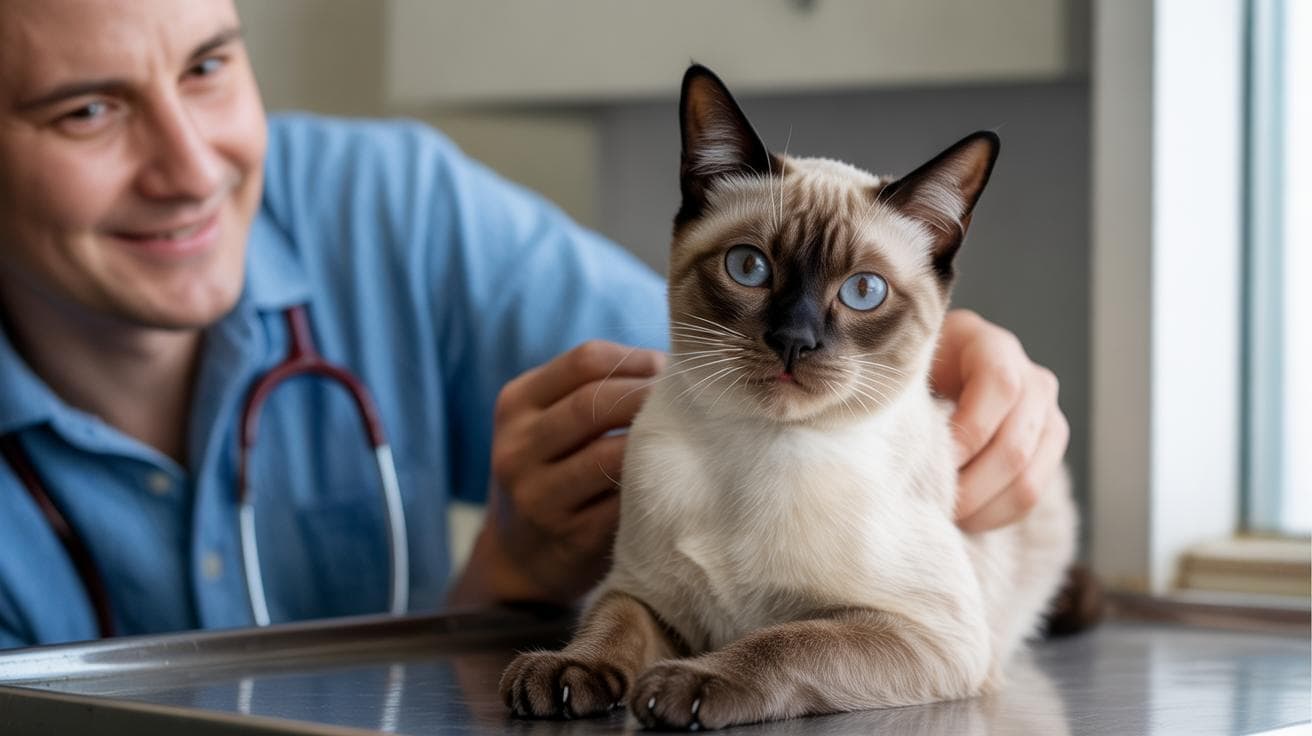
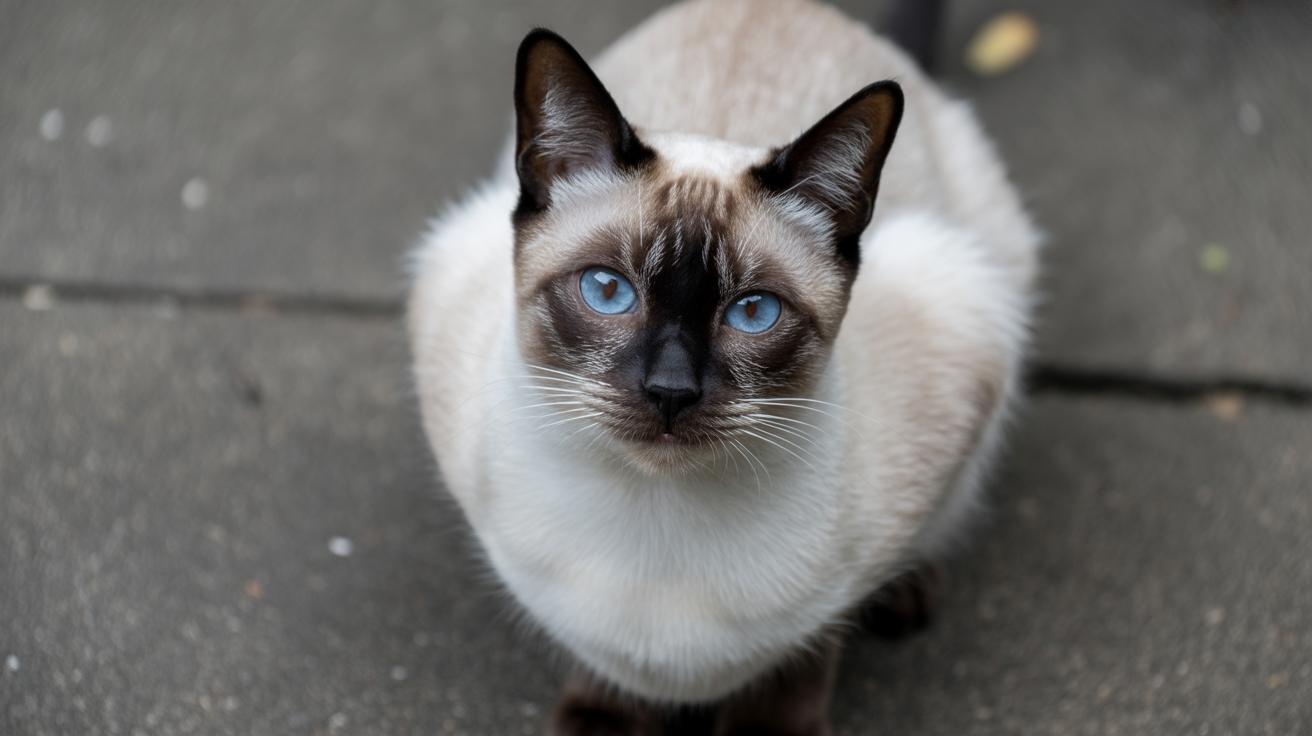
Think Siamese cats are just pretty faces? Think again. They’re more like chatty roommates than aloof pets, following you like a soft shadow and holding full conversations with their loud, lilting meows. Ever watched your kitty insist on lap time at 2 a.m.? That’s classic Siamese.
They come from Thailand, which used to be called Siam, and were once treasured in temples and royal homes. You’ll notice their bright blue eyes and point colors (darker fur on cooler body parts like ears, face, paws, and tail) , it’s temperature-sensitive coloring, so the colder spots get darker.
Personality-wise they’re bold, curious, and super social. They want to be where you are, learn tricks fast, and can get bored if left alone too long. Some are clingy in the best way; others are a little dramatic when you ignore them. Cute, right? Um, also loud.
Lifespan indoors is usually 15 to 20 years. Health-wise, they’re generally sturdy but can be prone to dental issues, respiratory sensitivities, and weight gain if under-exercised. Regular vet checkups and dental care go a long way.
Care tips: play with them daily, use puzzle feeders to keep their clever brains busy, and offer high perches so they can survey the room. Brush them sometimes and measure meals to avoid obesity. Keep them indoors for safety and consider microchipping.
If you want a quiet couch companion, a Siamese might not be your cat. But if you love talkative, affectionate, and clever roommates who demand play and attention, they’re a perfect fit. I once watched a Siamese leap three feet just to swipe a feather toy mid-air, pride and chaos all at once.
Worth every paw-print.
Quick Overview: Core facts at a glance
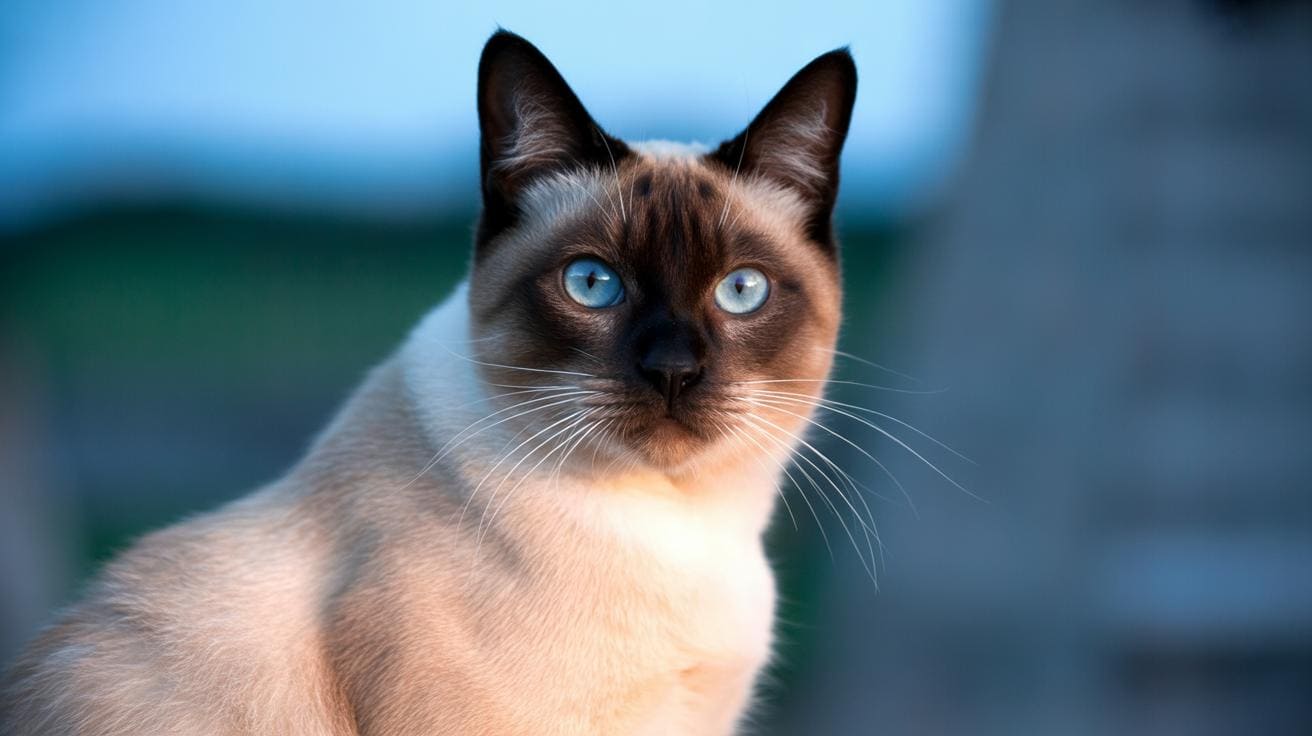
Siamese cats come from Thailand and are famous for their blue eyes, chatty ways, and those dark color points on their face, ears, paws, and tail. They usually live about 15 to 20 years indoors, tip the scales around 8 to 14 pounds, and thrive on company. Ever watched one follow you around like a shadow? Yeah, they’re that people-focused.
- Origin: Thailand (formerly called Siam). (Cat Fanciers' Association)
- Lifespan: typically 15–20 years indoors; some live longer. (Cornell Feline Health Center)
- Adult weight: about 8–14 pounds. (Cat Fanciers' Association)
- Appearance: temperature-sensitive color points (fur that gets darker in cooler areas of the body) , common colors are seal, chocolate, blue, and lilac, plus rarer variants. (The International Cat Association)
- Eyes: deep blue with adapted low-light vision. (Cornell Feline Health Center)
- Temperament: very vocal, social, and focused on people , they love interaction and chatter. (American Veterinary Medical Association)
- Health highlights: watch for progressive retinal atrophy (a genetic eye disease that slowly reduces vision), some heart issues, and routine dental disease (gum and tooth problems). (American Veterinary Medical Association; Cornell Feline Health Center)
- Suitability: they prefer close companionship and usually do poorly if left alone for long periods. (American Veterinary Medical Association)
- Notable types: the modern wedge-shaped head type, the older apple-head type, and the long-haired Balinese (a Siamese with longer fur). (Cat Fanciers' Association)
siamese cat history and origin: Thai roots to Western recognition
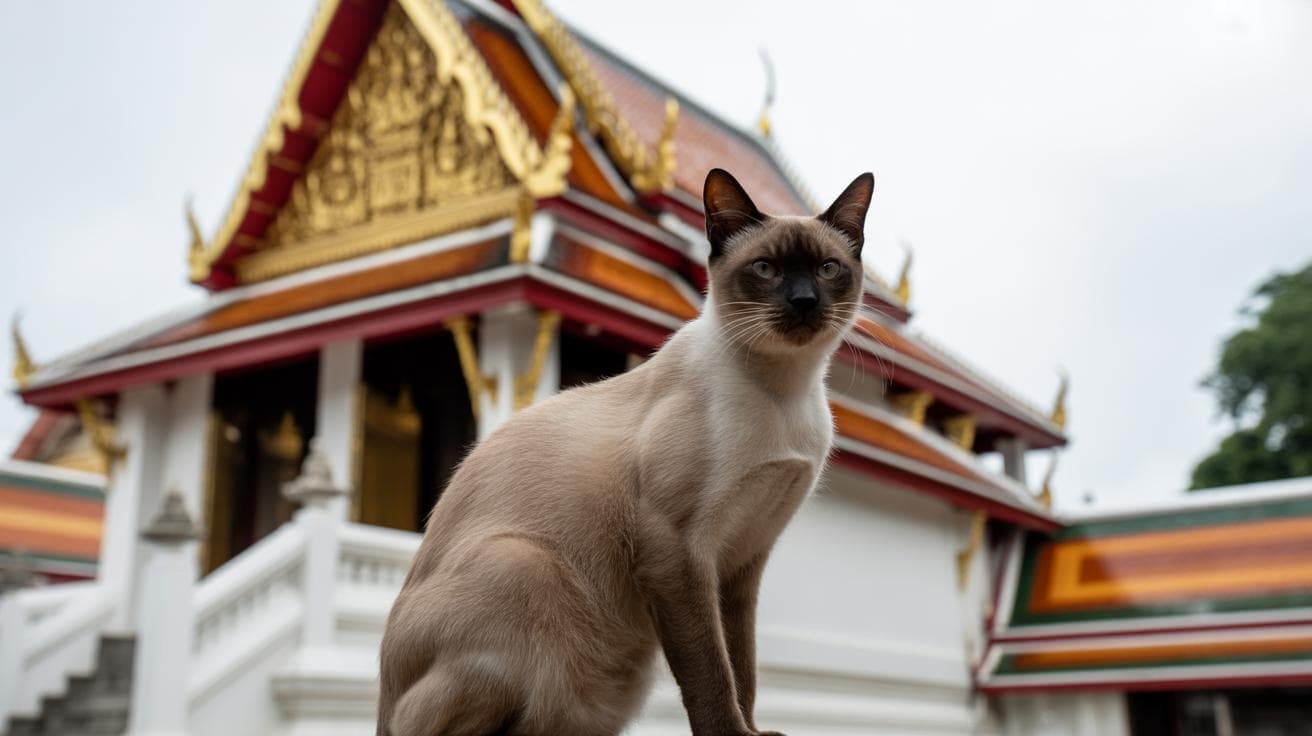
Tamra Maew (cat poems) are old Thai manuscripts that mention those blue-eyed, point-colored cats during the Ayutthaya period (about 1351 to 1767 CE). These poems are the earliest written record we have of the breed in Thailand. Ever notice how their eyes seem to glow? That history is where it starts.
By the 1800s Siamese cats were beloved by Thai royalty and temple communities. People sometimes believed they carried royal souls, and monks often looked after them. There’s a fun old tale that they’d pounce on intruders to guard a throne – part real guardian, part legend. Point color means the face, ears, paws and tail are darker than the body, by the way.
Live exports went to Europe in the late 1800s. Famous pairs like Pho and Mia arrived and the type appeared at the 1871 London cat show. Interest grew fast – a U.K. Siamese fanciers group formed around 1902, and the Cat Fanciers' Association gave the breed official recognition in 1906.
Soon Siamese cats worked their way into Western culture. A Siamese was even a White House pet in the Hayes era, and the breed popped up in movies and among celebrities. Embassy cats reportedly helped reveal hidden microphones in Moscow, which is about as spy-movie as real life gets. No wonder people fell head over paws for them.
siamese cat appearance and color-point genetics explained
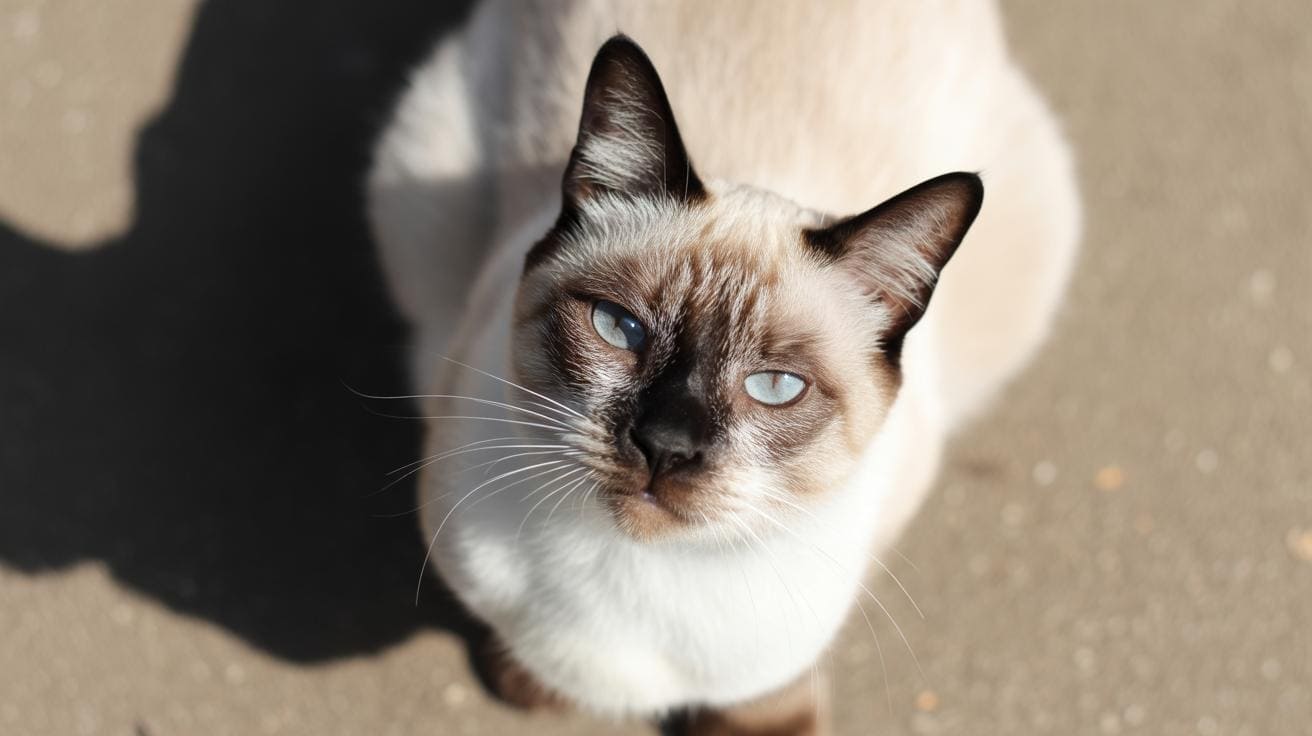
Siamese cats get their famous dark points because of a heat-sensitive enzyme called tyrosinase (an enzyme that helps make pigment). The enzyme doesn’t work as well at normal warm body temperatures, so the warm belly and back stay pale while cooler spots , the face, ears, paws, and tail , show darker color. It’s a neat trick of biology that gives them that dramatic mask-like look.
Kittens usually arrive creamy or almost white because the enzyme is mostly inactive inside a warm newborn. As their little noses, ears, and paws cool over the first weeks, pigment starts to show and the points begin to darken. You’ll often see the first hints by 2 to 3 weeks, the contrast becomes clear around 6 to 12 weeks, and then the points can keep deepening slowly through adulthood as seasons and room temperature change pigment expression.
The genetics behind this are pretty straightforward: the classic Himalayan, or color-point, allele of the tyrosinase gene plus other modifier genes that tweak how much pigment appears and where. Think of those modifiers as tiny volume knobs for color , some turn the points almost off so they look very pale, nearly like a near-albino, while others let more pigment through so the points look darker even on slightly warmer skin. Those effects depend on typical cat body temps, about 100 to 102.5 degrees Fahrenheit (37.8 to 39.2 degrees Celsius).
Recognized point colors start with four main categories: seal, chocolate, blue, and lilac. Breeders and geneticists also report variants like caramel and cinnamon that come from extra alleles and modifiers. Body type doesn’t change the color genes, so older “apple-head” Siamese and the sleek modern wedge-types can share the same points. And Balinese cats are basically long-haired Siamese , same point genes, plus a long-hair gene.
| Color Point | Typical Appearance | Notes |
|---|---|---|
| Seal | Very dark brown to almost black points | Classic high-contrast look on a pale body |
| Chocolate | Warm, milk-chocolate brown points | Softer contrast than seal, cozy tone |
| Blue | Soft steel-gray or bluish points | Muted, cooler feel |
| Lilac | Pale pinkish-gray points | Delicate, low-contrast appearance |
| Caramel / Cinnamon | Warm beige to spicy brown tones | Less common, driven by modifier genes |
Those pigment quirks also tie into eye color and vision. The color-point pathway is linked to having blue eyes and to some differences in how visual wiring develops, which helps explain why Siamese often have striking deep blue eyes and particular low-light vision traits. Ever watch those eyes catch the light? It’s pretty mesmerizing.
siamese cat temperament: vocal behavior, social needs, and trainability
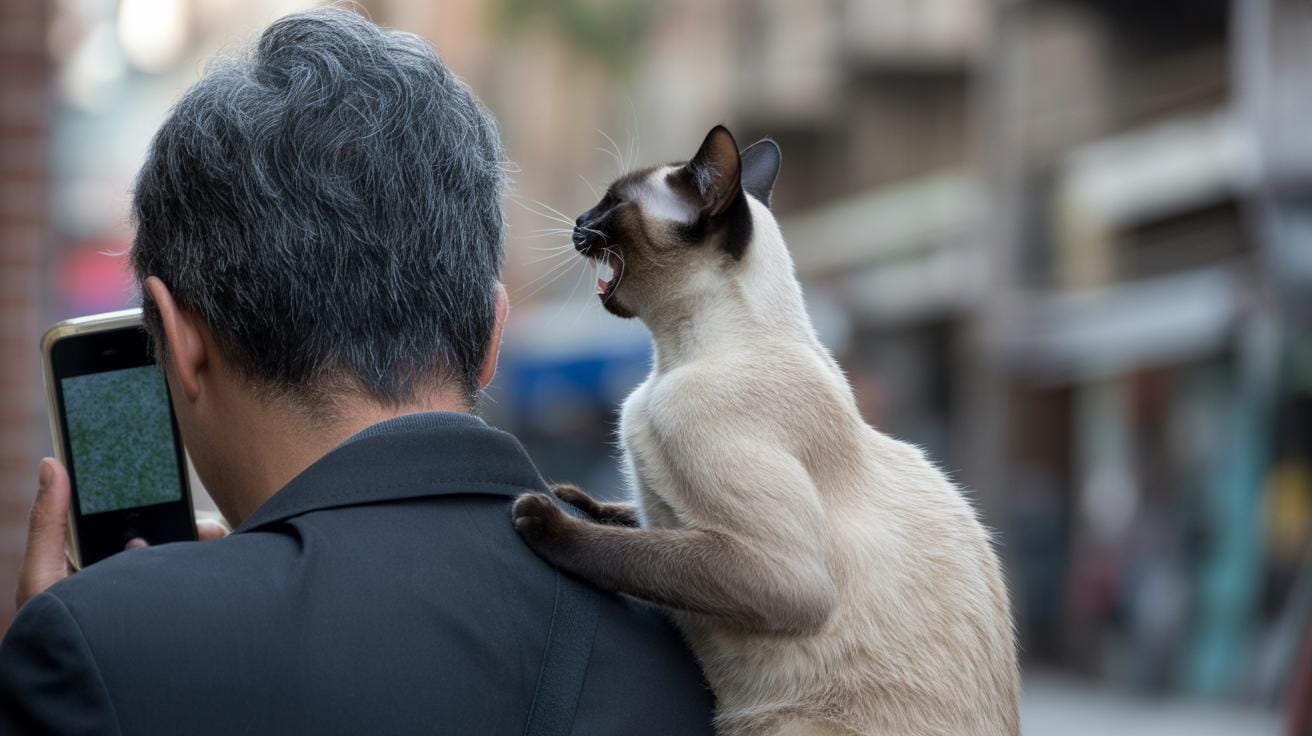
Siamese cats are famously vocal, a little opera house in fur. They chirp, yowl, meow and trill (a soft vibrating chirp), and they use those sounds like words – to get your attention, tell you they found something, demand play, or greet you at the door. Their calls can be specific: a short cry for food, a long complaint when bored, a soft trill to invite you over. Watch the body language too – tail flicks, ear position, and a fixed stare (an intense, focused look) say a lot. Many Siamese learn to “speak” on cue, so you might get an answer when you call their name. (AVMA)
They form very strong bonds and often follow their people around the house. Introduce them calmly and early and they usually do fine with kids and friendly dogs, because supervised play teaches everyone limits (feline behavior specialists). Left alone too long, some Meezers (a cute nickname for Siamese) can get separation anxiety (stress from being left alone) – look for nonstop vocalizing, destructive scratching, or changes in litter habits. Simple fixes help: a friend-cat, puzzle feeders (food toys that make your cat work for treats), timed play sessions, and a predictable daily routine so they know when attention is coming.
Siamese are clever and love to solve problems, so they pick up tricks fast. Clicker training (a small click device that marks good behavior), fetch, and puzzle toys are perfect for their brains. Keep training short and consistent – think two 5 to 10 minute sessions a day with treats and praise – and rotate toys so things stay fresh. Mental work tires them out almost as much as a good chase, and a tired Meezer is a calmer Meezer. (AVMA; feline behavior specialists)