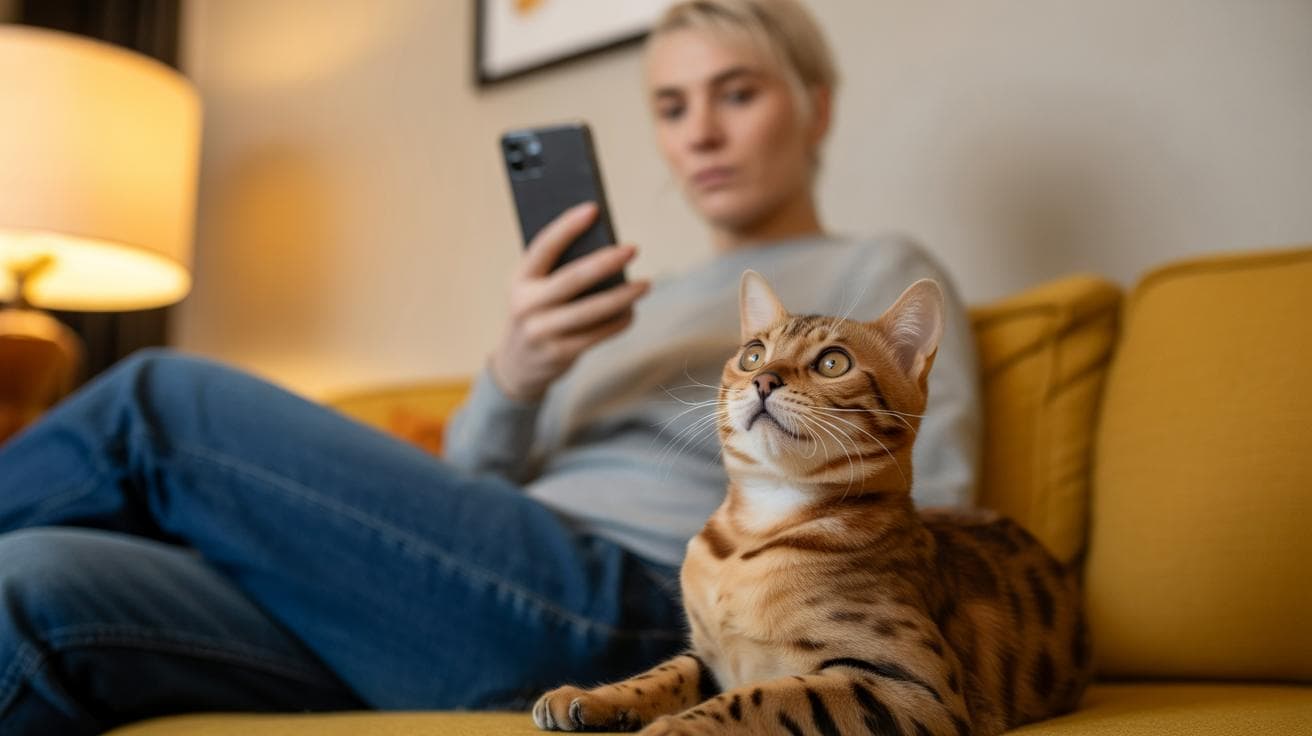
Are Bengals too wild to be housecats? Short answer: not really. Their spotted coat and Asian leopard cat ancestry (a small wildcat species) make them look like tiny jungle athletes, though.
They really move like it. You’ll see sky-high jumps that make you gasp, chirps that sound like little birds, and a nonstop curiosity that turns a cardboard box into an adventure. Ever watched one open a drawer? It’s hilarious.
If you’re wondering whether that energy is awesome or a handful, this guide breaks it down. You’ll get the scoop on how they look, what their temperament is like, everyday care, and common vet checks (health screenings for things like heart and eye issues). It’ll help you know what life will actually be like before you bring one home.
Spoiler: they’re brilliant, demanding, and wildly rewarding if you’re ready to play. Worth every paw print.
Are Bengals Right for You? Quick Snapshot
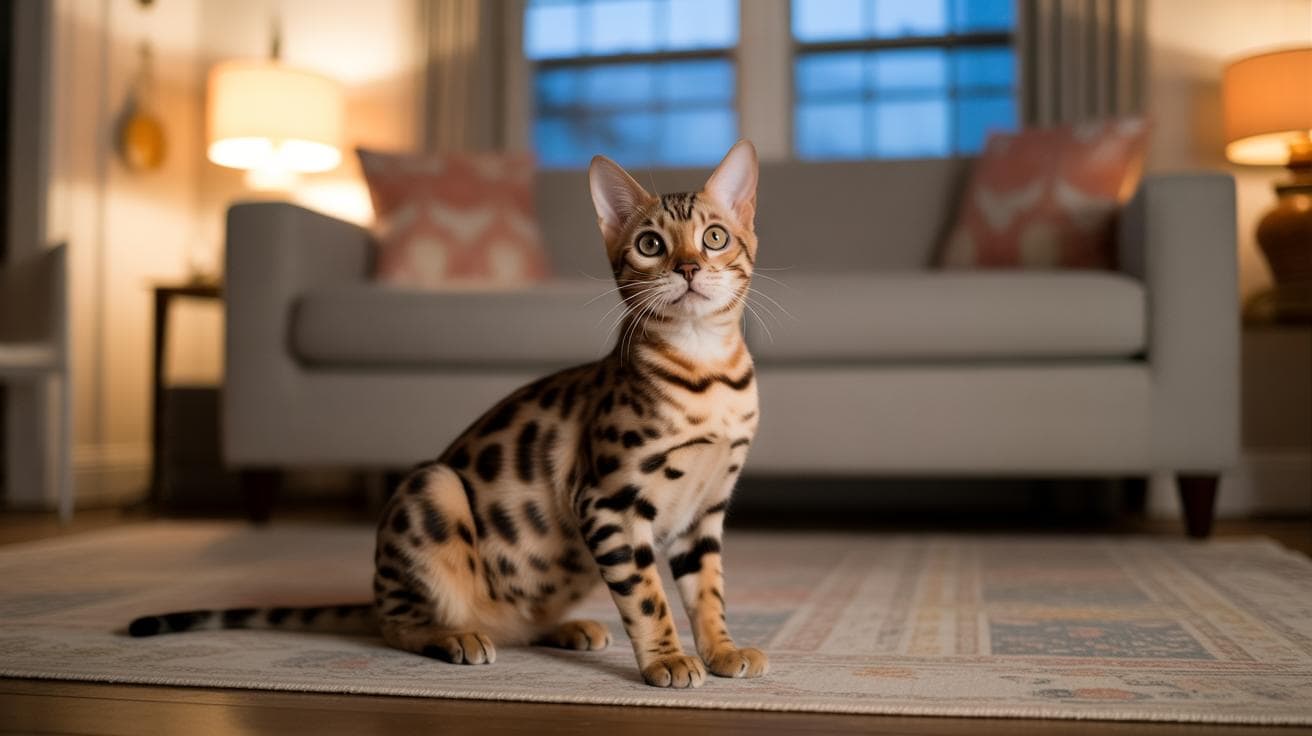
Yes, if you can keep up with a very active, curious cat that wants lots of play and attention. Bengals started in the 1960s when breeders crossed Asian leopard cats and domestic cats, and that wild heritage shows. They’re medium-to-large and muscular, like tiny jungle athletes, and they love climbing, chasing, and solving puzzles. Their typical lifespan is about 9 to 15 years.
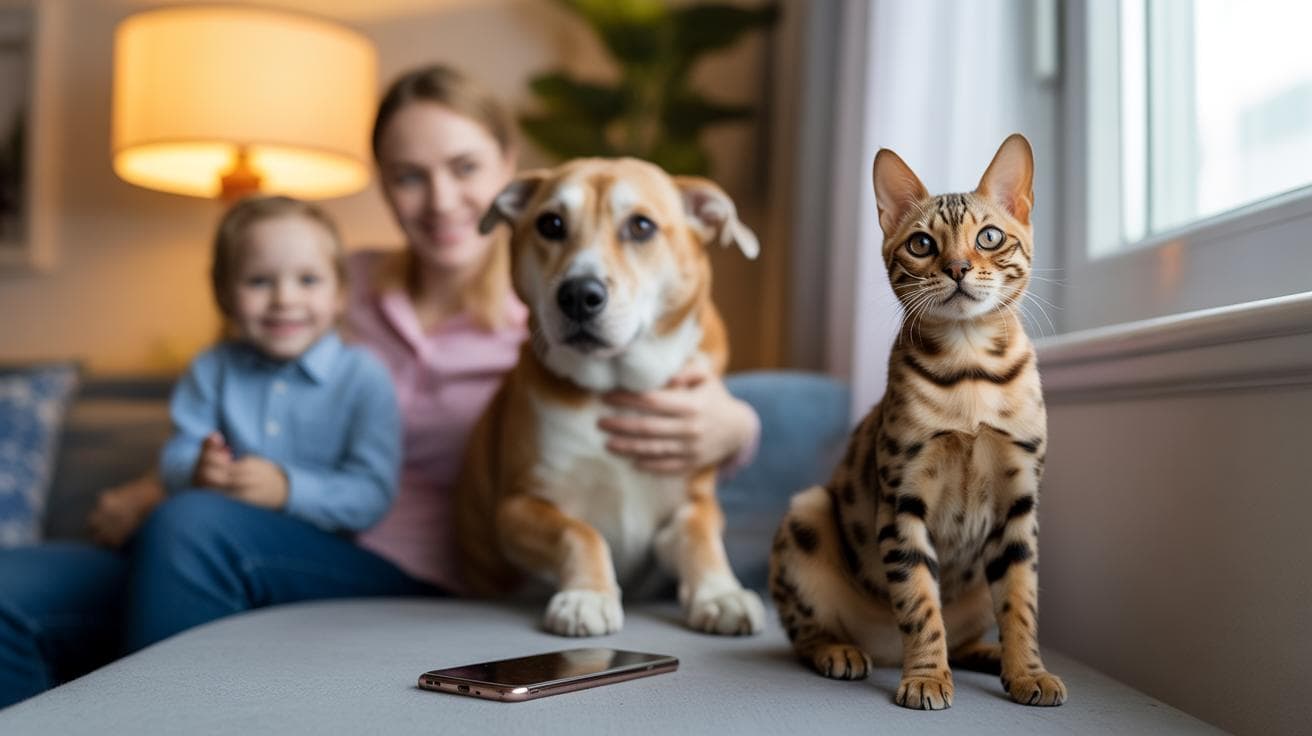
Ever watched a Bengal leap for a toy and freeze mid-air? Their energy is next-level, so they need daily play, tall cat trees, and puzzles to stay happy. They can be talkative and social, too, so they do best with people around or another playful pet.
Quick at-a-glance points:
- Weight: 8–15 lb
- Lifespan: 9–15 years
- Coat types: spotted, rosetted, marbled
- Common colors: brown, snow, silver variations
- Activity level: very high – needs daily stimulation
- Typical health screens: HCM (hypertrophic cardiomyopathy – a heart disease test), PRA (progressive retinal atrophy – an eye disease test)
| Stat | Typical Range or Note |
|---|---|
| Weight | 8–15 lb |
| Lifespan | 9–15 years |
| Coat types | Spotted, rosetted, marbled |
| Common colors | Brown, snow, silver |
| Activity level | Very high – needs daily stimulation |
| Recognition date | 1983-1990s |
| Typical health screens | HCM (heart disease test), PRA (eye disease test) |
Thinking of a Bengal? Great, if you love interactive play and a cat that acts like a curious little panther. Not so great if you want a quiet lap-only buddy. Worth every paw-print, if you ask me.
Bengal Cat Origin and Breed History
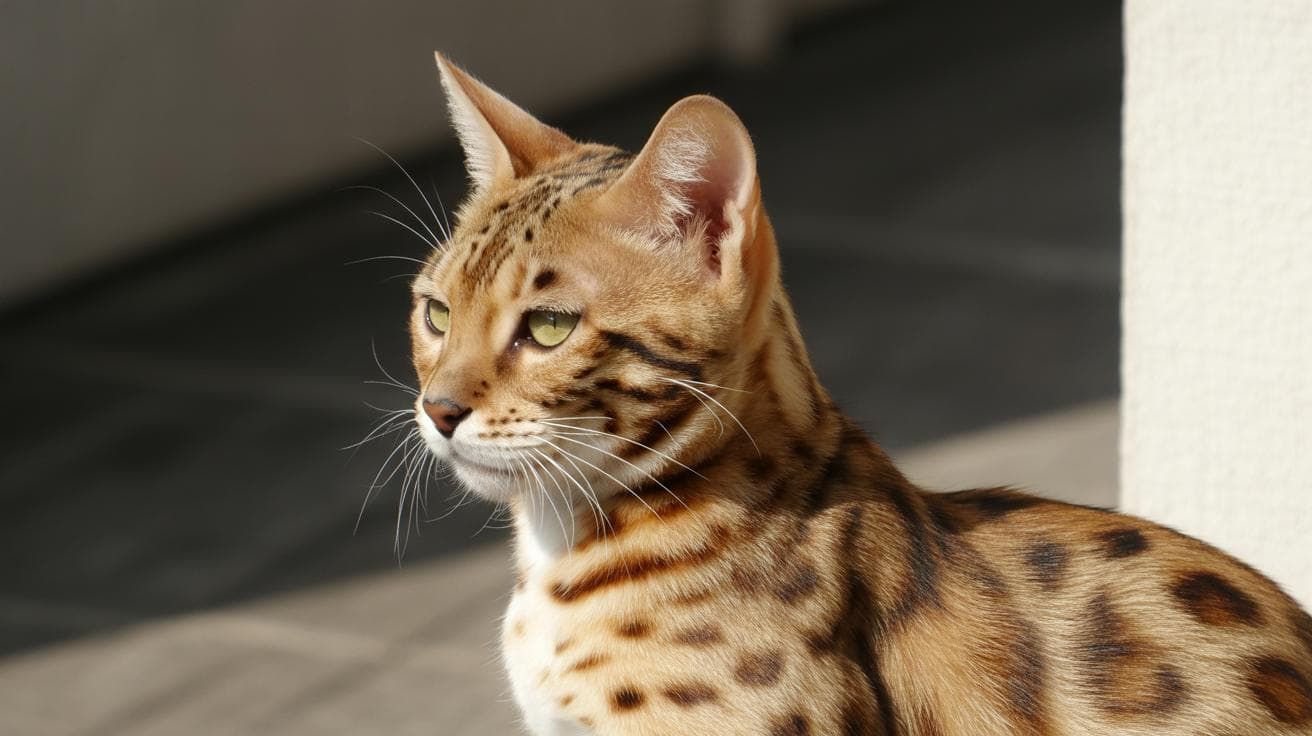
The modern Bengal started in the 1960s when breeders crossed the Asian leopard cat (a small wild cat native to Asia) with domestic shorthairs (short-haired house cats). They wanted that wild, spotted look in a pet you could actually live with. Over the next two decades breeders worked on coat patterns and calmer temperaments so these cats would fit into homes.
By the 1980s and 1990s major registries (official cat organizations) began accepting Bengals for shows and stud books. You can almost see the spots flash when a Bengal pounces, so dramatic. But behind that flashy coat was careful selection for friendlier behavior.
Breeders aimed to keep the wild appearance while choosing cats that enjoy people. Hybrid (offspring of two different species) litters were often backcrossed (bred back to domestic cats) over several generations. The result: bold markings plus a home-friendly attitude. Ever watched a Bengal chase a feather and look like a tiny leopard? Yep, they’re show-offs.
Rules came up because the breed began with a wild ancestor. Some places limit ownership or import of early-generation Bengals, and a few states or countries require permits. Check local regulations before you fall in love with a kitten, you don’t want surprises.
Most breeders eventually bred Bengal to Bengal, which toned down wild behaviors, made size and temperament more consistent, and pushed breeders to do better health testing and socialization. Still, Bengals are energetic and curious. If their play needs aren’t met, some end up in rescues, so plan for daily playtime or puzzle toys.
Breed Generations (F1-F5)
| Generation | Wild Ancestry | Typical Traits |
|---|---|---|
| F1 | About 50% | Strong wild traits, often larger and more reactive; very active and less predictable. |
| F2 | About 25% | Still shows noticeable wild behavior; lively and bold, but a bit more social than F1. |
| F3 | About 12.5% | More domestic in size and temperament; playful but generally more predictable. |
| F4 | About 6% | Tends to be calmer and more like a typical pet cat; great for families or busy homes. |
| F5 | About 3% | Mostly domestic behavior with the classic Bengal look; the easiest fit for most owners. |
Thinking about getting one? Pick the generation that matches your lifestyle, are you up for wild-energy playdates or a more chill, couch-side companion? Either way, Bengals bring personality and plenty of zooms.
Bengal Cat Appearance: Coat Patterns, Colors, and the Glittered Coat
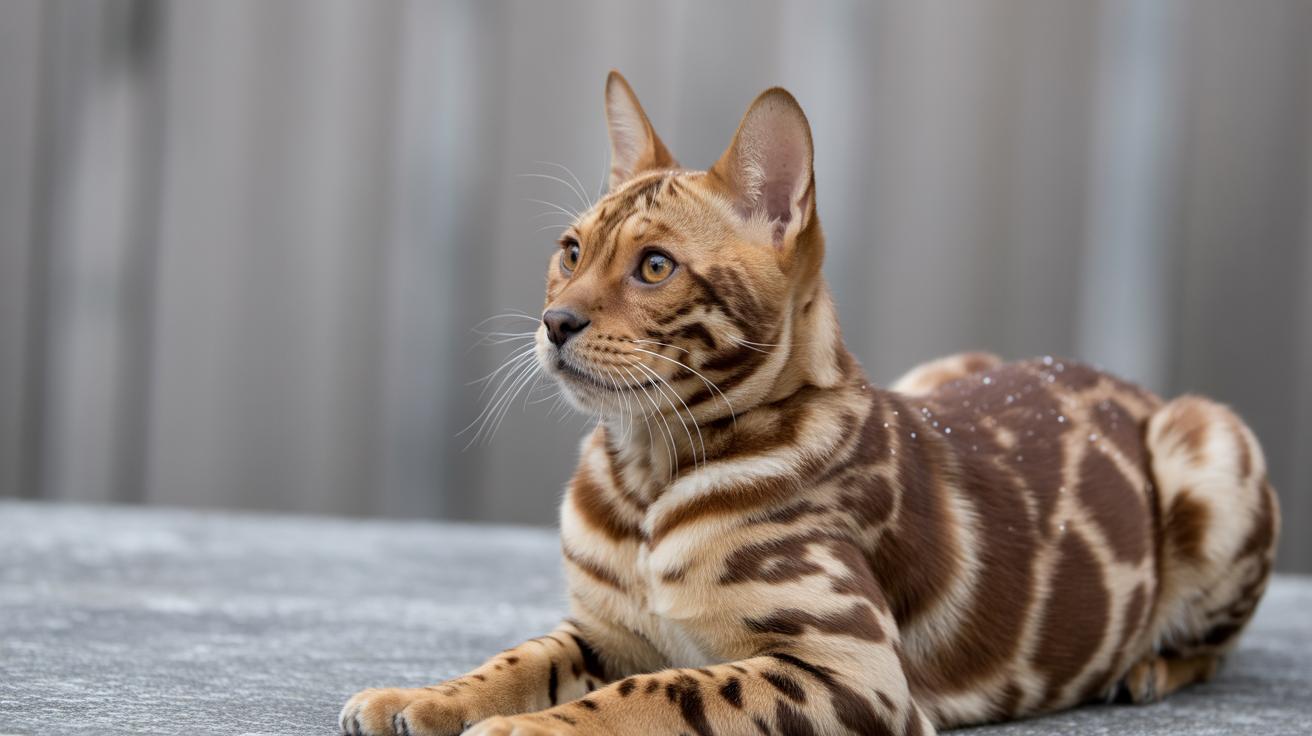
Bengal fur is short and dense. It feels silky and lies close to the body, which gives the cat a sleek, athletic look you can almost hear when it moves. Ever want to pet something that looks like polished velvet? This is it.
Their markings go from neat little spots to bold, flowing swirls, and the contrast is eye-catching and tactile. Some coats look like stamped spots; others look like streaked stone. You can spot the difference just by watching how the light plays across the sides.
Rosettes and marbling tell most of the story. Rosettes are two-tone spots with darker rims and lighter centers (think tiny donut-shaped marks). Marbling makes broad, horizontal ribbons that flow along the flanks, like water-streaked marble. Spot patterns sit between them and can be tight and round or stretched into tear-drop shapes.
- Rosette: two-tone spot with a darker outline and lighter center, often clustered and very three-dimensional.
- Spotted: single-color dots or small ovals scattered over the body, neat and punchy.
- Marbled: wide, horizontal swirls and ribbons that run along the sides and back, like carved stone.
- Snow / lynx variants: paler backgrounds with clear facial markings and contrast on the paws (lynx means tabby-like facial lines).
| Color Group | Typical Look / Notes |
|---|---|
| Brown group | Classic warm background with rich black or dark brown markings |
| Silver group | Cool, pale base with crisp dark markings and high contrast |
| Snow / blue / charcoal group | Paler snows, muted blues, or darker charcoals with softer contrast |
Many Bengals have literal sparkle called glitter, which comes from hair-shaft refractive properties (how light bends and bounces along each hair). In sunlight the coat can shimmer like sequins. And the eyes, greens, golds, yellows, browns, even orange, really pop against those patterns. I once watched a Bengal catch a sunbeam on the windowsill and, wow, the whole cat glowed.
Worth every paw-print.
Bengal Cat Size, Lifespan, and Common Health Considerations
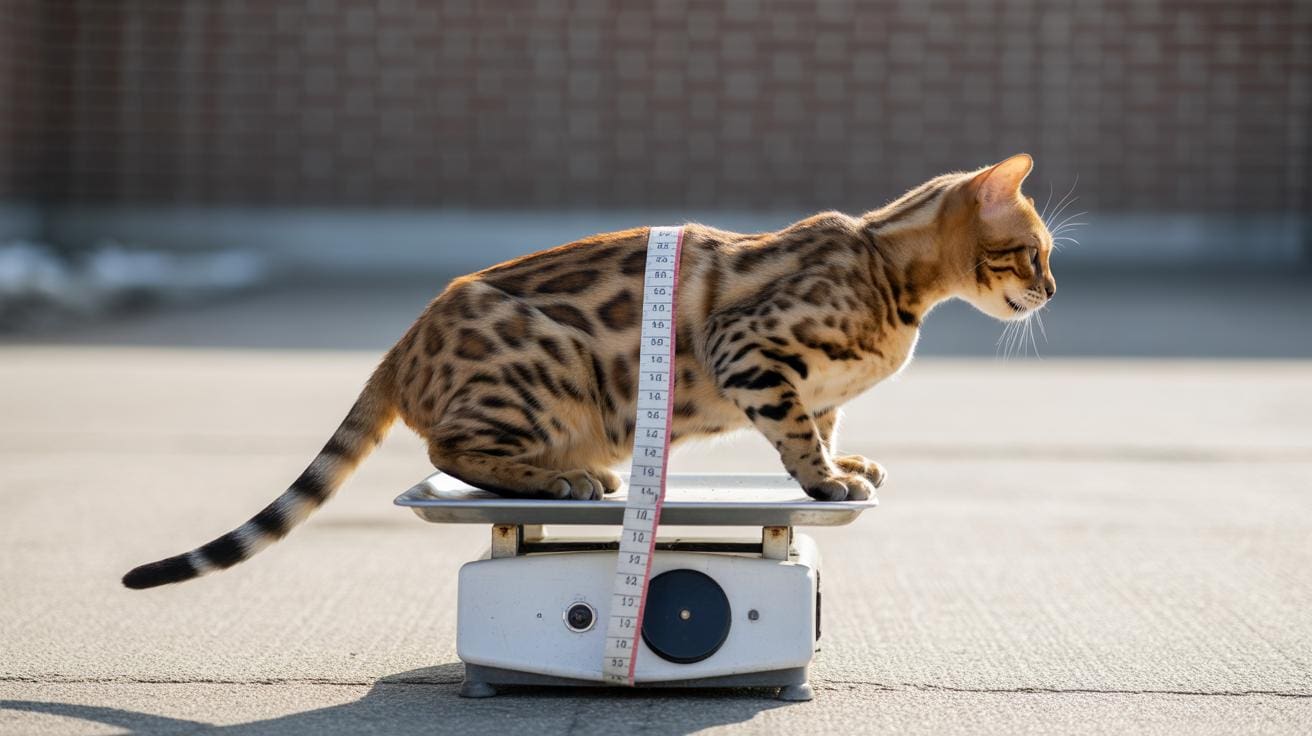
Bengals are muscular and athletic. Think compact sprinter, not a fluffy loaf. Size and weight change with sex, which generation the cat is (earlier-generation Bengals often grow bigger), how active they are, and what they eat. To check a healthy body feel, you should be able to feel ribs under a light layer of fat, see a waist from above, and notice a tucked belly from the side.
Many Bengals live well into their teens if they get good food and stay safe indoors or in a secure outdoor run. Lifespan still varies with genes and care, of course. High-quality nutrition, routine dental attention, parasite prevention, and regular vet visits all help add healthy years. Keep play time and weight in check to protect joints and the heart, and give them a comfy catio or a sunny window perch to cut down on risky outdoor encounters. Ever watch a Bengal sprint along a sunbeam? Pure joy.
Two inherited issues breeders and owners watch closely are hypertrophic cardiomyopathy and progressive retinal atrophy. Hypertrophic cardiomyopathy, or HCM, is a thickening of the heart muscle (the heart gets stiffer and works harder). It can show up as tiredness, breathing changes, fainting, or sudden collapse, sometimes in adulthood and sometimes earlier. Progressive retinal atrophy, or PRA, is a slow breakdown of the retina (the part of the eye that senses light) and usually starts with trouble in low light or clumsy navigation. Responsible breeders screen with cardiac ultrasounds (echocardiograms, a heart ultrasound) and eye exams, and some lines offer DNA testing when a specific mutation is known.
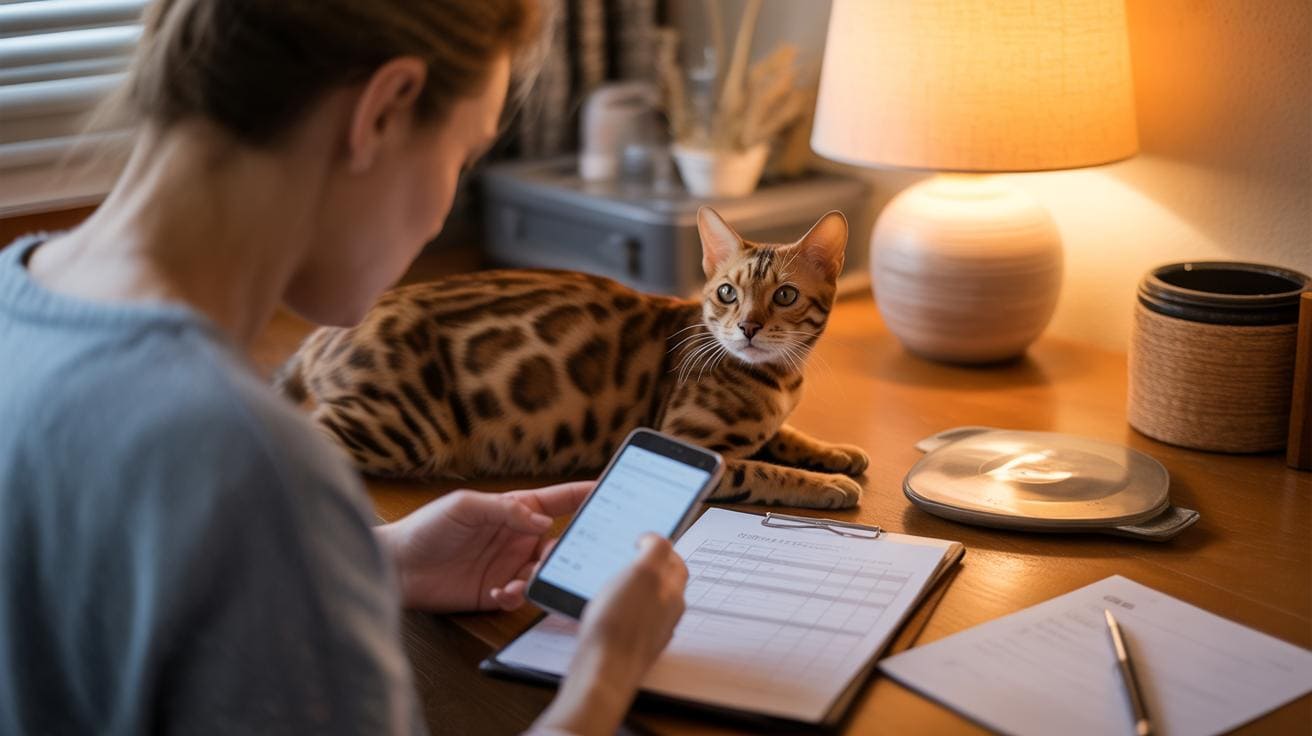
Practical screening and care are simple steps that pay off. Kittens need frequent early vet checks, adults at least yearly, and senior cats every six months with extra testing as needed. Ask breeders for dated test reports and the vet’s contact, and request an echocardiogram baseline for breeding cats or any with family history. If risk is present, repeat cardiac imaging every 12 to 24 months. Also mention anesthetic sensitivity (some cats react strongly to certain sedatives) before any surgery so your vet runs pre-anesthetic bloodwork and chooses drugs carefully. Little steps like this keep the zoomies coming for years. Worth every paw-print.
Bengal Cat Temperament, Intelligence, and Communication
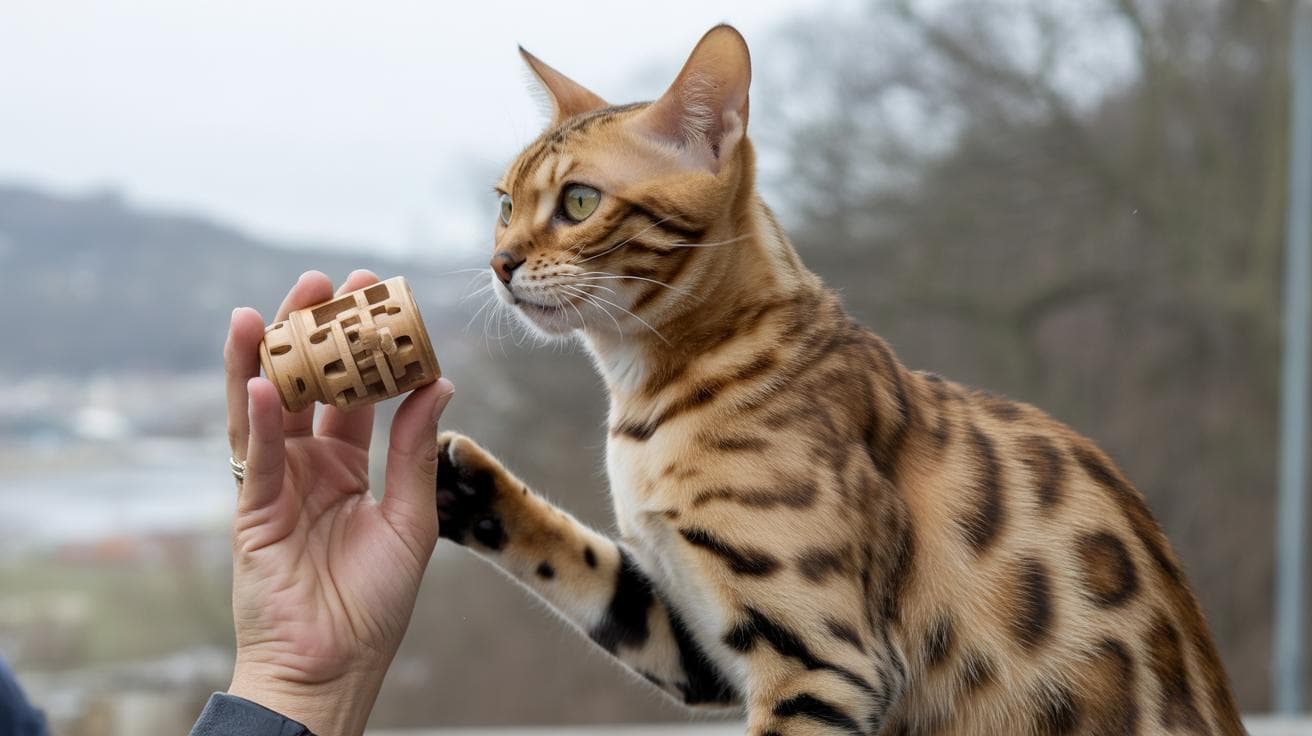
Bengals are bundles of energy and curiosity. They treat life like a string of puzzles to solve, always nosing around and testing new things. Think bold, bright, and very social , many act a bit like a loyal dog who wants to be wherever you are.
They have a lot to say. Expect chirps, trills, and chattering at birds, plus husky meows when they want your attention and sometimes a loud hello at the door. Your ears will learn their library of sounds fast.
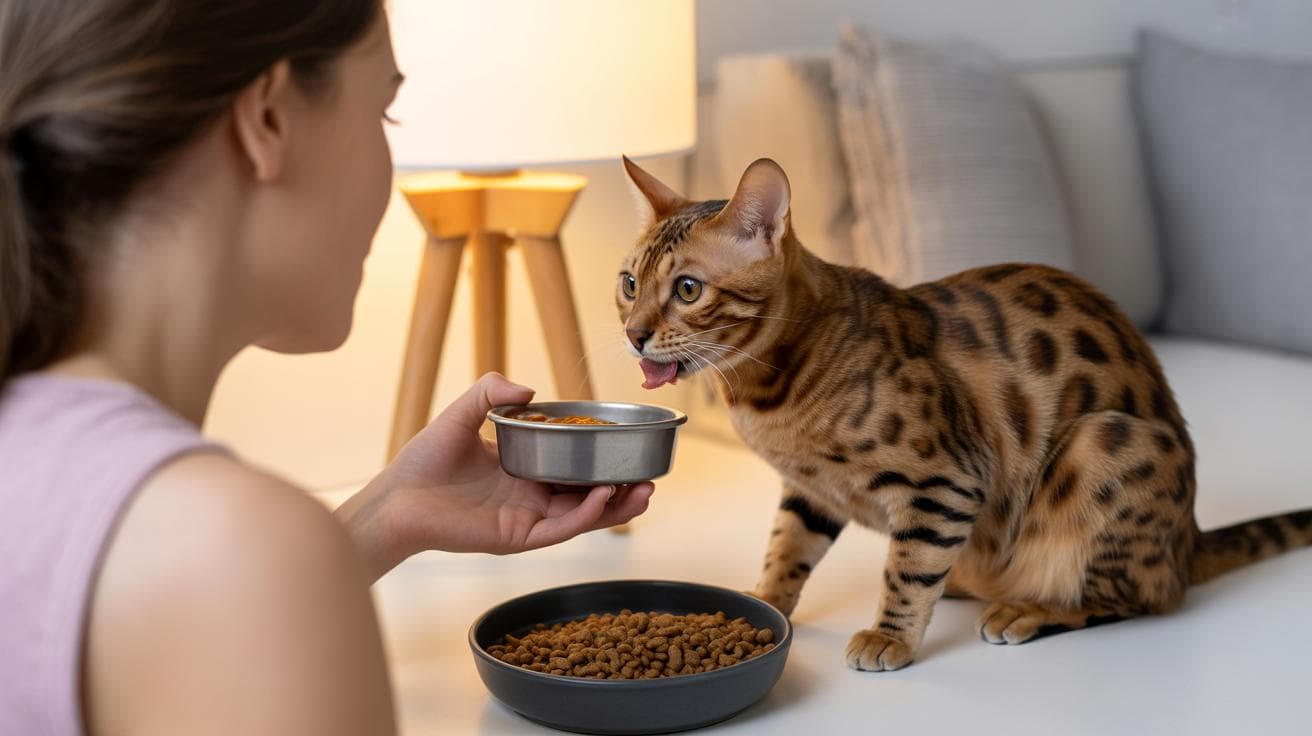
You will get followed, tapped awake, and offered toys as trophies. Some will nudge you with gentle paw taps in the morning, others carry favorite toys around like they own them. Many Bengals also love water play, dipping paws in a running faucet or splashing at treats in a shallow basin.
The hunting drive is strong. They watch birds from high perches (a raised shelf by a window), stalk shadows, and if given unsupervised outdoor access can catch small wildlife. You may see the classic low crouch, tail flicking, and that intense chitter when prey is in sight.
Channel that drive indoors and everybody wins. Give high window perches, puzzle feeders (a food toy that makes your cat work for meals), and timed play sessions so they can hunt safely and you avoid trouble. Short daily play bursts beat long, lonely stretches any day.
Training? Oh yes, they’re game. Use short, frequent sessions of 5 to 10 minutes, high-value treats, and shaping (rewarding tiny steps toward a trick). Try a clicker (a small device that makes a sharp sound) or a verbal marker to mark good behavior, then reward tiny approximations and build up.
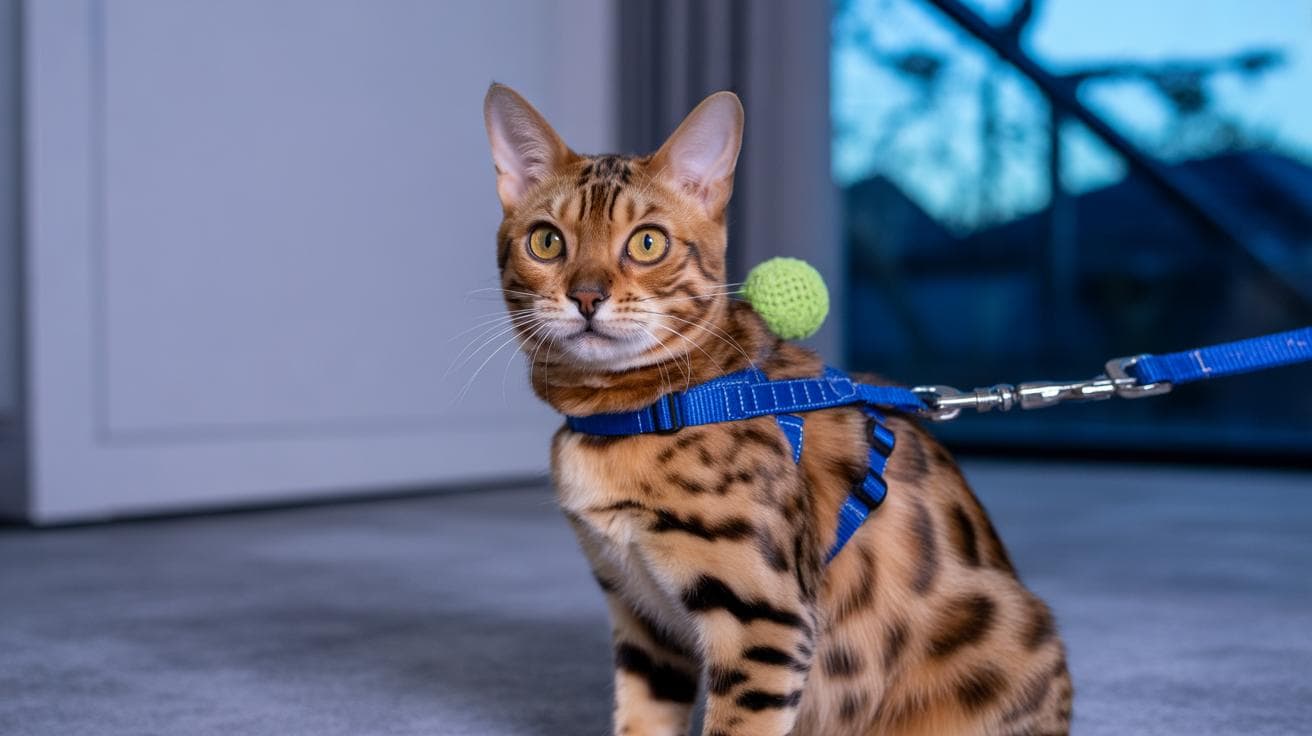
You can teach fetch, target-touch, and even loose-leash walking (walking with a harness and a slack leash). Keep it playful, end each session on a win, and rotate goals so their sharp minds stay curious. Worth every paw-print.