
Think Persian cats are just plush pillows that need no fuss? Their cloud-like fur, smooshy faces, and slow-motion pounces make them irresistible. Ever watched one tiptoe in slo-mo and still land the cutest flop? Yeah, charming but a little high-maintenance too.
That long coat and short muzzle mean daily grooming, wiping tear stains, and more vet visits than a short-haired buddy might need. Brush to stop mats. Clean their eyes because those smooshy faces can trap tears and goop. Little habits now save big hassles later.
In this post you’ll get clear, practical Persian facts about grooming routines, common health issues like PKD (polycystic kidney disease, where fluid-filled sacs form in the kidneys) and HCM (hypertrophic cardiomyopathy, a thickening of the heart muscle), plus realistic lifespan expectations so your kitty stays comfortable and thriving. We’ll cover what to watch for, simple home-care steps, and when to call the vet. Ready to keep your cat feline fine?
persian cat facts: Grooming, Health, Lifespan
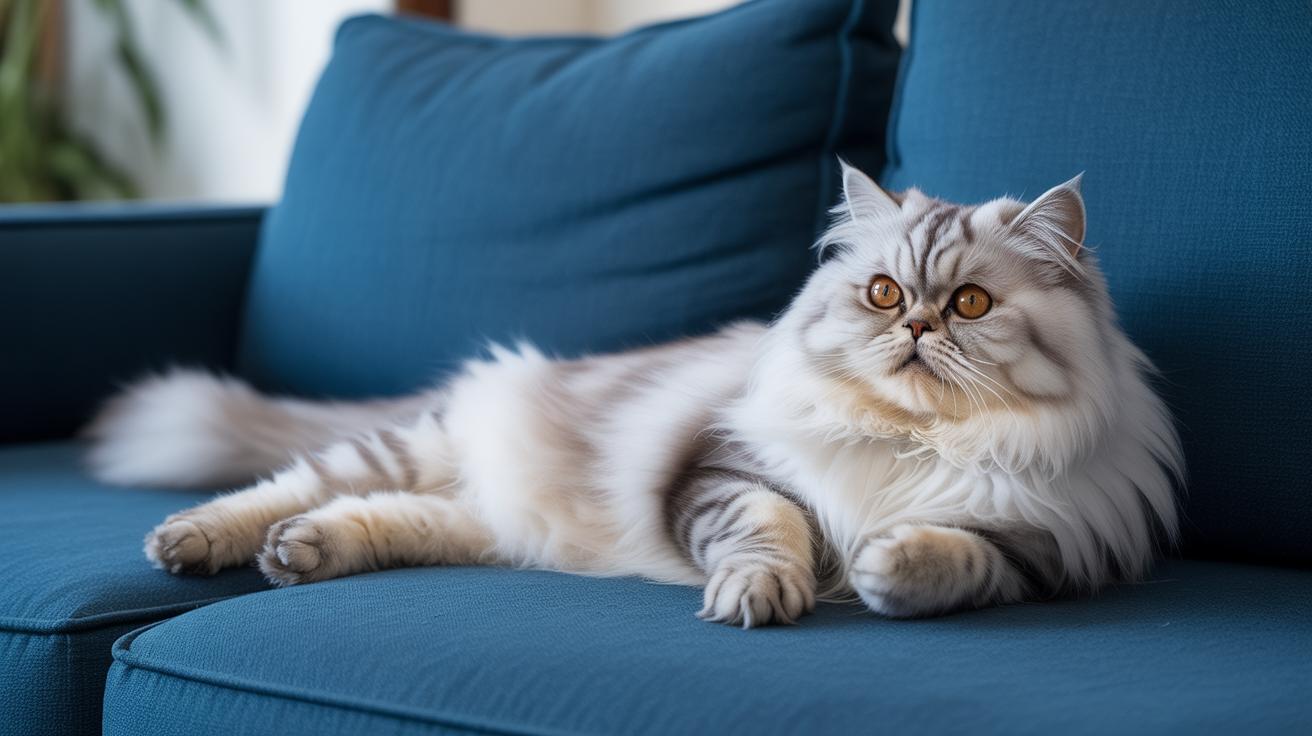
Persians are those plush, round-faced cats you see lounging like little fur pillows. They’re medium-to-large, usually 7 to 14 pounds, with a broad round face, a short muzzle, and big, wide-set eyes. Calm and a bit regal, they love a sunny spot and quiet pats , but they can be shy around strangers. Ever watched a Persian knead a blanket? Pure slow-motion joy.
Their coat is long, dense, and silky with a thick undercoat (the soft layer close to the skin that keeps them warm). That gorgeous fur means daily brushing to stop mats, and a monthly bath helps keep things smooth. Eyes need daily wiping to manage tear stains caused by their short face – it’s normal, but worth checking for irritation.
Healthwise, Persians do best with regular vet care. Average lifespan is about 10 to 17 years with routine checkups. Watch for a few breed-specific issues: brachycephalic breathing problems (short-nosed breathing difficulties), hypertrophic cardiomyopathy – HCM (a condition where the heart muscle thickens), and polycystic kidney disease – PKD (kidney cysts that can hurt function). Talk with your vet about screening for HCM and PKD if you’re getting a Persian from a breeder or rescue.
Quick facts:
- Weight: typically 7 to 14 pounds (some sources say up to 15 pounds).
- Length: about 14 to 18 inches nose to tail.
- Coat: long, dense, silky with a thick undercoat (think soft, warm cloud).
- Face types: from dollface to very short-muzzled, more extreme varieties.
- Grooming: daily brushing; monthly baths to prevent mats.
- Eye care: daily wiping to reduce tear stains and watch for irritation.
- Lifespan: around 10 to 17 years with regular vet care.
- Living situation: best kept indoors with toys and perches; outdoor time only when supervised.
Persians fit calm homes where someone will commit to daily grooming and watchful health care. I once watched a Persian named Luna leap for a toy and then go back to her throne , they’re playful, but in a very elegant way. For tips on choosing between adoption and buying, breeder questions, and early-life milestones, see the Choosing a Persian section later. Worth every paw-print.
Persian Appearance & Coat Types: coat structure, facial-variety trade-offs and health effects (see Basics for quick stats)
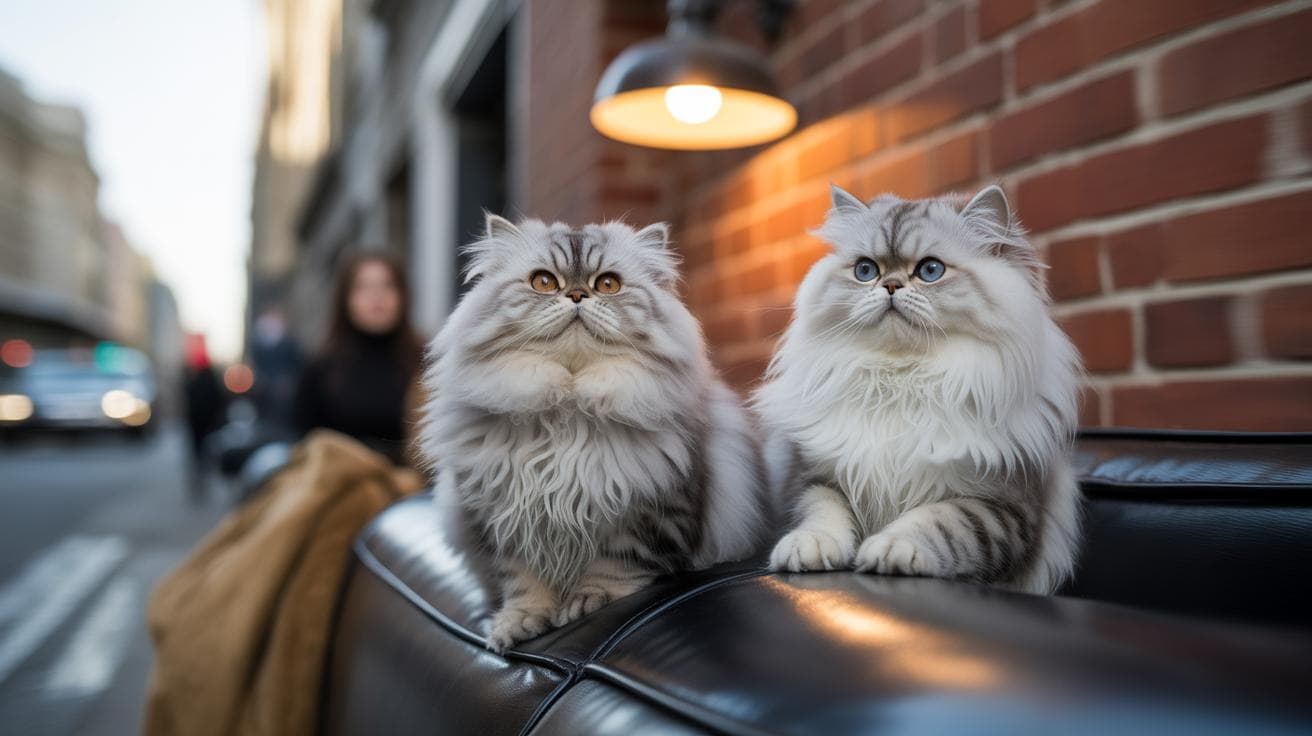
Persians are solidly built, with a broad chest, short thick legs, and big paws that give them a compact, plush shape, think cuddly aristocrat. They look like a velvet loaf, all soft curves and presence. See Basics for quick stats on size, grooming, and lifespan.
Their coat has two main layers. The undercoat (the soft, insulating layer next to the skin) is dense and fluffy, while the guard hairs (longer hairs that create the shiny surface) sit on top and give that glossy finish. Together they trap loose fur and moisture, so mats form in places with little air or movement, like the neck, armpits, and behind the ears. Seasonal shedding can come in heavy waves, too, so expect some serious vacuuming.
Dollface vs Peke-face
Dollface Persians have a longer muzzle (the snout area) and more open nasal passages, so breathing tends to be quieter. It’s easier to clean around their eyes and nose, and they usually have fewer airway or tear-drainage problems. You’ll still groom them a lot, but they often need fewer medical fixes. See Basics for quick stats.
Peke-face Persians have a very short muzzle and are strongly brachycephalic (a short-nosed skull shape), which gives that ultra-flat look. Cute, right? But it also brings louder breathing, snoring, and more tear-staining because tear drainage is often altered. Face grooming is trickier, and vets see more clinical issues with extreme faces, so plan for extra care. See Basics for quick stats.
Common colors & patterns
Persians come in solids, shaded and chinchilla types, bicolors, tabbies, and pointed varieties like Himalayans (colorpoint pattern with darker ears, face, paws, and tail). Light coats show tear stains more clearly, while dark coats hide stains but make dandruff and dust stand out. One quick safety note: white Persians with blue eyes carry a small risk of deafness, so ask breeders or shelters about hearing checks like the BAER test (a vet hearing test) when you’re considering a white or blue-eyed cat.
Persian Grooming & Coat Care: routines, tool uses, troubleshooting and pro-groomer thresholds
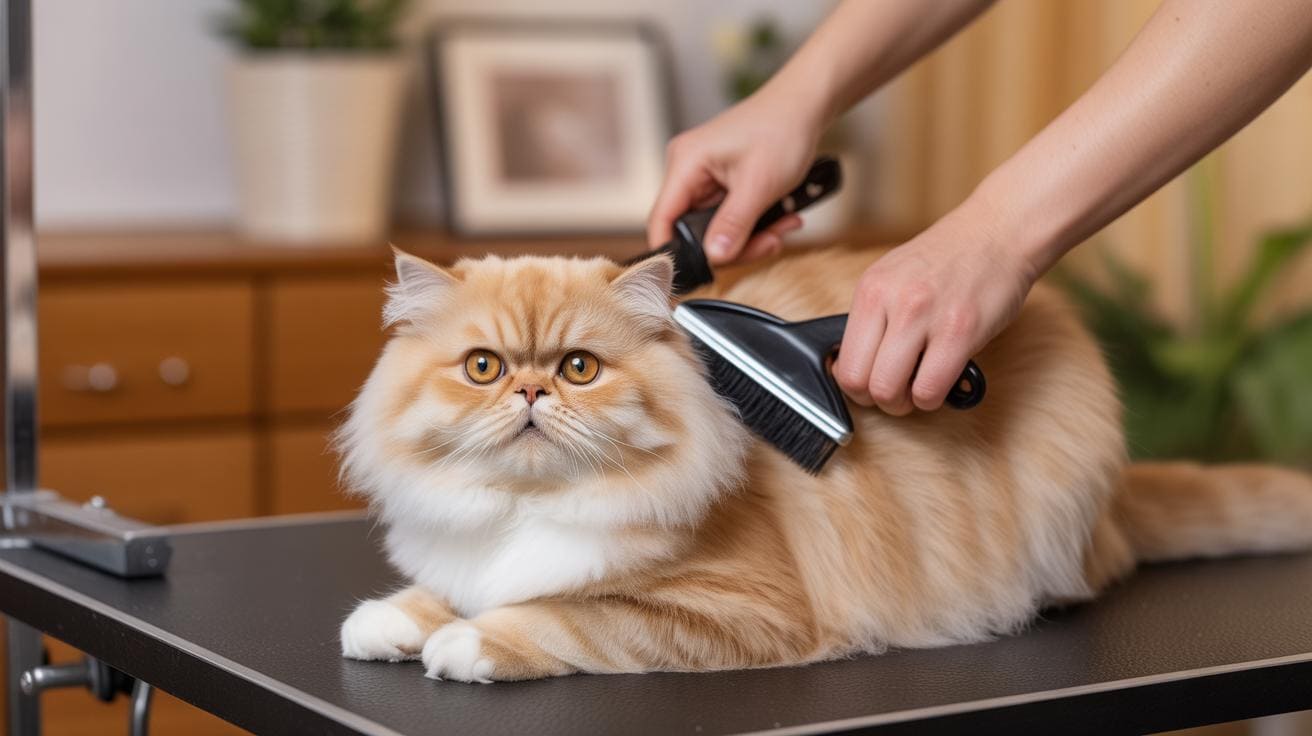
See Basics for quick stats on grooming frequency and eye care. Below is an easy, step-by-step routine you can do at home to keep that long coat shiny and mat-free – and to know when it's time to call a pro.
Brushing: step-by-step routine
Goal: remove loose undercoat (undercoat is the soft insulating layer right next to the skin), stop mats early, and check the skin for bumps or irritation.
Start calm. Gather your tools and let your cat sniff them like a tiny inspector. Work from the head toward the tail in short passes. Separate the coat into panels so you don’t miss spots. When you hit a tangle, work from the tips toward the skin while gently holding the base of the hair to reduce tugging. Finish with a soft brush or a fingertip rub to smooth the guard hairs (guard hairs are the longer outer hairs that give the coat shine). For kittens, keep sessions to 1 to 2 minutes, use treats, and slowly lengthen the time as they relax.
- Slicker brush – lifts loose fur and teases small tangles.
- Wide-tooth comb – opens up dense areas and helps find mats.
- Stainless-steel comb – fine teeth for finishing and catching tiny tangles.
- Dematting comb or knife (a tool that cuts or slices through very tight mats; use only if you know what you’re doing)
- Grooming rake (pulls the undercoat out without over-brushing the topcoat)
- Soft finishing brush – smooths and buffs the coat for shine.
- Fingertip massager – calms nervous cats and gives you a skin check at the same time.
A quick tip: think of brushing like a slow, gentle massage. Your cat’s whiskers will twitch, their tail might flick, and sometimes they’ll nap right after. Worth every paw-print.
Bathing, dematting & eye care
Bathing: use warm, shallow water and a cat-safe shampoo. Protect ears and eyes, lather gently, rinse thoroughly, towel dry, then use a low-warm blow dryer if your cat tolerates it. For a full step-by-step, see do cat need bath.
Dematting: first figure out if the mat is loose or tightly stuck to the skin. Loose mats can often be teased apart with a comb. For tighter mats, spray a detangler, work at the edges, and never yank. If the skin looks red, swollen, or the cat cries, stop right away. Seek professional help for skin redness, oozing, very large or tightly adhered mats, or when mats cover more than a small area.
Eye care: use a soft cotton pad or a vet-approved wipe moistened with saline and wipe from the inner corner outward, using a fresh pad per wipe. Don’t press. If the discharge is thick, green or yellow, bloody, or the eye looks swollen, call your vet.
When to call a pro
Bring in a professional groomer or your vet when mats are skin-tight or cover more than 10 to 20 percent of the coat, when at-home attempts cause stress or skin damage, or when the cat’s behavior makes grooming unsafe. Major de-matting can take hours, and sometimes it needs sedation in a clinic. Better safe than sorry, your cat and your fingers will thank you.
Health & Lifespan: screening protocols, timelines, warning signs and management strategies
See Basics for lifespan and routine care stats. This section focuses on what to watch for and when to test, so you can catch common Persian problems early and keep your cat comfy.
Brachycephaly (short, flat face common in Persians) brings some special precautions. Watch breathing when your cat is relaxed: count breaths per minute, listen for noisy breathing or snoring, and notice how they handle activity. If your cat tires quickly or breathes with an open mouth at rest, that’s a red flag.
At home, move a hot or breathless cat to a cool shaded spot, keep handling calm and gentle, and call your vet if the fast or noisy breathing continues or your cat seems distressed. Ever watched a Persian try to nap while snoring like a tiny tractor? Yeah, pay attention.
Key inherited conditions and screening timelines
PKD (polycystic kidney disease) can be found with a DNA test (cheek swab or blood sample) at any age. A renal ultrasound (kidney imaging scan) shows cysts and is useful for breeding cats or adults showing symptoms. Breeders should test parents before breeding. If you adopt or buy a kitten, ask your vet about PKD testing at the first adult exam so you can monitor later.
HCM (hypertrophic cardiomyopathy, thickening of the heart muscle) often starts quietly. Your vet listens for murmurs during checkups and may suggest an echocardiogram (heart ultrasound) if anything sounds off. For breeding or at-risk cats, get a baseline echo by 1 to 2 years old and follow the cardiologist’s advice about repeat checks, usually every 12 to 24 months when prior changes exist.
Eye problems like entropion (eyelid rolling inward) and corneal ulcers (a sore or scratch on the eye surface) are common in flat-faced cats. Vets look at eyelid position and corneal health during exams. Dental checks matter too, with cleanings scheduled when tartar (hardened plaque) or gum disease shows up.
Watch for these urgent signs and call your vet right away:
- Labored or noisy breathing, or open-mouth breathing at rest.
- Fainting, sudden collapse, or trouble standing.
- Rapid weight loss or big appetite changes.
- Persistent bloody or green eye or nasal discharge.
- Swollen belly, severe lethargy, or trouble eating.
Long-term care mixes simple home steps like cooling, keeping a healthy weight, and gentle play with vet-led monitoring, medicines when needed, and surgery for serious issues such as entropion or airway correction under specialist care. Regular rechecks and timely referrals to a cardiologist or ophthalmologist really help. Oops, actually, consistent follow-up can change outcomes a lot.
Worth every paw-print.