Think cutting the scoop is the easiest way to slim your cat? That’s tempting, but the smarter move is to change what’s in the bowl. You’ll get better results and your kitty won’t feel robbed.
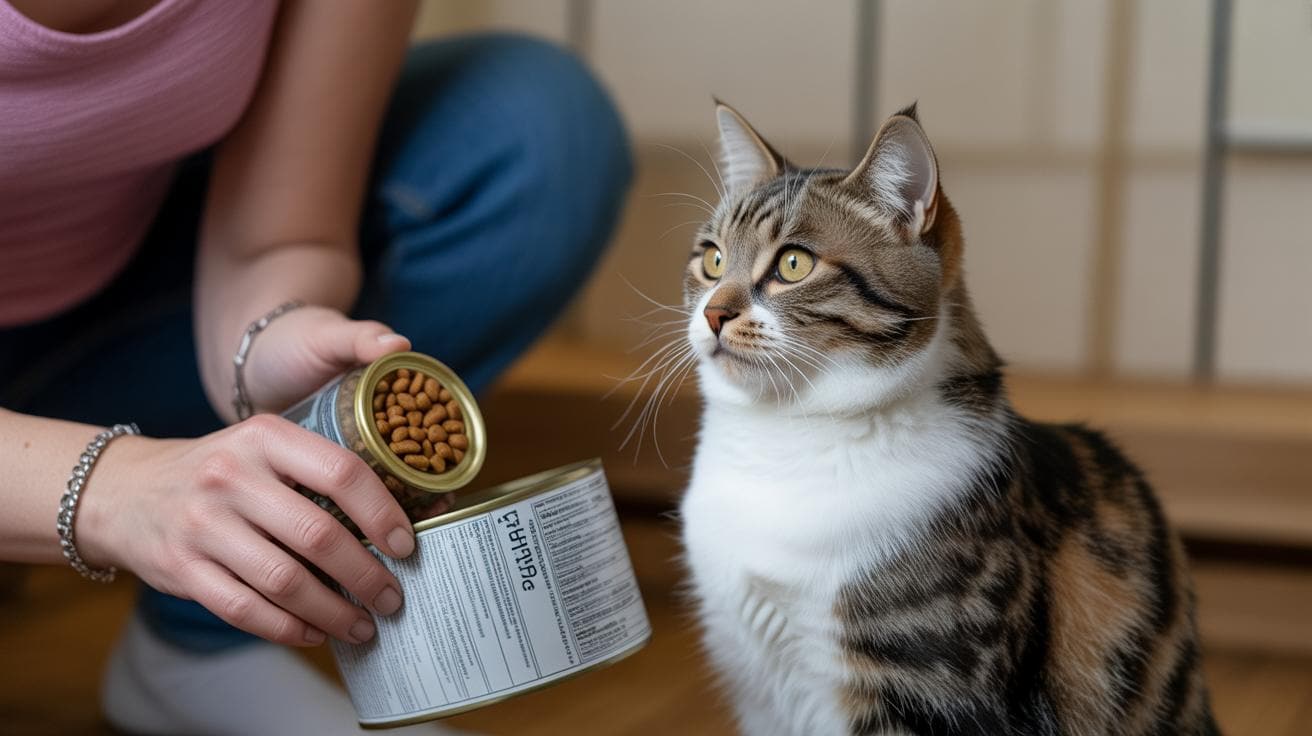
Look for higher animal protein (meat-based protein like chicken or fish that helps protect muscle). Aim for moderate fat (dietary fat that gives steady energy) so your cat isn’t hungry an hour later. And pick low carbs (starches and sugars) so calories aren’t hiding where you can’t see them.
Watch out for label tricks. If there’s no calorie count (calories per serving) or the bag just says “light” with no details, that’s a red flag. “Light” can mean less fat but the same calories overall, or it can be marketing fluff, yep, tricky.
Also, don’t forget wet food. The extra moisture (water content) helps your cat feel full faster, so they eat fewer calories and still have the spring to pounce. Ever watched whiskers twitch as a saucy bite rolls across the floor? That’s the good stuff.
Worth every paw-print.
weight-management cat food: what to look for

Quick checklist for busy cat parents. Focus on three things: higher protein, controlled fat, and low carbs. Think of it like giving your cat a meal that helps them feel full, keeps muscle, and gently sheds pounds. Ever watched your kitty chase shadows? That extra spring comes from muscle, so preserving it matters.
Aim for calorie splits that favor animal protein (protein is the building block for muscles and cells). A good target is about 35 to 50 percent of kcal from protein. Keep fat moderate (fat is an energy-dense nutrient) at roughly 20 to 30 percent of kcal. Minimize carbs (carbs are starches and sugars) to under about 10 to 15 percent of kcal. Cats are obligate carnivores (they must eat meat), so higher protein helps spare muscle when calories are cut.
Safe weight loss is steady, not fast. Aim for about 1 to 2 percent of current body weight per week. So a 15 pound cat should lose about 3 to 4 ounces each week. It’s slow, but that helps keep muscle and avoid problems.
Watch these label red flags. Missing kcal per serving. Vague claims like light or reduced with no guaranteed analysis. Packaging that hides moisture or calorie info. You should see an AAFCO feeding statement (AAFCO is the pet food standards group) and any prescription label if the food needs a vet’s ok. Wet or canned food usually adds moisture and helps cats feel fuller, see the Fiber, moisture, and form section for more on wet vs dry.
Oops, one quick aside. For picky cats, moisture can be a game changer. Your cat’s whiskers will thank you.
Checklist
- Animal-source protein listed first (meat, poultry, or fish).
- kcal per serving or per cup stated (calories on the label).
- Moisture percentage shown or single-serve wet options available (wet food adds water to meals).
- Fiber source listed (pumpkin, beet pulp, etc.), fiber helps with satiety.
- Guaranteed analysis with protein, fat, and fiber percentages.
- AAFCO statement or prescription label visible when clinically indicated.
Cross-reference: see Macronutrient breakdown (for taurine, L‑carnitine, and protein-quality discussion), Calorie density, labels, and portion control (for calorie conversions and sample tables), Shopping checklist (12 yes/no label checks), and Fiber, moisture, and form (wet vs dry details).
Macronutrient breakdown in weight-management cat food: protein, fat, carbs
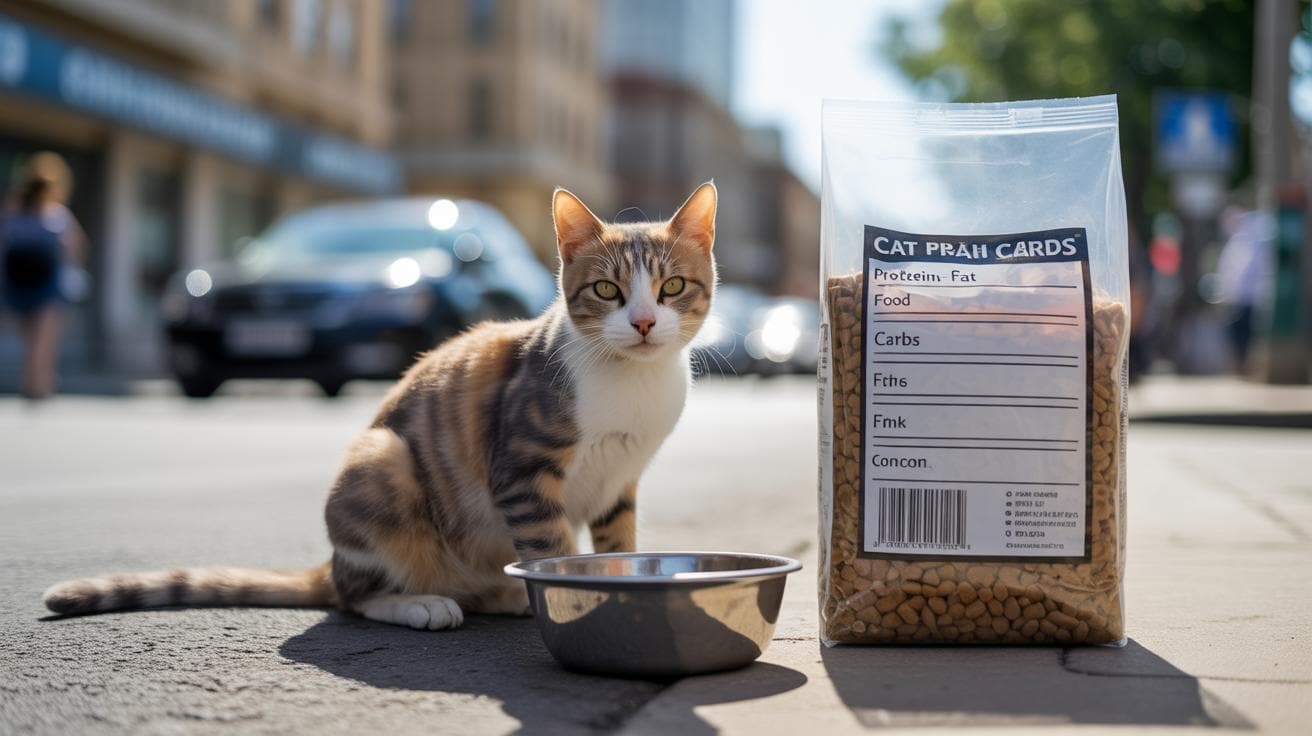
Cats are obligate carnivores, so protein quality matters more than the percent on the bag. Aim for a higher share of calories from protein (refer to checklist for numeric targets). Favor named animal sources up front: chicken, turkey, salmon, or chicken meal (concentrated meat powder). Look for clear label cues like "taurine added" , taurine (an amino acid cats can’t make enough of on their own) is nonnegotiable when you cut calories because it helps protect heart and eye health. Example label snippet: "Chicken meal, turkey, salmon; taurine (added)."
Fat needs to be controlled so total calories stay down, while still giving needed fatty acids and a taste your cat will love. Fat packs more calories per gram than protein or carbs, so small fat changes move total kcal quickly. That’s why weight formulas try to balance palatability with lower calorie load. Many diets add L-carnitine (compound that helps move fatty acids into cells for burning) in modest amounts to support fat use and help preserve muscle during weight loss. Example label snippet: "L-carnitine (added)."
Keep carbs low. Cats don’t rely on carbs for fuel, and excess starch or plant protein (plant protein , soy, pea , less complete amino acid profiles) can turn into body fat or leave them feeling less satisfied. When you cut calories, double-check vitamins, minerals and taurine stay at proper levels so lean mass and overall health are protected. Look for foods labeled "complete for adult maintenance" or "formulated for weight management" so you’re not accidentally shorting essentials.
Practical feeding cue: pick foods where animal protein is listed first, fat is moderate, and the nutrient statement shows added taurine plus balanced vitamins and minerals. Your cat will thank you with an enthusiastic pounce. Worth every paw-print.
| Nutrient | Recommended target | Why it matters |
|---|---|---|
| Protein | Refer to checklist for numeric targets | Preserves lean mass; animal-source proteins give complete amino acids and taurine (an amino acid cats need) |
| Fat | Refer to checklist for numeric targets | Provides essential fatty acids and flavor; energy-dense so watch total kcal |
| Carbohydrate | Refer to checklist for numeric targets | Keep lower to reduce starch load; excess plant starch/protein can convert to body fat and may lower satiety |
Fiber, moisture, and form: wet versus dry weight-management cat food
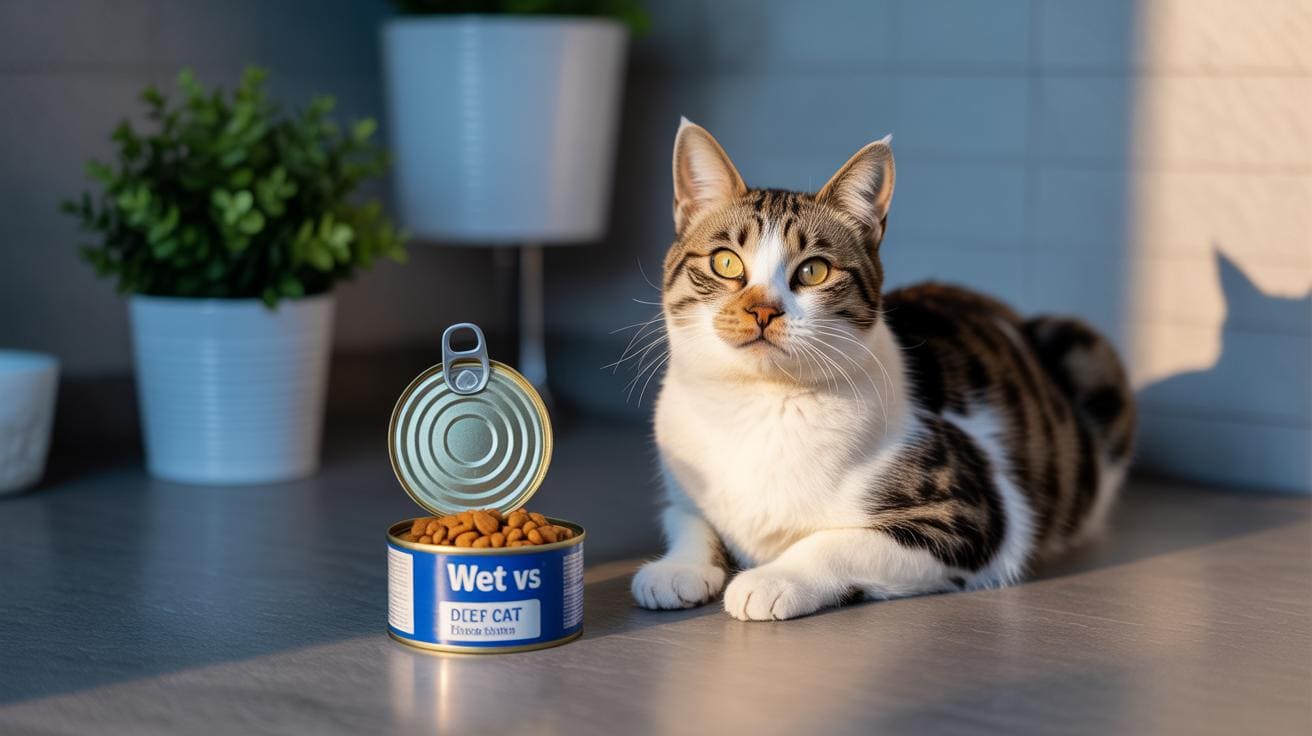
Canned food brings real water into the meal, which helps your cat feel full and supports urinary health. Moisture (the food's water content) lowers calories per bite and can mean fewer treats later, so your cat stays satisfied without starving. Pate (a smooth, spreadable texture) and single-serve trays are often lower in carbs (carbohydrates, the energy from starches and sugars) and tend to tempt picky eaters and seniors who prefer softer bites.
Fiber (the indigestible plant parts that add bulk) also matters for fullness, so look for recipes that balance fiber and protein. High protein helps keep cats lean and interested in their food, and adding a high-protein wet option can be an easy way to up both protein and water in a meal, try wet cat food high in protein if you want a quick swap.
Dry kibble is handy for busy homes and makes portioning simple. But many kibbles have more carbs per cup and can leave a cat feeling less satisfied. Kibble size and crunchiness change how fast a cat eats; some cats inhale tiny crunchy bits and end up overeating. Also, crunchy kibble rarely gives real dental cleaning, so don’t rely on it for your cat’s teeth.
One more note about labels: grain-free does not automatically mean low carb. Manufacturers sometimes add starches or other fillers to replace grains, so read the ingredient list. For busy days, toss a single-serve wet tray before you head out and enjoy ten minutes of safe play while your cat happily snacks.
- Wet pro: More moisture means better hydration, more fullness, and fewer calories per serving.
- Wet pro: Pate and single-serve trays are often lower in carbs and easy for picky or older cats to eat.
- Wet pro: Better hydration supports bladder health and can reduce stone risk.
- Wet pro: Softer textures are gentle on sore gums and extra palatable.
- Dry con: Usually higher in carbohydrates per cup, which can add calories fast.
- Dry con: Crunchy kibble rarely provides meaningful dental cleaning.
- Dry con: Small, tasty kibbles can encourage fast eating and overeating.
- Dry con: Some "grain-free" formulas still use starches and fillers, so they may not be low carb.
Worth every paw-print.
Calorie density, labels, and portion control for weight-management cat food
Calorie density decides how much your cat actually eats. Look for kcal (kilocalories, the food energy listed on pet food) per can or per cup so you can turn a feeding plan into real portions. If a package hides kcal, that’s a red flag, portion control becomes guesswork.
Most packages list kcal per can and kcal per cup. Use those numbers to set a daily kcal target, then split that into 2-3 meals. Many adult cats settle on a few ounces of wet food a day when the calorie target is right, but every cat is different, so do the math. Want a fast shortcut? Try an online cat food calorie calculator and keep a kitchen scale handy when measuring servings.
| Current weight (lb) | Target loss rate (%/week) | Daily kcal target | Example portion (based on 100 kcal wet / 300 kcal cup dry) |
|---|---|---|---|
| 10 | 1-2% | 160-180 kcal | 1.6-1.8 cans (~4.8-5.4 oz) or 0.53-0.60 cup dry |
| 12 | 1-2% | 184-207 kcal | 1.8-2.1 cans (~5.4-6.2 oz) or 0.61-0.69 cup dry |
| 15 | 1-2% | 224-252 kcal | 2.2-2.5 cans (~6.7-7.6 oz) or 0.75-0.84 cup dry |
| 20 | 1-2% | 280-315 kcal | 2.8-3.2 cans (~8.4-9.6 oz) or 0.93-1.05 cup dry |
Weigh food with a kitchen scale for precise portions, and use a small digital scale to weigh your cat weekly, write it down. Basic approach: estimate maintenance calories from your cat’s current weight, subtract a safe deficit (usually 10-20% under maintenance, per your vet’s plan), then calculate daily kcal and divide into meals. Measure by grams or ounces instead of guessing, your cat will thank you with happy purrs.
When to choose prescription versus over-the-counter weight-management cat food

Short, friendly guide to help you spot when a vet-supervised plan is the safer pick. Think of this as the quick rulebook so your cat gets the right calories, nutrients, and checkups without unnecessary risk. Ever watched your kitty sigh for more food? Yeah, us too.
When prescription diet is recommended
If your cat scores BCS 6–7 on the body condition score chart, they are overweight. If they score BCS 8–9, they are obese. BCS means body condition score (a 1 to 9 chart that shows very thin to very obese). For BCS 6 or 7, many cats do well with portion control and foods that are higher in protein and lower in carbs. That helps keep muscle while slimming the fat.
But for obese cats, especially those with diabetes, arthritis, or prior hepatic lipidosis (fatty liver disease that can be dangerous), a prescription metabolic formula is usually safer. Prescription diets are made to cut calories carefully while adding joint support (things like glucosamine), urinary safeguards (helps reduce risk of crystals or stones), antioxidants (for cell health), and omega-3 fatty acids (healthy fats that lower inflammation). The goal is to lose weight without losing muscle or stressing other organs. Worth every paw-print, right?
What vets check before starting a weight-loss diet
Expect a short wellness exam and some baseline tests. Common checks include CBC (complete blood count, looks at red and white blood cells), a blood chemistry panel (checks organ function and electrolytes), and urinalysis. Your vet will weigh your cat, record the BCS, and measure a baseline blood glucose. If the weight change looks driven by something medical, they may add thyroid testing or other screens.
Your vet will also write a calorie plan and pick a prescription if there are risks. Then they’ll set up a monitoring schedule with regular weigh-ins and appetite checks so problems get caught early. Follow-up is frequent at first, with weekly or every-other-week weigh-ins until your cat is losing steadily at about 1–2% of body weight per week. That steady pace helps keep muscle and keeps things safe.
Quick tip: you can weigh your cat in a carrier at home and subtract the carrier weight, if your vet okays home weigh-ins. Little tricks like that make follow-up easier on busy days, and you get to see the progress sooner.