Ever blamed a hairball only to pull out what looked like pale spaghetti? Finding roundworms (tiny worms that live in your cat’s gut) in the litter box can surprise you. These smooth, soft tubes feel like little pasta strands. Um, gross, right?
Adults can stretch up to three inches (about as long as a dollar bill). Kittens might host one- or two-inch mini worms. And their color? Off-white to tan, usually a bit shiny.
Ready to get feline fine on worm-spotting? I’ll walk you through four clues: shape, length, color, and texture. Then you’ll know exactly when to call the vet.
Visual Identification of Cat Roundworms
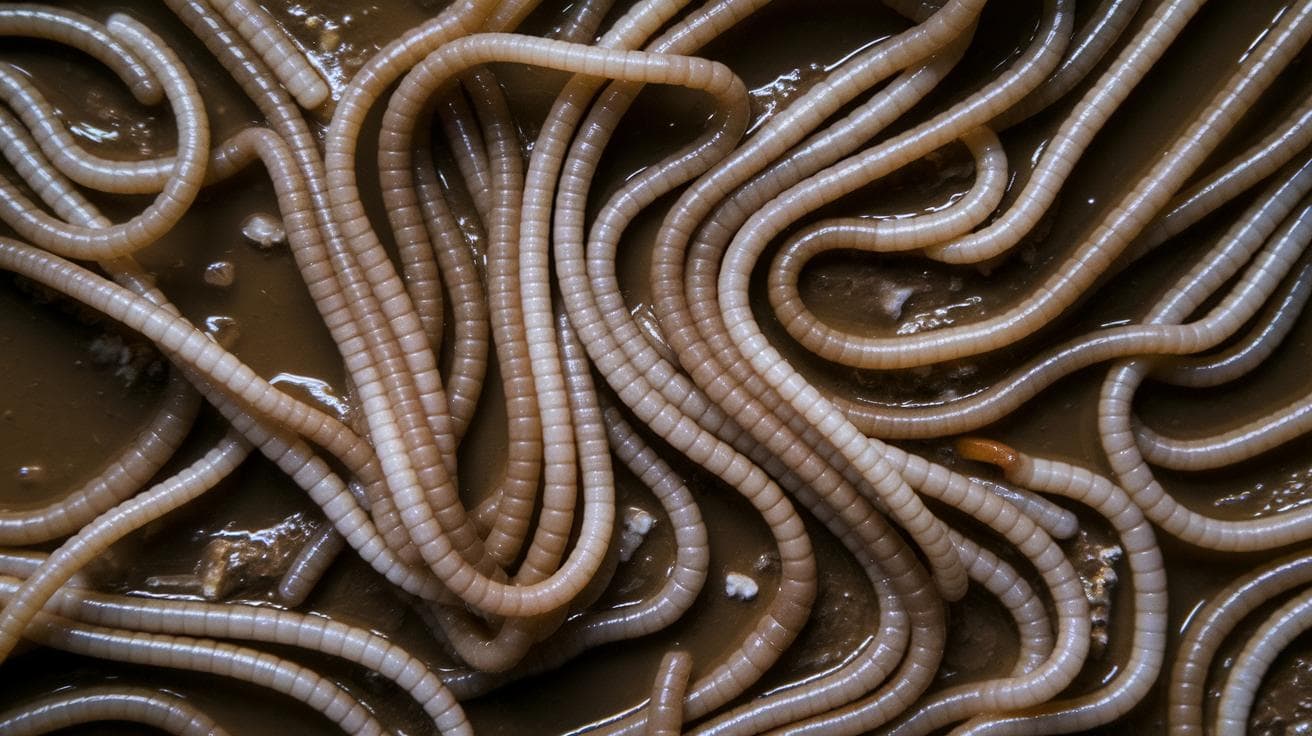
Spotting roundworms feels like finding strands of cooked spaghetti in your cat’s litter box. Adult worms can stretch up to three inches, while kittens host thinner, one- to two-inch threads that feel like delicate pasta strings. Ever thought your kitty was playing with a loose string of yarn? Well, it might actually be a worm.
These worms range in color from off-white to tan or light brown. Their bodies are smooth cylinders with faint cuticle ridges (tiny grooves along their skin). Shine a light behind one and you’ll see a soft glow through its slightly see-through body. And they feel springy, not slimy, slipping right through wet litter or soapy water.
- Adult cats: up to 3 inches long and about one-eighth inch thick
- Kittens: 1–2 inches long and narrower
- Shape: smooth cylinder, gently curved or straight
- Color: off-white, cream, tan, or light brown
- Texture: firm bounce, slight transparency, fine ridges
When a cat has a heavy infestation, she might cough or vomit up dead worms that look darker and shriveled. Check fresh regurgitation right away, because older bits can dry into nondescript flakes. In the litter box, new poop gives the clearest view, but dried clumps can hide curled-up fragments. Placing a white tray under the box makes those tan strands stand out.
I once scooped what looked like broken pasta from Luna’s litter box after her dewormer treatment. Oops, it was worm fragments that had darkened and curled like dried noodles. Worth keeping an eye out for those telltale threads.
Differentiating Roundworms from Other Cat Parasites
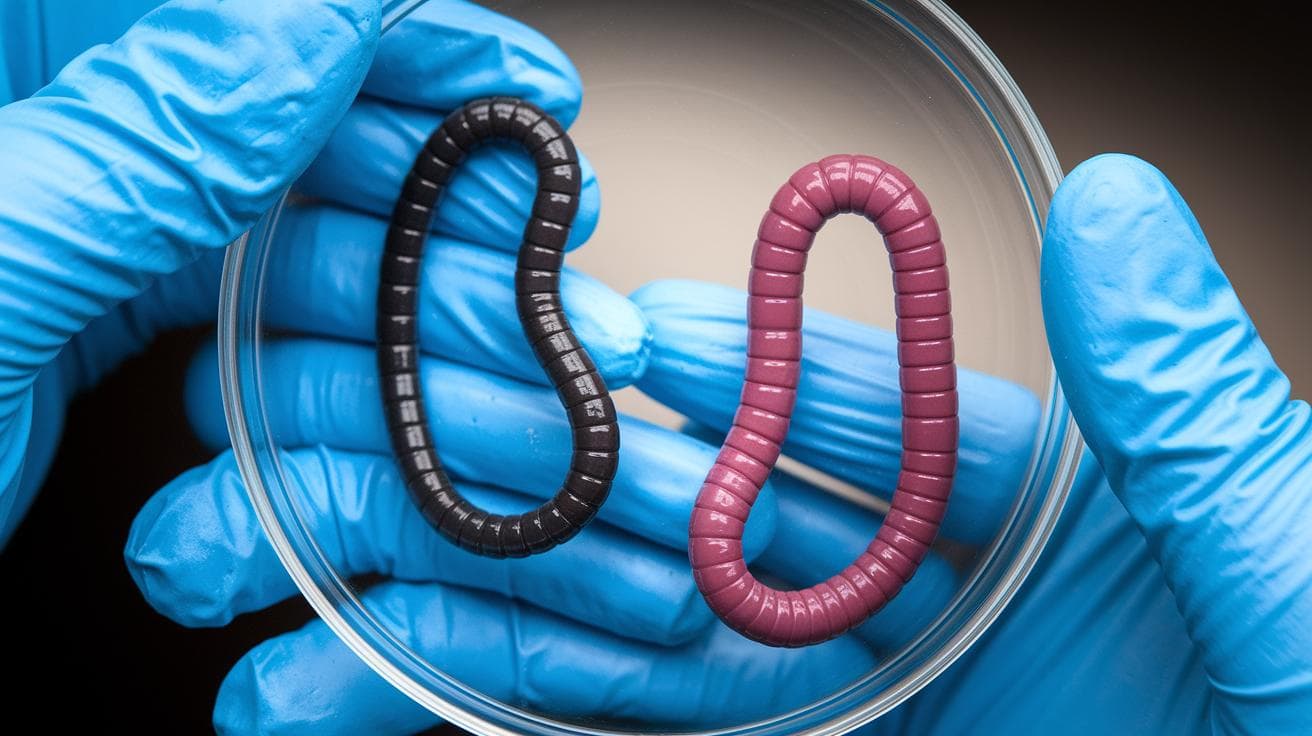
Ever spotted a wriggly guest in your litter box? Um, let me help you sort the wormy lineup. Roundworms (smooth, tube-like parasites) come in two main flavors: Toxocara cati (a cat-only spaghetti worm) and Toxascaris leonina (a dog-and-cat hopper).
Toxocara cati grows up to three inches long, tan in color, and only hangs out in cats. Toxascaris leonina is a bit shorter, paler, and jumps between dogs and cats. Both feel like silky pasta on your fingertip, but cati is a fat noodle while leonina is thin like angel hair.
Next up, hookworms (tiny half-inch critters with a fishhook-shaped end). You’ll spot a little curve at one tip. Flatworms (tapeworm pals) look like flat ribbons made of rice-grain segments. They snap off like breadcrumbs and don’t bounce when you poke them. Ever watched your kitty fuss over a flatworm crumb? It’s weirdly fascinating.
| Parasite | Description | Size & Shape |
|---|---|---|
| Roundworms | Smooth cylinder with faint lines | Up to 3 inches long; noodle-like |
| Hookworms | Curved hook on one end | About 0.5 inch; slim bodies |
| Flatworms | Segmented like rice grains | Flat ribbon shape; breaks into bits |
Oops, did I mention male vs female roundworms? Males are narrow with a hooked tail, while females have a straight, plump rear. And baby worms look skinnier and almost see-through compared to the chunky adults. Next time you’re on litter-box patrol, you’ll know exactly who you’ve found.
Worth every paw print.
Lifecycle Stages and Larval Appearance of Cat Roundworms

Ever peeked at a microscope slide and seen tiny specks that look like glass beads? Those could be roundworm eggs – microscopic spheres with thick, shiny shells. At first, they are unembryonated (no baby worm inside) and look clear and smooth under the lens. Give them two to three weeks in warm, damp soil (think muddy garden dirt), and they fill with coiled larvae (tiny baby worms). You’ll spot little springs waiting to hatch.
Once they hatch, larvae are teensy – about 0.3 to 0.5 mm long (thinner than a human hair!). They’re clear, wiggly, and glide like tiny snakes under 40× magnification (you need a 40× microscope lens to see them). Kittens often pick these up when nursing – dormant larvae in mom’s tissues spring to life and ride her milk train straight into newborns.
Eggs can hide out in soil for years, waiting for a curious kitten or stray to snack on contaminated dirt. Talk about a long wait! Then, after roughly three weeks (the prepatent period – time before eggs appear in feces), they pop up in poop, ready to restart the cycle.
Inside the cat’s gut, larvae grow into adults – the familiar spaghetti-like worms you might find in vomit or the litter box. They range from one to three inches long (2 to 8 cm) and are off-white to tan. Tiny but mighty.
| Stage | What It Looks Like | Where You See It |
|---|---|---|
| Unembryonated Egg | Clear, smooth shell | Fresh fecal float slides |
| Embryonated Egg | Larva coiled inside | Soil samples, lab slides |
| Larva | 0.3–0.5 mm, transparent, wriggly | Microscope view of stool |
| Adult Worm | 1–3 inches, off-white to tan | Vomit or litter box |
Inspecting Cat Stool and Vomit for Roundworms
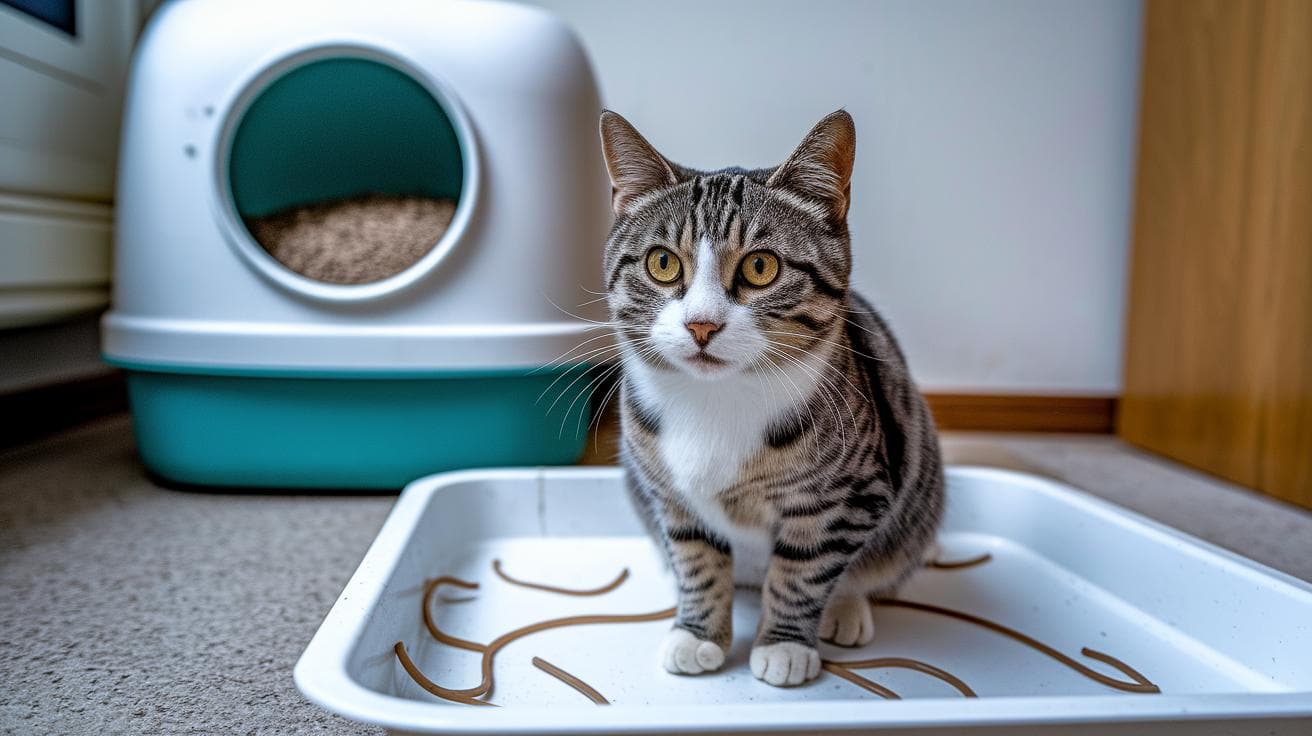
Ever peek into your cat’s litter box and wonder if there are roundworms (tiny tube-shaped parasites) on the loose? It might feel gross, but it’s a simple check you can do in minutes to catch any unwelcome guests early, your vet will be grateful, and so will your kitty.
Inspecting stool (cat poop):
- Slip on a disposable glove and scoop a small sample of fresh stool.
- Spread it on a clean, white tray so off-white worms really pop.
- Focus on the moist bit first, you might see live, springy strands up to 3 inches long.
- Then gently sift the drier clumps to reveal dark, shriveled fragments that used to be worms.
Checking vomit:
- If your cat pukes, lay it on a white paper towel or that same tray right away.
- Check before it dries: fresh worms lie straight or in gentle curves; older pieces curl up and darken.
- You know, just give it a quick scan, those tiny tubes aren’t hard to miss once you’re looking.
Worth every glove. Catching worms now can save your cat a lot of trouble later. Who knew a white tray could be such a hero?
what do cat roundworms look like: Spot Easily
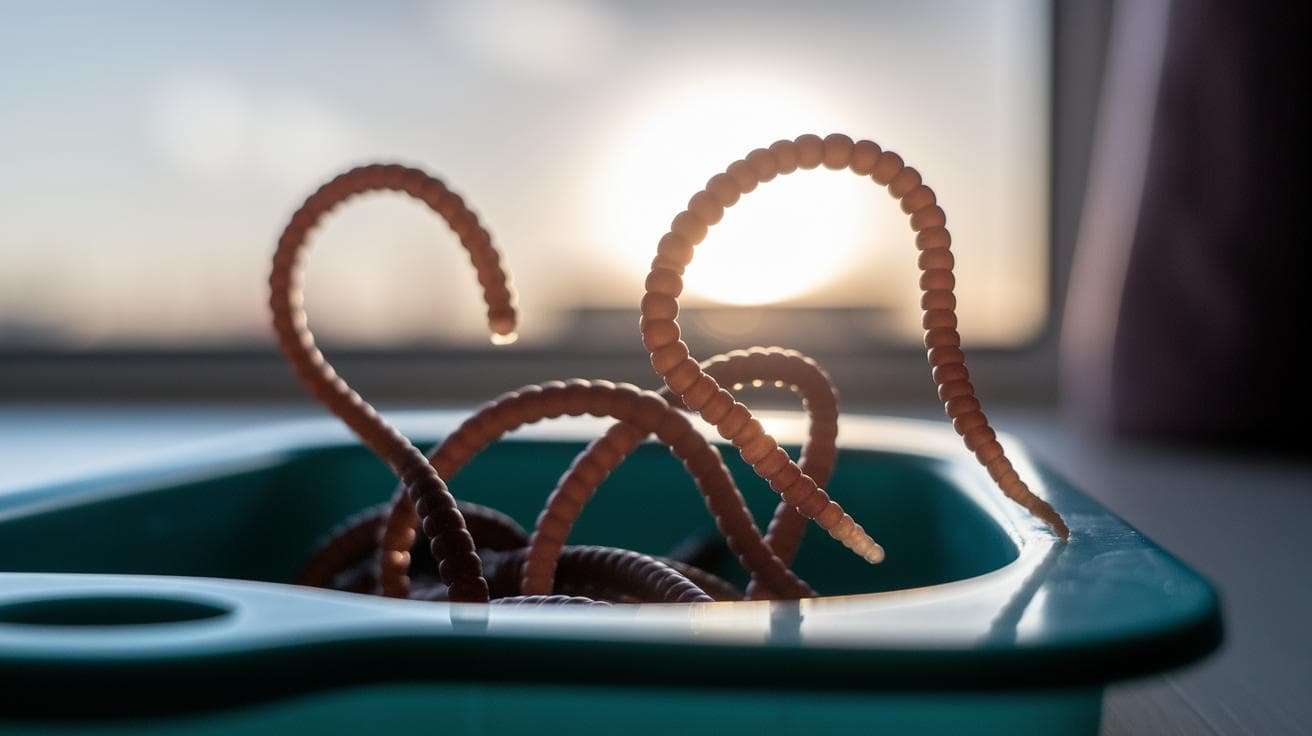
Ever tried to snap a picture of a wriggly spaghetti noodle – um, a worm? Getting a clear, close-up shot of that squirmy guest really helps your vet know exactly what you’ve found. A smartphone macro lens (a small clip-on lens for your phone that magnifies up to 10× (ten times bigger)) turns faint color bands and tiny ridges into crisp details.
- Clip the macro lens onto your phone and line it up with soft daylight or an LED ring light. This cuts harsh shadows.
- Shine a gentle backlight (light behind the worm) so its slightly see-through body glows and the ridges stand out.
- Lay the worm on a clean white disposable pet-safe tray for contrast – tan strands really pop against bright backgrounds.
- Place a small ruler or a marked toothpick next to the worm to show its length (adults are 1–3 inches, kittens 1–2 inches).
- Slip on a disposable glove so you’re not handling the worm directly – they can squirm fast – and use tweezers or a tongue depressor if needed.
Keep your phone steady, tap the screen to lock focus on the ridges, and frame the worm in the center. After you shoot the photo, seal the tray and ruler in a bag and wash your hands well. These clear, scaled photos make it easy for your vet to confirm a roundworm and choose the right treatment.
Signs to Consult a Veterinarian After Finding Cat Roundworms
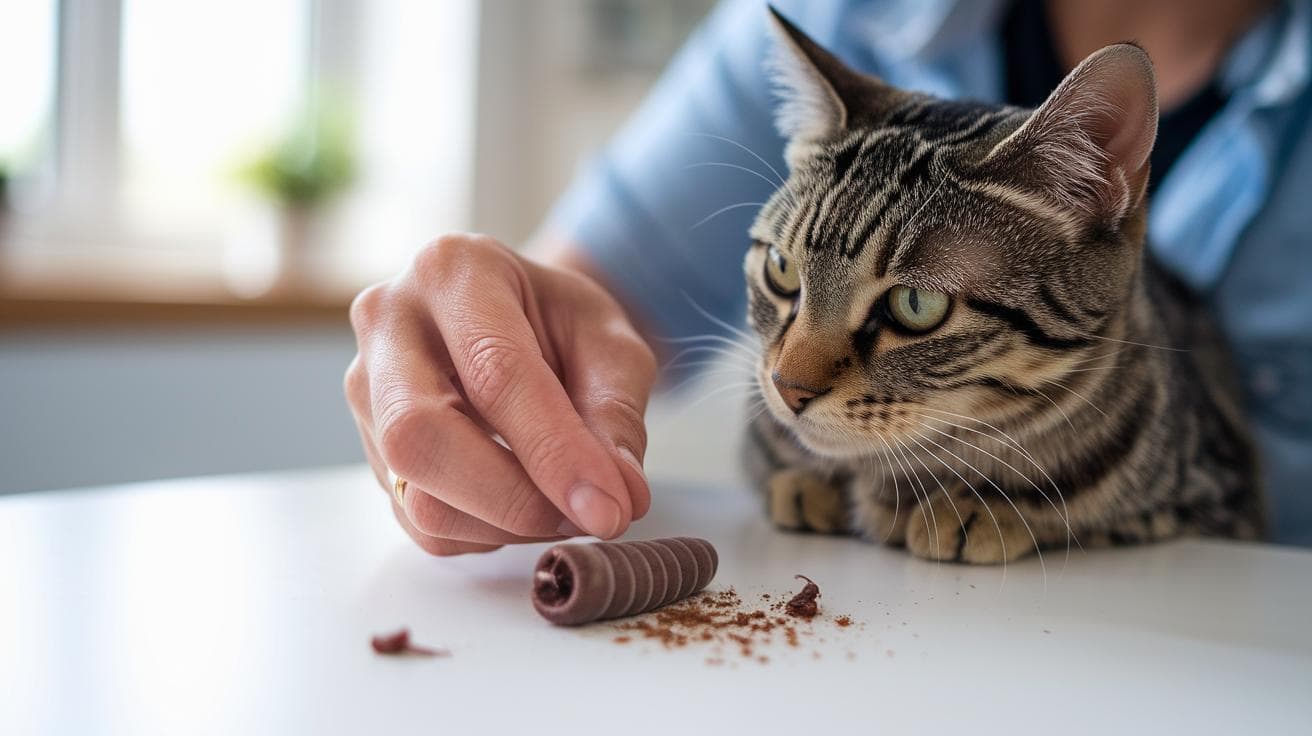
Your cat might purr and play without missing a beat. But they can still hide a roundworm (long, skinny parasite) problem. A big worm load can slow even the spryest furball.
- Watery or bloody poop
- Noticeable weight loss and no interest in snacks
- Lethargy or a “nap all day” vibe
- Pale gums or eyelids (anemia (fewer red blood cells) can make them look washed out)
- A pot-bellied tummy, especially in kittens who should look sleek
- Worms or slimy strands in vomit or poop (oops, gross)
- Squiggly worm bits after you give dewormer medicine
And if you still spot wriggly bits or your kitty seems off after treatment, don’t wait. A vet can check for anemia, make sure the medicine worked, and have your cat back to pouncing on toys in no time.