Think you know cats? I bet you don't. We packed 25 quick, weird, totally shareable feline facts into one lightning-fast read. You'll get hair-raising stats, tiny tiger DNA comparisons (DNA is the genetic blueprint), sprint speeds that make you blink, and sleep totals that explain all the napping.
Perfect for slipping into a DM, nailing a party-trivia win, or that moment your cat stares at you like it owns the room. Ever had your cat lock eyes and you just freeze? Drop one of these facts and you’ll sound like the resident cat expert , claw-tastic.
Short, fun, and full of stuff that makes you smile and say, "No way." I once watched Luna leap six feet for a scrunched-up paper ball, true story. Worth every paw-print.
20 Shareable Cat Facts , Fast, Share‑Ready Lead

Ready for 20 bite-size, paws-itively shareable cat facts you can copy, post, or DM – pick your favorite and spread the kitty joy!
-
Fact #1 , Domestication: Domestic cats were first tamed about 9,500 years ago in the Fertile Crescent (the Middle East region where farming began), where they kept grain stores free of rodents, thanks, ancient farmers!
-
Fact #2 , DNA link to big cats: House cats share roughly 95.6% of their DNA with tigers (genomic – DNA-level studies), which helps explain those tiny-tiger moves when they pounce.
-
Fact #3 , Why cats can’t taste sweetness: Cats lack a working sweet-receptor gene (the taste gene that senses sugar), so candy and ice cream just don’t taste the same to them.
-
Fact #4 , Field of view & blind spot: Cats see about 200 degrees around them, but they have a small blind spot right under the nose, perfect for spotting movement across a room, less great for that toy under the couch.
-
Fact #5 , Top sprint speed: A domestic cat can sprint roughly 30 to 31 mph in short bursts, thanks to explosive hind-leg power, blink and you’ll miss the zoom.
-
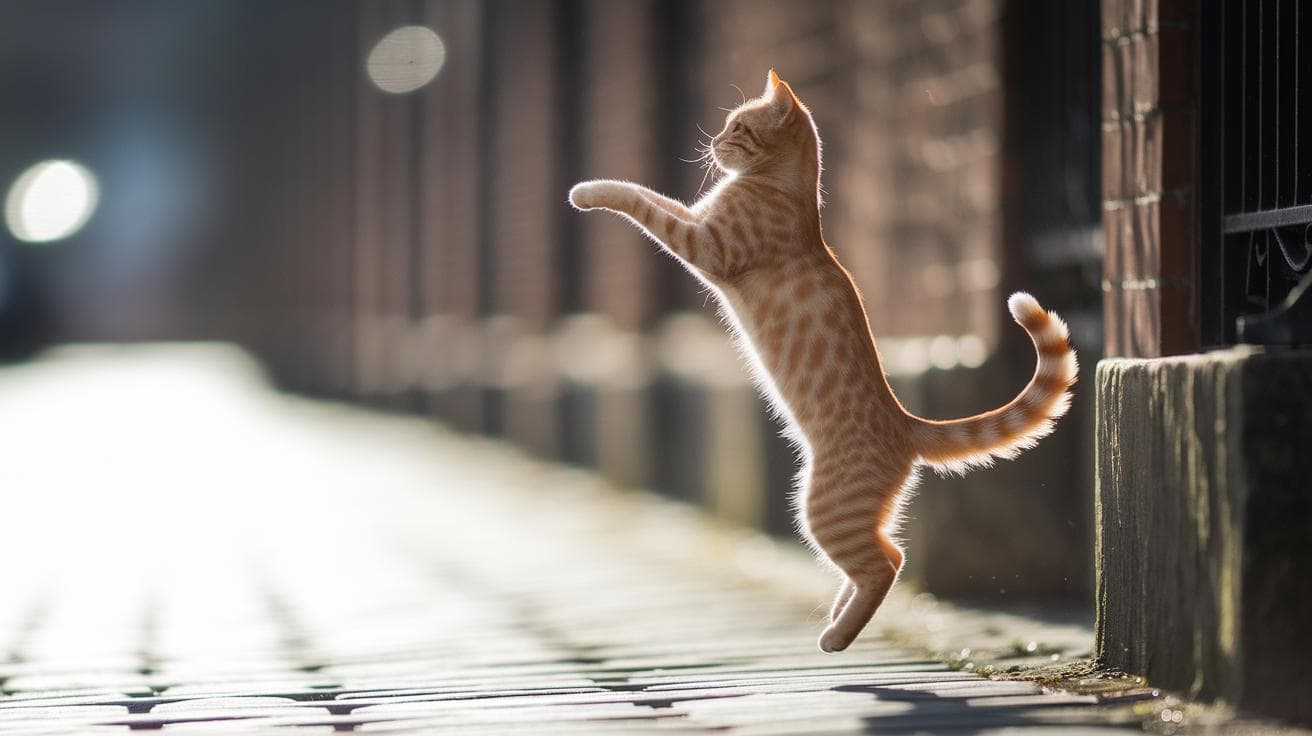
Fact #6 , Jumping height: Cats can leap up to five times their own height because of powerful hind legs and a super-flexible spine, watch those rear legs coil like springs.
-
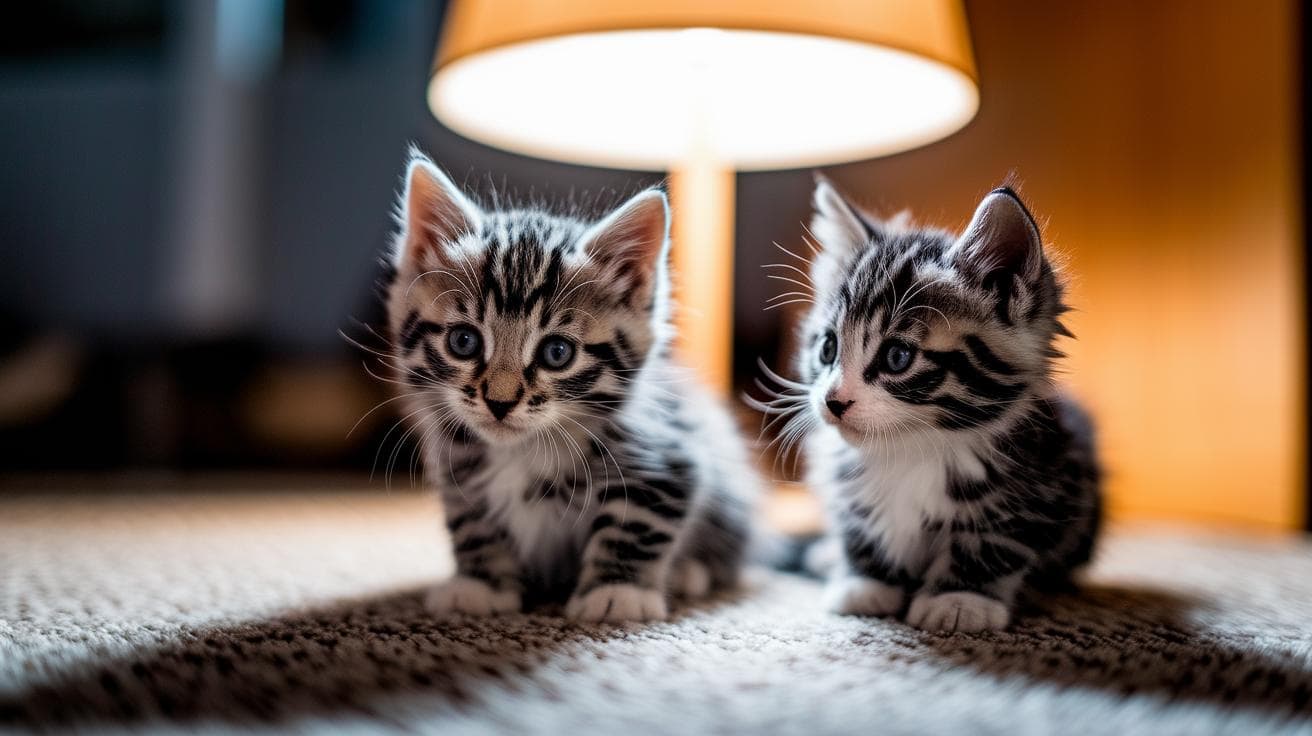
Fact #7 , Adult bones: An adult cat ends up with about 230 bones after the juvenile ones fuse together, more bones than humans, and way more wriggle.
-
Fact #8 , Skeletal muscles: Cats have roughly 500 skeletal muscles (the muscles that move bones), which give them super-precise, quick motions when they stalk or stretch.
-
Fact #9 , Sleep time: Most cats snooze about 16 hours a day; senior kitties can reach 20 hours, your couch buddy is basically a professional napper.
-
Fact #10 , Activity pattern: Cats are crepuscular (most active at dawn and dusk), so those early-morning zoomies are just their natural hunting schedule.
-
Fact #11 , Taste bud count: Cats have about 473 taste buds (flavor sensors) versus roughly 9,000 in humans, which helps explain their picky palate.
-
Fact #12 , Vision details: Cats see well in low light and can detect ultraviolet light (UV – light humans can’t see), plus they have the largest eyes relative to head size among mammals, hello night-vision vibes.
-
Fact #13 , Ear rotation: Each ear has about 32 muscles and can swivel independently up to 180 degrees to zero in on tiny sounds, those pinpoint ear twitches mean serious listening.
-
Fact #14 , Toes and polydactyly: Most cats have 18 toes; polydactyl cats have extra toes (polydactyly means extra digits) and sometimes look like they’re wearing mittens.
-
Fact #15 , Collarbone placement: A cat’s collarbones are embedded in the shoulder muscles and don’t form a bony bridge like ours, which helps cats squeeze through narrow gaps.
-
Fact #16 , Grooming time: Cats spend roughly 15 to 50% of their waking hours grooming, licking cleans, cooling off, and calming down all rolled into one.
-
Fact #17 , Seawater tolerance: Cats can drink seawater because their kidneys filter out salt (kidneys – the body’s natural filter), a trait linked to their desert-dwelling ancestors.
-
Fact #18 , Record oldest cat: The longest-lived recorded cat, Crème Puff, reached 38 years (verified longevity records), yes, that’s basically a cat grandparent times four.
-
Fact #19 , Health link to owners: Some studies find cat owners have about a one-third lower risk of heart attack or stroke, an association, not a promise, but hey, purring therapy sounds nice.
-
Fact #20 , Spay/neuter and lifespan: Spayed and neutered cats live longer on average, population studies report neutered males live about 62% longer and spayed females about 39% longer, so those routine surgeries can really help.
Later parts of the article dive deeper into each fact, list primary sources or study notes, and don’t just repeat these lead lines word-for-word.
Fact #3 , Why cats can’t taste sweetness (expands Facts #3 & #11)

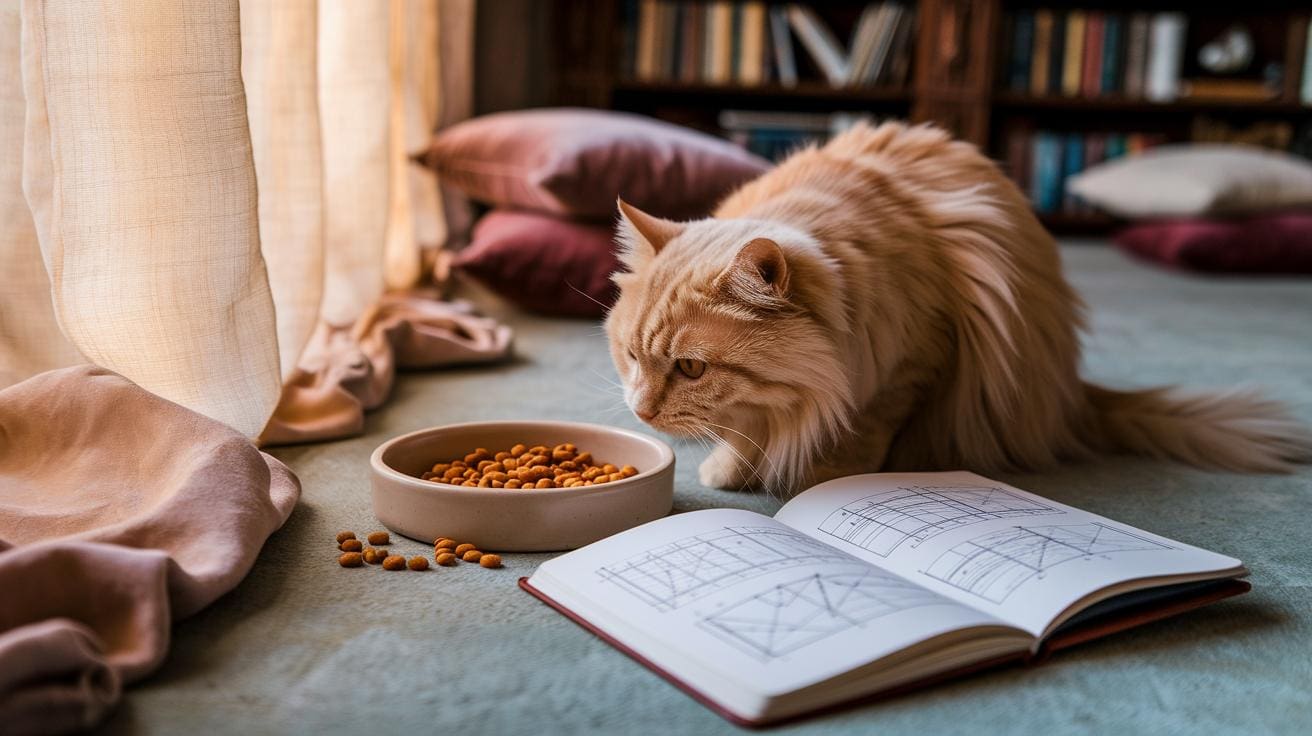
Cats are missing a working sweet receptor gene (the gene that builds the protein that senses sugar). So sugar molecules just don’t register as “sweet” to them the way they do to us. Genomic and taste receptor studies point right at that broken gene. Ever watched your kitty sniff a cupcake and walk away? Yep, this is why.
They also have only about 473 taste buds (tiny sensors on the tongue) compared to roughly 9,000 in humans. Fewer sensors means less taste detail. Put that together with the nonfunctional sweet receptor and sugary flavors become nearly meaningless. Cats are tuned instead to amino-acid flavors, those meaty tastes that tell them food has protein. They also pick up certain bitter flavors that warn them off toxins.
Scientists use behavioral tests to check sweet preference, like two-bottle preference setups (two drinks offered to see which one a cat picks) and flavored food trials. But those tests have limits. Thirst, newness, texture, and what the cat ate earlier can change the result. Kittens can behave differently than adults, too.
Some artificial sweeteners taste odd or even bitter to cats, and a few are unsafe for pets. Also, cats are obligate carnivores (they must eat meat), so their bodies handle sugars differently than ours. That changes how rewarding sweet things are and how their diet affects them.
Owner takeaway: skip sugar-based treats. Pick meat-flavored, vet approved treats instead. Your cat will probably show appreciation with a satisfied purr, not a lick of frosting.
How senses help hunting and play
Taste is a small piece of the hunting puzzle. Smell, vision, whisker touch, and hearing do most of the work, especially at dawn and dusk when cats are most active. Picture it: whiskers twitch, ears pivot, eyes lock on a tiny moving shadow. That’s the real magic of a cat on the hunt (see Fact #10 on crepuscular timing).
Fact #4, #12 & #13 , Vision and Hearing: field of view, UV, blind spot, and ear rotation

This section expands Facts #4, #12, and #13.
Back to lead , Fact #4 Back to lead , Fact #12 Back to lead , Fact #13
Scientists find a cat’s field of view is about 200 degrees, measured with visual-field mapping (perimetry (visual-field mapping tests that check what a cat can see) and watching moving targets). Eyes set toward the front give lots of side vision, but there’s a tiny blind spot right under the nose , roughly six inches , because the muzzle blocks that close-in view. That layout also changes how the two eyes overlap, which is what helps your cat judge depth when it times a jump.
Cats see well in low light thanks to two tricks. First, the tapetum lucidum (a reflective layer behind the retina, like a tiny mirror for light) bounces light back through the eye so dim photons get a second chance. Second, the retina is packed with rod photoreceptors (cells that pick up faint light). That’s why their eyes glow at night. There’s also good evidence cats can detect ultraviolet light from tests where cats choose a UV-marked target (behavioral choice tests) and from recordings of retinal activity (measuring the eye’s electrical response). Still, results vary with surface reflections, the exact light used in tests, and age or breed differences.
Each ear has about 32 little muscles (small muscles that swivel the outer ear). Those let the pinna (the outer ear flap) turn nearly 180 degrees and move independently. Cats can aim a single ear at a rustle and then the other ear at a squeak. That fine movement funnels sound and helps pinpoint prey. They also hear ultrasonic high pitches that humans miss, which is handy for locating tiny rodents. Audiometry (hearing tests) and simple orientation tests (seeing if a cat turns toward a sound) back this up. Like vision, hearing can fade with age or vary by breed.
All those senses match a cat’s crepuscular nature: dawn and dusk are prime time. Low-light sight and super hearing make those early and late hours perfect for hunting.
How senses help hunting and play
Whiskers, ears, and night-ready eyes team up when a cat stalks or pounces. Whiskers feel the last inch, ears lock on the softest rustle, and eyes follow the smallest move. Then boom. The perfect pounce.
Ever watched your kitty freeze, then launch like a tiny tiger? Worth every paw-print.
Fact #5 & #6 , Speed, Jumping and Body Mechanics
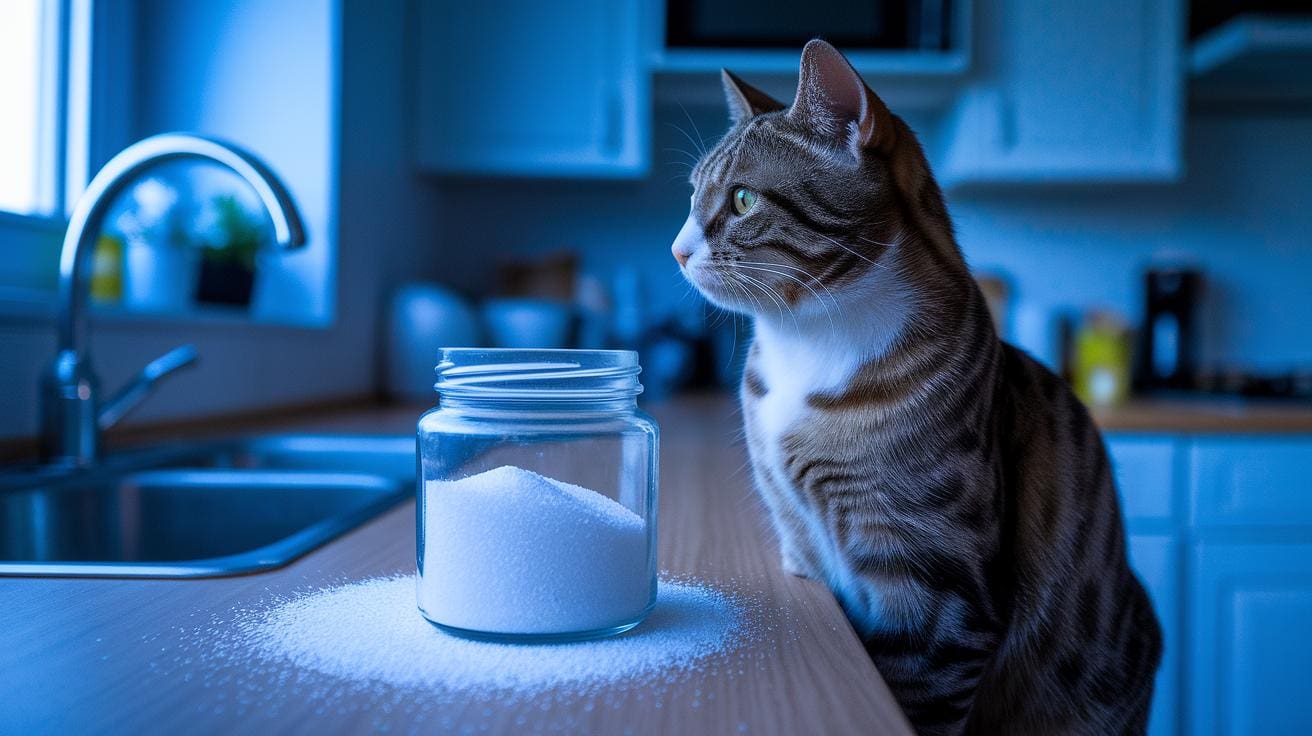
Back to lead , Fact #5 Back to lead , Fact #6 Back to lead , Fact #7 Back to lead , Fact #8 Back to lead , Fact #14 Back to lead , Fact #15
Speed and jump height look like clean numbers, but scientists get them in different ways. Radar timing (speed guns) and GPS collars (a small tracking device) both give top-speed estimates of about 30-31 mph, but those are short-burst maxes. Young, fit cats and cats that spend time outdoors tend to hit the higher marks; breed and lifestyle matter too. Ever watched your cat go from zero to zoom? That’s the short-burst magic.
Jump height is measured with filmed trials and scaled targets, so the tape tells the tale. Cats can clear roughly five times their body height thanks to strong hindlimbs (the back legs) and spinal flexion (the spine bending like a spring). You can almost hear the satisfying snap when they tuck and launch.
| Trait | Typical Value / Note |
|---|---|
| Sprint speed | About 30-31 mph (radar timing or GPS collars; short-burst max) |
| Jump height | Up to ~5× body height (hindlimbs + spine spring) |
| Adult bones | About 230 bones after juvenile fusion (fusion = bones joining) |
| Newborn bones | About 245 bones at birth before fusion (growth plates are still open) |
| Skeletal muscles | About 500 skeletal muscles (muscles that move the bones) |
| Typical toes / polydactyly | Usually 18 toes; polydactyly (extra toes) reported but needs verification |
A few quick caveats. Speed tests favor short sprints, so a cat’s recorded top dash isn’t the same as its everyday trot. Jump measures depend on good video and a motivated cat, you know, the one chasing a feather wand. Bone counts come from dissections and x-rays that follow when growth plates close and bones fuse, so newborn totals drop as kittens grow. And those wild stories about cats with tons of extra toes? Cute, but check the vet notes or museum specimen records before you file them as fact. Worth every paw-print of curiosity, though.
Fact #16 , Communication, Purring and Quirky Behavior
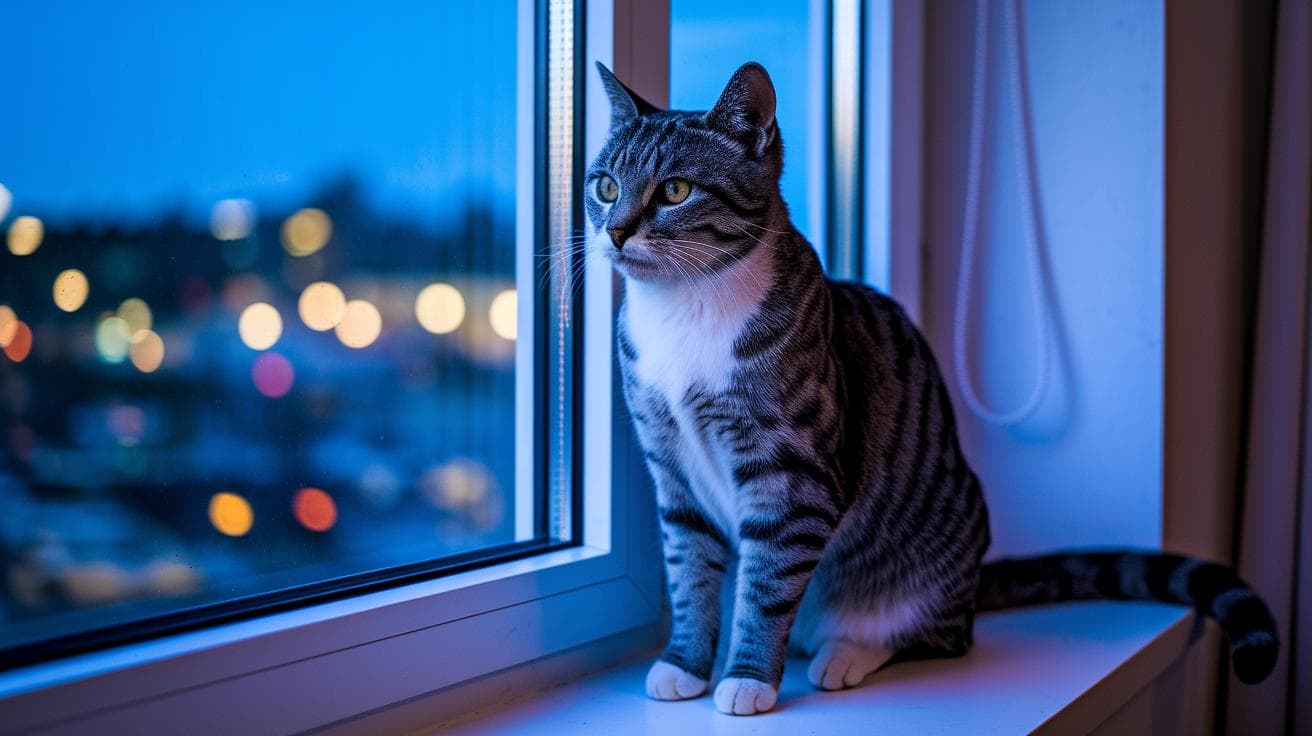
This expands Fact #16 (grooming time) and other signals like meows, purrs, tail and whisker cues.
Back to lead , Fact #16
Cats mostly use meows for us , short, higher-pitched calls to get attention, food, or a hello. Researchers who record and study meows (vocalizations, the sounds cats make) find clear differences when cats “talk” to people versus other cats. Little chirps and trills usually mean “look here” or “play now.” For a deeper breakdown of those tiny sounds, see this link: What do cat chirps mean. Ever notice your cat shifting tones the second you walk in? They’re tailoring the message, cute and clever.
Purring shows up in lots of situations , contentment, self-soothing, or even as comfort during illness. Scientists measure purrs in low frequency ranges (frequency means how fast sound waves vibrate), and some people think those frequencies might help healing, though we need more proof. There are dramatic claims about super-loud purrs, but those should be checked against original acoustic data (recorded sound measurements) before we take them as gospel. Still, that soft lap rumble is a real mood-booster for humans and pets alike.
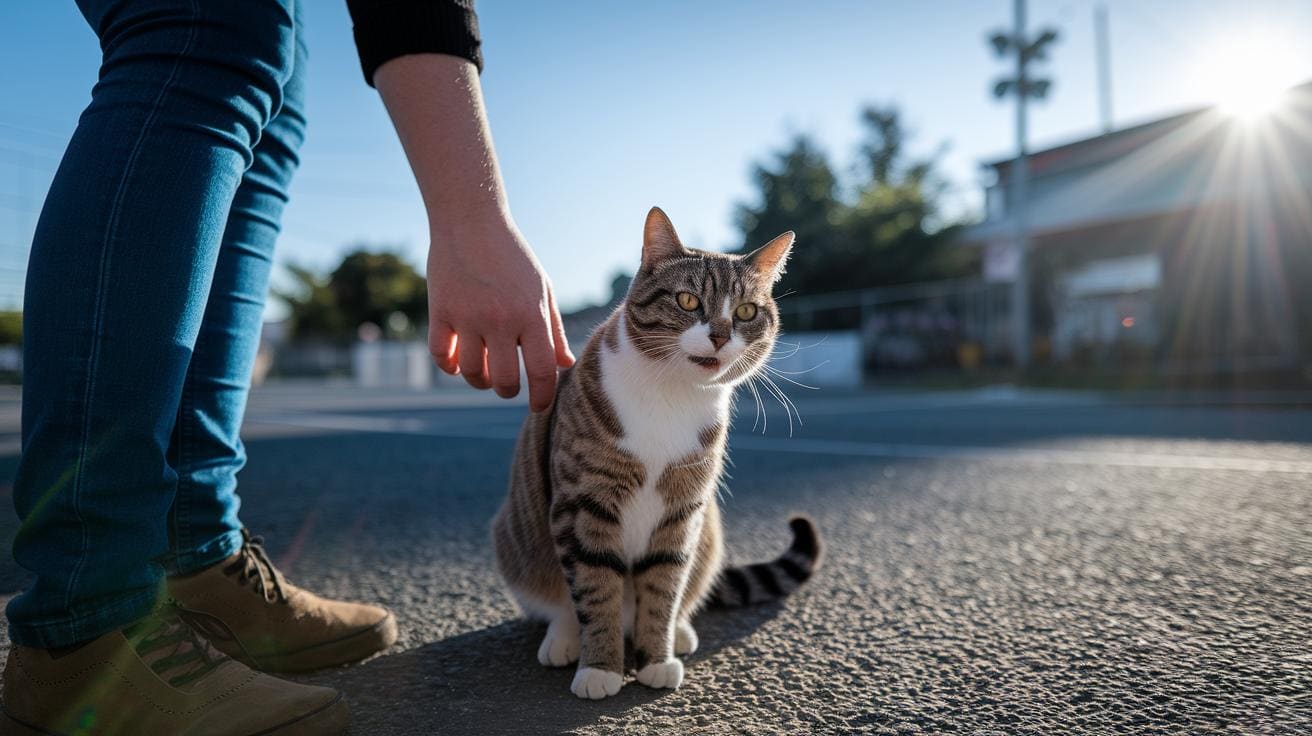
Grooming is about hygiene and communication. Cats spend around 15 to 50 percent of their waking time grooming , cleaning, cooling off, and calming themselves. Watch whisker position: whiskers forward means curiosity, swept back usually means wariness. Tail carriage tells you a lot too: a straight, twitchy tail shows interest; a lashing tail is a warning. Slow blinks mean trust, and kneading is comfort and bonding. These signals work together with grooming to say “I’m comfy” or “I’m annoyed,” so read the whole cat, not just one clue.
Primary sources behind this include:
- Peer-reviewed studies on feline vocalizations and meow-to-human research (scientific papers).
- Veterinary behaviorist reviews on grooming and social signals (veterinary association guidance).
- Acoustic and physiological studies on purring frequency and related health ideas (sound and body measurements).
- Observational time-budget studies that measured how much of the day cats spend grooming.
Three quick owner takeaways: your cat’s meow is usually aimed at you; purring isn’t always pure happiness , sometimes it’s coping; grooming is normal unless it causes hair loss or sores.
Quick owner cues and what to do
- Soft blink back at a relaxed cat to show calm, friendly intent.
- Give a cat space if the tail is tucked or lashes , that’s a warning.
- Offer vertical scratching options like posts or sisal (a rough natural fiber) to match grooming and stretching needs.
Worth every paw-print.