Are Cheetahs Big Cats? Yes, But Not Panthera

Yep, cheetahs are big cats, but they’re not part of Panthera (the roar-making group that includes lions and tigers). Kind of surprising, right?

Scientists put cheetahs in the subfamily Felinae (a scientific group for small-to-medium cats) and the genus Acinonyx (their own branch on the family tree) because bones and genes point the way. The voicebox, or larynx (the part that makes sounds), is a dead giveaway.

Their larynx can’t make a true roar. Instead they purr and chirp, sweet, birdlike sounds that are surprisingly chatty. Don’t take that for weakness. Cheetahs trade a thunderous roar for rocket speed: light frames, springy spines (they stretch and snap back like a spring when they run), and semi-retractable claws (claws that stay partly out to dig in) that hook the ground. Ever watched one sprint? It’s jaw-dropping.

Are Cheetahs Big Cats? Yes, But Not Panthera
- Clear answer on cheetahs big cat status (terse lead).jpg

Nope, cheetahs aren’t “big cats” in the Panthera sense. Panthera (the roar-capable big cats like lions and tigers) is a different group. Cheetahs sit in the family Felidae (the cat family), subfamily Felinae (small to medium cats), genus Acinonyx, species Acinonyx jubatus.

Taxonomy makes it clear: they’re not Panthera. Oops, let me rephrase that , scientists look at bones and genes, and cheetahs don’t match the roar-makers. Their vocal anatomy (the larynx or voice box) is built so they purr and chirp, not roar.

But don’t think they’re meek. Cheetahs are built for speed. They have a lightweight frame, long legs, a flexible spine (stretches like a spring when they run), and semi-retractable claws (claws that don’t fully pull in) to grip the ground. Their bodies trade roar power for rocket power.

So yes, they’re large felids in size and presence. They’re just a different kind of big, fast, sleek, and chirp-happy. Worth every paw-print.

Cheetah vocal anatomy and why they do not roar
- Cheetah vocal anatomy and why they do not roar.jpg

Cheetahs don't roar because their voicebox isn't built the same way as the big roars of lions and tigers. They lack a fully flexible, floating hyoid (U-shaped bone at the base of the tongue) and other laryngeal (voicebox) adaptations that let Panthera cats make deep, sustained roars. A floating hyoid helps the larynx vibrate and resonate more, and that extra vibration is what gives a roar its power.

So cheetahs use different sounds. They purr, and they make a high, birdlike chirp that cuts across the savannah when they're trying to find cubs or a mate. Vocal anatomy is one of the traits scientists use to group big cats, so these differences help put cheetahs in their own corner of the family tree. Ever heard one? The chirp is oddly musical.

  • purr , a soft, continuous sound, like your house cat when it's relaxed.
  • chirp , a high, sharp call used for contact or alarm, almost birdlike.
  • growl , a short, low warning when a cheetah feels threatened.
  • hiss , a quick, defensive sound to warn off predators or rivals.
  • cough , a clipped, harsh noise sometimes heard during agitation or play.

Not a roar, but still pretty cool.

Size, weight, and physical comparison (field numbers and table)
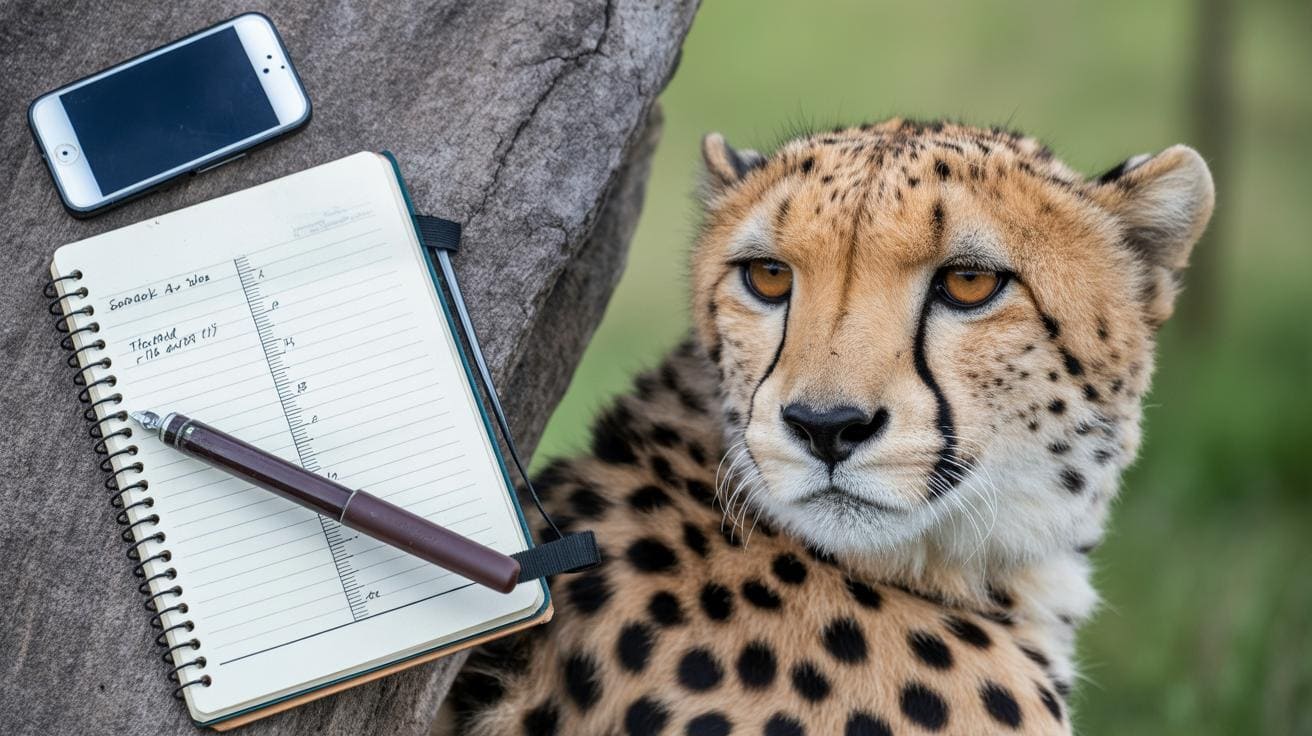
- Size, weight, and physical comparison (field numbers and table).jpg

Here are field-reference numbers for adult cheetahs you can use in the field. Weight: 34–72 kg (kilograms). Body length: 112–150 cm (head and body, measured nose to base of tail). Tail length: adds 60–84 cm (base to tip, helps with balance). Shoulder height: 70–90 cm (ground to top of shoulder).

These numbers are handy for quick ID. They don't change scientific classification. Think of them as dress code, not a family tree. Ever watched a cheetah stretch before a sprint? That long tail and slim body give you an instant clue.

Species Typical weight (kg) Body length (cm) Shoulder height (cm)
Cheetah (Acinonyx jubatus) 34–72 112–150 70–90
Leopard (Panthera pardus) see species ranges see species ranges see species ranges
Lion (Panthera leo) see species ranges see species ranges see species ranges

Quick tip: for fast field ID, look for a slim build, long tail, and high shoulder flexibility, those are cheetah clues. Worth keeping in mind.

Anatomy and locomotor adaptations that set cheetahs apart
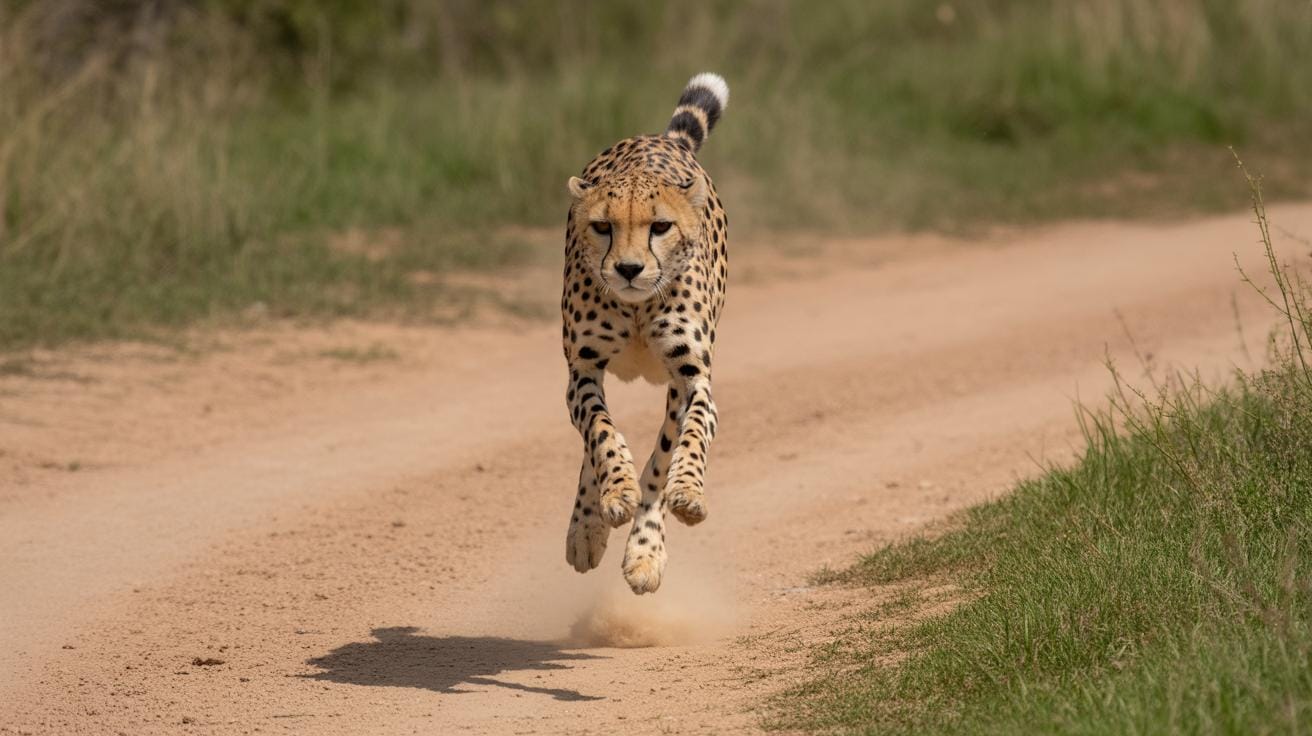
- Anatomy and locomotor adaptations that set cheetahs apart.jpg

Cheetahs are built to sprint. Picture a spotted blur launching across the grass, muscles coiling and uncoiling. It’s all about speed, not strength.

They have semi-retractable claws (claws that stay partly out to give extra grip), a super-flexible spine (the back bends and snaps back like a spring to lengthen each stride), and a long tail (a steering rudder for balance and quick turns). Their hind limbs, or back legs, are unusually long for body size, which boosts push-off power. And their hearts and lungs are enlarged (bigger organs to pump and oxygenate more blood), so they can fuel those short, explosive bursts.

These bits work together: sticky claws for traction, a springy spine for big reach, long legs for power, and big lungs and heart for oxygen. Ever watched a cheetah twist mid-run to follow a zigzagging gazelle? That tail and flexible spine make it possible.

But they’re not built like the heavy, power-built big cats that wrestle prey. Cheetahs prefer hit-and-run hunts. They use speed to catch and subdue prey, then get out of harm’s way instead of getting into long fights. Worth every paw-print.
Taxonomy, genetics, and evolutionary relationships of cheetahs

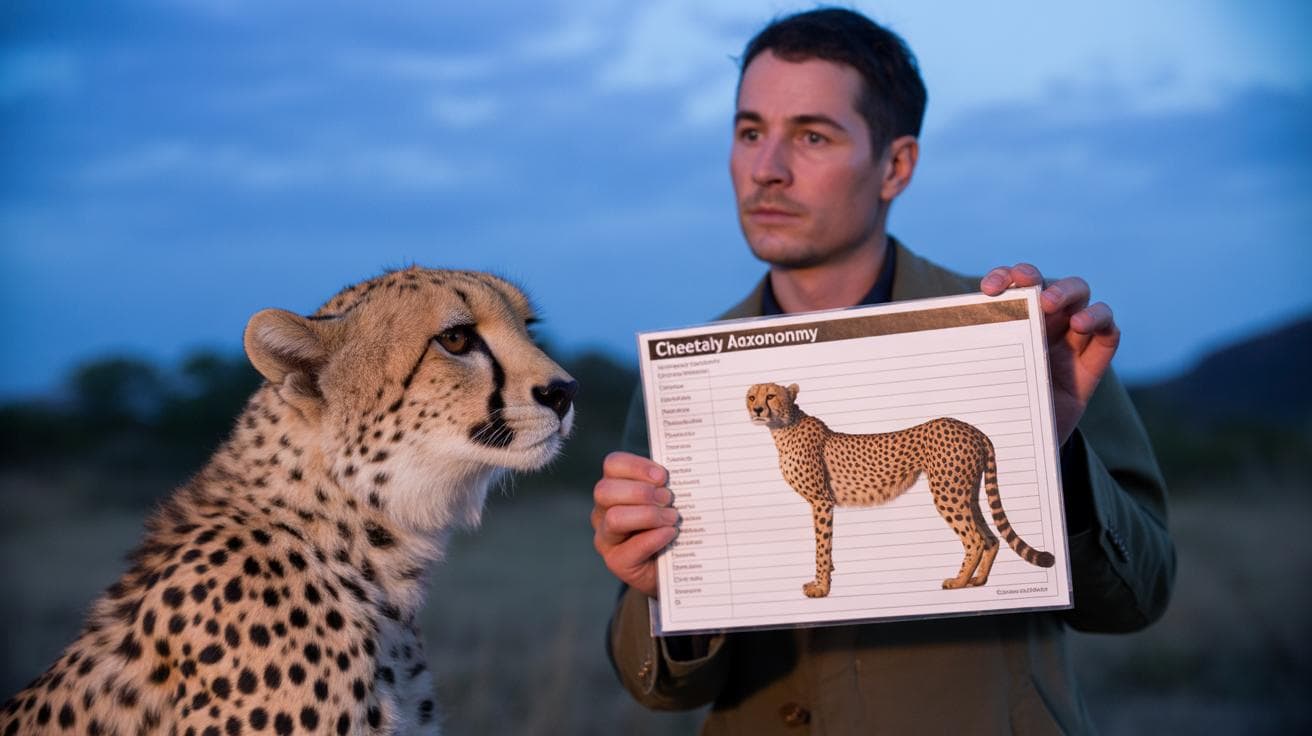
- Taxonomy, genetics, and evolutionary relationships of cheetahs.jpg

Surprising DNA work (genomic tests, meaning DNA studies) shows cheetahs are genetically closer to pumas than to some other big cats. Puma (also called cougar or mountain lion) pops up as a nearer relative than you might expect.

When scientists draw cat family trees (phylogenies, which are like evolutionary family charts) they find that being big and being a sprinter evolved more than once in different cat lines. In other words, the cheetah’s lightning speed and slim, sprinting body showed up independently, not as a direct gift from other big sprinters. Think of it like different designers building similar race cars.

Cheetahs today have very low genetic diversity because of past population crashes (bottlenecks – sharp drops in numbers). That means many cheetahs share very similar DNA, which can make them more fragile to disease and reproduction problems. It’s a long-lasting mark from hard times in their history.

  • Closer: puma (cougar / mountain lion)
  • Closer: some small felids (smaller wild cat species)
  • More distant: Panthera (the big-cat group like lions, tigers, leopards, jaguars)
  • Transitional: Neofelis (clouded leopard genus)

Pretty neat, right? Evolution can take different routes and still end up with similar, claw-tastic results.

Are Cheetahs Big Cats? Yes, But Not Panthera

- Conservation status, population numbers, and practical implications.jpg

Yes, cheetahs are big cats , sleek, fast, and unmistakable. They belong to their own genus, Acinonyx, not to Panthera (Panthera is the group that includes lions, tigers, leopards, and jaguars).

There are only about 8,000 cheetahs left in the wild. They have low genetic diversity (variation in genes within a population), which makes them more vulnerable to disease and causes trouble when breeding programs try to keep populations healthy.

How we classify them matters. Classification (how scientists group animals) affects legal protection, who gets conservation funding, and reintroduction plans (putting animals back into places they used to live). So labels aren’t just words , they guide real decisions.

Big threats right now:

  • Habitat loss , shrinking homes mean smaller, broken-up populations.
  • Human-wildlife conflict , farmers and herders sometimes lose livestock and retaliate.
  • Prey decline , fewer antelope and gazelles means hungry cheetahs.
  • Illegal trade , poaching and trafficking still take animals and cubs.

Key programs helping cheetahs include the Cheetah Conservation Fund and local community research partners. These groups work on everything from habitat restoration to helping people coexist with cheetahs , practical stuff that actually helps animals survive.

Worth protecting, right? Ever watch a cheetah sprint on video and feel that wow moment? That’s the kind of wild we want to keep around.

Quick pointers

- Quick FAQ pointers (direct readers to deeper sections).jpg

Short, scannable notes that point straight to the full sections below.

  • Taxonomy: How cheetahs are classified (taxonomy is how species are grouped), their genetics (genes and heredity), and who they’re related to in evolutionary terms (who’s related to whom).
  • Roaring: Cheetah vocal anatomy (the body parts that make sound) and why cheetahs do not roar like lions or tigers.
  • Size figures: Size, weight, and simple physical comparisons to other big cats and similar-sized animals.
  • Field identification tips: Field ID tricks and practical comparisons to help you spot a cheetah in the wild or on camera.
  • Behavior and movement: Anatomy and locomotor adaptations (body features for running) that let cheetahs run so fast and move so differently.
  • Conservation numbers: Conservation status (how at-risk they are), current population numbers, and what those figures mean for protection efforts.
  • FAQs: Common questions and quick, clear answers.

Example pointer format – "Size figures: Size, weight, and physical comparison"

Are Cheetahs Big Cats? Yes, But Not Panthera

- Field ID and practical comparisons spotting cheetahs from similar felids.jpg

Quick, practical cues to spot a cheetah in the field or in photos. I’ll keep it simple and useful whether you’re watching from a hide or scrolling through pics.

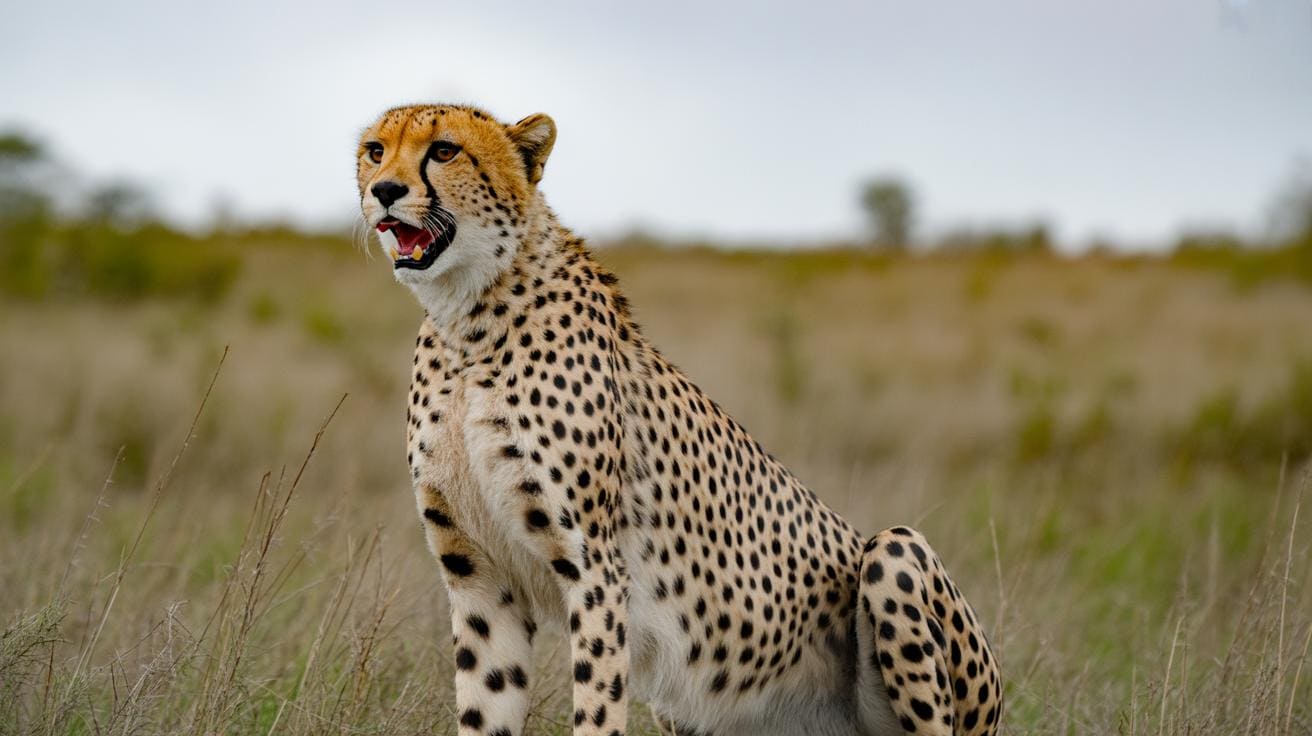
  • Solid black spots, not rosettes (rosettes are clusters of spots that form rings, like on leopards).
  • Distinct black tear lines running from the inner eye to the mouth – they help cut glare and focus on prey.
  • Long, slim legs and a high shoulder profile that make them look built for speed. Think long limbs and a lean frame.
  • Long, ringed tail with a narrow, darker tip (ringed means bands of color); the tail acts like a rudder when they sprint.
  • Active by day – diurnal (active during daylight hours) rather than mostly at night.
  • Tail and stride show a sprint-specialist posture – short ground contact, long reach, and that low-to-the-ground sprint stance.

From a distance light and motion can blur markings. So watch how it moves and the tail shape too. Ever seen one launch into a sprint? That’s the real giveaway.

Final Words

We answered the main question in the lead: cheetahs aren’t “big cats” in the roaring Panthera sense. They’re large felids in the subfamily Felinae.

Why that matters: their hyoid (throat bone) and larynx don’t allow a true roar, their build favors sprinting over brute force, and genetics place them with non-roaring felids. Field ID, size figures, and conservation notes give practical context.

So when someone asks are cheetahs big cats, you can say no, with respect for their speed and style. Pretty purr-worthy.

FAQ

Are cheetahs big cats, and are they cats or dogs?

Cheetahs are not “big cats” in the Panthera roaring group; they are true cats (Felidae family), placed in subfamily Felinae (small- and medium-sized cats), and they are not dogs.

Why are cheetahs not considered big cats?

Cheetahs are not considered big cats. Their vocal anatomy lacks the flexible hyoid and laryngeal features needed for a full roar (hyoid: throat bone), a key Panthera trait.

Can cheetahs roar?

Cheetahs cannot roar. They purr, chirp, growl, hiss, and make a bark-like cough, their hyoid and larynx staying more rigid than those of roaring cats.

Are cheetahs friendly?

Cheetahs can be relatively tolerant and curious, appearing friendly in captive or socialized settings, but wild cheetahs remain wild and are not safe or suitable as pets.

Where do cheetahs live?

Cheetahs live across parts of Africa with a tiny Iranian remnant population; they favor open grasslands and savanna (open plains) that let them spot prey and sprint.

Are cheetahs endangered and how many remain?

Cheetahs are listed as vulnerable, with roughly 8,000 wild individuals; main threats include habitat loss, human conflict, prey decline, and illegal wildlife trade pressuring their recovery.

What are the five big cats, and is the leopard one of them?

The five classic big cats are lion, tiger, jaguar, leopard, and snow leopard; the leopard belongs to Panthera (roaring cats) and is counted among them.

Related Articles

Author

  • Isabella Tiu

    Isabella Tiu is a transcriptionist from Calhoun, Florida, known for her sharp attention to detail and her commitment to providing accurate and efficient transcription services. With a passion for language and communication, she thrives on transforming spoken words into clear, readable content for her clients.

    When she's not working, Isabella enjoys hiking and camping, finding peace and inspiration in the beauty of the outdoors. She often says, “The best lessons are often learned in nature,” a philosophy she embraces both in her work and personal life.

    Isabella’s love for both her craft and the natural world reflects her belief in continuous learning and exploration.

    View all posts

Similar Posts