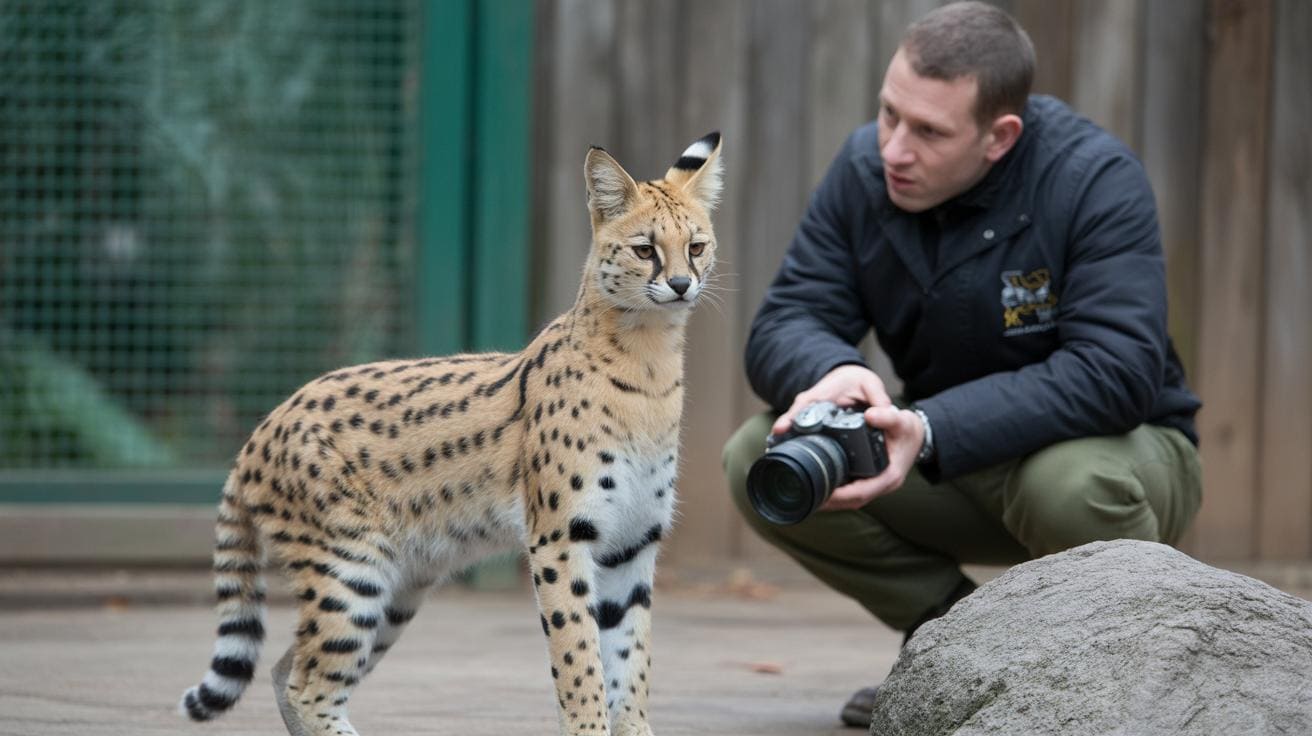
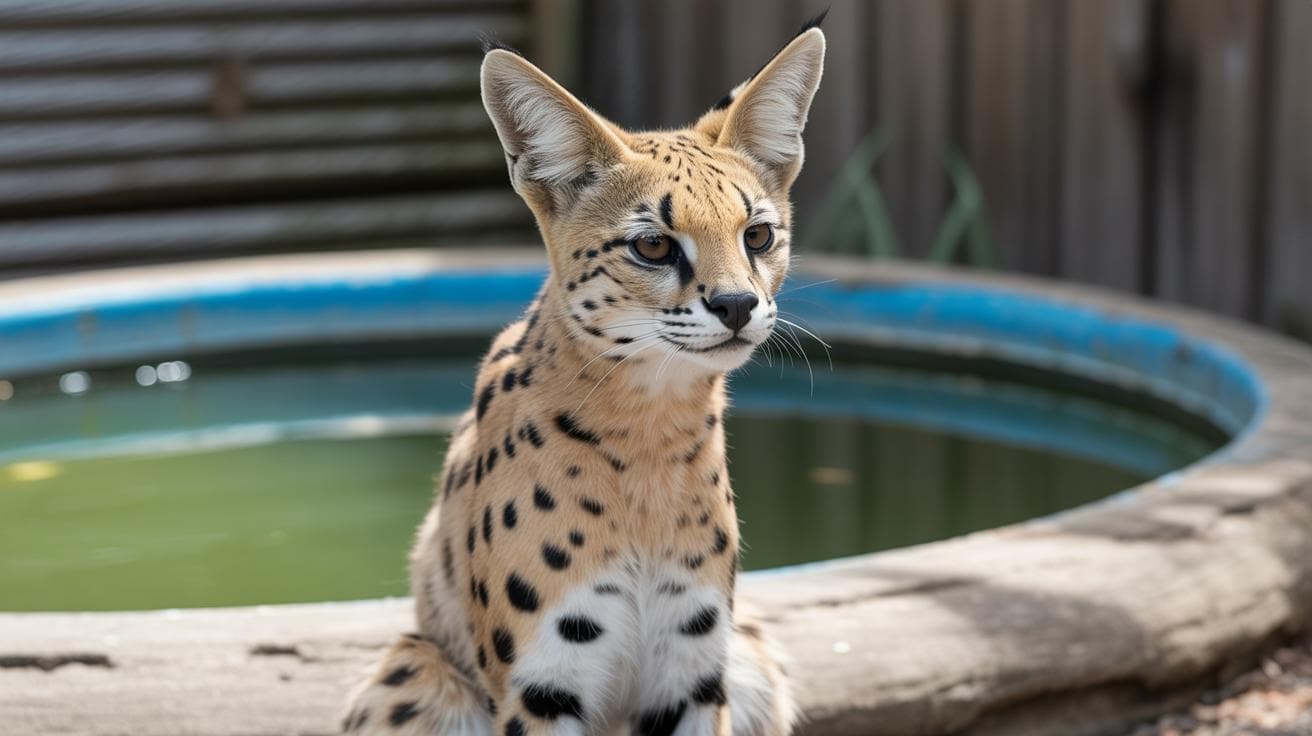
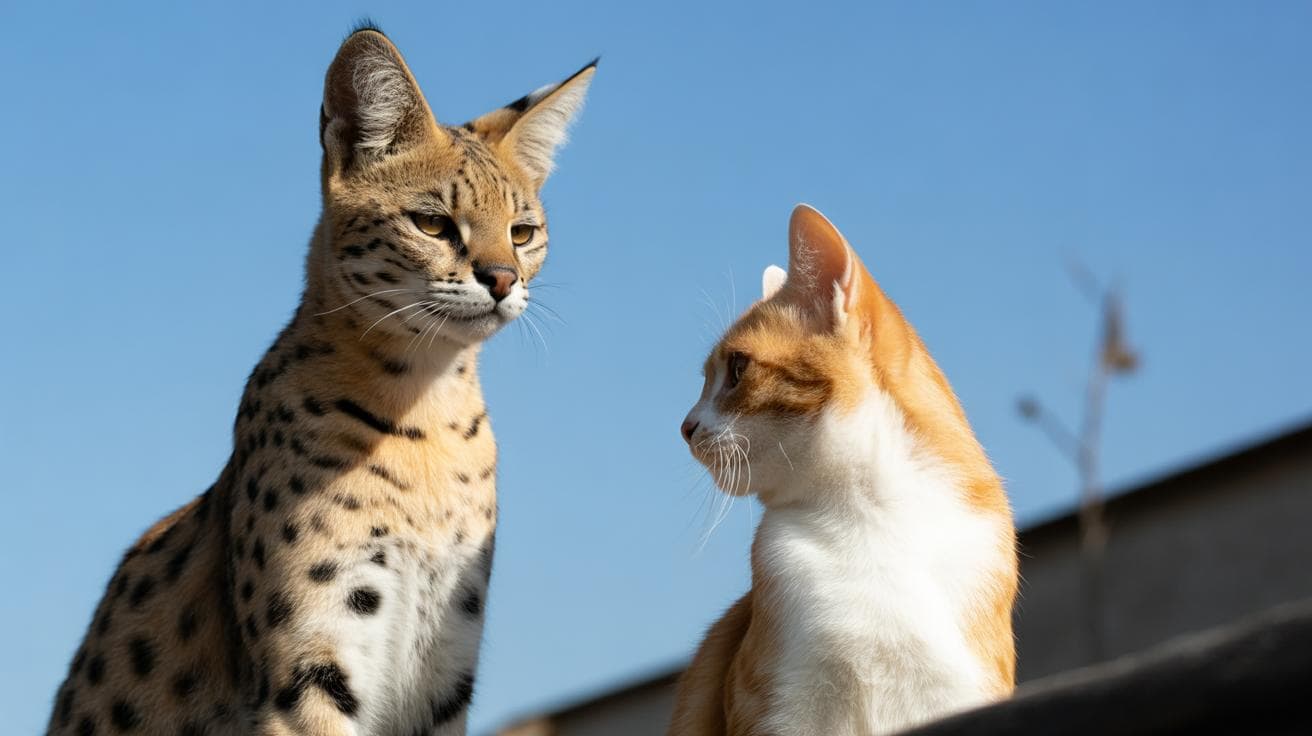
What if a cat about as big as a medium dog could launch ten feet straight up and hear a mouse under thick grass? Meet the serval (an African wild cat with long legs and big ears). Ever watched your house cat sprint after a toy and thought, whoa, where did that skill come from? Servals turned those moves into a whole lifestyle.
They’re built to hunt in tall grass. Long legs give them extra reach and speed, and those huge ears act like sound funnels (they help pinpoint the tiniest rustles). You can almost see the whiskers twitch as they lock on to a hidden prey.
Let’s break down what makes them so efficient. Size, meaning how long and heavy they get, helps with jump power and stride. Diet includes mostly rodents (mice and similar small mammals), plus birds, frogs and fish. Behavior is the showstopper: high pinpoint pounces (fast, straight-up jumps to catch prey) and soft trills (short chirpy calls) that seem part acrobat, part detective.
By the end you’ll get why servals move like gymnasts and sound like chatty sleuths. Worth every paw-print.
Serval Quick Overview
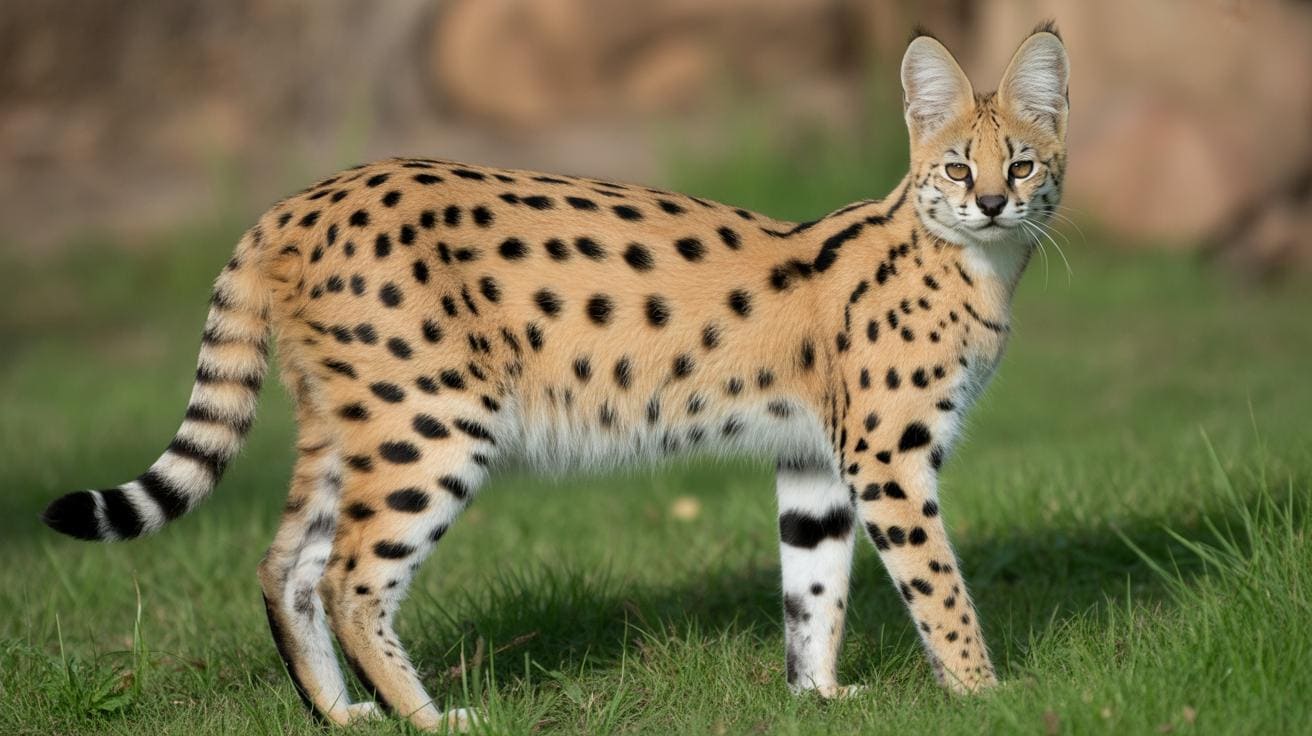
Meet the serval. Leptailurus serval is a long-legged African wild cat found across much of sub-Saharan Africa. It’s built for hunting in tall grass, with big ears that seem to listen to every mouse rustle. Ever watched one pounce? It’s a show.
- Size: head-and-body length 67–100 cm (26–39 in) (measured from the tip of the nose to the base of the tail). Think medium dog body, cat agility.
- Weight: males 10–18 kg (22–40 lb); females 6–13 kg (13–29 lb). Males are usually noticeably bigger.
- Primary diet: mostly rodents, plus birds, reptiles, fish, frogs, and insects. They’re rodent specialists but opportunistic feeders.
- Typical habitat: well-watered savannah (grassland with scattered trees), long grass, reedbeds (thick wetland grasses), and riparian zones (areas next to rivers and streams). In short, places with tall cover and water.
- Lifespan in captivity: some have lived past 20 years (there are reports of 19+ years elsewhere). They can live a long time with good care.
- Vertical leap: about 3 m (roughly 9–10 ft) straight up. Whoa. That pounce is why birds never feel safe.
- Hunting success: roughly 50 percent of hunts succeed. About half the time they bag a meal, which is pretty solid for a wild cat.
- Vocalizations: a mix of mews, chirps, and trills used for staying in touch and maternal calls. They don’t roar like big cats; they talk more like high-pitched chitchat.
- Legal and permits: ownership and permit rules vary by jurisdiction. Check your local law before you get excited.
See sections below for details and sources.
Serval Appearance, Markings, and Physical Adaptations
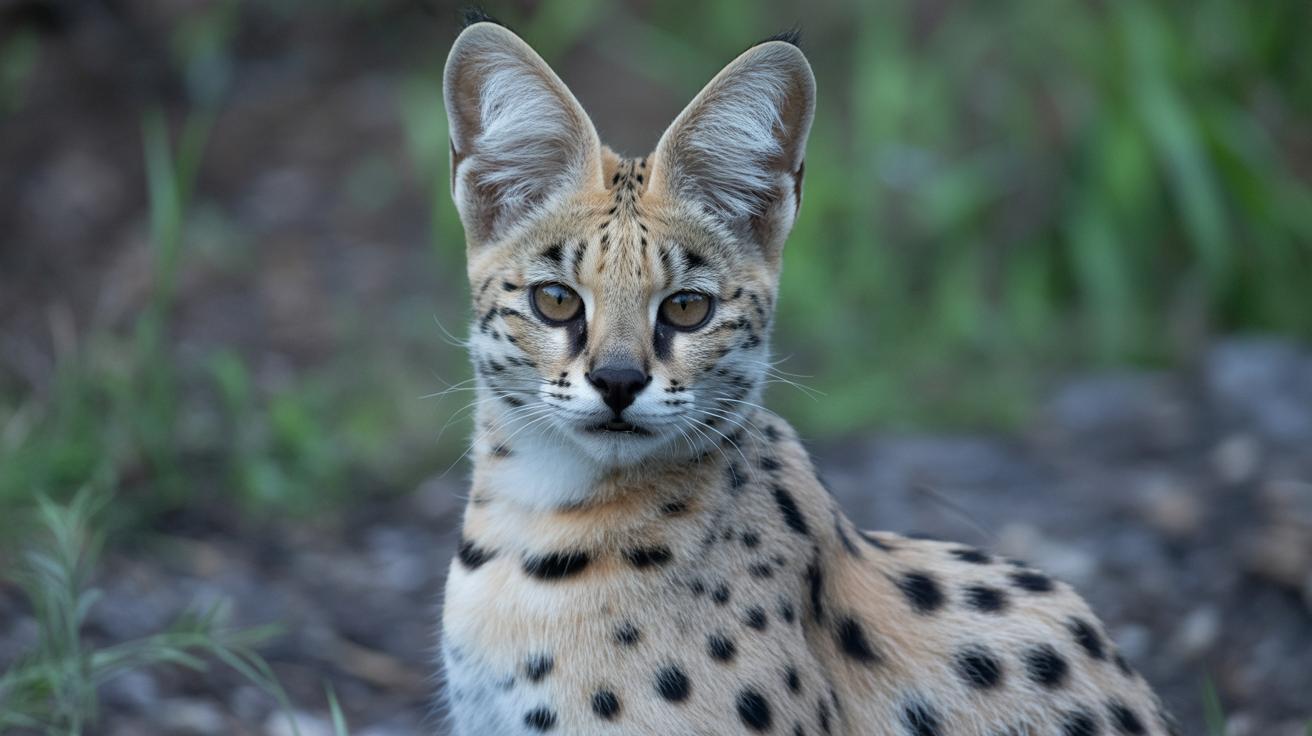
Those huge, rounded ears sitting wide on a small, delicate head give the serval crazy good directional hearing. They can hear the tiniest rustles in tall grass and zero in on prey. Ever watched a serval cock its head and freeze? That’s hearing doing the work – "Is that a rustle or a mouse?" The skull (head bone structure) and teeth are compact and built for quick, precise bites. Paw pads (thick skin cushions under the paw) are soft and grippy so stalking stays silent.
The hind legs are much longer than the front legs, so the serval walks with a high-stepping, almost stilted gait and launches huge pounces from those back limbs. Muscles and tendons (stretchy tissue that stores elastic energy) work like a loaded spring, giving sudden, powerful thrusts for ambush attacks. The short tail helps balance during tight turns and mid-air corrections. Think of the serval as a precision jumper and ambush hunter, not a long-chase sprinter. Worth every paw-print.
Coat colors range from pale yellow to buff, dotted with bold black spots that sometimes merge into stripes along the neck and back. West African speckled variants, called servalines, are reported, and rare melanistic individuals (very dark or black-coated due to extra pigment) show up from time to time. The belly is white, the eyes are amber, and the ringed tail usually has 6 to 7 black bands plus a black tip. See Quick Overview for compact measurements.
| Trait | Measurement / Description |
|---|---|
| Head & ears | Small head with very large rounded ears for acute directional hearing |
| Tail length & rings | 24–35 cm (9–14 in); typically 6–7 black rings with a black tip |
Serval Hunting Skills, Diet, and Sensory Abilities
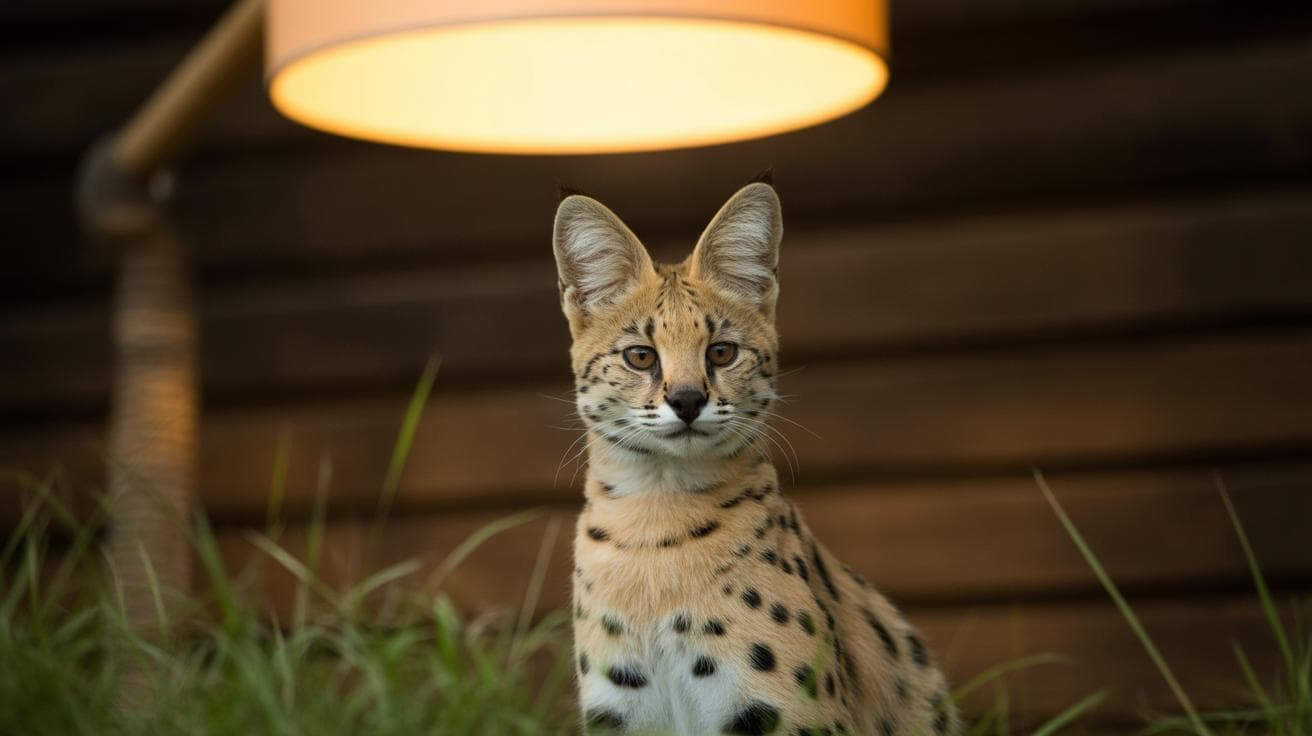
Servals hunt using a classic listening-hunt posture. They freeze, tilt the head, push whiskers forward, and let their ears twitch until a tiny sound points them to hidden prey. Ever watched one lock onto a mouse under the grass? It’s like watching a furry radar do its thing (see Appearance for the anatomy that makes this possible).
Diet centers on small mammals, but servals will also take birds, reptiles, fish, amphibians, and large insects depending on where they live. They pick what’s easiest to catch in reedbeds (tall wetland grasses), long grass, or near water. So habitat really shapes the menu.
For birds they use a vertical leap and a two-paw aerial catch. Picture a straight-up launch, forepaws clapping together to trap the bird midair, quick, precise, and oddly graceful. Like catching a tossed ball with two mitts, only fluffier.
Ground prey gets a different move: a tucked, springing pounce that ends with a single, decisive bite. You’ll see the body coil, the quiet wait, then that satisfying thud as they land right on target. Really impressive aim.
Servals will also wade into shallow water for fish or probe muddy edges for frogs, striking with fast, downward swipes. You might catch a splash and a flash of spotted fur as they nab something slippery.
Their whole hunting style is stealth plus bursts of speed. Vision favors low-light activity, crepuscular (active at dawn and dusk), and hearing does a lot of the locating work in tall grass or under cover. Curious about jump height, speed, or hunting success rates? Check the numbers in the Quick Overview.
Serval Habitat, Range, and Daily Activity Patterns
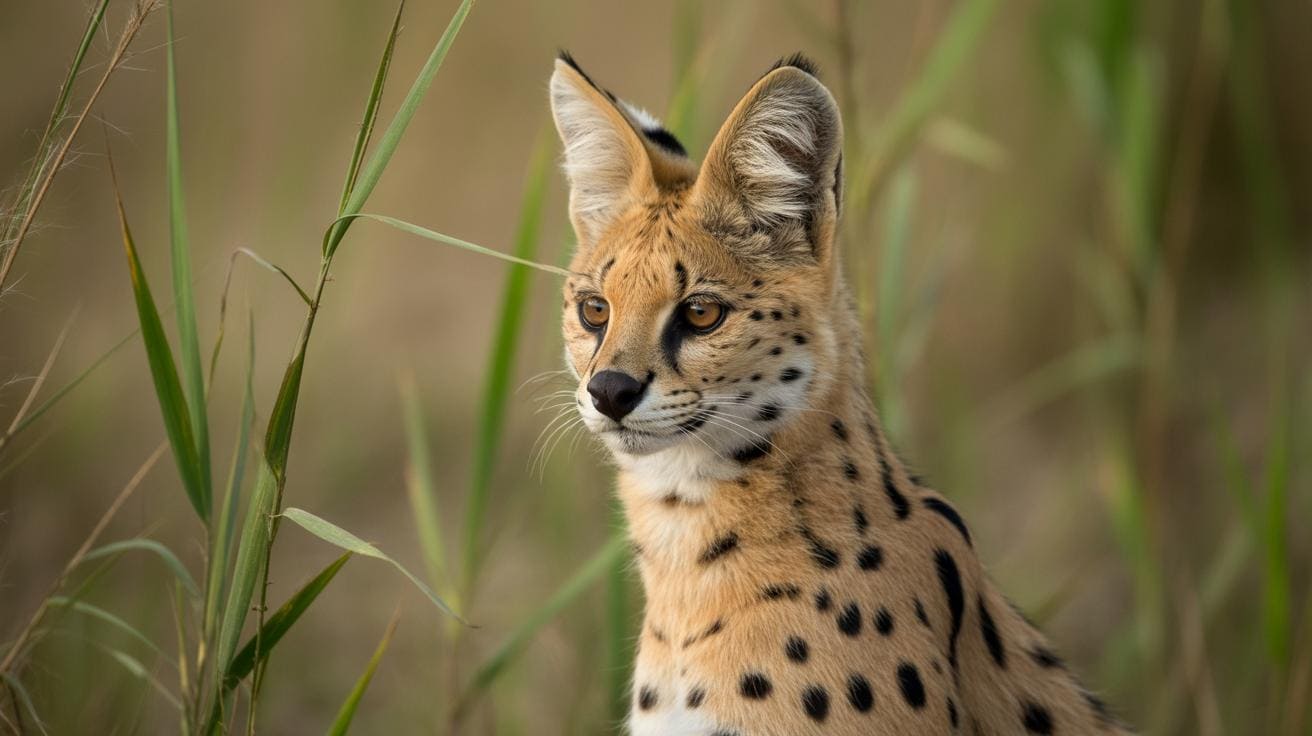
Servals live across much of sub-Saharan Africa, with smaller pockets in southwest Africa and a few old records from Morocco and Algeria. They’re common where water and tall cover meet, and sightings thin out near the edges of their range. Think of them as a creature of the wetter, grassy bits of the continent.
They prefer well-watered savannah (grassland with scattered trees), long grass, reedbeds (thick wetland grasses), and riparian zones (river and stream edges). You’ll also find them in alpine grasslands (high-elevation grassy areas) and woodland edges that border waterways. They avoid dense rainforest and true deserts because there’s no good hiding or hunting there. Picture tall grass brushing against their legs and a soft chorus of mousey noises underfoot.
Servals are mostly solitary. Their activity peaks at dawn and dusk, with plenty of nighttime hunting too , crepuscular (active at dawn and dusk) and nocturnal (active at night) habits that match their giant ears and pinpoint hearing. Ever watch one freeze, ears swiveling as if tuning a radio? Yeah, that listening style really works.
Males and females keep largely separate territories (home ranges), only overlapping briefly for mating, and individuals can roam several miles while foraging. When seasons change and water shifts, servals follow the food and move toward wetter ground. See Quick Overview for the compact numeric summaries on size, jump height, and captive lifespan.
Serval Reproduction, Gestation, and Kitten Development
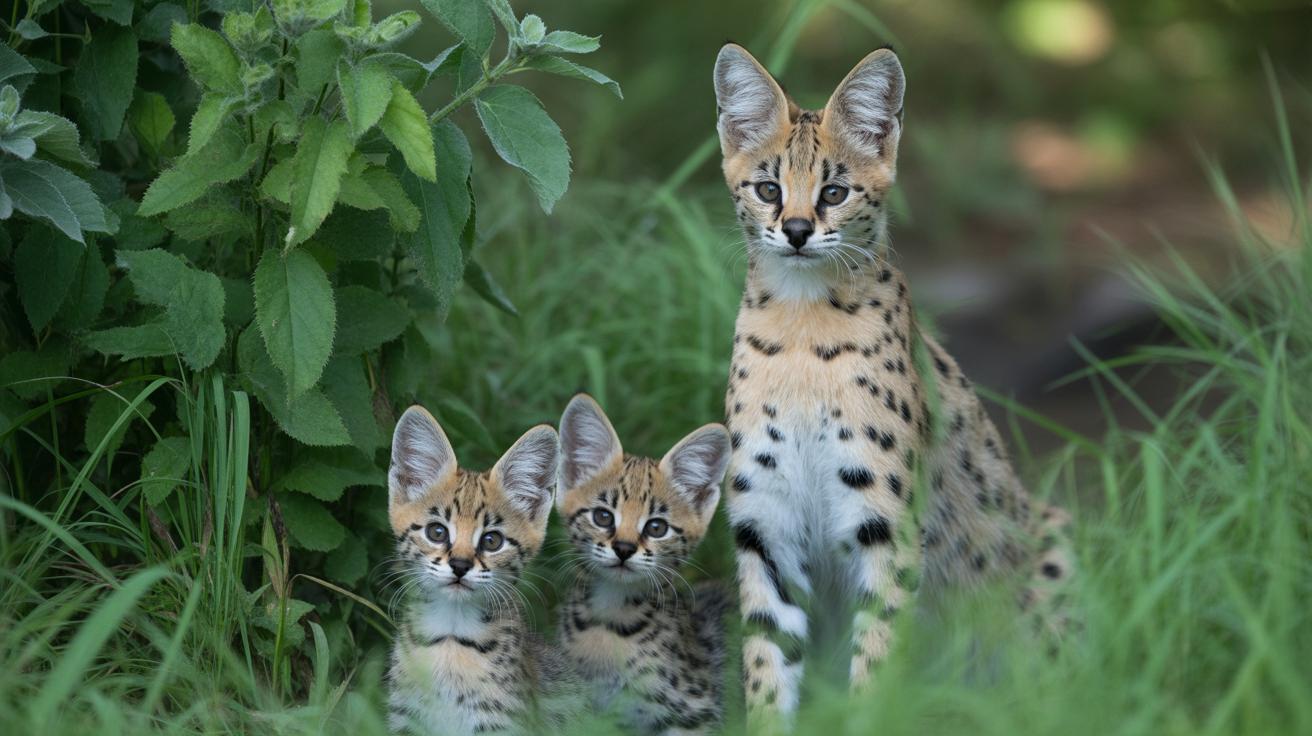
Servals live mostly alone, so moms and dads only meet briefly to mate. These meet-ups are short and quiet. After that, the female raises the kittens on her own, picking a hidden den (a snug, secret nest) and doing the lion's share of parenting. It’s a very private start to life.
Gestation & Birth
Gestation (pregnancy length) is about 67 to 77 days, most often around 73 days. Litters can be as small as one kitten or as large as five, but two is the usual number, so moms often handle either a solo baby or a tiny sibling crew. Newborns are fragile and tiny, weighing roughly 240 to 255 g (about 8.5 to 9 oz). For the first few days the mother keeps them hidden, popping in to nurse and then moving them if the den feels unsafe. It’s all careful, low-key parenting.
Kitten Growth & Maturity
Eyes usually open at 9 to 12 days, and the little furballs start exploring more as their senses sharpen. Around three weeks they begin tasting solid food while still nursing, which kick-starts the hunting lessons they’ll need later. By 6 to 8 months many kittens are roaming farther from the natal den and can fend for themselves on short trips. Sexual maturity comes at about 18 to 24 months; at that point youngsters, especially males, are often pushed out of mom’s territory and start carving out their own ranges.
Worth every paw-print.