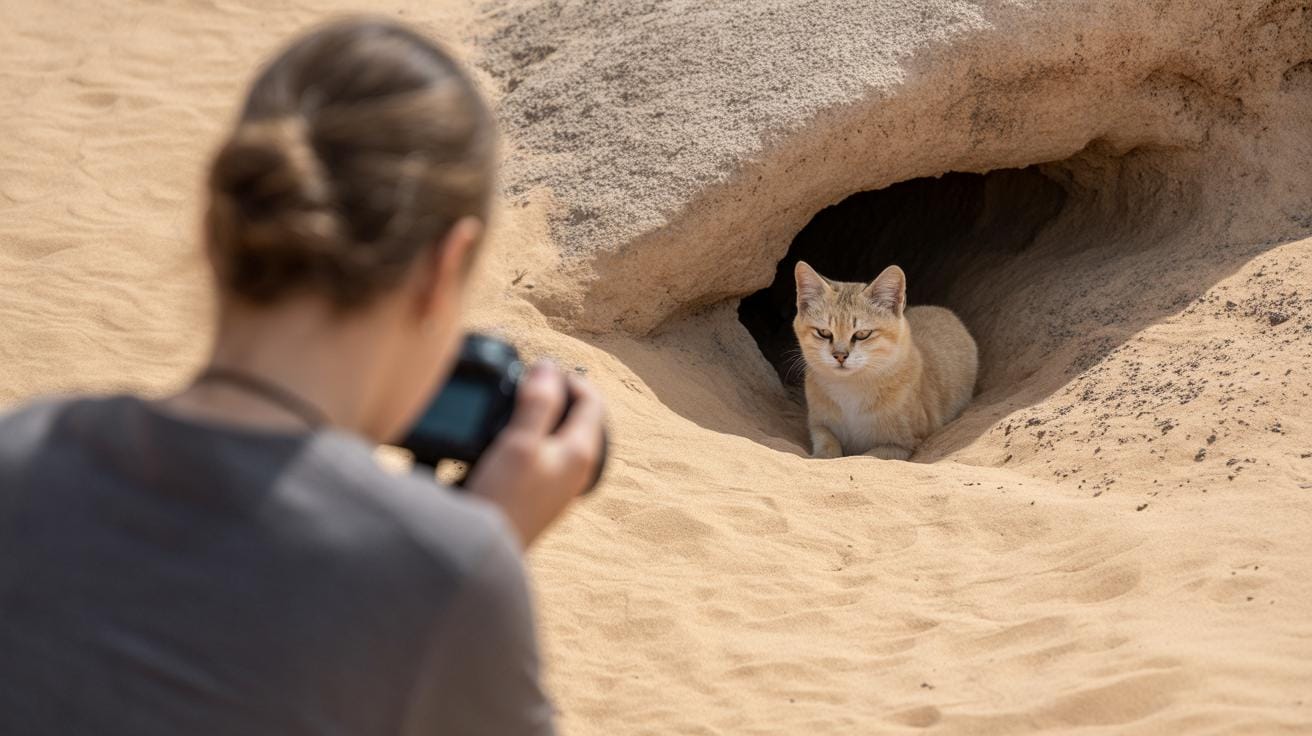
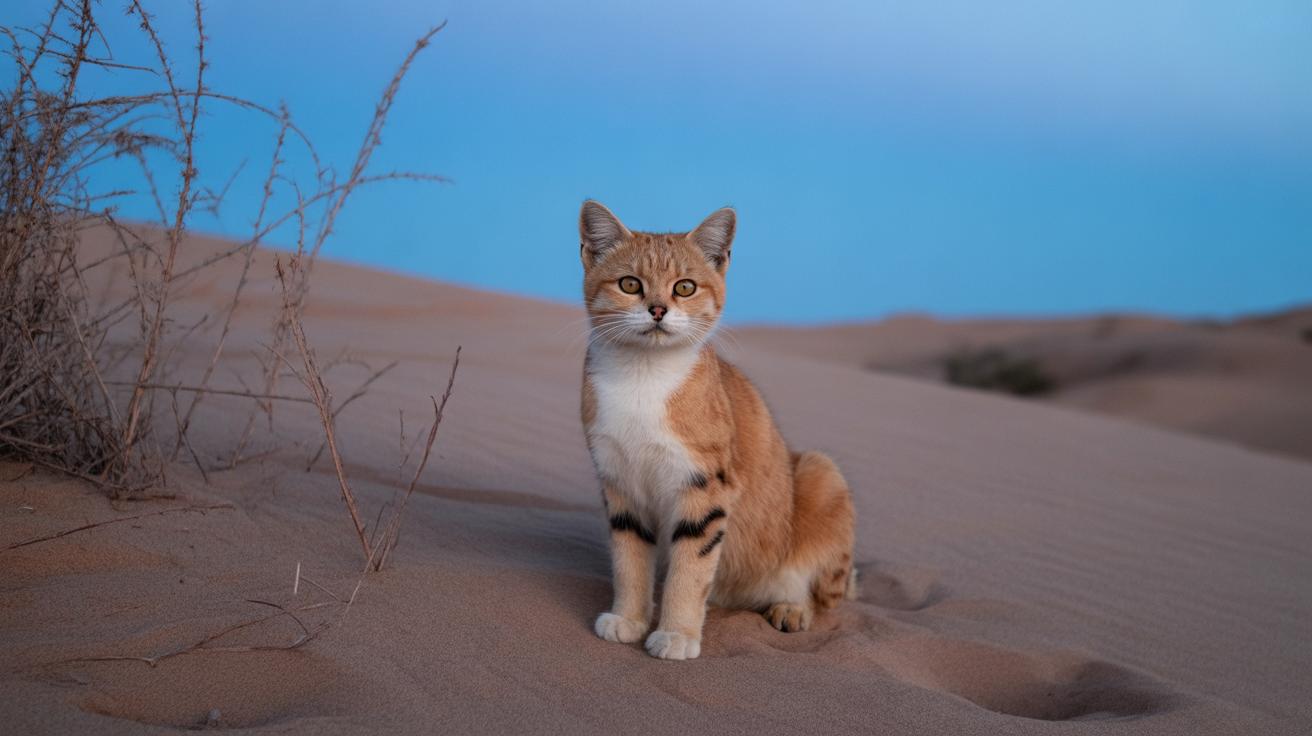
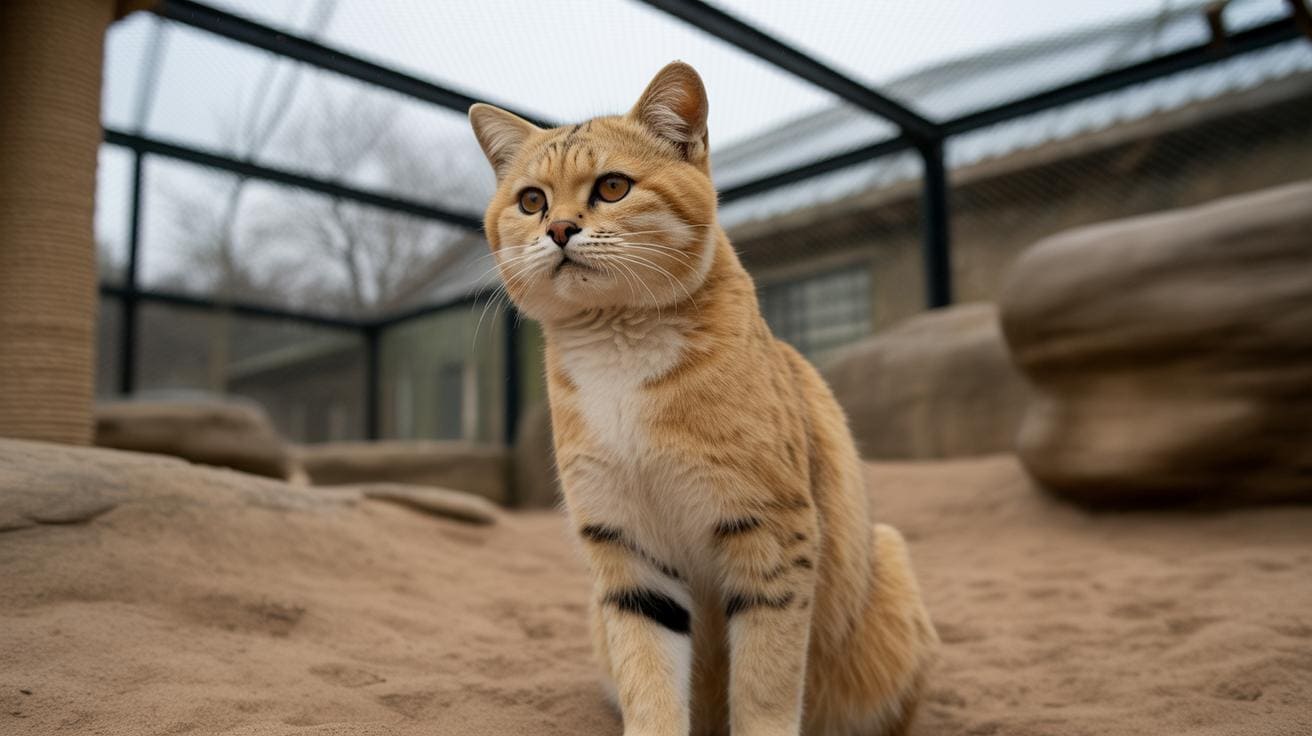
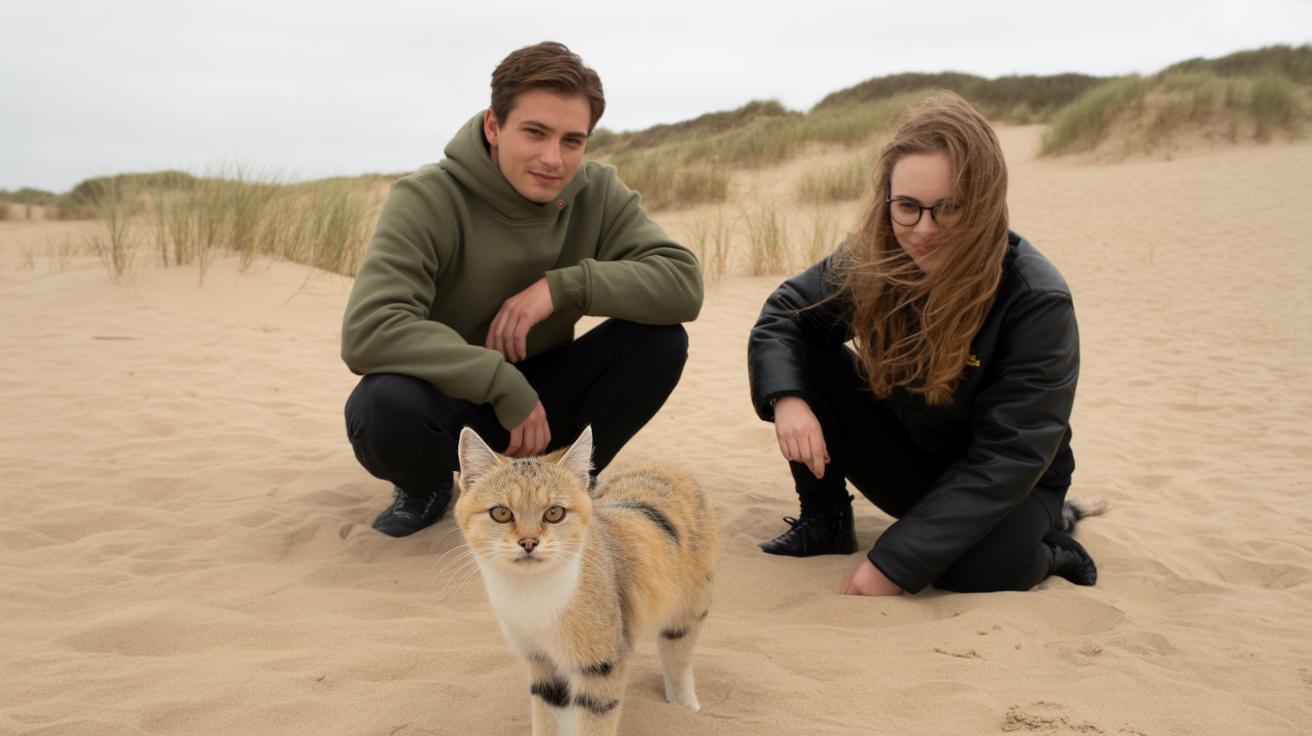
What if the desert's toughest hunter could curl in your palm and erase its footprints like a cat with a magic paw? Ever picture that? Meet the sand cat, a tiny wildcat that seems built for disappearing.
It's compact, with sand-swirled fur that blends into dunes and big ears like radar dishes that pick up the faintest squeaks. Its paw pads (the furry soles of its feet) act like tiny snowshoes, thick fur on the soles keeps hot sand off and helps mask prints. You can almost feel the soft whisper of sand as it pads by.
We'll look at how it looks, the clever tricks it uses to live in scorching, silent places, and the conservation picture, what helps it survive and what still threatens it. Ever watch your house cat chase a shadow? Imagine that, but under a blazing sun and under starry nights. By the end, you’ll know how this little cat thrives where few felines can. Worth every paw-print.
At-a-glance species summary
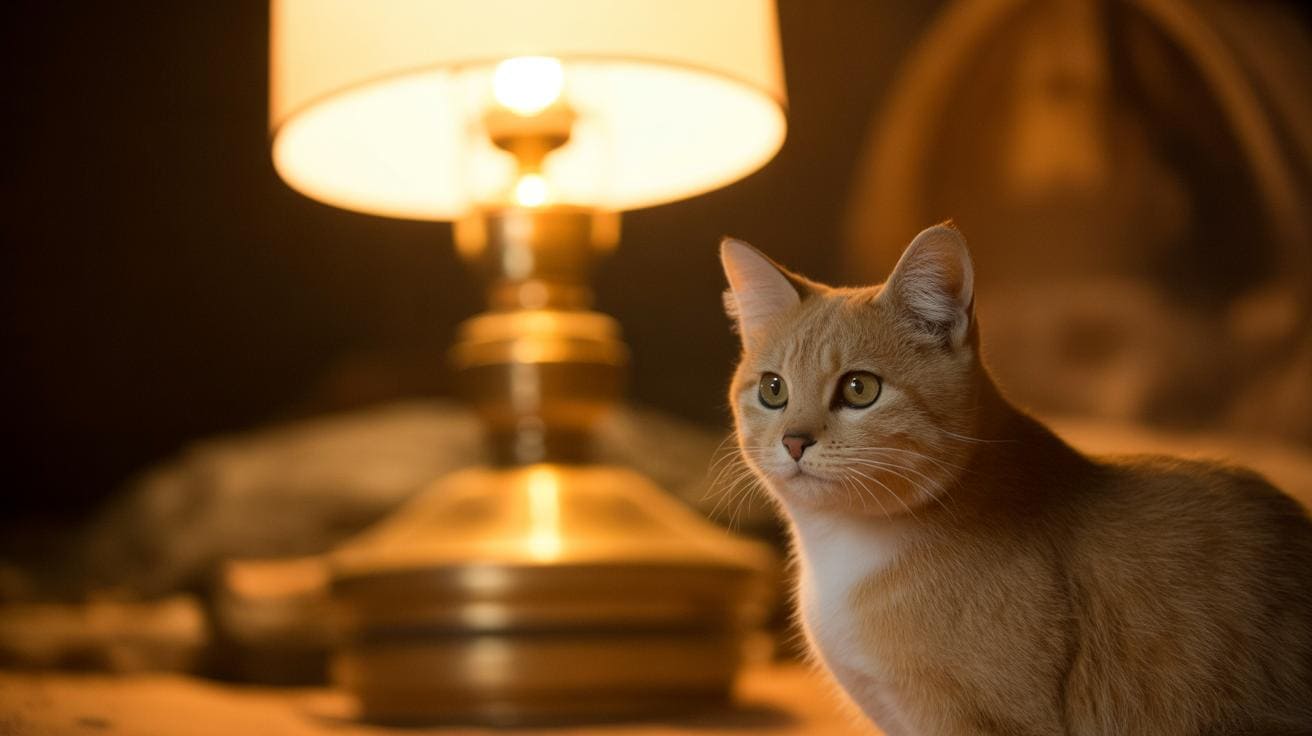
Felis margarita, the sand cat, is a small, specialized desert wildcat. Think compact, stealthy, and built for sand , a quick guide that links to fuller sections below.
- Felis margarita – named for Gen. Jean Auguste Margueritte; first described in 1858.
- Range: Sahara, Arabian Peninsula, Southwest and Central Asia – see the mapped below image for details.
- Small desert wild cat with a compact build; weight about 4–8 lb (1.8–3.6 kg) – Read more: Appearance.
- IUCN: Least Concern (2016) – IUCN means International Union for Conservation of Nature (the group that tracks species risk) – see conservation.
- Signature adaptation: thick fur on the paw soles protects from hot sand and helps hide footprints – Read more: Adaptations.
- Diet: opportunistic carnivore (eats whatever small prey is available) – mainly rodents, birds, reptiles, and insects – details.
- Behavior: mostly nocturnal and shelters in burrows (underground dens) during the day – Read more: Behavior.
- Desert specialist: the only wild feline that lives exclusively in desert environments – more on range and habitat in range notes.
- Quick facts here link back to the detailed sections and their citations so we don’t repeat source lists.
Alt-text suggestions:
(1) Range map infographic – "Map showing Felis margarita distribution across the Sahara, Arabian Peninsula, and Central Asia."
(2) Size-comparison image – "Sand cat (4–8 lb) next to a domestic cat silhouette to show smaller, compact build."
Sand cat appearance, size, and key measurements
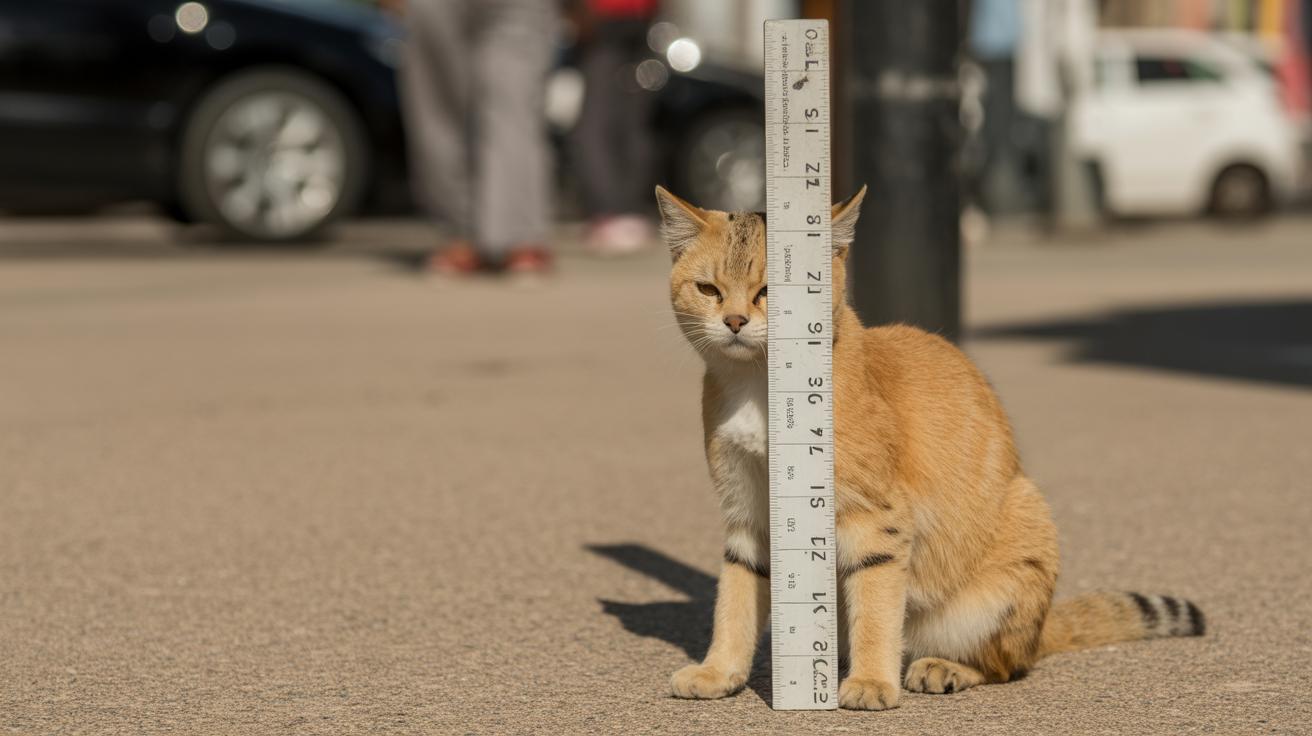
Sand cats are small, compact desert wildcats built low to the ground. See the table below for the authoritative measurements you'll use in reports or ID guides.
| Metric | Value |
|---|---|
| Adult body length | 39–52 cm (15–20 in) |
| Tail length | 23–31 cm (9.1–12.2 in) |
| Adult weight | 4–8 lb (1.8–3.6 kg) |
| Shoulder height | 10–12 in |
| Winter coat hair length (max) | ~2 in (Central Asia populations) |
Coat color runs from sandy to light gray, with a pale underbelly. The fur is thick and protective, buffering hot daytime sand and cold nights; in winter the hairs can reach about two inches, forming insulating hair (longer strands that trap air and warmth) in colder parts of their range. It looks and feels like a built-in sweater for desert life.
Faces are kitten-like: broad heads, big green-yellow eyes, a reddish streak from the eye across the cheek, and a small black nose. Tails usually have two or three dark rings and finish with a black tip, which is a handy visual cue when a cat flicks its tail under moonlight. Ever watched those whiskers twitch as it stalks a beetle? Cute.
Feet are furry underneath, which helps them walk on loose sand (the fur pads act a bit like tiny snowshoes) and also hides tracks. Claws are partly non-retractable (claws that don't fully tuck into the paw pad), so they can look a bit blunt compared with fully retractable claws. Quick ID tips: paw fur far denser than domestic cats or other small wildcats, ears are fluffy and set low, and this is the only felid found exclusively in desert habitats, claw-tastic adaptation, right?
Editorial note: Use the numeric values in the table above as the single authoritative source for these metrics; other sections should link here instead of repeating full numbers.
Sand cat adaptations for desert life
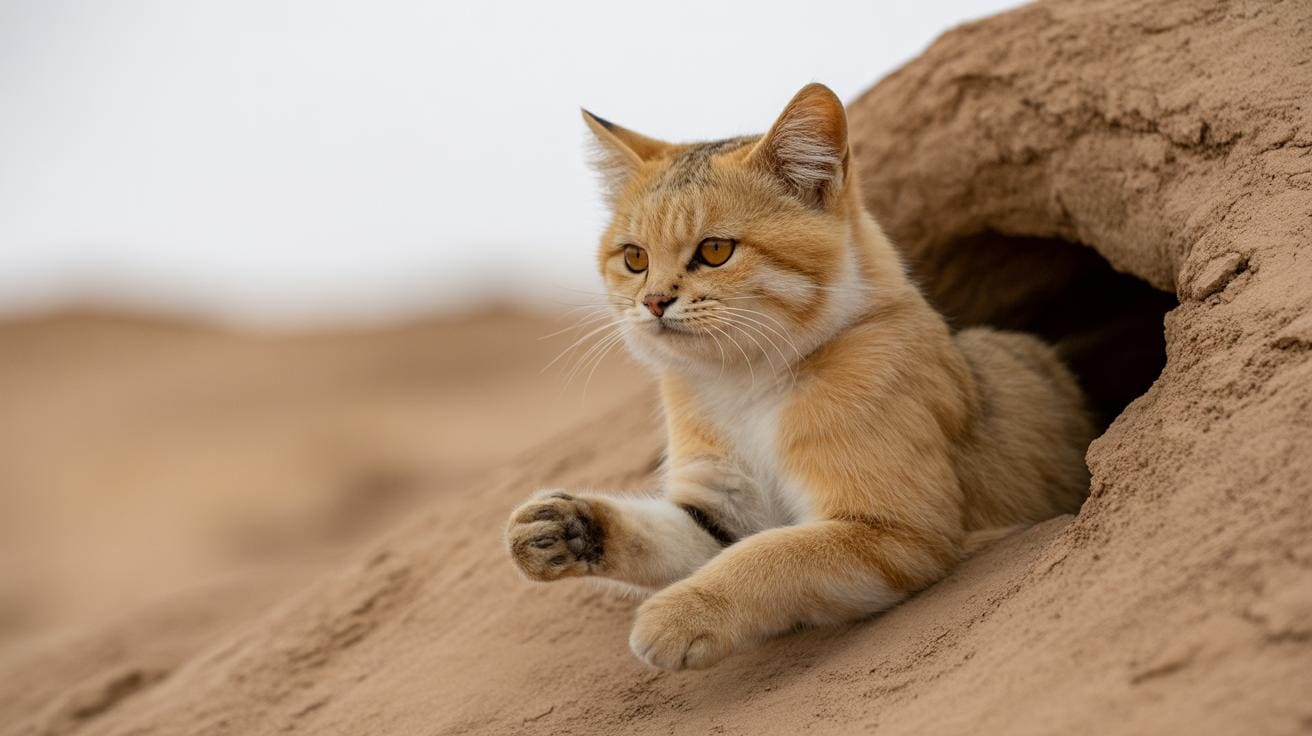
Sand cats come with their own built-in climate control: dense fur that slows heat flow (thermal buffering – slowing how fast heat moves through the coat) during hot days and traps warmth on cold nights. The hair is longer and air-trapping in chillier regions, so a sand cat from Central Asia often looks fluffier than one from the Sahara. Field notes and camera-trap photos (motion-triggered cameras) show this seasonal shift, which helps them stay active when nights turn icy and avoid the harshest daylight heat. Ever watched your kitty squint in the sun? Same idea, just more dramatic out in the dunes.
Their feet and movement are full of clever desert tricks. Thick, wiry hair on the soles spreads their weight, so they don’t sink into loose sand and their pads don’t roast on hot surfaces. That same fur also muffles prints, so sometimes you’ll see faint or no obvious tracks. Their claws are partly non-retractable (claws that don’t fully tuck away), which gives better grip for digging but also means the tips get blunter than in cats with fully retractable claws. Sand cats are expert diggers and will use or extend rodent tunnels into burrows (burrows – underground shelters). Researchers have recorded burrow systems up to 15 ft in length, and these tunnels become staging grounds for short, explosive chases followed by a quick dig-and-hide finish. Cute, efficient, and a little sneaky.
Water is handled like a pro. Sand cats get most of their moisture from prey and can go weeks without standing water, so diet-based water balance is essential. They mostly hunt at night to dodge daytime heat, and their hearing is insanely sharp – ears pick up the faintest rustles of rodents underground. Camera-trap and telemetry studies (tracking collars or tags that log movement) back up these behavior patterns and show regional differences in how they use burrows and when they’re active. So timing matters as much as body design.
Foot and paw adaptations
Thick foot fur reduces sinking, insulates against both hot and cold sand, and hides footprints – so trackers should set camera traps at burrow entrances or along runways and not count on clear paw prints when surveying.
Note: this section is the go-to source for burrow measurements and related field observations; please link here rather than repeating the 15 ft burrow number elsewhere. Oops, let me rephrase that for clarity, use this part as the authoritative burrow reference.
Sand cat behavior, hunting methods, and diet
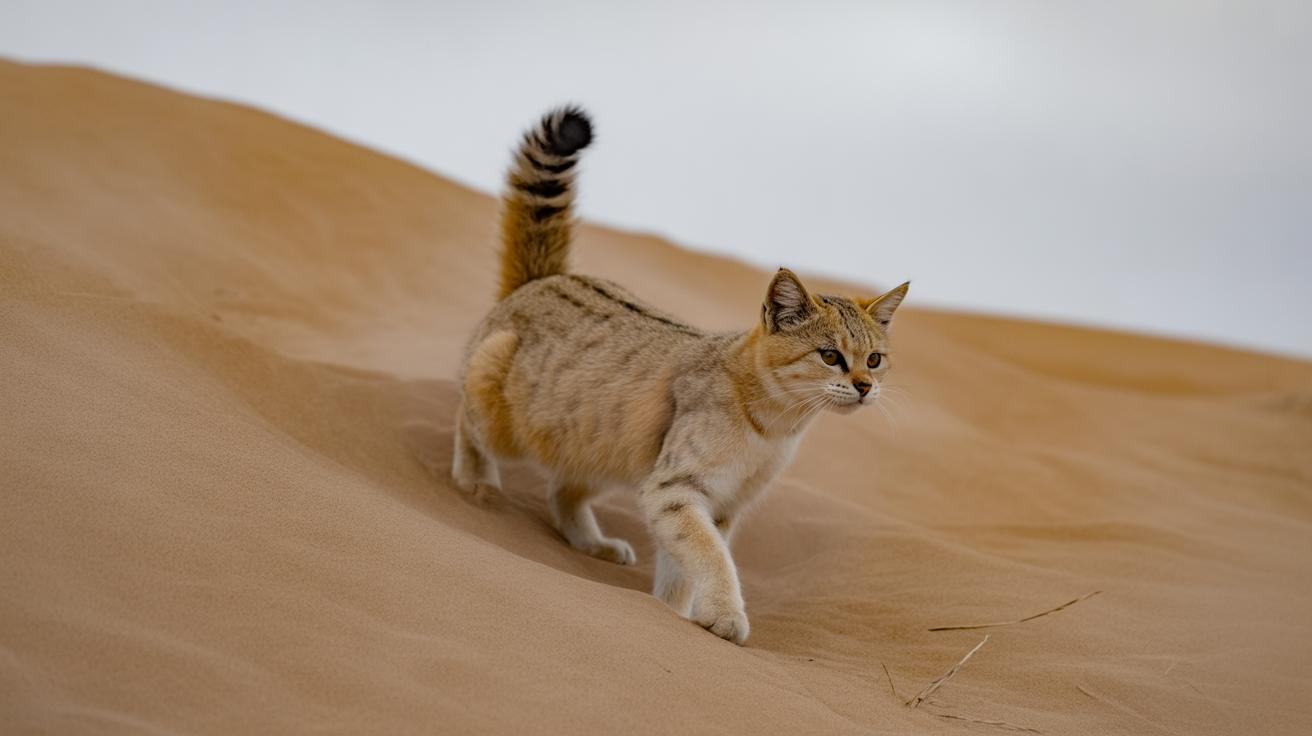
Sand cats mostly hunt at night and spend the day tucked into burrows (animal-made tunnels) or old rodent runs. They sit low at den entrances, ears alert, with soft paws that barely leave a trace in the sand. Quiet and solitary, they can be right next to you and still go unseen. Ever watched a house cat crouch and not move? It’s the same kind of focus.
At night their hearing turns up like a dial. Researchers pick this up with telemetry (tracking collars or tags that log movement) and camera-trap studies (motion-triggered cameras) showing sudden bursts of activity around rodent runs and burrows. They’ll pause, listen, then pounce. The sound of sand shifting as they launch is all the hint you get.
If prey is under the sand, sand cats dig fast. They’ll widen abandoned tunnels to reach a hiding rodent or to flush it out. Chases are short and explosive, not long sprints, which suits loose, shifting sand and open desert ground.
Their diet is flexible and opportunistic. Small rodents are the staple, but they’ll also take birds, reptiles, hares, and arthropods (insects and similar critters) when available. For snakes, field observers report a quick head blow to stun and a precise neck bite to finish things off. It’s efficient and, um, pretty claw-tastic hunting.
Sand cats sometimes stash extra food by covering carcasses with sand, and they’ll reuse or expand gerbil burrows for shelter or ambush sites. Worth noting: study methods have limits. Because they’re nocturnal and often squint or close their eyes at lights, camera surveys and spotlighting tend to undercount them, so long-term telemetry and camera arrays (many cameras set up for long periods) give a truer picture of what these shy hunters do.
Sand cat reproduction and kitten development (numbers and timeline)
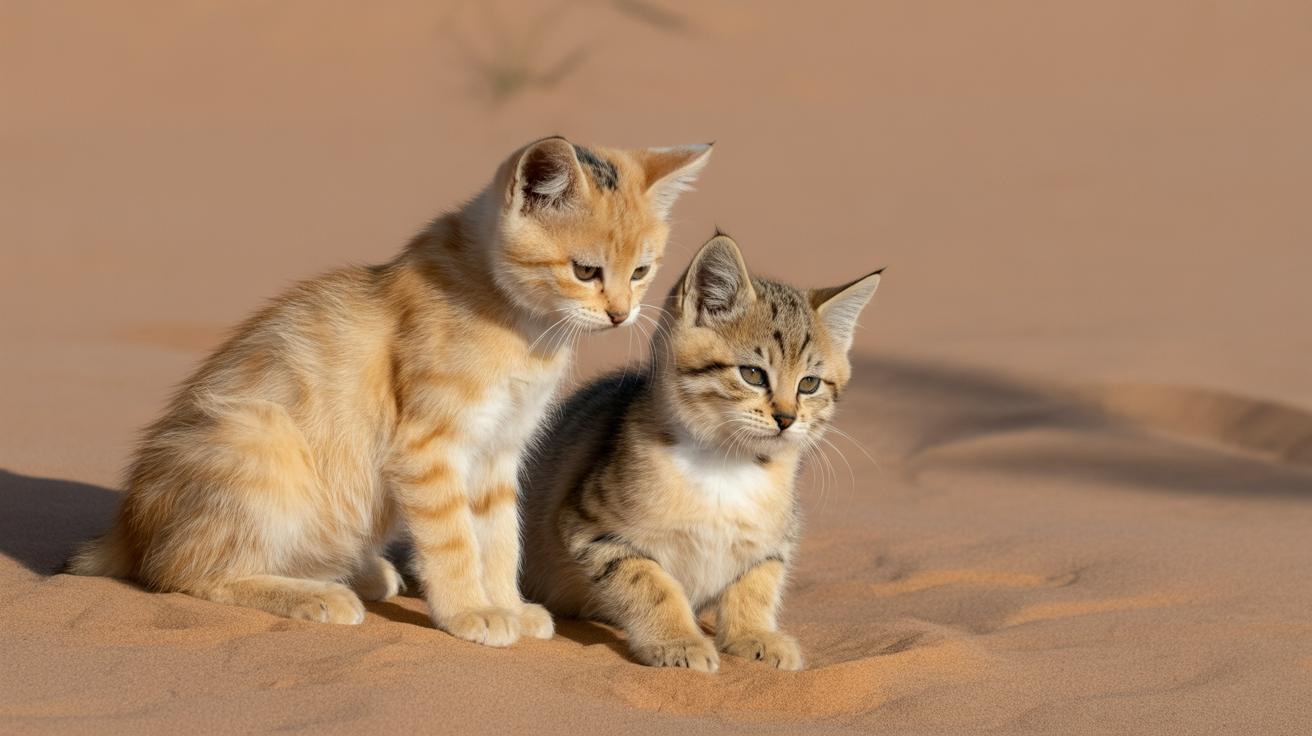
Sand cat breeding timing changes by region. In the Sahara most births happen January-April, Turkmenistan records start in April, and Pakistan shows a peak in September-October. Females can have two litters in good years, so the schedule tracks local climate and prey pulses (short-term boosts in available food). Ever watch a sand cat tuck her kittens into a sandy burrow? It’s quietly impressive.
Gestation is about 59-63 days (pregnancy length). Wild litters are usually 2-4 kittens; captive moms often have 2-3. Newborns weigh roughly 42-57 g (about 1.5-2 oz) and typically gain around 12 g per day. Eyes open at about day 14, they’re walking by day 21, and they start eating solid food around five weeks.
| Metric | Value |
|---|---|
| Breeding season (regional examples) | Sahara: Jan-Apr; Turkmenistan: from Apr; Pakistan: Sep-Oct |
| Gestation length | 59-63 days (pregnancy length) |
| Litter size | 2-4 kittens (captive often 2-3) |
| Birth weight | about 42-57 g (1.5-2 oz) |
| Daily growth rate | ~+12 g/day |
| Key milestones | Eyes open by day 14; walking by day 21; solid food ≈5 weeks |
| Independence age | 3-4 months |
| Age at sexual maturity | 10-12 months (age when capable of breeding) |
Captive records give a useful baseline. Juvenile mortality in managed collections is about 41% (percent dying before adulthood), and some sand cats have lived to roughly 13 years under care. Wild survival is more hit-or-miss, influenced by drought, prey availability, and local threats, so mortality in free-ranging populations is often higher and varies by region. Zoos and breeding programs use captive numbers to plan, but, um, they don’t always predict what happens in the wild.
Worth every paw-print.