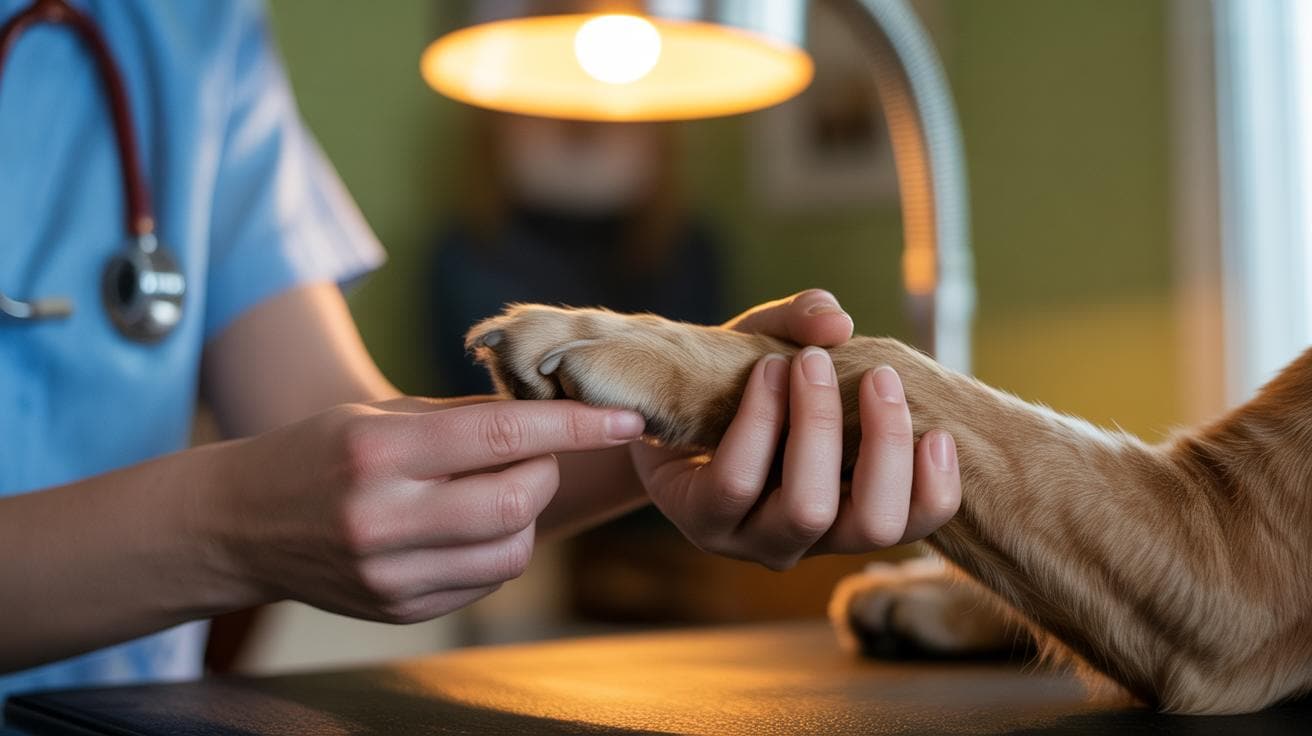
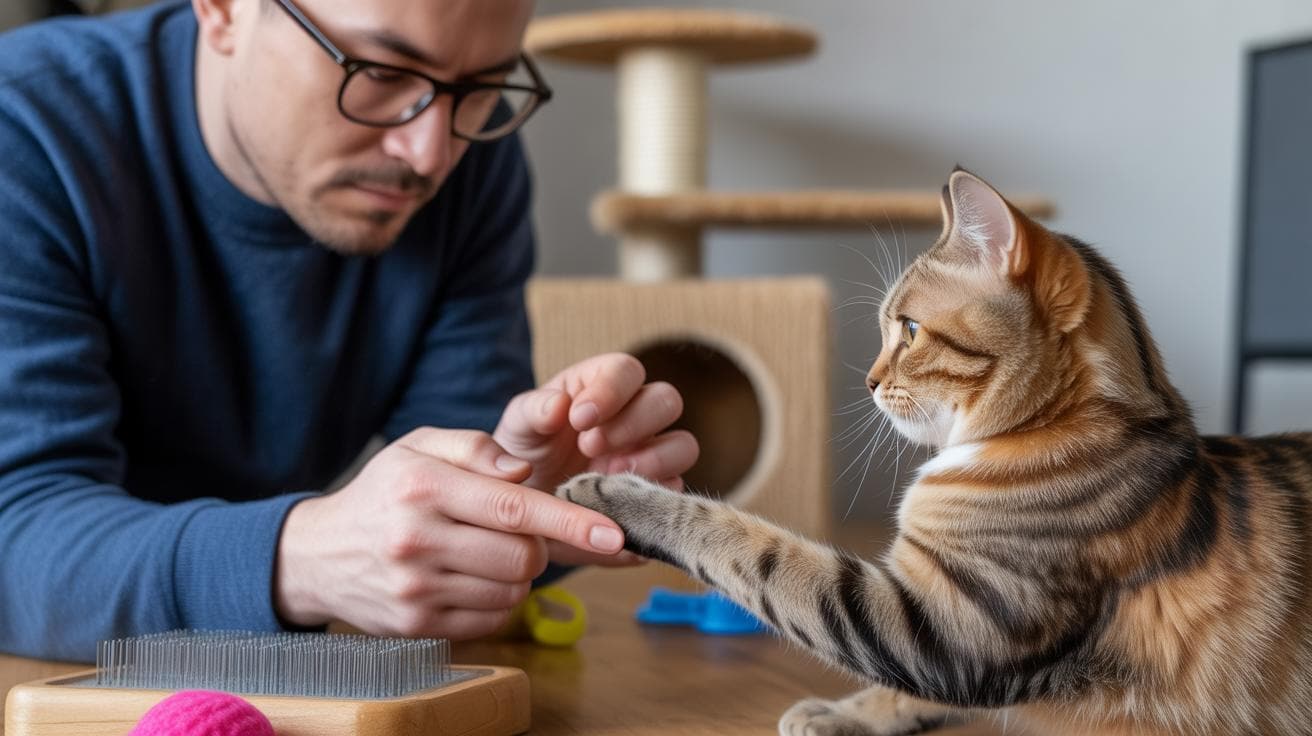
Ever watched your cat nibble a claw and wondered if it’s hygiene or a cry for help? Most of the time it’s just grooming. Your kitty makes soft little nibbles, whiskers twitching as she chews and peels away the old outer sheath (the thin, dead layer that comes off) so the sharp inner claw can do its job. Claws are made of keratin (the same protein as your fingernails), so think of it like a kitty filing session with tiny teeth and a post. Claw-tastic.
But pay attention. If the chewing is constant, aimed at one toe, or comes with bleeding, swelling, limping, or dullness and tiredness, it could be an infection, a broken or ingrown claw, or pain. Snap a quick photo and check with your vet, better safe than sorry, uh, right? Worth every paw-print.
Biological grooming: routine claw-biting explained
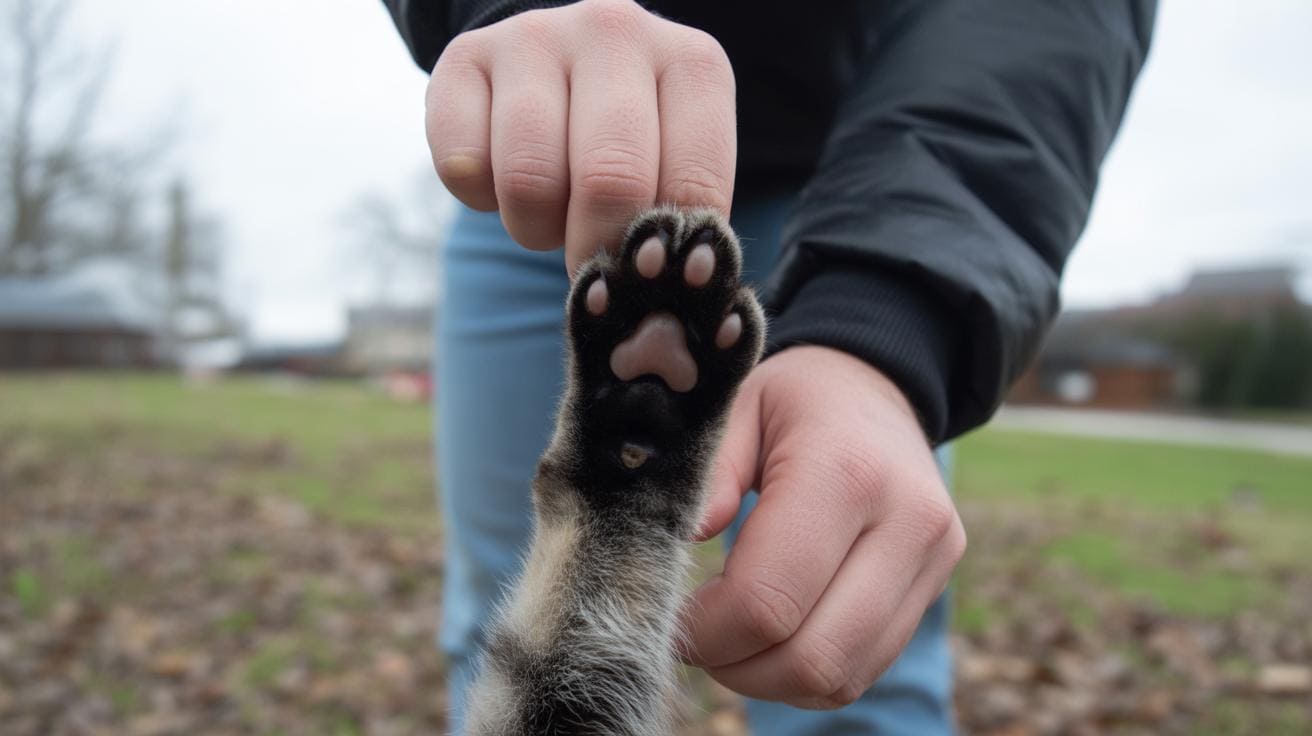
Most claw-biting is just normal grooming. But if your cat chews claws every day or obsessively, if you see blood or swelling, or if your cat is limping or unusually tired, call your vet.
Cat claws are mostly keratin (the same tough protein as human fingernails). They wear an outer sheath that sheds in layers. When a kitty bites, scratches, or licks a claw, it’s usually pulling away that old sheath so the sharp inner claw can work. Think of it like a cat filing its nails with its teeth and a scratching post. About 90% of nail care is self-managed when cats have good scratching options, though older or less-mobile cats and some kittens may chew more as part of normal grooming.
When it’s normal
- removing the outer sheath
- cleaning out dirt or trapped litter
- chewing off a small broken tip
- brief grooming comfort or nervous licking during a grooming session
- extra attention to paws in older cats who can’t scratch as much
A worrying change usually shows up in frequency or focus. If your cat keeps chewing the same toe all day, chews every day, or the paw looks red and sore, that’s different from casual grooming. If you see persistent bleeding, swelling, or limping, see Medical causes for red flags so a vet can take a look.
Watch for patterns over a few days. Note which paw, how long the chewing lasts, and any limping or behavior changes, video or a quick photo can help. Those details help answer why your cat is biting its claws and point to causes like a broken nail, infection, a foreign object, or stress. If the habit is repetitive or looks painful, get your vet involved so they can check for infection or other problems.
Medical causes that make cats bite their claws
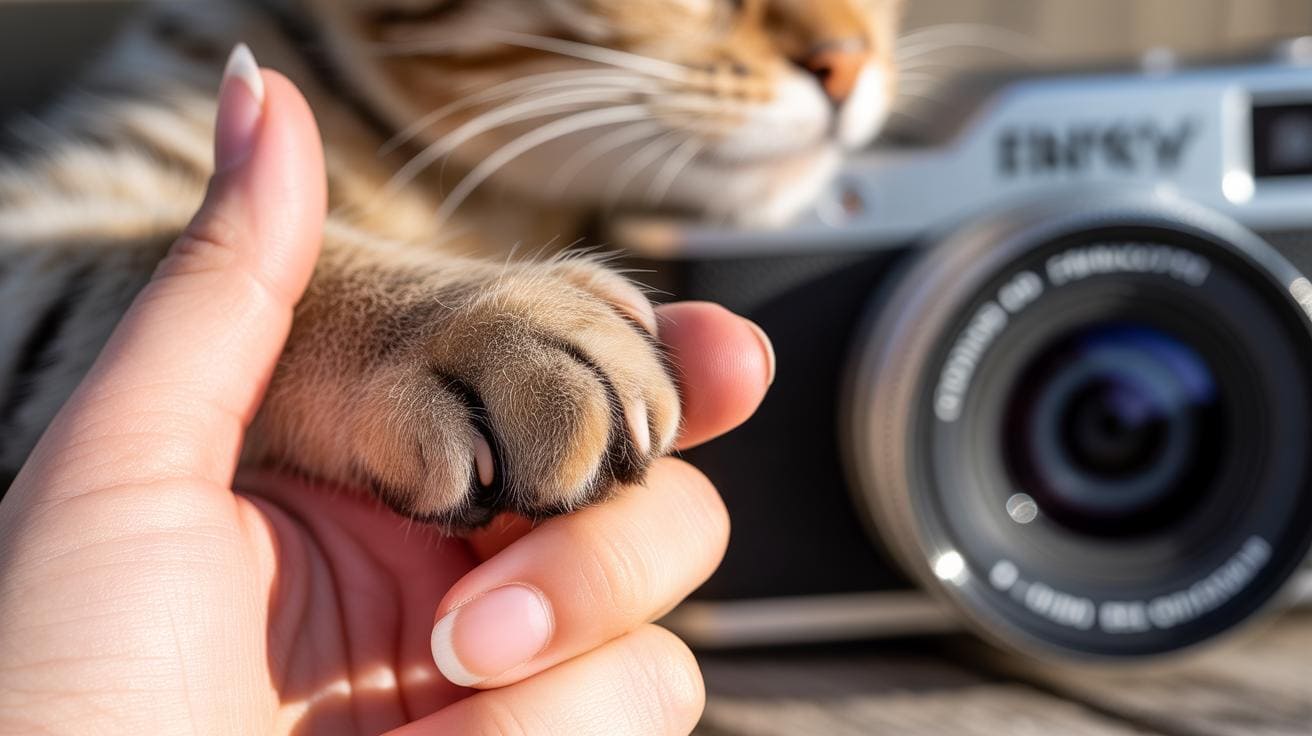
Sometimes claw chewing is more than grooming. Lots of medical issues make cats gnaw at their toes and nails. Think injuries like a split or broken nail, a cut, or a small foreign object stuck under a claw. Bacterial or fungal nail-bed infections are common too; fungal means a fungus like ringworm that lives on skin and nails.
Parasites are a big one. Fleas and mites make paws itch so badly your cat will chew and bite. Allergic pododermatitis (paw inflammation from allergens) can do the same. There are also immune diseases like pemphigus foliaceus (an autoimmune skin disease where the body attacks the skin), and neoplasia (abnormal tissue growth), including lung-digit syndrome, which is when cancer spreads to the toes.
Watch for clear signs of trouble: swelling, redness, sticky or bloody discharge, or a cracked-looking claw. If your cat pulls the paw back, limps, or cries when you touch a toe, that usually means pain. Left alone, a deep infection can move into bone and cause osteomyelitis (a bone infection), which is much harder to treat.
Parasites and systemic problems can look similar. Ringworm (a fungal infection) can affect nails and skin and can pass to people and other pets. If you worry about shared beds or a dog bringing bugs in, read about do cat fleas live on dogs to see why parasite control matters and how transmission can happen.
When to see the vet
- daily or obsessive chewing that does not stop
- the same paw targeted again and again
- visible swelling of the paw or toe
- sticky, bloody, or foul-smelling discharge
- limping or obvious pain when walking
- a broken or missing claw you can see
- fever, extreme tiredness, or not eating
How vets check it out
Vets use cytology (a quick cell exam) and cultures to find bacteria. Fungal tests include PCR (a DNA test) or DTM (a fungal culture medium). They may take skin scrapings or swabs for parasites. X-rays help if a fracture or deep object is suspected. Cultures usually come back in 48 to 72 hours. X-rays are immediate. Fungal workups can take several days to weeks, depending on the test.
If your cat is chewing a paw, don’t guess. Get it checked. It could be something simple, or it could need real treatment, and early care usually means a faster, happier recovery.
Why Do Cats Bite Their Claws: Causes
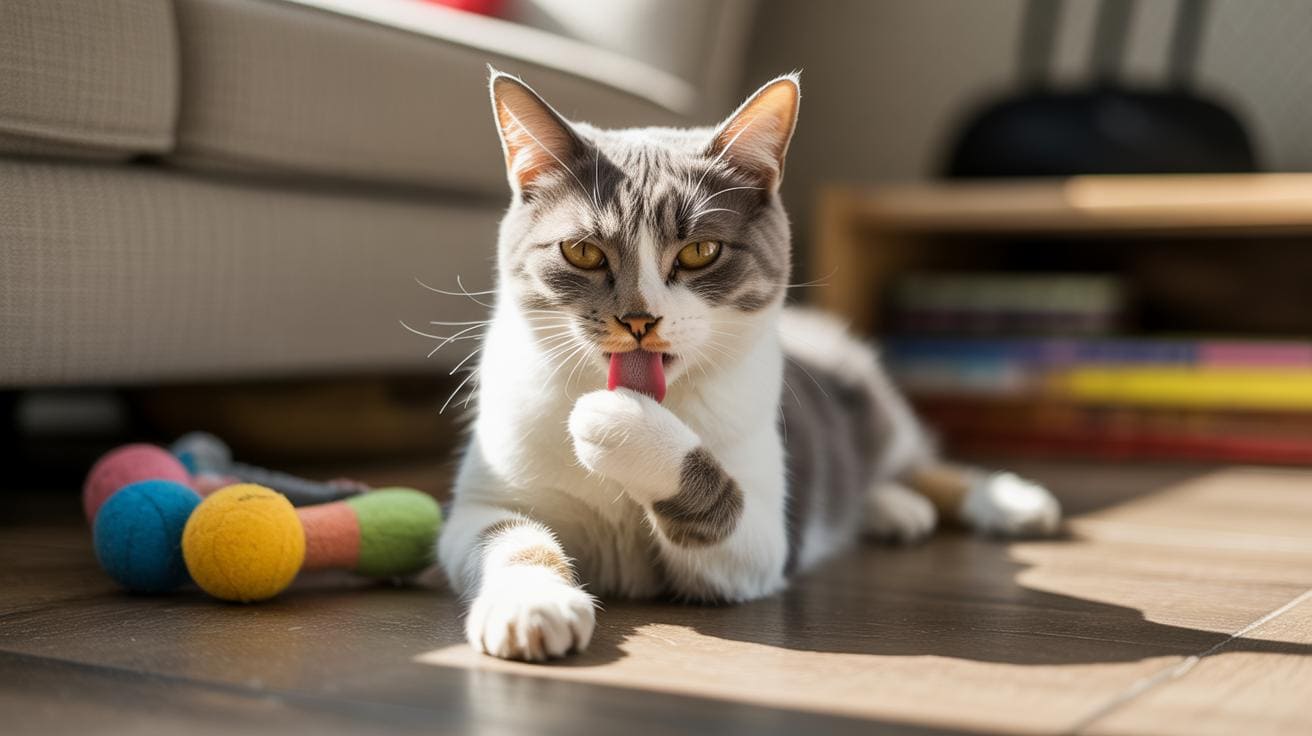
Stress and change are big triggers. Moves, new people or pets, guests, or swapped furniture can make a cat over-groom (that means extra licking or chewing). Boredom or not enough play also pushes some cats to chew like they are self-soothing. Ever watched your kitty chase shadows and then nibble a paw? That nervous, repetitive chewing is often the same thing.
Tension between housemate cats shows up the same way. Some breeds are just more anxious by nature, so if your cat is a nervous type, keep a closer eye on them. Behavioral chewing usually looks repetitive and tidy. Medical chewing often comes with limping (favoring a leg), swelling (puffiness), pus (infected fluid), or obvious pain, so if you see those signs or bloody spots, check the Medical causes right away.
Try a few quick fixes at home first. Short interactive play sessions, 5 to 10 minutes, two or three times a day, help burn off the hunting drive and cut boredom; the satisfying thud of a chasing toy can work wonders. Reduce sudden stress where you can: keep routines steady, give a quiet room during upheaval, or separate tense cat pairs for a bit. Rotate toys and introduce new items under supervision for a week so things feel fresh; novelty helps a lot.
Handle paws calmly when you check them, and never punish the cat for chewing, punishment just makes anxiety-related biting worse. If chewing keeps up despite these steps, or your cat chews every day and damages skin or fur, get a behaviorist consult or see a veterinary behaviorist (a vet who specializes in pet behavior). For ongoing enrichment plans and long-term routines, see Long-term prevention.
Worth every paw-print.
Inspect and document + first aid
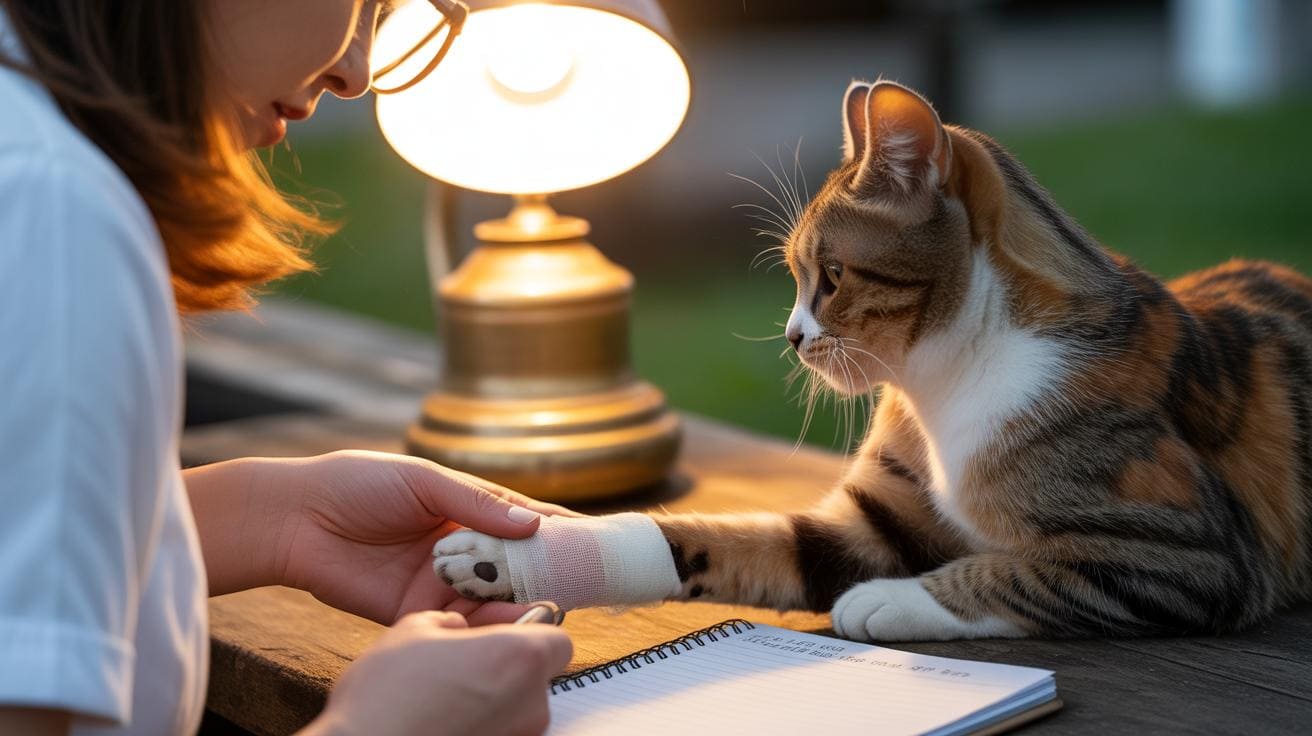
Start by watching from a short distance so you don’t stress the cat more. Take photos from several angles with your phone (the camera’s date/time info is usually enough). Note which paw, how long the chewing lasts, and how often it happens , short video clips are great. Write down any other signs you see, like limping, appetite changes, or hiding, and the time you first noticed the problem. If you see persistent bleeding, swelling, or limping, check the Medical causes for red flags.
If the cat pulls away, growls, or seems in sharp pain, stop the exam right away and call your vet. Heavy bleeding or dramatic swelling needs a clinic visit. Don’t poke at deep wounds or try to dig out things stuck under the nail yourself (that can make pain, infection, or bleeding worse). If your cat becomes aggressive, give it space and phone the clinic.
For small, superficial issues you can try a calm first-aid routine. Move the cat to a quiet room or carrier (cat carrier – hard-sided travel box) and speak softly to lower stress. If a toe is bleeding, press gently with clean gauze or a cloth (clean cloth) for several minutes until it slows. Rinse dirt or litter away with lukewarm saline (saltwater solution) , pour or dab gently. Don’t scrub. Take photos after cleaning so the vet can see the before-and-after.
If bleeding won’t stop, you suspect a foreign object (like a splinter or grass awn), or the wound looks deep, get to the vet promptly.
When you call the clinic, have your notes ready: date of onset, how the problem has changed, which paw is affected, any past paw issues, and any home treatments you tried. Attach the photos or videos to your message if you can. That little timeline helps the vet triage faster and plan next steps.
Worth every paw-print.