Think every wild cat eats the same thing? Nope, not even close. Ever watched a house cat turn up its nose at veggies? Wild cats are obligate carnivores (they must eat meat), and each species has its own favorite menu.
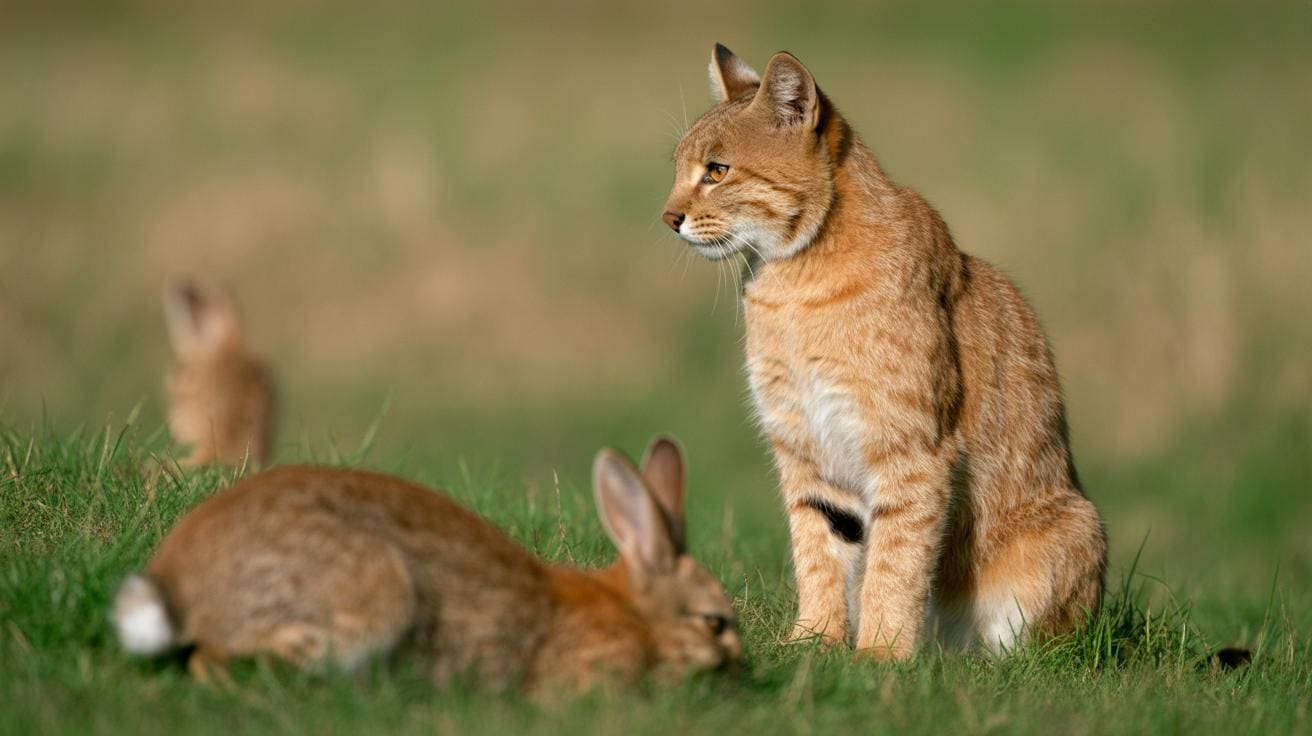
Small wildcats stick to tiny prey: mice, voles, insects, and birds. Picture the satisfying crunch of feathers as a bird skitters away. Medium-sized cats like bobcats and lynx favor rabbits, hares, and sometimes young deer. They’re built for quick bursts and pounces.
Cheetahs and servals chase down fleet-footed prey , gazelles or small antelope for cheetahs, and rodents or birds for servals. Fishing cats and some otter-like species actually go after fish and crustaceans, slipping through reeds for something slippery and wet. Snow leopards and mountain cats take on sheep and goats in steep places, using stealth more than speed.
Big hunters like lions and tigers tackle large hooved mammals , deer, wild pigs, even buffalo. That’s a heavy meal and a lot of drama. Size, habitat, and season change the menu a lot. In winter, when small prey hides, a wild cat might switch to whatever’s easier to catch.
Whole prey matters. Eating fur, organs, and bone (whole prey = the entire animal, not just meat) gives cats nutrients they can’t get from muscle alone. Organs (like liver) are vitamin-rich, bones supply calcium, and fur or feathers help wear teeth and move food through the gut.
When food gets scarce, cats scavenge (eat leftovers or carrion) or hunt livestock. That’s when conflicts with people spike. A hungry cat might risk farmlands, which sadly often leads to retaliation or trapping.
We’ll walk species-by-species through those menus, show why whole prey is so important, and explain what happens when natural food runs out and cats start eyeing our chickens or goats. Worth understanding if you care about cats , wild and furry, and a little unpredictable.
What Do Wild Cats Eat: Diets by Species
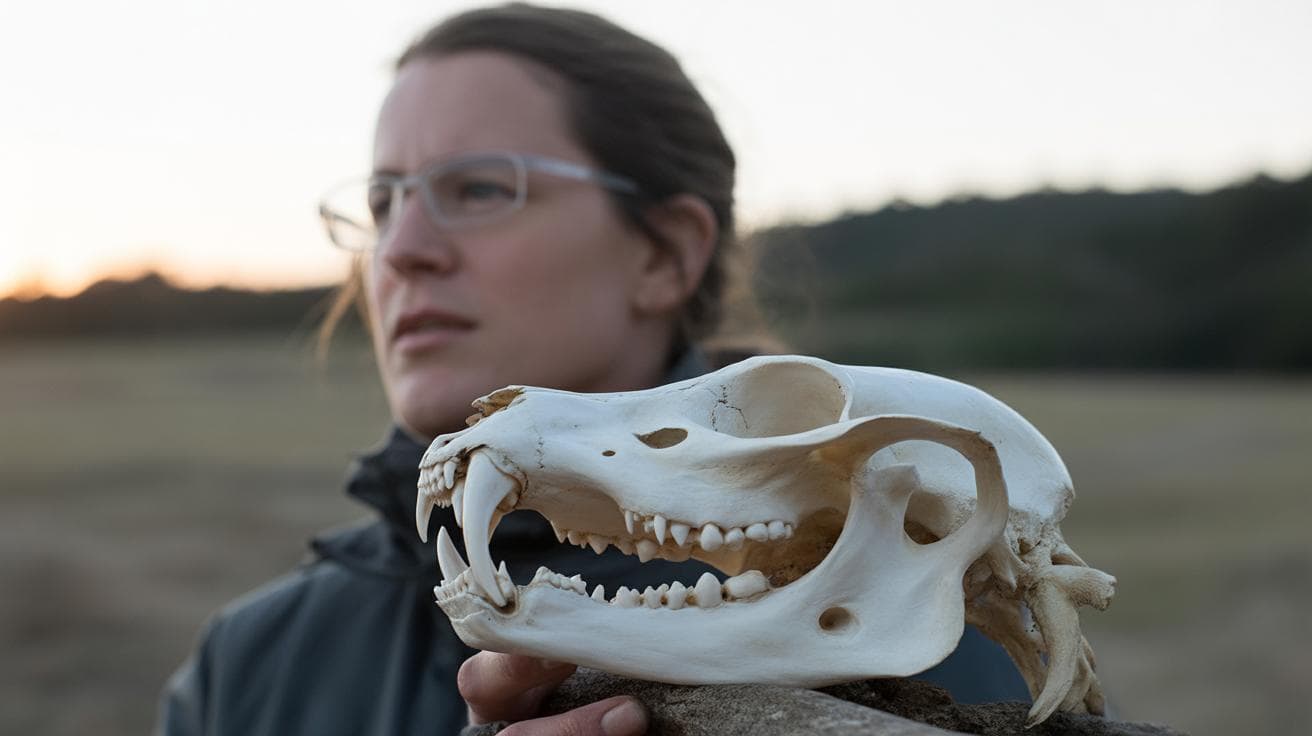
Wild cats are obligate carnivores (they must eat meat). Their bodies are made to handle whole, raw prey, so most of their meals are meat and the parts that come with it. Small wild cats mostly hunt rodents and little birds , mice, voles, sparrows , and some specialists eat fish and crustaceans, like the fishing cat. Medium-sized felids go after bigger mammals and birds. Big cats usually hunt hooved mammals (ungulates) like deer and antelope.
They don’t eat one big meal a day. Instead they nibble and pounce many times , several small feedings across the day. And they usually eat whole prey: fur or feathers, organs (like liver and heart), and bone. Organ meat packs vitamins and minerals. Bones give calcium and a satisfying crunch, and they help wear down teeth and exercise the jaw. Ever watched a cat pull at feathers or crunch a rib? It’s a good reminder their digestion expects whole prey.
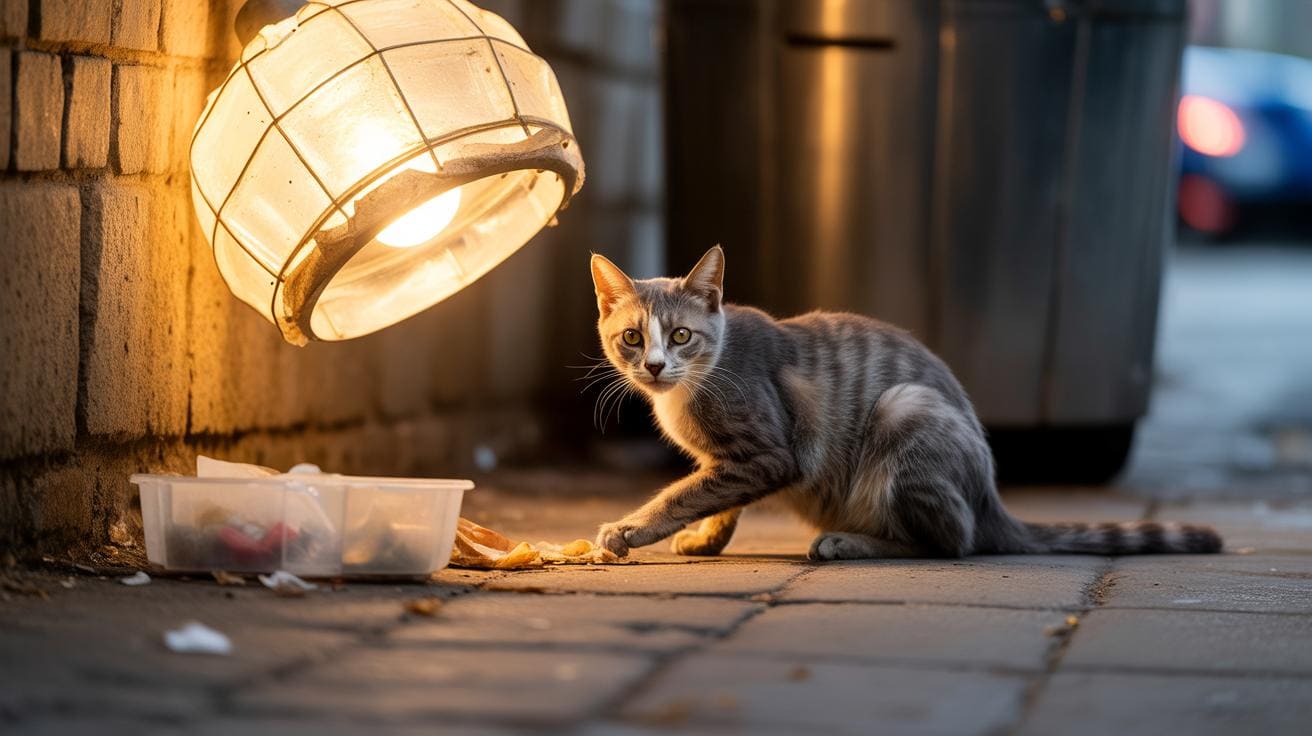
How a wild cat eats depends on its size, the season, what it’s learned, and what prey is nearby. A tiny forest cat will have a very different menu than a lion on the savanna. Feral cats show the small-prey pattern well: about nine mice a day on average, and many small hunters feed roughly 10 to 15 times daily. Think of it like a kitty buffet made of mousie snacks.
Calorie-wise, wild and feral diets are mostly protein and fat. On average the split is about 52% protein, 46% fat, and 2% carbohydrate by calories. That low-carb part is important , cats don’t rely on carbs like some other animals do.
When natural prey drops or people leave food around, wild cats shift to scavenging or go after livestock. That can increase conflicts with people and create real conservation headaches for communities trying to protect both farms and wild cats. So good prey management matters for everyone.
Worth every paw-print. Watching a cat thrive on the right food , organs, bones, meat , is kind of magical, and it’s a neat reminder that their whole design is built for hunting and eating whole prey.
Prey types wild cats eat: rodents, birds, reptiles, amphibians, fish, invertebrates
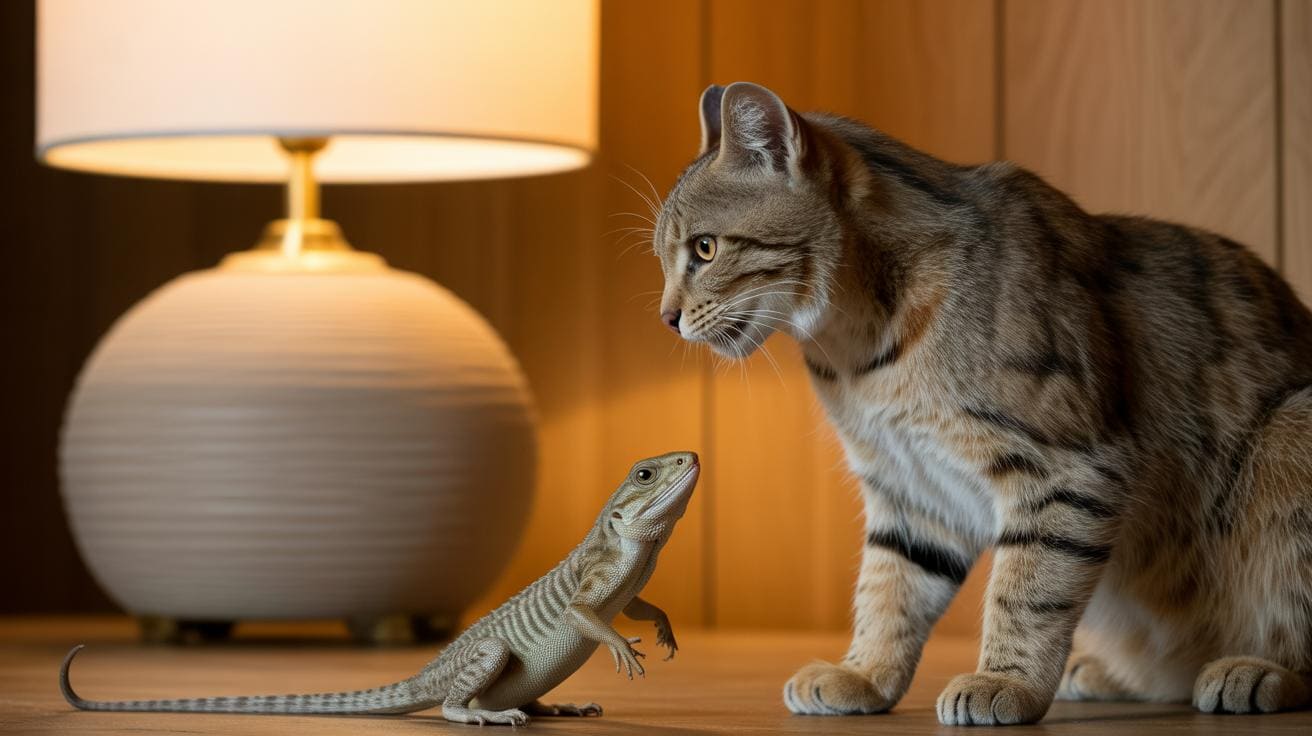
Wild cats eat a surprisingly wide menu. Think of them as sleek little hunters picking what’s easiest to catch that day. Your neighborhood feral cat and a small wild felid (a small wild cat species) might eat very similar things, just at different scales.
-
Rodents , Mice, rats, voles, squirrels, hares, and rabbits make up a big part of many cats’ diets. Small rodents are grabbed in quick strikes, over and over during the day. You can almost hear the soft pounce and rustle as a cat scores another meal.
-
Birds , Small passerines (small perching birds like sparrows and robins) are common targets. Cats that hunt near water will also take waterbirds or shorebirds. Some cats wait by nests or along flight paths, sitting very still until the moment to leap.
-
Reptiles , Lizards and small snakes are eaten where they live. Ground-dwelling reptiles get caught by stealth and a fast pounce. It’s all about patience and timing.
-
Amphibians , Frogs and toads show up on some menus, but watch out. A few toads have toxins that can hurt cats. See the Risks section for handling and treatment tips if you’re dealing with wild prey.
-
Insects and arthropods , Spiders, grasshoppers, cockroaches, and beetles give tiny but useful nutrients. They’re especially important for kittens and for smaller wild cat species that need lots of quick snacks.
-
Fish and crustaceans , Fishing cat and flat-headed cat specialize in fish and crabs, using paws or short dives to grab slippery meals. Think of it like watching a cat fish with its hands.
-
Eggs and nest prey , Eggs and nestlings get taken when cats can reach low shrubs or ground nests. It’s opportunistic, if it’s there and easy, they’ll try it.
What a cat eats really depends on where it lives. A forest cat’s pantry is different from a savanna lion’s. Seasons, wetland presence, and nearby coastlines all change the menu. And that amphibian toxin risk? Yep, another reason to check the Risks section if you’re handling or rehabbing wild prey.
Hunting techniques wild cats use: stalking, ambush, pursuit, and nocturnal feeding
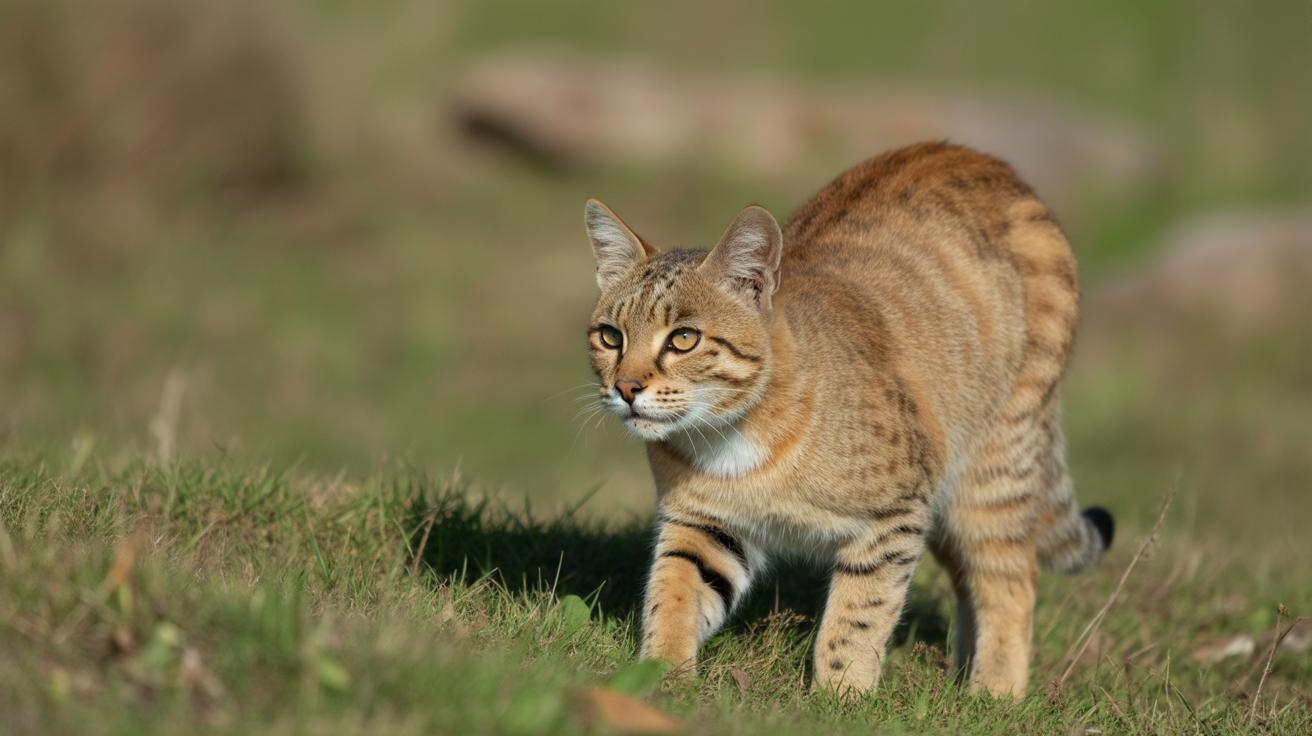
Stalking and ambush are the backbone of how wild cats hunt. A cat freezes, belly low, ears forward, and inches closer until the strike distance feels right, then explodes into motion. Stealth comes from soft foot pads and whiskers (vibrissae that sense tiny air movements and brush). Body size and limb morphology (body and limb shape) shape how a cat strikes: short, powerful legs favor leaping pounces. Long limbs favor fast chases. Big muscles help when they need to grapple larger prey. Experience matters too. Older cats read wind and shadow better than kittens do.
-
Stalk and pounce , Small wild cats and feral kitties sneak up on rodents and songbirds with a creeping approach, then launch a sudden vertical leap that covers a few feet and snags prey before it scatters. It’s precise. Quick and tidy.
-
Ambush and wait , Tigers, leopards, and some medium-sized felids lie in wait near trails or waterholes, striking at close range with a lunging grab and a neck bite. Patient and brutal. Classic big-cat style.
-
High-speed pursuit , Cheetahs are sprint specialists, hitting top speeds around 60 to 70 mph in short bursts. Their long limbs and flexible spine let them stretch out for huge strides as they chase fleet antelope. It’s all about acceleration and control.
-
Water and paw-fishing , Fishing cats and flat-headed cats use their paws to scoop fish or probe shallow water, timing a quick swipe to surprise slippery prey. Think of a slow, careful paw reach followed by a snap. Slick, clever, and a little splashy.
Many wild cats hunt at night. Big pupils and super-hearing help them find rustling prey in dim light. Daytime stalkers lean on sharp vision and contrast to pick out motion. Technique guides the finish: tiny prey often get a quick bite to the skull or neck. Bigger animals get held down and suffocated, usually by the throat. Fishing tactics focus on a secure catch and fast handling near water so the meal doesn’t slip away.
Ever watched a cat freeze, then pounce? It’s a small, perfect thing. Worth every paw-print.
How much wild cats eat: caloric needs, daily intake, and body-size differences
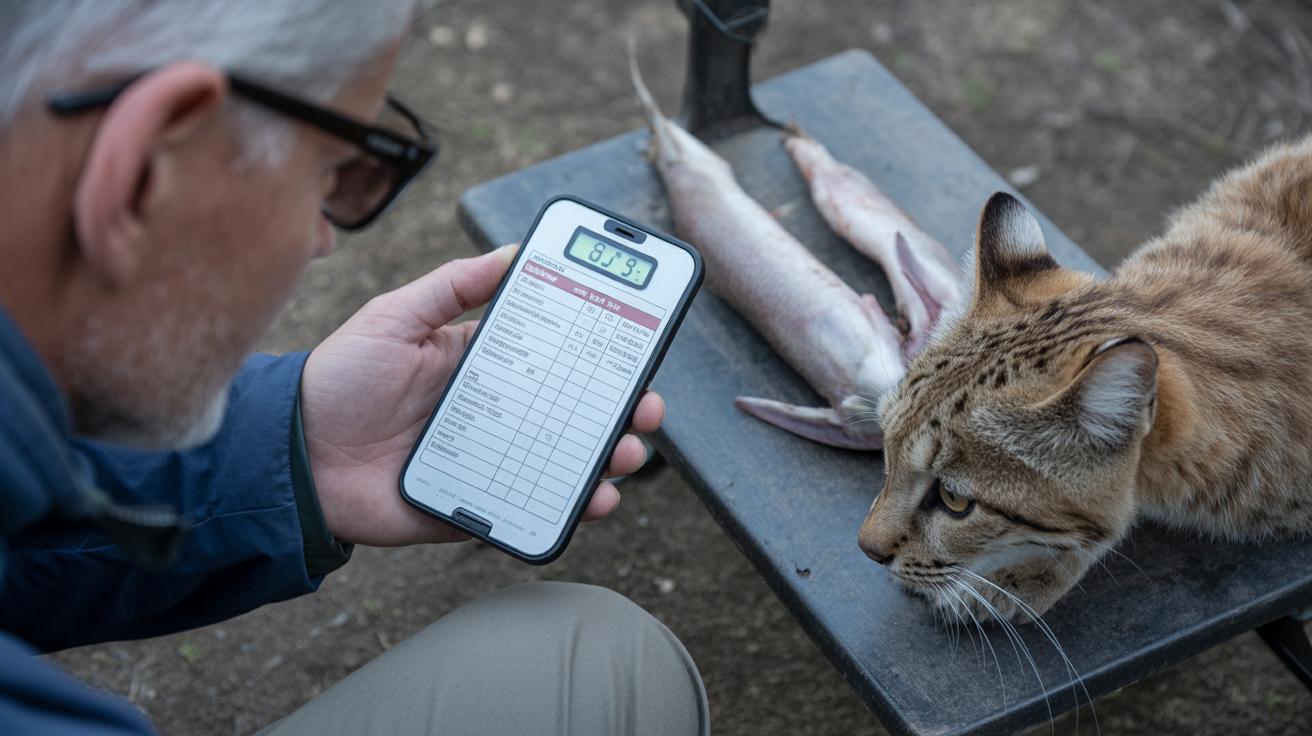
Small wild cats spend their day on lots of tiny hunts. Think of a steady stream of mousie snacks, small birds, or little fish, many short captures instead of one big feast. Their energy comes from lots of quick meals, so if prey is nearby they eat a lot more often.
Medium felids, like pumas or big bobcats, usually need about 2,000 to 4,000 kcal per day (kcal = nutritional Calories). They often take prey that weighs roughly 1–30 kg (2–66 lb). One big kill can feed them for a few days, with the cat coming back to nibble at the carcass. That pattern helps them save hunting energy by making fewer trips for bigger payoffs.
Large big cats, such as lions and tigers, average around 5,000 to 10,000+ kcal per day (kcal = nutritional Calories). They can gobble many kilograms in one sitting, often 5–30 kg (11–66 lb) at a carcass. These big cats can fast longer and use fat reserves (stored body fat used for energy) to get through the lean times between major hunts.
Body size changes everything. Smaller cats chase lots of tiny prey and eat several times a day. Mid-sized cats hunt bigger animals and return to a kill multiple times. The giants rely on a few big hunts, heavier meals, and stored fat to bridge the gaps.
Worth every paw-print.
| Species size category | Typical prey examples | Typical daily feeding pattern/quantitative notes |
|---|---|---|
| Small wild cats | Small rodents, passerines, small fish | Tens to a few hundred grams per day total; many short feeding bouts across the day |
| Medium felids (puma/large bobcat-sized) | Medium mammals and birds (1–30 kg / 2–66 lb prey) | About 2,000–4,000 kcal/day (kcal = nutritional Calories); single kills may last multiple days with repeated visits |
| Large big cats (lion, tiger) | Ungulates and large mammals | About 5,000–10,000+ kcal/day (kcal = nutritional Calories); single-meal consumption often 5–30 kg (11–66 lb); can tolerate longer fasts using fat reserves (stored body fat used for energy) |
Seasonal, maternal, and juvenile feeding: how wild cats learn what to eat
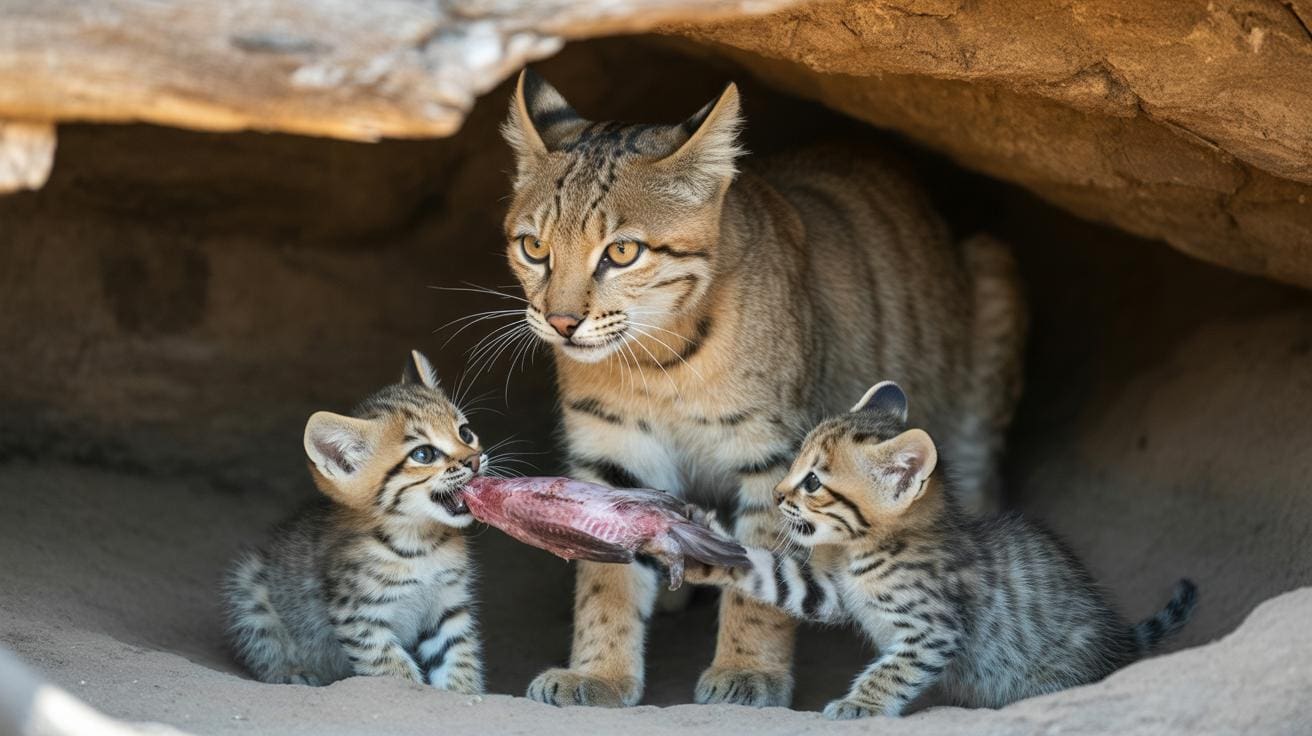
Kittens start sampling solid food at about 4 to 5 weeks old, nibbling on bits of the whole prey their mother brings home (whole prey = an entire animal, not just scraps). Nursing usually continues until around three months, and weaning (when kittens stop nursing) is gradual, paced to the mother’s routine and whatever food is available locally.
Moms are full-on teachers. They carry prey back to the den and put it in front of the kittens, sometimes still alive but injured, so the youngsters can practice biting, tearing, and swallowing. The smell of fur and blood, the rustle of feathers , all of that helps the kittens figure out what to eat and how to handle it. Cute, messy, and brilliant.
Mothers even stage easy hunts on purpose, making a slow, deliberate catch so the kittens can watch, stalk a few steps, or chase it. Think of it as guided practice: the freeze, the stalk, the pounce. Kids go from awkward swats to cleaner, faster neck bites with every try. I once saw a tiny kit bat at a sparrow like it was a toy, then an hour later nail a near-perfect pounce , tiny improvements add up fast.
Practice matters. Juvenile cats (young, still learning) get better with each attempt , shorter chases, sharper aim, more successful grabs. By watching, smelling, and touching real prey they learn which parts are richest: organs (nutrient-packed bits like liver and heart), meat, even bone, and they figure out how to handle feathers or fur without choking. Your cat’s whiskers twitch as it sizes up the prize , really sensory stuff.
Seasonal cycles change the classroom. When small mammals (mice, voles) boom, moms can bring more frequent, easy meals and kittens learn quicker. When prey is scarce, litters see fewer whole kills and families widen their menu to include birds, insects, or scavenged meat. Those shifts shape when young cats hunt, how often they succeed, and how fast they become independent. Isn’t it neat how nature schools them, one tiny pounce at a time?