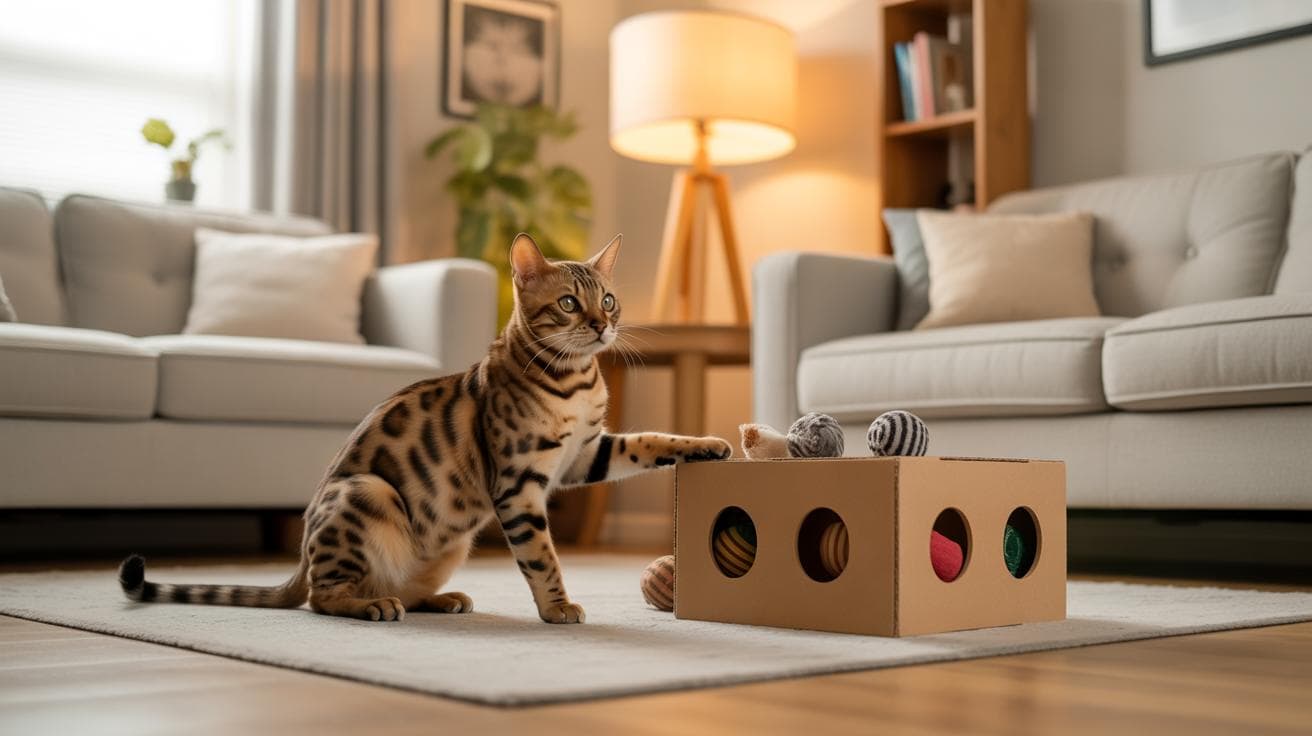
Bengal cat activity level and toy recommendations

Think house cats are lazy? Meet the Bengal. This pint-sized athlete treats your sofa like a jungle gym and lives for zoomies (those wild, goofy sprints cats do).

They sprint, climb, and pounce in quick, explosive bursts. Then they flop for a nap. So one long play session won’t cut it , they want lots of short, intense play breaks.

We break down their activity rhythms and share toy picks that actually keep up: fast wheels (like a hamster wheel for cats), feather wands (a long stick with feathers that mimics prey), wall shelves (sturdy ledges for climbing), and puzzle feeders (toys that hide kibble so your cat has to work for meals). Ever watched your Bengal launch from a shelf? Your couch will thank you.

Read on if you want a calmer couch and a happier, more satisfied Bengal.
Worth every paw-print.

Bengal cat activity level and toy recommendations
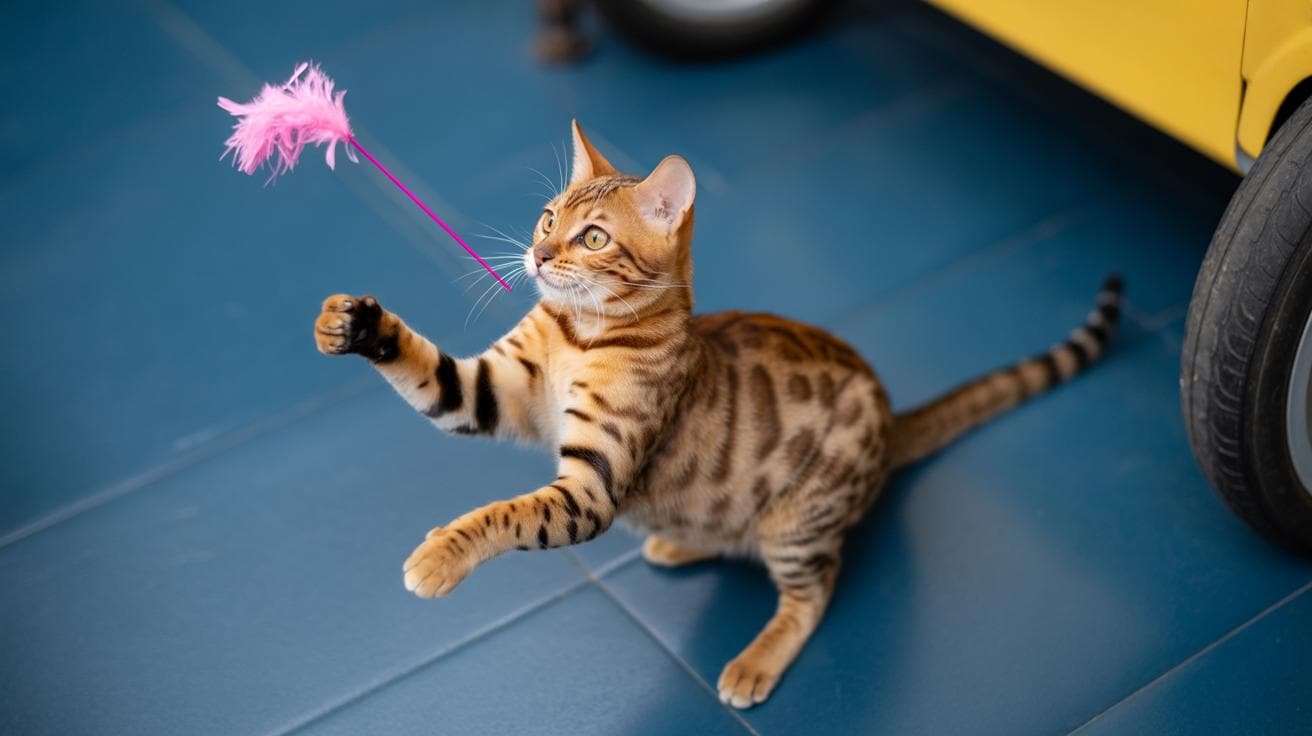
- Immediate answer activity needs and quick toy picks.jpg

Bengal cats are high-energy little athletes. They love running, climbing, and hunting-style play all day, with short, explosive bursts of energy and lots of zoomies. Your living room might feel like a jungle gym sometimes, fun, chaotic, and totally claw-tastic!

Play in short sessions. Try several 5 to 10 minute bursts spread through the day instead of one long workout. Short sessions keep them engaged, cut down on naughty behavior, and fit into busy schedules. Ever watched your kitty stalk a sock for two minutes and then nap like nothing happened?

  • One Fast Cat exercise wheel , a big wheel that lets them run for cardio (exercise wheel, like a hamster wheel but for cats). Price bracket: high ($180-$320). Great for hyper Bengals once they learn it; a few short training sessions usually do the trick.
  • Tall multi-level cat tree (multi-perch model) , supports jumping and high naps, often with posts wrapped in sisal (sisal is a coarse plant fiber used for scratching). Price bracket: medium ($40-$150). Your cat will love scouting from the top.
  • Trixie-style puzzle feeder , makes them work for meals and mimics hunting (a feeder that hides kibble and makes cats solve a puzzle). Price bracket: low-medium ($15-$60). Slows eating and keeps their brains busy.
  • Da Bird feather wand , a wand toy that mimics flying prey (wand toy with feathers on a string), perfect for fast chase sessions. Price bracket: low ($5-$20). Super interactive and great for bonding.
  • Wall-mounted climbing shelves , add vertical routes without taking floor space (sturdy boards mounted to the wall). Price bracket: low-medium ($20-$60). Makes your walls a playground.
  • Interactive treat-dispensing toy or robot , solo mental play when you’re out (robot, a battery-powered toy that moves and drops treats). Price bracket: medium ($25-$90). Keeps them occupied and curious.
  • Cat drinking fountain , encourages hydration and playful splashes by circulating water (fountain that keeps water moving to entice drinking). Price bracket: low-medium ($20-$60). Many cats prefer moving water.
  • Harness + leash kit (fit-for-cats) , supervised outdoor exploration and extra exercise (harness made for cats, with secure fastenings). Price bracket: low ($15-$35). Great for safe outdoor sniffing.

Quick buyer guide, Bengals style: schedule several short play bursts daily with a mix of chase, climb, and puzzle work. Rotate toys so nothing gets boring, and supervise string or motorized toys at first. You’ll find most of these at Chewy, Amazon, brand sites, or specialty pet stores. Train new gear slowly, be patient, and enjoy the show, those leaps are worth every paw-print.

Bengal cat activity level by age: kitten, adult, and senior patterns
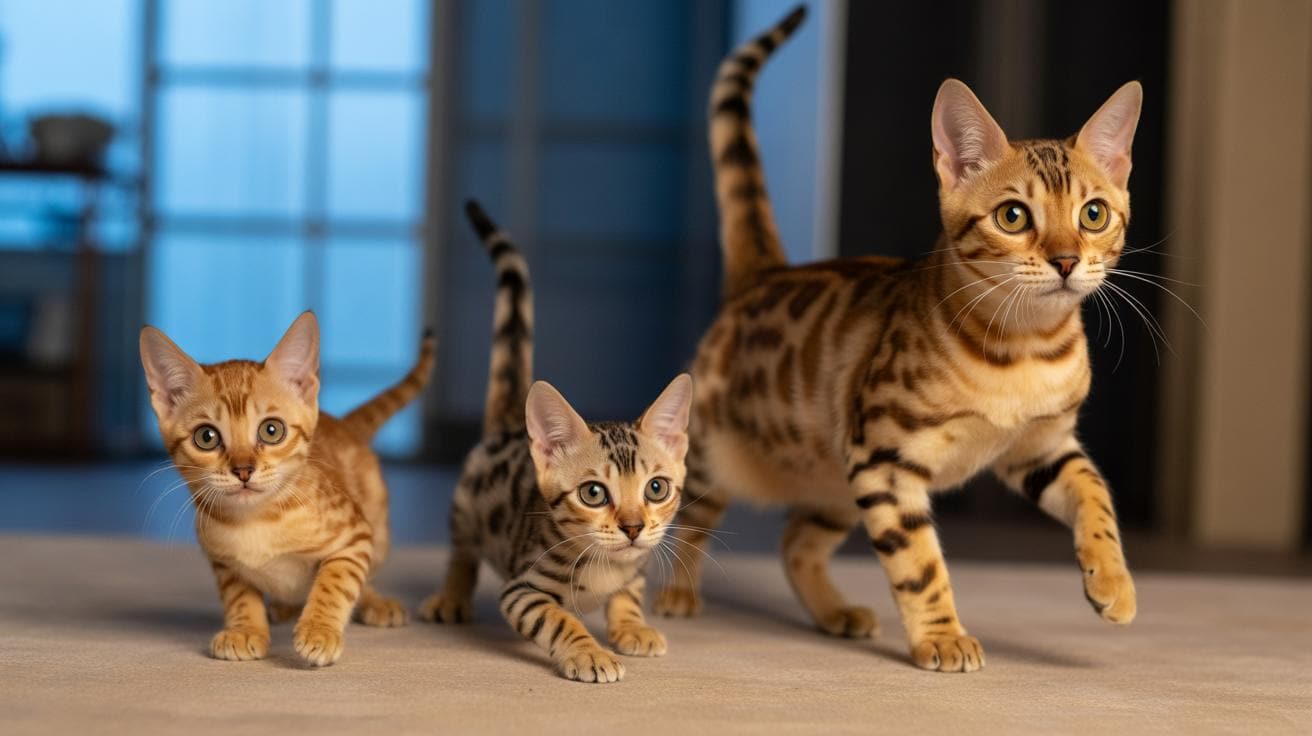
- Bengal cat activity level by age kitten, adult, and senior patterns.jpg

Bengals shift how they use their energy as they get older, so your toys and play should change too. Personality and outdoor access matter a lot, so watch the cat more than the clock. Whisker-twitching curiosity is the real guide here. Ever watched your kitty chase shadows? That tells you more than a calendar.

Kittens explode in short zoomies and learn fast. They need lots of tiny, guided play sessions to build social skills and bite inhibition (learning to control biting). Try gentle wand play, soft fetch toys, and low platforms (short steps or shelves) they can clamber on safely. Use chew-safe materials for teething, like durable rubber (strong, bouncy chew surface) or reinforced fabric (extra-stitched cloth), and keep things supervised so little nips turn into good manners.

Adult Bengals are peak athletes: fast chases, crazy high jumps, and clever problem solving. Match that drive with toys like exercise wheels (a big running wheel), tall multi-level perches (shelves and platforms up high), and puzzle feeders (treat toys that make your cat work to get food). They love a bit of choreography: a feather wand, then a quick puzzle challenge keeps their brain and muscles humming. That satisfying thud when they land? Priceless.

Seniors mellow but still want to play. Swap to low-impact moves that are easy on joints, gentle puzzle feeders, soft balls rolled along the floor, and ramps to higher spots so they don’t have to leap. Short, calmer sessions with more rest between bouts help keep weight and mobility steady without boring them. Worth every paw-print.

  1. Kittens , frequent short bursts with close supervision.
  2. Adults , varied, higher-intensity sessions mixing chase, climb, and puzzles.
  3. Seniors , low-impact, shorter sessions with extra rest and joint-friendly toys.

Bengal cat toy categories: what to buy and what each does
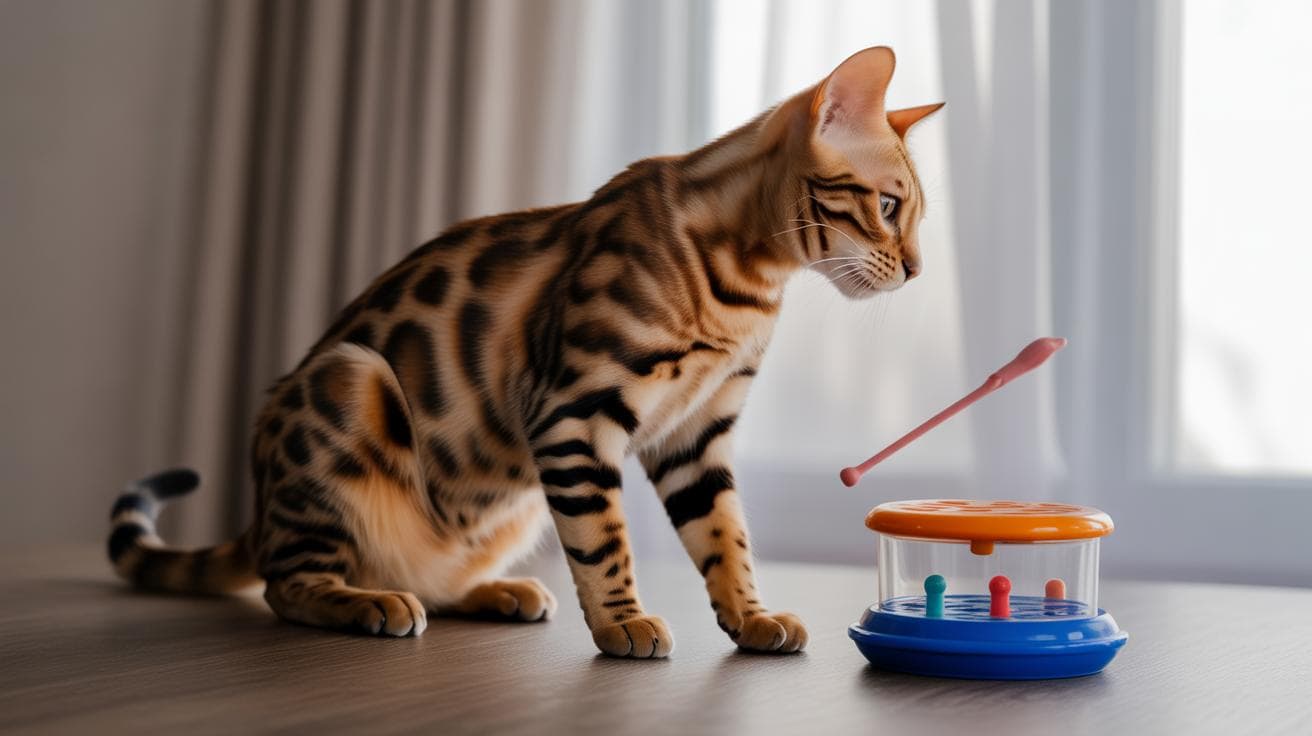
- Bengal cat toy categories what to buy and what each does.jpg

Here’s a quick map of the main toy types that satisfy a Bengal’s need to hunt, climb, and solve puzzles. I’ll tell you what each does, what to look for in the design, and how to play safely so your cat stays busy and happy.

Wand and feather toys

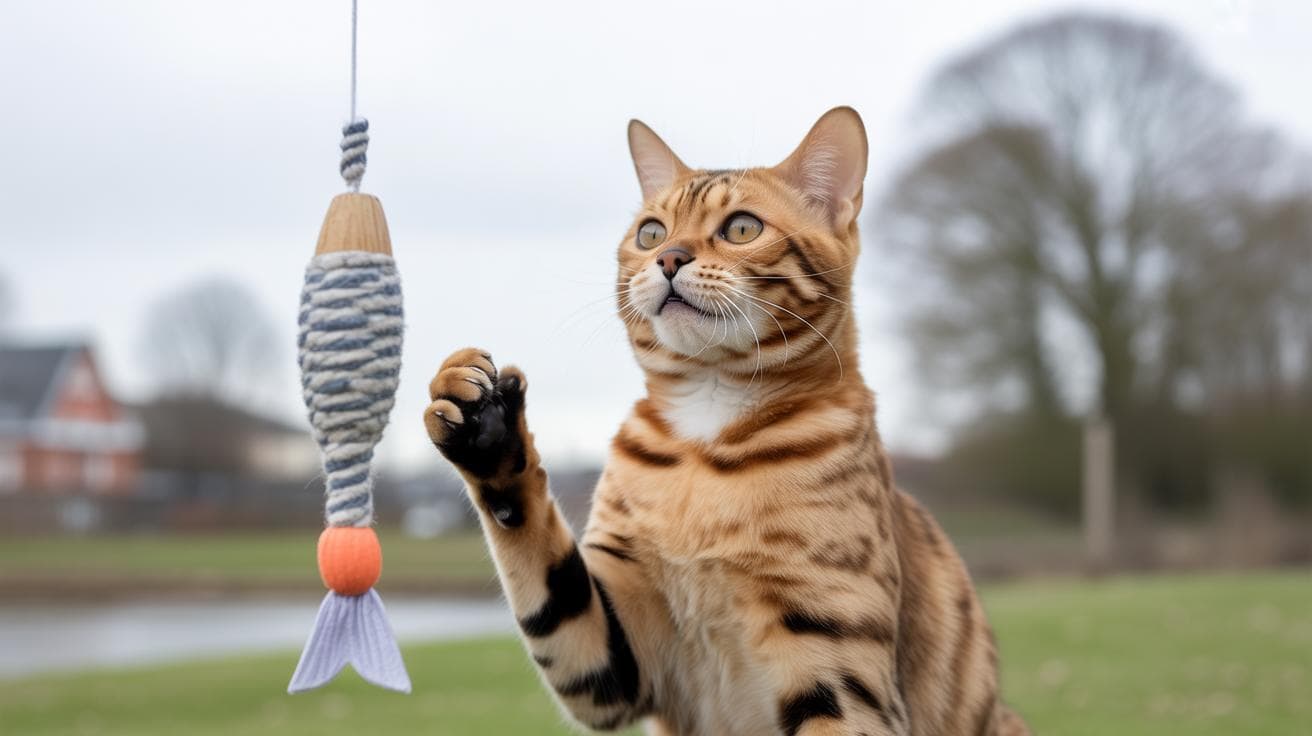
Wand toys copy fluttering prey and spark short, intense chases. They are perfect for quick sessions that burn energy and make your cat leap and pounce.

Look for a sturdy shaft (rod) and tightly knotted feather or fabric ends. Replaceable heads save money, you swap the tip, not the whole wand. Keep the handle comfortable for you, too.

  • Use tips:
    • Move the wand like a small animal: dart, pause, hide. Ever watched your kitty stare, then explode into motion? That.
    • Keep sessions 5 to 10 minutes. For very intense chases, 3 to 7 minutes is plenty.
    • Safety: toss frayed feathers or fabric. Store wands out of reach when not playing. Let your cat “capture” a soft toy at the end for a satisfying finish.

Puzzle feeders and treat-dispensers

Puzzle feeders slow down fast eaters and give brains a workout. They’re great when Bengals need a mental challenge as much as a snack.

Pick adjustable-difficulty designs made from food-safe materials and easy-to-clean parts. Start simple so your cat learns the game, then raise the challenge as they get clever.

  • Difficulty and maintenance:
    • Begin on low difficulty and increase over days.
    • Wash removable parts weekly with hot, soapy water.
    • Use kibble (small dry cat food) sized pieces so mechanisms don’t jam.

Interactive electronic and motion-activated toys

Battery-powered motion toys mimic erratic prey paths and keep solo Bengals moving when you’re busy. These can be a big hit for independent play.

Choose sturdy models built for pets, not cheap gimmicks. Look for covered motors (small electric part that moves the toy) and enclosed batteries (power cells) so curious chewers can’t get to them.

  • Safety and maintenance:
    • Inspect for small, removable parts before giving the toy to a heavy chewer.
    • Turn toys off for periodic supervised checks and battery changes.
    • Replace batteries promptly and recycle old ones safely.

Climbing, scratching, and vertical systems

Tall cat trees, wall shelves, and scratching posts give Bengals room to leap, hunt from high perches, and stretch. They need vertical space to feel at home.

Look for dense sisal (a coarse plant fiber) on posts, solid platforms, and a wide base for stability. Anchor tall units to walls or studs and place shelves near favorite windows for birdwatching.

  • Installation tips:
    • Stagger platform heights for easy ascent.
    • Put a comfy mat or perch near a sunny window.
    • Make sure high platforms have edges your cat can grip.

Fetch, tunnels, and solo-play launchers

Soft balls, ball tracks, and fabric tunnels invite repeated chases, ambushes, and retrieval practice. Bengals love the rhythm of a tunnel surprise or a ball that keeps rolling.

Choose chew-resistant balls and tunnels with sturdy seams so they survive zoomies. Toss in a favorite scent or a small bell for extra interest.

  • Play note:
    • Keep fetch and tunnel sessions to 5 to 10 minutes for focused fun and to avoid boredom.
    • Rotate toys every few days to keep novelty high.

Worth every paw-print.

Durability, Safety & Maintenance

- Durability, Safety  Maintenance.jpg

Bengals are tiny acrobats and serious chewers, so pick gear that can take a beating and still keep play safe. Look for reinforced seams and double-stitched fabrics (two rows of stitching for extra strength), chew-resistant silicone (flexible, tough rubber), hard rubber parts, and tightly wound sisal (coarse plant fiber, like rough rope) on scratching posts. These choices cut down on shredded toys and loose stuffing , and save your sanity.

  • Choose toys with reinforced seams and double-stitching; skip loose trims and tiny detachable bits that can be swallowed.
  • Favor chew-resistant silicone or hard rubber for chew-target pieces, and get wand heads (replaceable toy tips) when you can.
  • Pick scratching posts wrapped in tightly wound sisal or reinforced cardboard (thicker, layered cardboard) so they last.
  • Inspect soft toys and wand attachments once a week for fraying, holes, or loose stuffing.
  • Check larger structures – trees, wall shelves, wheels – every 1 to 2 months for wobble, cracked parts, or loose fasteners.
  • Wash soft toys monthly or anytime they get dirty: hot, soapy water, then air dry fully before reuse.
  • Disinfect puzzle feeders (treat-dispensing toys) and food bowls weekly with safe dish soap and hot water; rinse well.
  • Swap batteries every 3 to 6 months or any time a toy slows, stutters, or sounds weak.
  • Remove batteries for long-term storage to prevent leaks and corrosion.
  • Supervise first play sessions with string-based or motorized toys (toys with small motors), then store them out of reach when you're done.
  • Retire soft toys that show exposed stuffing, persistent holes, or bits that could be swallowed – heavy chewers often need new toys every 3 to 6 months.
  • Pull plastic parts from use at the first crack; stop using motorized toys that overheat or run erratically.

A quick hand-sew or patch can buy a little time if you spot loose stitching. But frayed fabric near magnets or exposed motors is a no-go – toss and replace. If a motor acts up, unplug the toy, stop play, and contact the maker or recycle the unit. Worth every paw-print.
Bengal cat activity level and toy recommendations

- Vetted products 6 top picks for Bengal cats with reasons and price ranges.jpg

Bengals are basically tiny cheetahs in a fur coat – they sprint, climb, and hunt like pros. So you want gear that won’t wobble, tear, or suddenly cave in when they go full zoom. It keeps play safer, and honestly, it’s more fun for both of you.

Quick buyer guide:

  • Check warranties and return policies. Aim for at least a one-year warranty and a 30-day return window so you can test fit and behavior risk-free. It’s nice to know you’re covered if your explorer decides a new tree needs “improvements.”

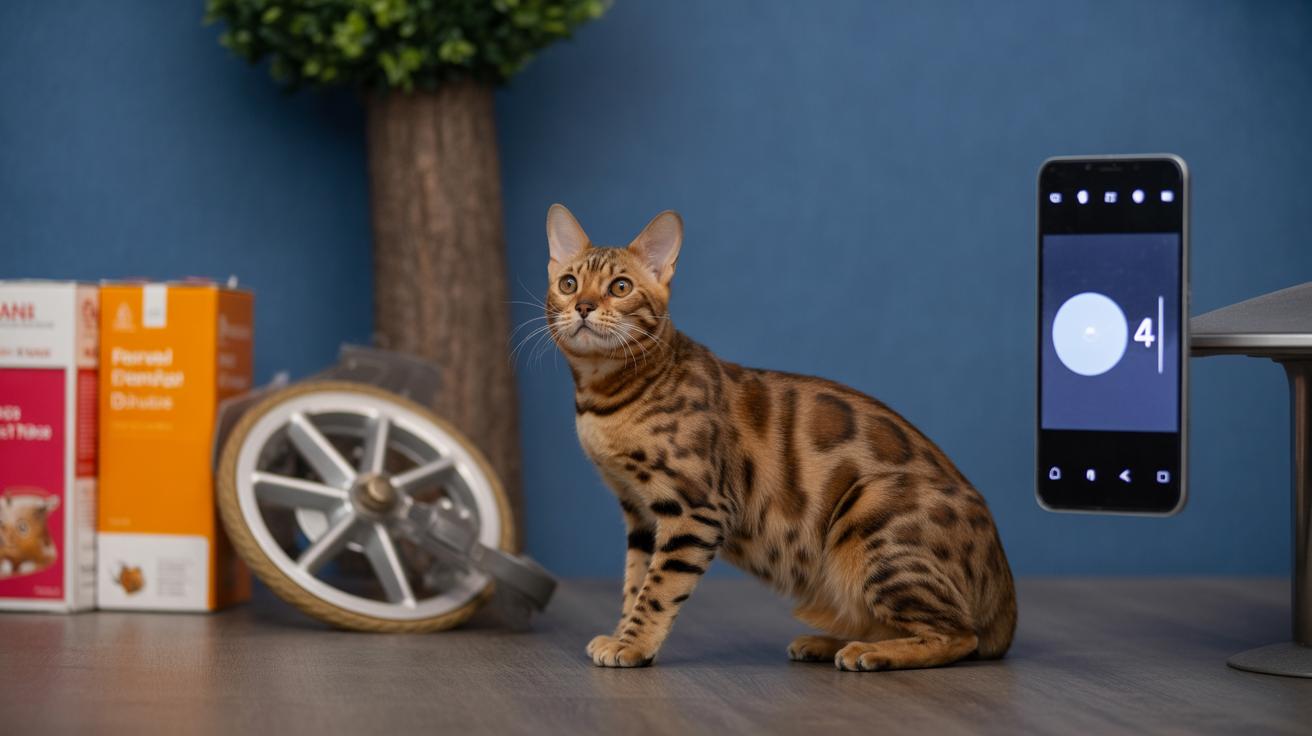
  • Measure ceiling height and wheel clearance before you buy. Measure your room and compare to product specs; many tall trees and exercise wheels (large wheels a cat runs inside) list minimum ceiling or clearance needs. You don’t want a tower that brushes the ceiling when your Bengal launches.

  • Look for sturdy construction. Seek a reinforced frame, a solid base, and durable coverings like ballistic nylon (very tough synthetic fabric) or puncture-resistant canvas (heavy-duty canvas treated to resist tears). Prefer a thick plywood base (layers of wood pressed together) and steel frame (strong metal) over thin particle board (cheap wood composite). A steady base means no scary wobbles when your cat jumps.

  • Plan for a few short training sessions with wheels. Start with treats and a harness (soft vest that clips on) for 3 to 5 minute sessions to build confidence. Let them get curious before expecting a full sprint. Patience pays off.

  • Test trees and harnesses for fit before final setup. Assemble the tree near a favorite window, let your cat explore at their own pace, and check harness fit indoors first. Ever watched a Bengal inspect a new perch like it’s a mini Everest? Yeah, let them take their time.

  • Consider a harness plus leash for supervised outdoor time or controlled training. Practice indoors until your cat is calm, then try a short backyard walk. It’s a great way to give safe, fresh-air enrichment.

  • Prioritize replaceable parts and serviceable fasteners – swappable pads, removable covers, and bolts you can tighten later (hex bolts, six-sided head bolts). Avoid glued joints that trap you when something wears out. A product you can fix is a product that lasts way longer.

Worth every paw-print.

Bengal cat activity level and toy recommendations

- DIY and low-cost play ideas tailored for Bengal activity.jpg

Bengals are all about short, explosive bursts of hunting, climbing, and puzzle-solving. These quick, low-cost projects use stuff you already have around the house and hit those instincts hard. Ready to make playtime a little more claw-tastic?

  1. Homemade fishing-pole toy
    Materials: stick or dowel, paracord (strong nylon cord), durable feather or fabric strip (non-toxic).
  • Tie the paracord to the stick with a strong knot, double it over and pull tight.
  • Secure the feather or fabric with a tight knot and wrap a bit of tape around the knot for extra hold.
  • Trim the extra cord and give it a gentle tug to test strength.
    Safety & play style: never leave string toys out unsupervised; use them for 3 to 7 minute chase sessions and end with a quick catch so your cat feels successful.
    Estimated cost: $2 to $8
  1. Muffin-tin puzzle feeder
    Materials: muffin tin (metal baking tray), tennis balls or small lids, kibble (dry cat food) or treats.
  • Put kibble in some cups.
  • Cover other cups with balls or lids to make your cat work a bit harder.
  • Let your cat paw and nudge to find the food.
    Safety & play style: great for slowing meals and giving brain exercise; watch the first few tries so nothing gets stuck.
    Estimated cost: $5 to $10
  1. Cardboard box obstacle course
    Materials: several boxes, box cutter (utility knife), packing tape.
  • Cut entry and exit holes, then tape seams to strengthen them.
  • Stack and arrange boxes to make tunnels and low platforms.
  • Hide a treat or toy inside for ambush fun.
    Safety & play style: brilliant for climbing and surprise pounces; check for sharp edges and replace crushed boxes.
    Estimated cost: free to $5
  1. Crinkle fabric teaser
    Materials: scrap fabric, crinkle paper (noisy, safe paper), sewing needle (or hot glue).
  • Sandwich crinkle paper between two fabric pieces.
  • Sew or glue the edges, leaving a small gap to make sure the paper sits right.
  • Finish the seam and add a loop for tossing.
    Safety & play style: loud and attention-grabbing, perfect for short bursts of play; toss it away if it starts to tear.
    Estimated cost: $1 to $6
  1. Slow-feeder bottle puzzle
    Materials: empty plastic bottle (recycled soda bottle), screwdriver, kibble (dry cat food).
  • Make several small holes in the bottle, smoothing any rough edges.
  • Fill with kibble and screw the cap on loosely so it rolls and dispenses food.
  • Roll it on carpet or put it in a shallow box to slow the roll and control the mess.
    Safety & play style: good for mental and physical work; retire the bottle if it cracks or fragments.
    Estimated cost: free to $2

Worth every paw-print. Try one or two, watch how your Bengal lights up, and tweak them for your cat’s style. Ever seen a Bengal go from zero to zoom in two seconds? Pure joy.

Bengal cat activity level and toy recommendations

- Building a daily enrichment plan and toy rotation strategy for Bengals.jpg

Bengals do best with a simple daily plan that mixes short bursts of cardio, brain games, and stuff to climb. Kittens usually add up to 20 to 60 minutes a day spread across lots of tiny sessions. Adults tend to need 20 to 40 minutes total, split into several 7 to 12 minute play bursts. Seniors do 10 to 20 minutes with gentler moves and extra rest. Ever watched your cat zoom and then flop in five seconds? Yeah, that.

  • Morning: quick chase session (feather wand or exercise wheel).
  • Mid-morning: food puzzle time (puzzle feeder or slow-food challenge).
  • Midday: supervised climbing or sunning on a window perch.
  • Afternoon: solo play while you work (treat-dispensing toy or motion toy).
  • Evening: family play session , wand, fetch, or a short wheel run.
  • Before bed: calm sniff-and-treat puzzle or a gentle rolling ball to wind down.
Time Slot Activity Duration per Age Group Suggested Toys
Morning Active chase Kittens: 5 to 10 min · Adults: 7 to 12 min · Seniors: 3 to 6 min Feather wand (stick with feathers for pouncing), exercise wheel (like a small running wheel for cats)
Mid-morning Mental work Kittens: 5 to 8 min · Adults: 8 to 12 min · Seniors: 4 to 6 min Puzzle feeder (food toy that makes them think), muffin-tin game (treats hidden under cups)
Midday Climb and rest Kittens: short climbs · Adults: about 10 min · Seniors: ramps plus more rest Cat tree (multi-level scratching & climbing post), wall shelves (mounted steps for climbing)
Afternoon Solo engagement Kittens: 5 to 10 min · Adults: 10 to 15 min · Seniors: 5 to 8 min Treat-dispensing toy (releases treats as they play), motion toy (battery-powered moving toy)
Evening Bonding play Kittens: multiple short bursts · Adults: 12 to 15 min · Seniors: 6 to 10 min Feather wand, soft balls (light balls for fetch)
Before-bed Calm puzzle Kittens: 5 min · Adults: 5 to 10 min · Seniors: 3 to 5 min Slow feeder (bowl that slows eating), rolling ball (gentle self-rolling toy)
  1. Pick 3 to 5 favorite toys to rotate each cycle. Keep it small so each toy feels new.
  2. Store the rest in a covered box out of sight. Out of sight, out of bored mind.
  3. Swap toys every 3 to 5 days to keep novelty high.
  4. Bring back the stored toys after 10 to 14 days and watch which ones spark fresh interest.

Keep a simple 7 to 14 day log of session lengths, toy choices, and moods like happy zoomies, quick naps, or signs of overstimulation. Tweak times up or down based on energy, mobility, and appetite so the plan fits your cat, not the other way around. Worth every paw-print.

FAQ: Bengal cat activity level and toy recommendations (quick answers)

- FAQ Bengal cat activity level and toy recommendations (quick answers).jpg

Q1 – What are common signs of boredom in cats?
Look for chewing on things, nonstop yowling, pacing, or your cat stalking socks and houseplants. You might notice shredded plants, couch-claw marks, or 3 AM concerts. Bengals get mischievous fast, so boredom often turns into trouble pretty quickly.

Q2 – Cat zoomies explained?
Zoomies are short, wild bursts of speed, usually after a nap or a bathroom break. Ever watched your kitty rocket down the hall and skid to a stop? Let them burn it off with a quick chase using a feather wand or small ball.

Q3 – How do I recognize overstimulation signs?
Watch for a whipping tail, ears flattened tight, sudden hard swats, or your cat freezing mid-play. Those are the red flags. Slow things down, offer a calm toy, or just give them space to chill.

Q4 – When should I consult a vet about low activity?
Call the vet if a once-zoomy Bengal suddenly sleeps a lot, loses weight, or seems stiff and sore. Signs to watch:

  1. Sudden, lasting lethargy
  2. Noticeable weight loss or weight gain
  3. Limping or trouble jumping
    Better safe than sorry , a quick check can catch issues early.

Q5 – How do I identify play aggression?
If play turns into hard bites, repeated strong swats, or your cat keeps chasing your hands, that’s play aggression. Stop the game, give a short timeout, then redirect with a wand or plush toy so they learn to pounce on the toy, not you.

Q6 – Are lasers okay for play?
Laser pointers (red dot) are fine sometimes, but don’t rely on them alone. Finish the session with a tangible catch , a toy or treat , so your hunter feels rewarded. Otherwise the endless red dot can be super frustrating.

Q7 – When should I replace soft toys?
Toss soft toys if stuffing shows, big tears appear, or bits come loose , anything a cat could swallow. For heavy chewers, plan on replacing them every 3 to 6 months. Safety first, always.

Q8 – How often rotate toys?
Swap toys every 3 to 5 days and keep about 3 to 5 in regular use. Rotation keeps things interesting, like surprise toys waiting in a drawer. It’s an easy trick that makes old toys feel new.

Q9 – Any safety tips for motorized toys?
Check batteries, seals, and moving parts before play. Motorized toys (battery-powered moving toys) can fray or drop parts, so inspect them and supervise early sessions. Replace anything that looks worn or loose.

Q10 – Best quick fix for sudden zoomies?
Grab a feather wand or toss a small ball for a 5 to 10 minute chase. The satisfying thud of a ball and a happy pounce works wonders. Worth every paw-print.

Final Words

You now have a clear action plan: Bengals sprint, leap, and stalk in short bursts, so split play into multiple short sessions each day to keep them happy and fit.

We covered top picks , exercise wheels, tall trees and wall shelves, puzzle feeders, feather wands, interactive dispensers, fetch toys, fountains, and safe harness walks , plus tips for choosing chew-resistant builds.

Follow the quick plan: short daily bursts, toy rotation every few days, regular wear checks, and buy sturdy models from trusted retailers. This matches Bengal cat activity level and toy recommendations, and brings lively, less-shredded days. Worth every paw-print.

FAQ

Bengal cat FAQs

What is the activity level of a Bengal cat and how can I keep them entertained?

The activity level of a Bengal cat is very high. Bengals love hunting-style play, climbing, running, and puzzle tasks; keep them engaged with multiple short sessions, vertical routes, and interactive toys.

What toys do Bengals like?

Bengal cats like wand/feather teasers (Da Bird), exercise wheels (One Fast Cat), tall cat trees, puzzle feeders (treat-dispensing toys), sturdy double-stitched plush, interactive robots, and small fetch balls for chase play.

How many hours of play does a Bengal kitten need?

A Bengal kitten needs many short play bursts totaling about 20–60 minutes daily, increasing with age; split into 5–10 minute guided sessions to teach bite inhibition and build stamina safely.

Is the Da Bird cat toy good for Bengals?

The Da Bird cat toy is excellent for Bengals. It mimics flying prey and sparks high-energy chases; supervise string play and swap the wand when the feather shows heavy wear.

Are plush toys safe for Bengal cats?

Bengal cat plush toys are fine if built for heavy play—double-stitched seams, tight fabric, and no loose stuffing. Retire plush when seams fray or stuffing escapes, and avoid unsupervised loose-fill play.

Are cat wheels worth it for Bengals?

Cat wheels are worth it for many Bengals. Wheels like One Fast Cat give sustained cardio and a solo energy outlet, though they need training, space, and patient owner intro time.

Author

  • Isabella Tiu

    Isabella Tiu is a transcriptionist from Calhoun, Florida, known for her sharp attention to detail and her commitment to providing accurate and efficient transcription services. With a passion for language and communication, she thrives on transforming spoken words into clear, readable content for her clients.

    When she's not working, Isabella enjoys hiking and camping, finding peace and inspiration in the beauty of the outdoors. She often says, “The best lessons are often learned in nature,” a philosophy she embraces both in her work and personal life.

    Isabella’s love for both her craft and the natural world reflects her belief in continuous learning and exploration.

    View all posts

Similar Posts