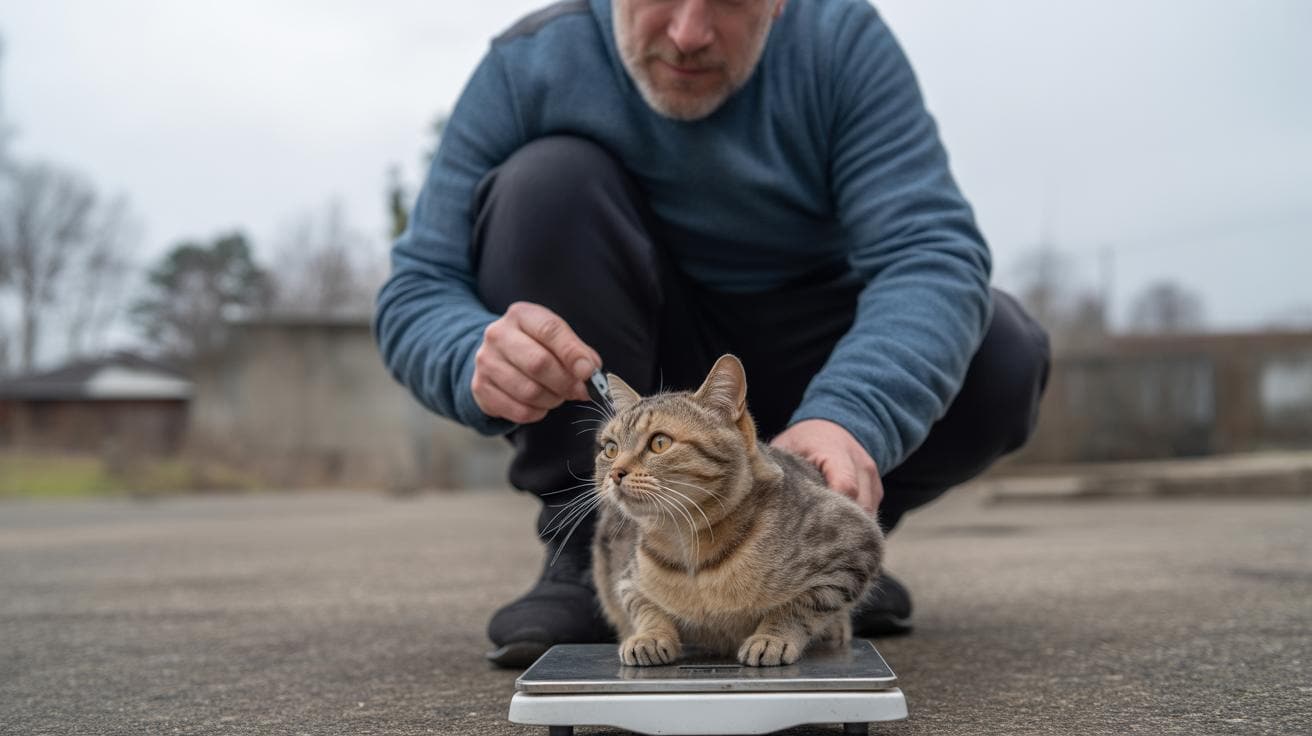
Think a human BMI can size up your cat? Spoiler: not really. Cats are compact, flexible, and full of surprises, so a human-style number only gives a rough idea, not a diagnosis. Still, it can be a handy starting point if you know what it actually measures.
This BMI-style calculator uses four inputs: body weight, rib-cage circumference (measure around the widest part of the chest at the level of the 9th rib), lower hind-leg length (knee-to-ankle, just the lower leg), and a breed or body-length selection. Those bits together make a single “cat shape” number that tries to guess body type. It’s meant as a guide for curious cat parents, not a vet verdict.
I’ll walk you through how to measure each part, show the simple formula and a worked example, and point out the calculator’s limits so you can use it wisely. Ever watched your kitty slip between cushions and wondered how on earth you’re supposed to measure that grace? Yep, we’ll cover the tricky bits and a few tips that save time and keep your cat calm.
Ready? Let’s get measuring and make sure your purring pal is feeling feline fine.
BMI-style calculator for cats: how-to-use-and limitations
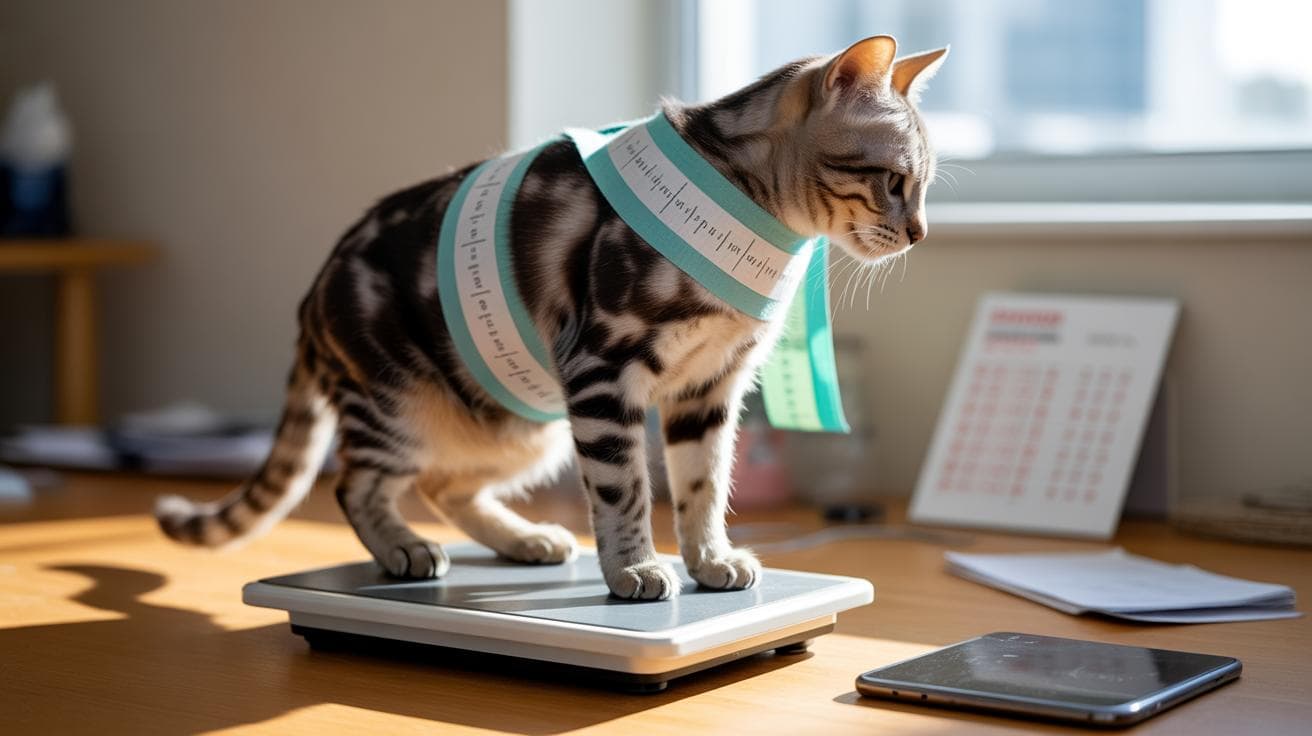
This tool estimates a cat’s body condition with a BMI-style index. You’ll need four things: body weight, rib-cage circumference at the level of the 9th rib, lower hind-leg length measured knee-to-ankle, and an optional breed or skeletal-length choice. Think of the index as a shape number for cats , not the same as human BMI, but a useful guide.
What to measure (quick definitions)
- Body weight , use lb or kg on a scale.
- Rib-cage circumference (chest measurement at the widest part of the ribs).
- Lower hind-leg length (knee-to-ankle length on the back leg).
- Breed/length selector , pick short, average, long, or a specific breed if listed; it helps interpret the result.
The formula (plain steps)
- Divide the rib-cage measurement by 0.7062.
- Subtract the lower hind-leg length.
- Divide that result by 0.9156.
- Subtract the lower hind-leg length again.
The final number is the cat’s BMI-style index (a simple shape index for cats).
Worked example up front , follow along
- Rib = 30 cm (11.8 in).
- Leg = 12 cm (4.7 in).
- Weight = 6.8 kg (15 lb).
Step-by-step:
- 30 cm ÷ 0.7062 = 42.50 (intermediate A).
- A − leg: 42.50 − 12.00 = 30.50 (intermediate B).
- B ÷ 0.9156 = 33.33 (intermediate C).
- C − leg: 33.33 − 12.00 = 21.33 (BMI-style index ≈ 21.3).
Interpreting that index
In many online tools, an index of about 21.3 maps to roughly 30% overweight (these mappings vary by tool). If percent overweight = 30%, then ideal weight = current weight × (1 − 0.30). Example: 15 lb × 0.70 = 10.5 lb (6.8 kg × 0.70 ≈ 4.8 kg).
Typical calculator fields , what to enter
- Weight , numeric value and unit (for example: 15 lb or 6.8 kg).
- Rib circumference , chest at the 9th rib (example: 30 cm or 11.8 in).
- Lower hind-leg length , knee-to-ankle (example: 12 cm or 4.7 in).
- Breed/length selector , choose the closest skeletal type; if unsure pick “average.”
Measurements , how to position the cat
Have the cat standing on a flat surface with legs perpendicular to the floor and head upright so bones line up. Measure rib-cage circumference at the 9th rib , that’s the widest mid-chest band where you can follow the ribs. Measure lower hind-leg length from the back knee joint down to the ankle with the leg relaxed but straight.
Common mistakes to avoid
- Don’t measure while the cat is crouched or hunched.
- Don’t wrap the tape over thick fur instead of snug against fur.
- Don’t mix units , pick metric or imperial and stick with it.
Step-by-step measuring and calculation (friendly guide)
- Prepare cat and tools , grab a digital or kitchen scale (tare/zero it to remove carrier weight), a flexible cloth tape (cm/in), and a towel or carrier to keep your cat calm.
- Position cat correctly , have them stand on a non-slip mat or use a helper to steady them.
- Measure rib-cage circumference , place the tape at the 9th rib, snug but not tight; record it.
- Measure lower hind-leg length , measure knee-to-ankle along the back leg while it’s straight and relaxed; record it.
- Enter numbers and compute with the formula , see the worked example above for the math.
- Convert index to actionable numbers , turn percent overweight into pounds or kg to set goals and plan feeding.
Quick conversion examples
| Current weight | Percent overweight | Weight to lose |
|---|---|---|
| 10 lb | 10% | ≈ 1.0 lb |
| 12 lb | 20% | ≈ 2.4 lb |
| 15 lb | 30% | ≈ 4.5 lb |
Limitations and a hands-on reminder
This index is a useful guide, but don’t treat it like a final diagnosis. A hands-on rib-feel check is important , you should be able to feel ribs with a thin layer of fat, not see them staring back. See the Measurement Tips section in your tool for calm-cat tricks, scale calibration, and handling notes. Ever watched your kitty chase shadows? Use short play sessions and slow weight goals instead of drastic cuts. Worth every paw-print.
Interpreting BMI-style calculator for cats results: ranges, rib-feel guidance, borderline readings, and immediate actions
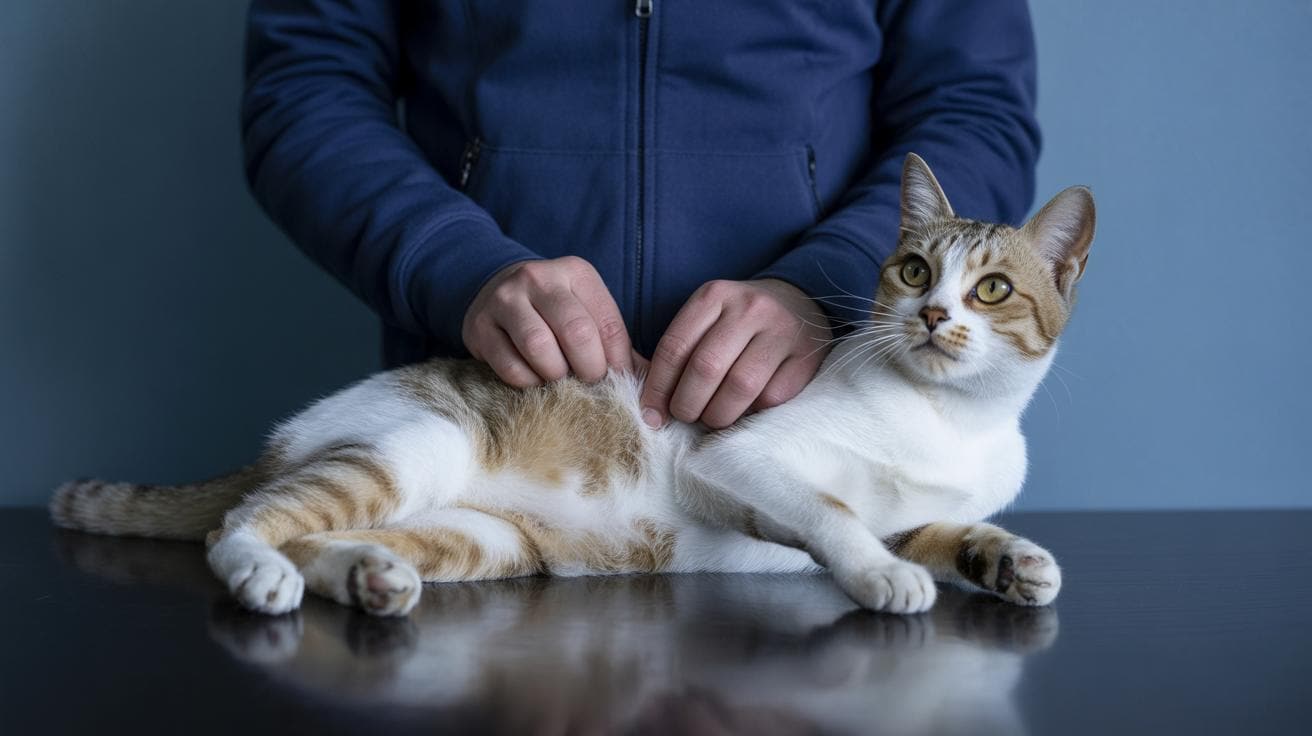
Most cat BMI-style calculators give three things: a BMI-style index (a number showing weight relative to size), a percent-overweight value (how far your cat is from the calculator’s ideal, in percent), and an ideal-weight estimate (the target weight). Map those numbers to a body condition score, or BCS (a 1 to 9 scale vets use to rate fat and muscle). BCS 3 to 4 is often the healthy zone. Most house cats weigh around 8 to 12 lb (3.6 to 5.4 kg). Big breeds like Maine Coon commonly run 20+ lb. If the calculator and your hands disagree, think of the number as a nudge, not the final word, and double-check with a hands-on check or your vet.
Palpation matters , palpation means feeling with your fingers to check body shape. With light fingertip pressure along the chest you should feel ribs as low, rounded ridges under a thin fat layer when the cat is ideal (BCS 3 to 4). If ribs and hips look sharp and pop out, that’s underweight (BCS 1 to 2) , ribs feel pointed, with little or no fat. If ribs are hard to find because of a smooth, padded surface, that’s overweight to obese (BCS 6 to 9). Quick rule: BCS 3 corresponds to about 20% body fat (percent of weight that’s fat). Higher BCS numbers mean ribs get more buried and the waist fades. Picture your fingertips clicking just right against ribs. Ever watched your kitty pounce and thought, yes, that’s the one? That feeling.
Handle borderline calculator results with a calm plan. Define percent-overweight bands like this: 10 to 20 percent is mild, 20 to 40 percent is moderate, and over 40 percent is severe. For a 10 lb (4.5 kg) cat, that’s roughly 1 to 2 lb, 2 to 4 lb, and more than 4 lb to lose. For a 15 lb (6.8 kg) cat, that’s about 1.5 lb, 3 lb, and more than 6 lb. Recheck measurements in 1 to 2 weeks to spot any drift. Call the vet if you see unexplained weight loss greater than 5 percent in 1 to 2 weeks, if your hands-on exam looks worse than the index says, or if your cat shows warning signs like loss of appetite, vomiting, or lethargy. Hands-on checks often trump numbers.
Simple action steps:
- Underweight → vet check and appetite strategies, and careful refeeding plans.
- Ideal → keep the feeding and play routine that’s working.
- Overweight → measured portions, fewer treats, and more interactive play sessions.
- Obese → a veterinary weight plan with supervised calorie reduction and follow-up.
Worth every paw-print. Oops, one more thing , if you’re unsure, take pictures and notes for your vet.
Limitations of BMI-style calculator for cats: accuracy issues, validation gaps, measurement failures, and merged special cases
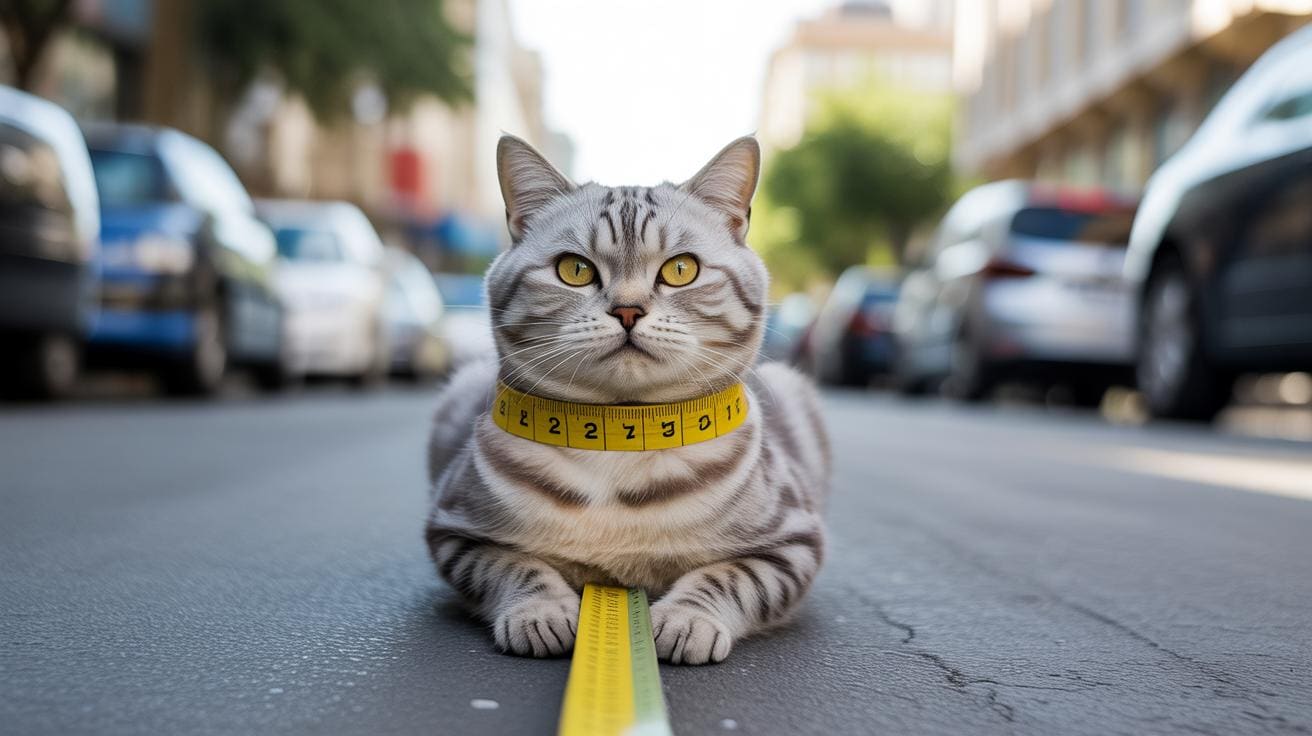
Think of a BMI-style index as a rough shape score, not a full body-composition report (body composition means the mix of fat and lean muscle). It’s a quick screening tool. It hasn’t been tested on every breed or body type, so it can miss important things like percent body fat, where fat sits on the body, or medical causes of weight change. Use it to nudge you toward a hands-on check and a vet exam, not as a final answer.
Breed, fur, and muscle throw the math off. Thick fur can hide fat pockets so a fluffy cat might look trim but still carry extra fat under the coat. Big-boned cats matter too: adult Maine Coons often run 20 to 25 lb (9 to 11 kg) even when fit, while Siamese adults usually fall around 8 to 12 lb (3.6 to 5.4 kg), with males toward the upper end. Muscle and fat feel very different. A muscular hunter-type cat can score “heavy” even with low fat. And older cats with sarcopenia (age-related muscle loss) may keep the same scale weight while losing muscle and gaining fat. Weird, right? But true.
Measurement mistakes are a huge source of error. Small tape placement changes change the index a lot. For example, with a 30 cm rib reading and a 12 cm leg length the index is about 21.3. Move the rib tape to 32 cm and the index jumps to about 24.4. That’s a 14 to 15 percent change from just a 2 cm slip. Crouched posture, a loose tape, or entering inches when the calculator expects cm will mess things up even faster. And remember: normal daily swings of about ±50 to 150 g (about 2 to 5 oz) happen, so tiny changes usually aren’t a crisis.
Note: Treat calculator results as estimates and combine them with a hands-on body condition score (BCS) and a veterinary exam before changing food or starting a weight plan. Use fingertip palpation (use your fingertips to feel ribs without pressing hard), look for a visible waist from above, and track trends over several weeks instead of reacting to one number. Worth every paw-print.
Kittens
Adult BMI-style indices don’t apply to growing kittens. Kittens grow fast and follow different curves, so follow veterinary growth charts. For precise targets, use your vet’s pediatric chart. Ever watched a kitten explode into energy? That’s growth.
Seniors and sarcopenia
Older cats can lose muscle while keeping or gaining fat, which hides true body composition. Look for muscle loss over the spine and hips while weight stays the same. That’s a red flag. Talk to your vet about diet and care if you see this.
Pregnancy and lactation
Pregnant and nursing queens need more calories and different targets. Don’t use adult weight-loss goals on a mom cat feeding kittens. Ask your vet about energy needs during pregnancy and nursing.
Breed-specific notes
For breed extremes, read the result in context. A 22 lb Maine Coon might be healthy. A 12 lb Siamese might need trimming. Let skeletal size and overall shape guide interpretation, not just the index.
Measurement tips
- Weigh at the same time each day, ideally before feeding.
- Zero or tare your scale and remove carrier weight when possible.
- Use a soft tape measure and place it at the same rib position each time.
- Try two-person holds or the carrier-weigh method to keep your cat calm.
- Be careful with units. If the tool wants cm, don’t enter inches.
- Repeat measurements and watch trends over weeks, not hours.
Next, take a breath and give your cat a treat. Small, steady tracking beats frantic number-checking. And hey, isn’t it nice when a simple check helps you spot a real change early?
Alternatives and complements to a BMI-style calculator for cats: BCS, professional testing, and photo methods
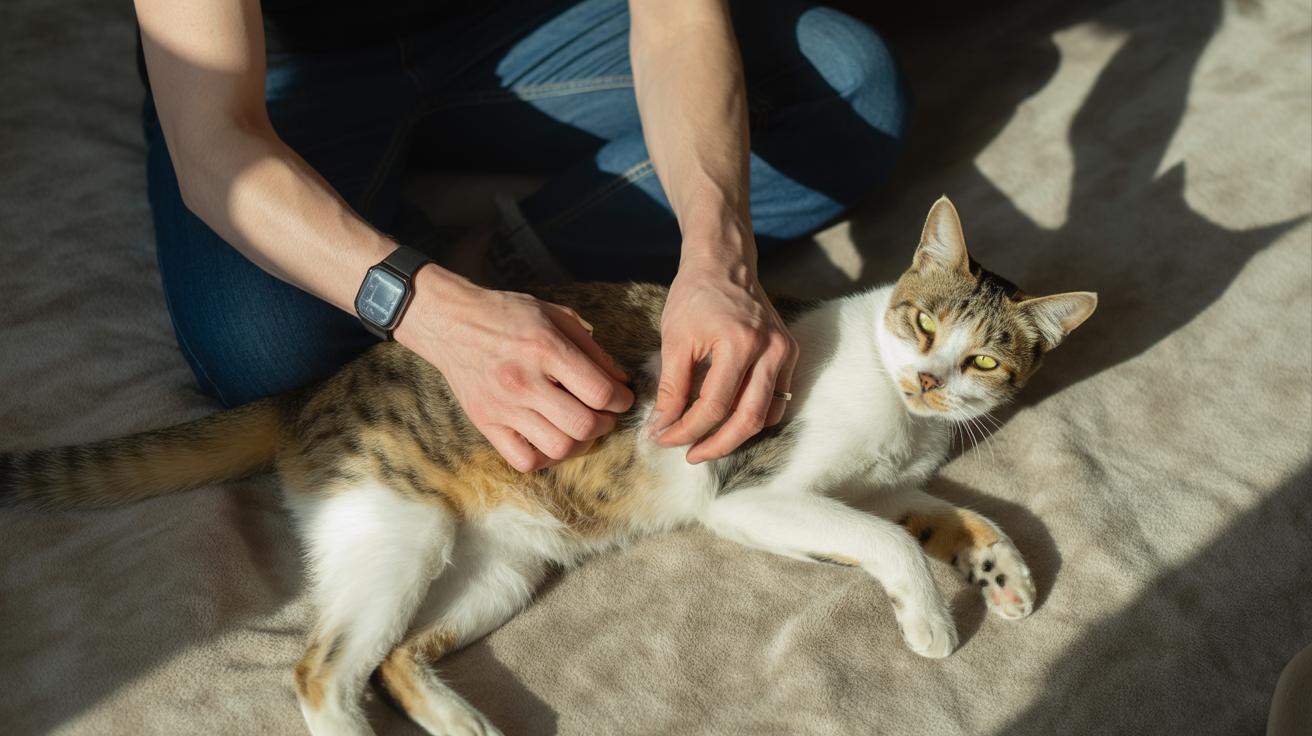
A quick, practical swap for a BMI-style index is the body condition score, or BCS. Do a simple BCS at home by looking down from above to see if your cat has a waist, and from the side to check for a tummy tuck. Then run your fingertips over the ribs to feel how buried or obvious they are. Use a 1 to 9 mental scale: low numbers mean too thin, middle numbers mean about right, higher numbers mean extra padding. Jot that BCS next to the number from your calculator so you’ve got two ways of seeing the same story. Ever feel like a detective? This part is the fun bit.
If you want more exact numbers, try professional body composition testing. DEXA (dual-energy X-ray absorptiometry) is the clinical gold standard – it’s an X-ray that separates fat from lean tissue and gives a reliable percent body fat. Some clinics or university hospitals offer it. Bioelectrical impedance (a way to estimate body fat by running a tiny electric current through the body) can be cheaper and faster, but it’s less reliable in pets because hydration, fur, and posture change readings. These tests usually need a referral and cost more than a routine exam, so consider them when the calculator and hands-on check disagree, or when a medical issue is suspected.
Photo-based guides and silhouette charts are low-effort helpers that work well with the others. Take consistent top and side photos with the cat standing, compare them to published silhouettes, and note small changes over weeks. Combine those pictures with your home BCS and the BMI-style index to watch trends. Photos plus a fingertip check often spot problems before the scale does.
Body Condition Score (BCS) explained
BCS uses a 1 to 9 scale where about 3 to 4 is usually ideal. It relies on visual clues like a waist and tummy tuck, plus fingertip palpation of ribs and hips. Write the BCS next to your calculator result so you and your vet see the same picture.
Professional body composition testing
DEXA gives accurate measures of fat and lean mass and is used in clinics and research. Bioelectrical impedance is easier to get but can be off in cats because fur, hydration, and posture affect the reading. Pick DEXA when you need precise body composition numbers or when other checks don’t agree. Worth every paw-print.