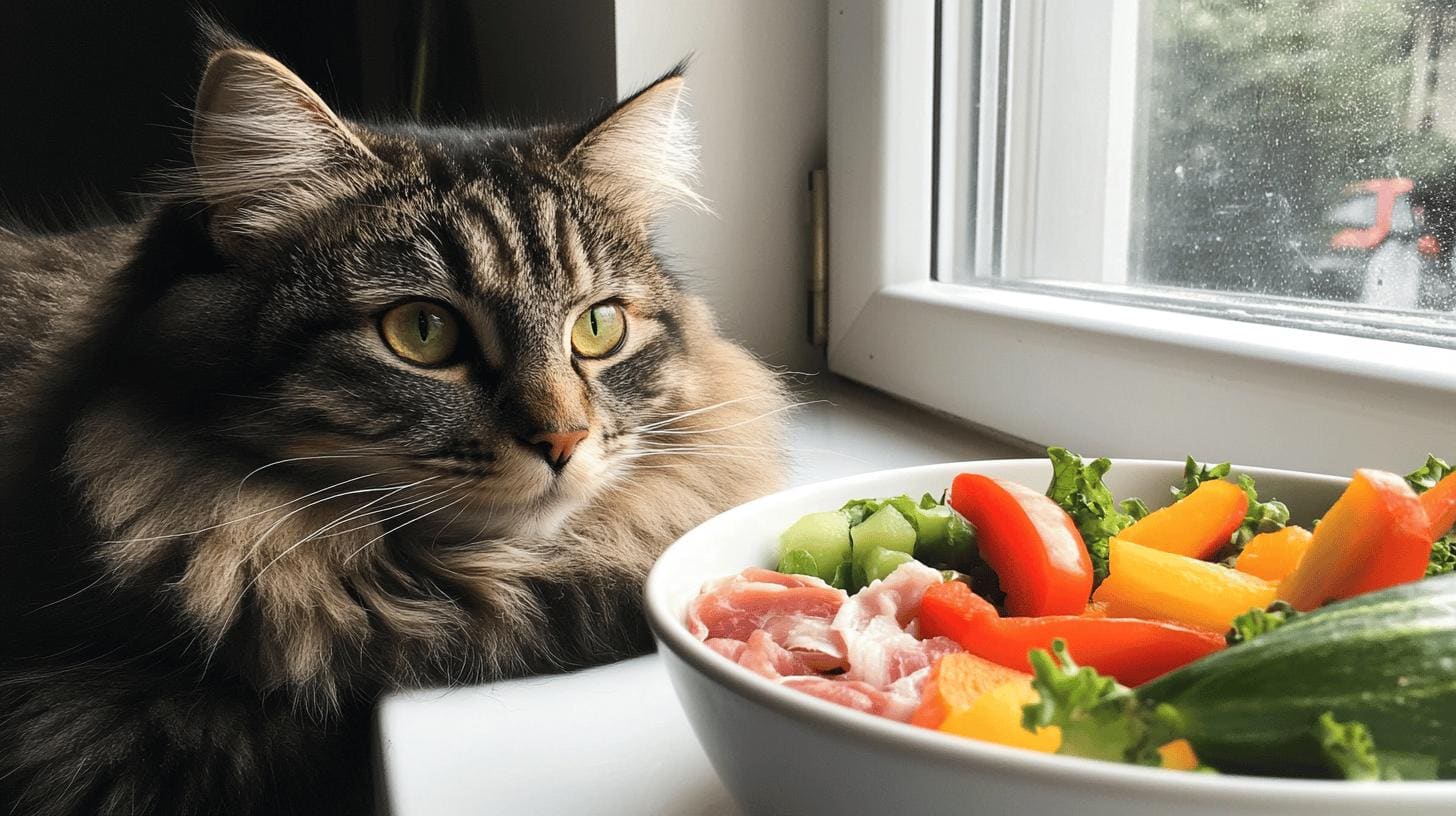
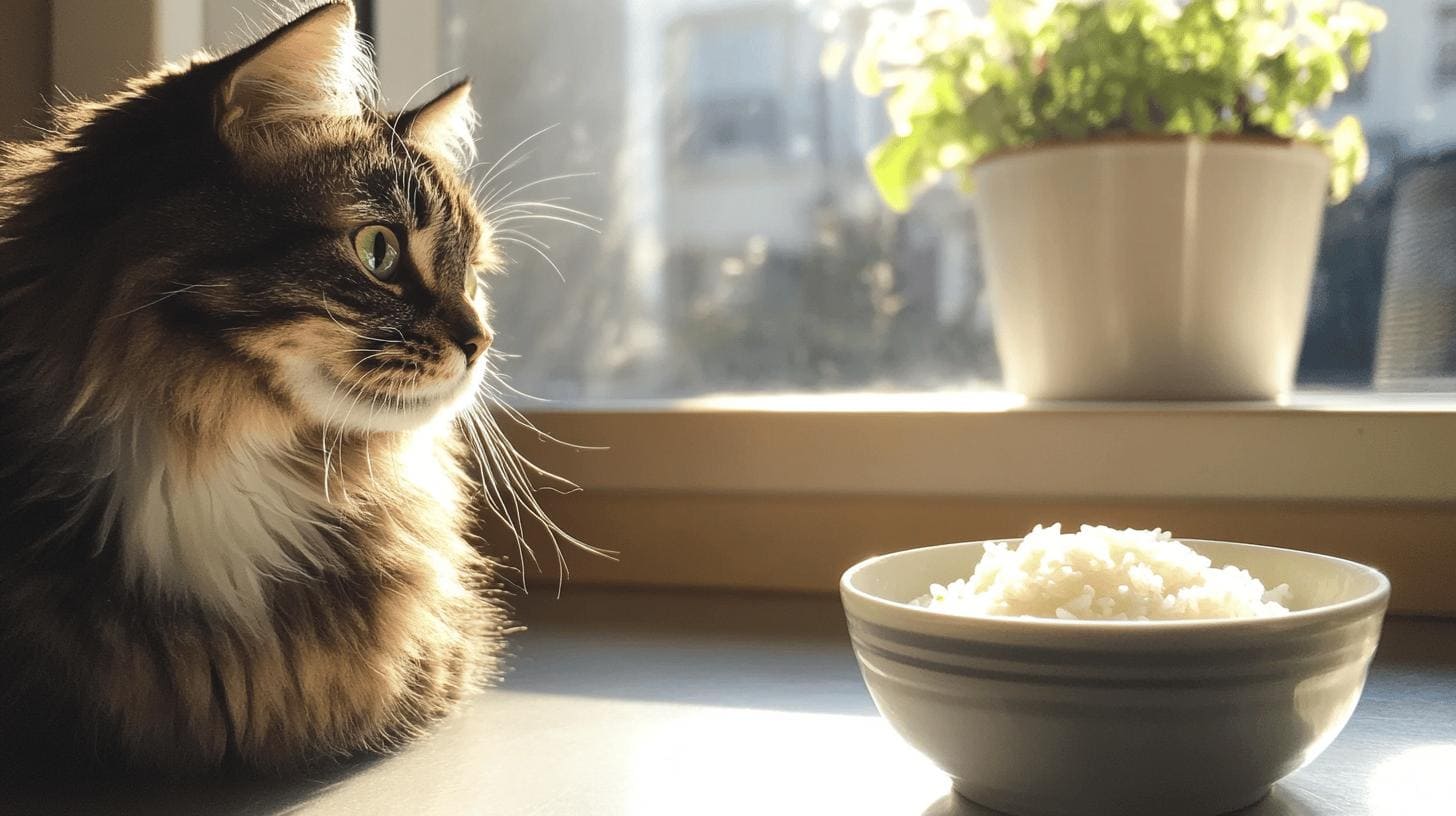
Can your cat really eat white rice without any troubles? As a devoted cat owner, you've probably asked yourself this question at some point. White rice is generally safe for cats in moderation, but it shouldn't become a part of their regular meals. Why? Cats are obligate carnivores, meaning their nutritional needs are best met by meat. Feeding them too much rice might leave them short on the essential nutrients they need. Let's explore how to safely incorporate white rice into your cat's diet without compromising their health.
Can Cats Eat White Rice Safely?
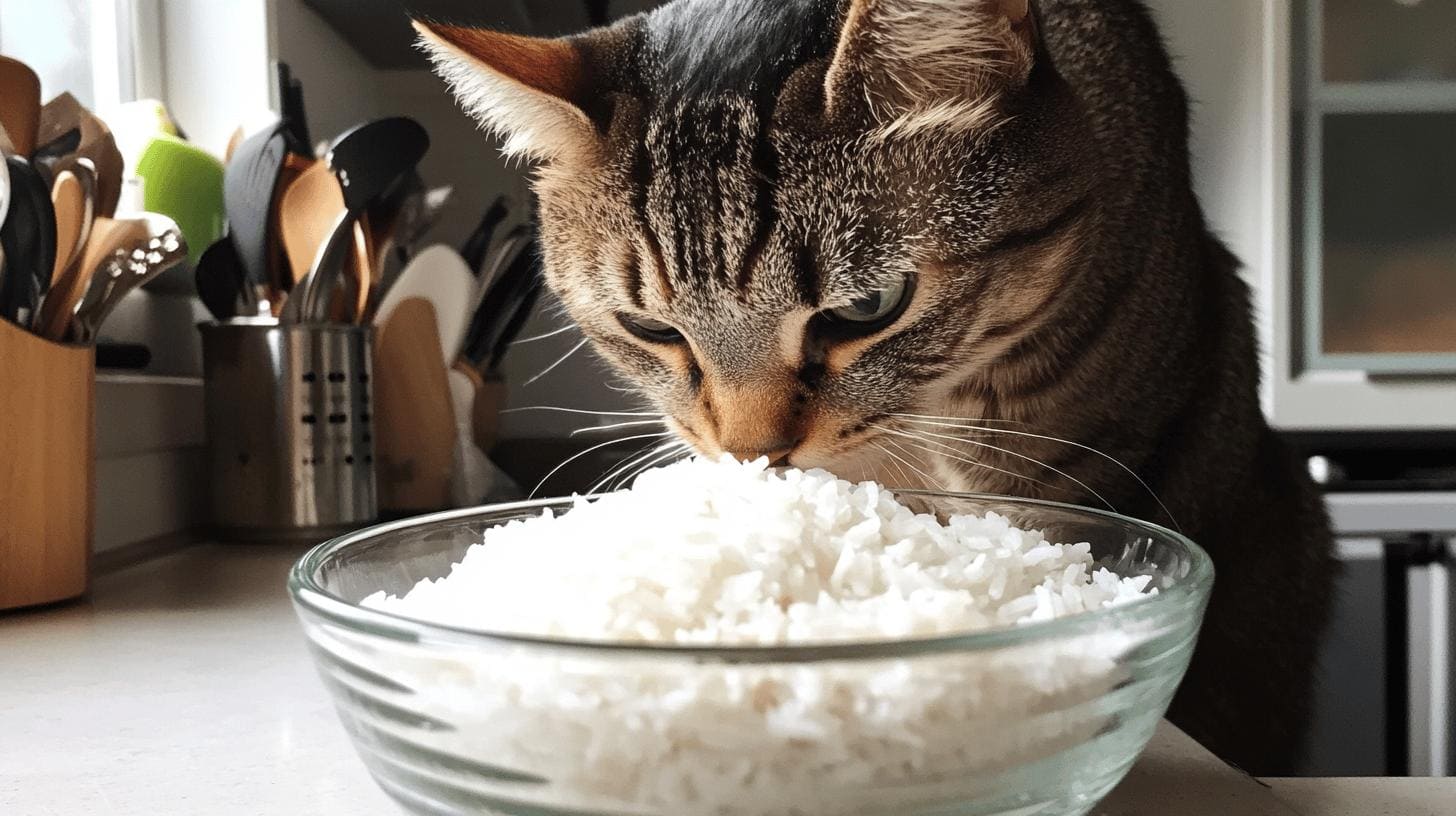
White rice is safe for cats to eat in small amounts. It's non-toxic and generally easy to digest, thanks to its bland nature and low fiber content. If you're wondering, "Can I feed my cat white rice?" the answer is yes, but with caution. While it won't harm your feline friend in small doses, white rice should never become a staple in their diet.
Despite being safe, white rice lacks the essential nutrients that cats need. Cats are obligate carnivores, meaning their diet should primarily consist of meat. Feeding them too much rice could lead to nutritional deficiencies since it doesn't provide necessary proteins and amino acids. Overconsumption of rice may also result in digestive issues or contribute to obesity, affecting your cat's overall health.
In terms of frequency, white rice should only be an occasional treat. Think of it as a rare indulgence rather than a dietary component. If you choose to give white rice to your cat, make sure it's plain and cooked thoroughly. A small spoonful mixed with their regular food is enough. Monitoring their reaction and adjusting accordingly ensures that your cat enjoys a balanced and nutritious diet.
Nutritional Impact of White Rice for Cats
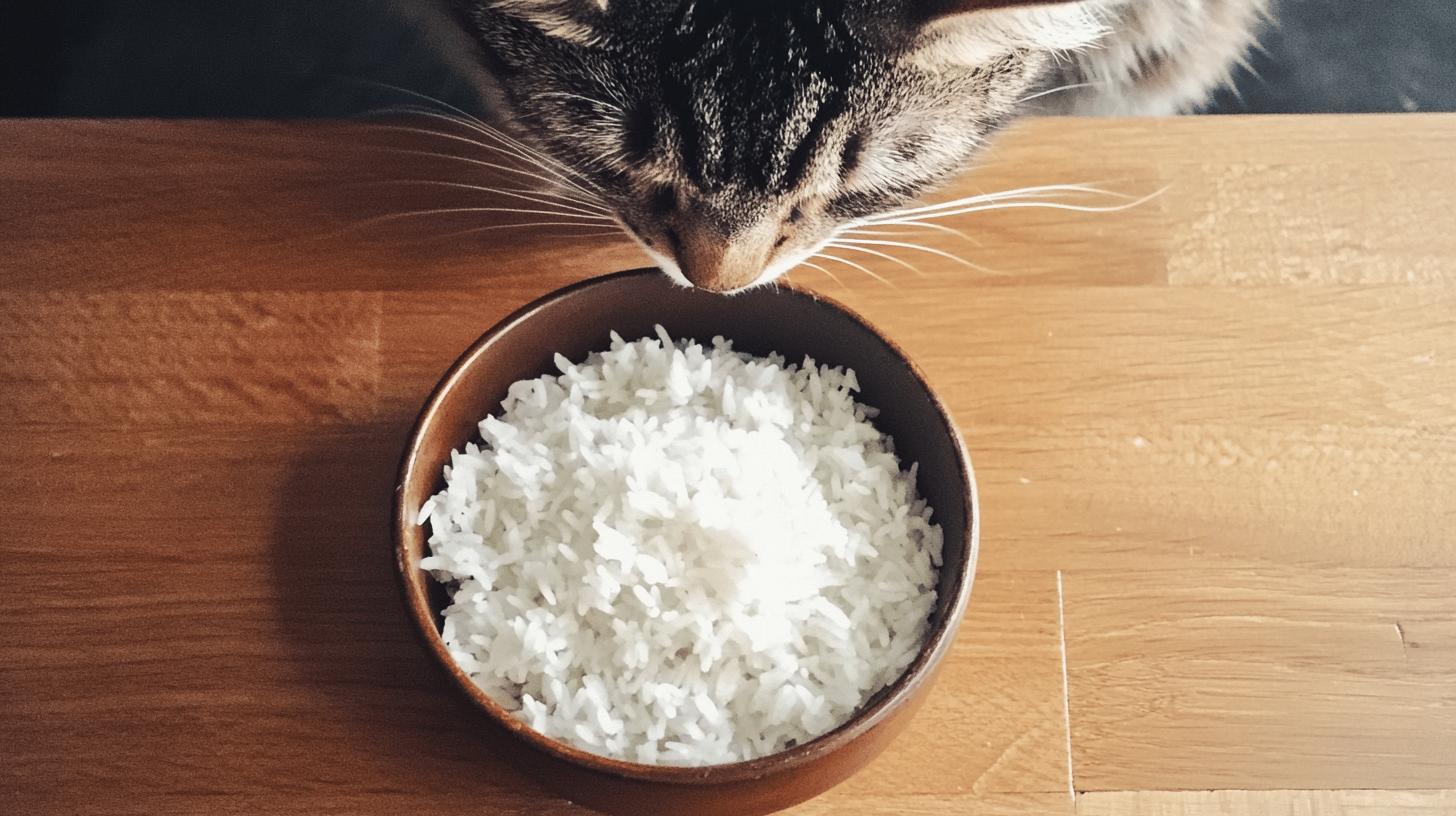
White rice doesn't provide the essential nutrients cats need, like proteins and amino acids. Brown rice, although richer in B vitamins and iron, is harder for cats to digest. Neither type offers what cats require as obligate carnivores. Here's a quick comparison:
| Nutrient | White Rice | Brown Rice |
|---|---|---|
| Vitamin B | Low | High |
| Iron | Minimal | Moderate |
| Digestibility | Higher | Lower |
Cats thrive on diets rich in animal-based proteins, including nutrients like taurine and arginine, absent in rice. While rice might be used occasionally for specific health issues, it shouldn't be a staple in their diet. Their nutritional needs are best met through a meat-rich diet.
When and Why to Feed White Rice to Cats
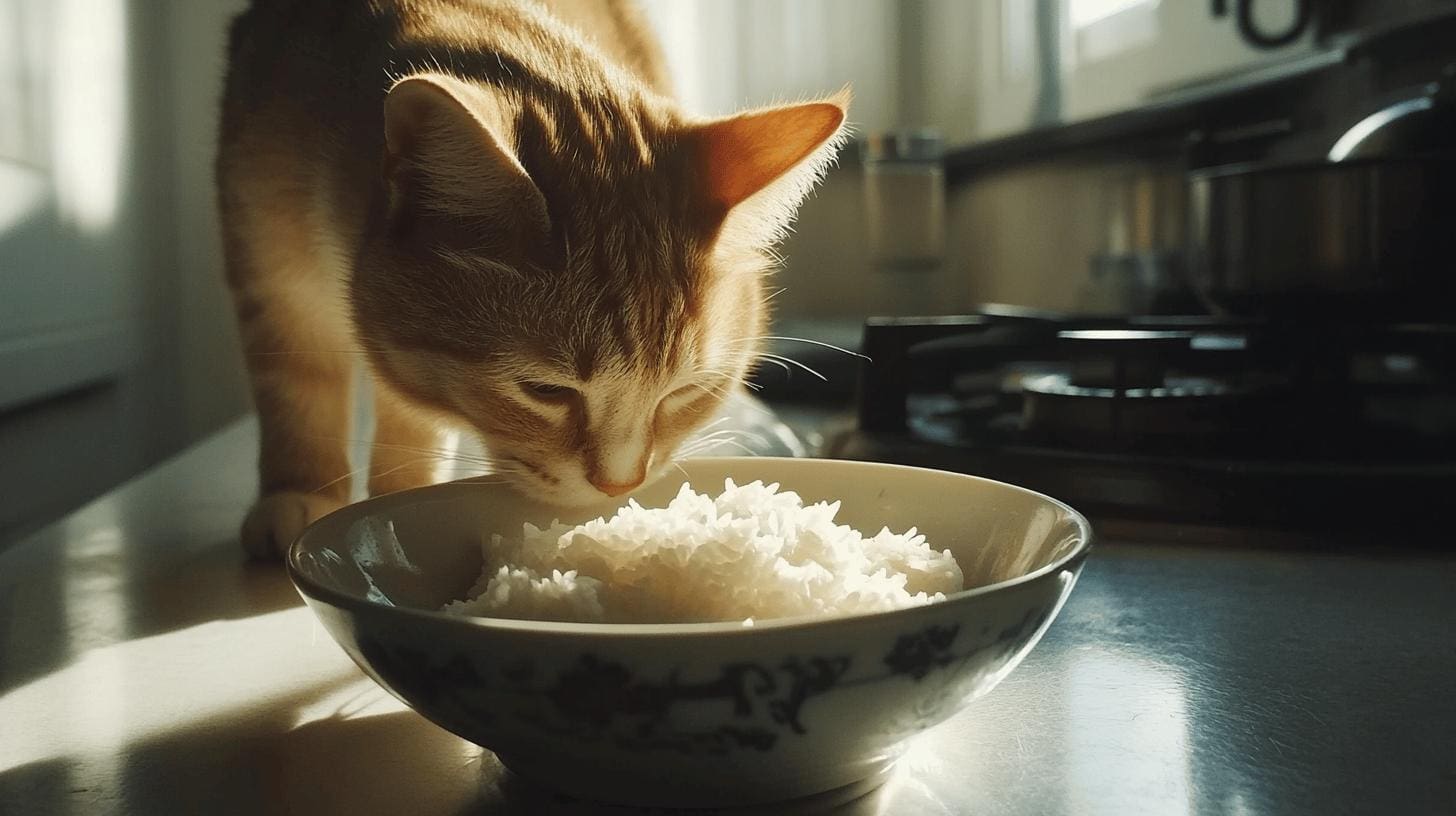
White rice can sometimes be a helpful remedy for cats experiencing digestive issues, particularly diarrhea. Its bland nature and easy digestibility make it a gentle option to soothe an upset tummy. Unlike brown rice, which is harder for cats to digest, white rice can temporarily bind loose stools and offer some relief. But remember, this should be a short-term solution rather than a dietary staple, as it doesn't provide the essential nutrients that cats require.
There are specific scenarios where feeding white rice to cats might be beneficial:
- Digestive Upset: When your cat has diarrhea, a small amount of plain white rice can help firm up the stool.
- Transitioning Diets: If you're switching your cat's food, a little white rice can ease the transition and prevent stomach upset.
- Post-Illness Recovery: After recovering from an illness, white rice can be a gentle introduction back to regular feeding.
- Sensitive Stomach: For cats with a sensitive stomach, white rice might soothe occasional digestive discomfort.
Even though white rice can offer temporary relief, it's crucial to prepare and serve it properly. Always thoroughly cook the rice without any seasonings, oils, or additives. Start with small portions, about a teaspoon mixed with their regular food, to monitor your cat’s reaction. Moderation is key, as too much rice can lead to nutritional imbalances. Always consult your vet if diarrhea persists or if you have concerns about your cat's health.