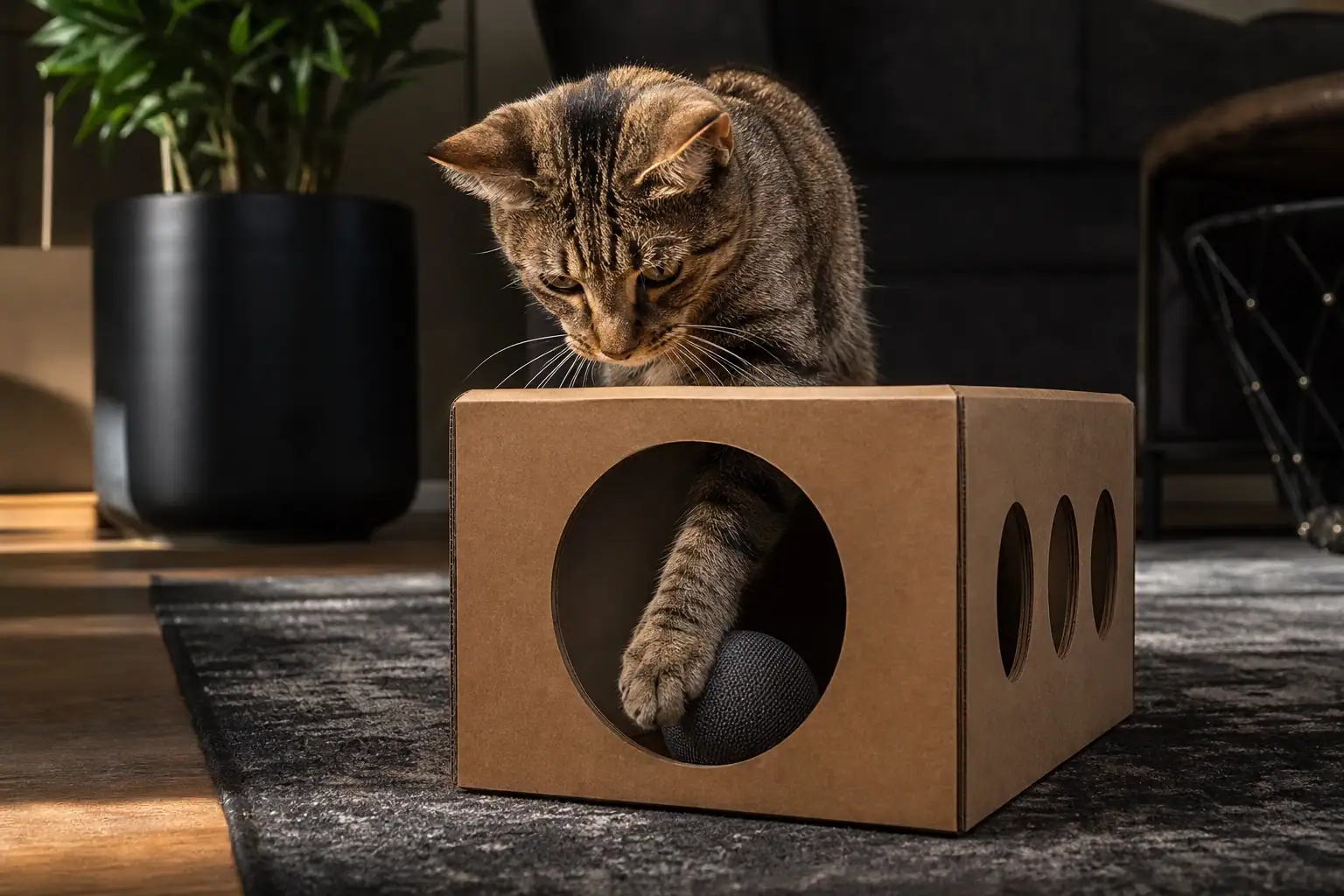
A cat toy box can mean three different things: a bin that stores toys, a subscription box that delivers new toys, or a cardboard activity box with holes for pawing and hunting. For most homes, the best answer is a storage system first: keep four or five appropriate toys in an easy-access rotation, put strings and electronic toys in closed supervised-only storage, and use a third small container for anything that needs washing or retirement.
That setup does more than clear the floor. It keeps risky toys out of reach, makes damage easier to spot, and restores some novelty when familiar toys return after a week away. A subscription can add variety, and a DIY box can add a hunting challenge, but neither replaces inspection and deliberate storage—especially when your cat bites, shakes, and opens ordinary plush toys quickly.
Which Kind of Cat Toy Box Do You Need?
Search results mix products with completely different jobs. Decide which problem you are solving before you buy anything.
| Type | Best for | Main drawback | Smart choice |
|---|---|---|---|
| Storage box or basket | Organizing toys and running a rotation | An open bin may give a cat access to unsafe toys | Use an open daily bin plus closed supervised-only storage |
| Cat subscription box | Trying new toy types without shopping one by one | Clutter, repeated toy styles, unsuitable treats, and weak toys | Choose a flexible cadence and inspect every item before use |
| DIY box with holes | Pawing, searching, and problem-solving play | Chewed cardboard, sharp cut edges, loose tape, or trapped paws | Build it simply, supervise, and retire it when damaged |
If you arrived looking for a monthly delivery, jump to the subscription section below. If toys are already taking over your floor, start with the two-box storage system. If your cat likes fishing objects out of narrow spaces, the DIY play-box section gives you a safer build.
Build a Safer Two-Box Storage System
One giant basket is convenient until a cat digs past a solid ball to reach a feather wand, elastic cord, or damaged plush. Separate toys by the level of access they require.
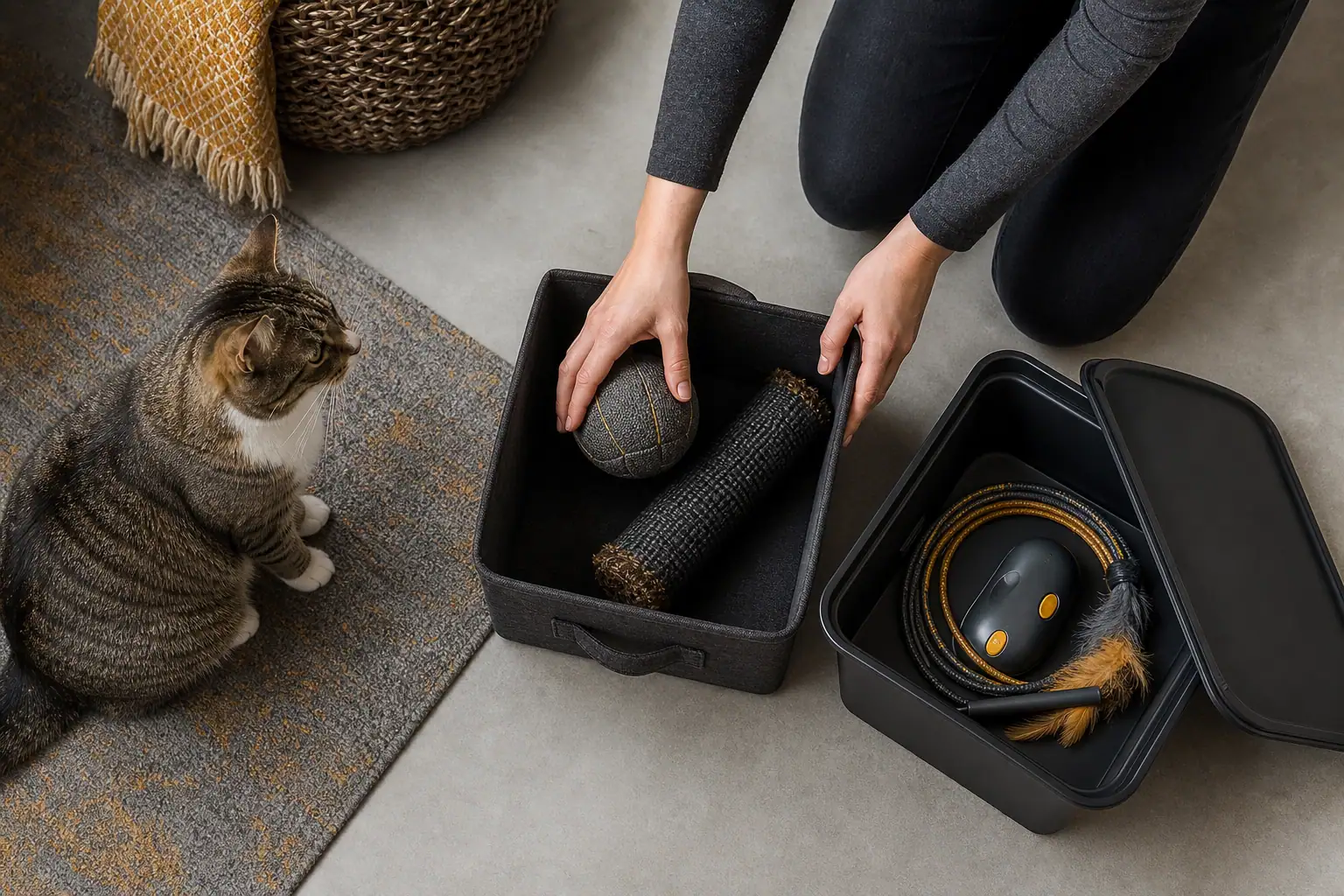
- Make an active-toy box. Use a low, stable, washable bin for the small set your cat may access under the level of supervision you have already established. Choose a bin without long loop handles, splintering wicker, exposed staples, or a heavy hinged lid.
- Make a supervised-toy box. Use a secure lidded container stored in a cabinet or on a shelf the cat cannot open. Put wands, ribbons, elastic, feathers, refill attachments, electronic toys, catnip bags, and any toy your cat tries to dismantle here.
- Add a wash-or-retire tray. A shallow container near the laundry area keeps wet, dirty, or questionable toys from going back into circulation by accident. This is a holding area, not permanent storage.
The active bin should not be an invitation to trust every item unattended. Your cat’s behavior determines access. A large molded track toy may be a reliable leave-out option for one cat, while another cat pries at its joints. A dense kicker may survive months of carrying but last minutes with a seam-focused chewer. Observe first, then assign the toy to a storage tier.
Cornell Feline Health Center advises avoiding toys with small pieces and strand-like parts that can separate and be swallowed. That is why wands, loose feathers, cords, and similar toys belong behind a lid after the session rather than mixed into a cat-accessible basket.
Use the Box to Run a Toy Rotation
A toy box becomes enrichment equipment when it controls novelty instead of merely hiding clutter. The veterinary behaviorists at VCA suggest keeping a larger assortment but offering only four or five toys at a time, then rotating weekly. The AAFP/ISFM feline environmental needs guidelines likewise recommend rotating toys to reduce habituation and boredom.
You do not need exactly 20 toys or a color-coded spreadsheet. You need enough variety to cover different parts of play without leaving every hazard on the floor.
- Chase: a wand, rolling toy, or covered-motion toy used with appropriate supervision.
- Catch and wrestle: a larger kicker or rugged plush that gives teeth and back feet a target.
- Search and solve: a puzzle feeder, treat ball, or DIY activity box.
- Solo batting: a sturdy ball, spring, or track toy that you have watched your cat use safely.
- Rest-day novelty: a paper bag with handles removed, a cardboard box, or a tunnel inspected for damage.
Once a week, swap two or three items rather than replacing the whole set. Move each returning toy through a 30-second check: pull gently at seams and attachments, look for tooth punctures and cracks, confirm battery doors close, smell for trapped moisture, and discard loose pieces. Our durable cat toys guide explains the failure points rough players expose fastest, while the cat toy enrichment rotation helps you balance chase, capture, foraging, and rest.
What Belongs Out, Put Away, or Retired?
Labels such as “interactive” or “durable” do not determine storage. How the toy fails—and how your cat attacks it—matters more.
Possible active-box toys
- Large, one-piece balls or rolling toys that cannot fit in the mouth
- Enclosed track toys with no cracks, loose covers, or exposed fasteners
- Rugged fabric toys with intact reinforced seams, if your cat does not ingest fabric
- Washable food puzzles with no food left to spoil
- Other simple toys your cat has repeatedly used without chewing pieces off
Supervised-only storage
- Wands, fishing-pole toys, ribbons, string, yarn, elastic, and feather attachments
- Electronic toys with motors, charging ports, batteries, wires, or removable covers
- Small plush mice, bells, glued decorations, removable eyes, and detachable tails
- Catnip or silvervine toys that trigger frantic chewing or guarding
- Any new toy until you have seen how your cat bites, carries, and dismantles it
Retire immediately
- Open seams, exposed stuffing, loose fibers, or detached decorations
- Cracked plastic, sharp edges, loose magnets, damaged batteries, or exposed wire
- A toy that has become sticky, swollen, permanently odorous, moldy, or impossible to clean
- Cardboard that is wet, collapsing, sharply torn, or being eaten rather than shredded and abandoned
- Anything missing a piece that you cannot account for
If a piece may have been swallowed, stop play and call your veterinarian for guidance; do not wait for a toy-box cleanup day. Repeated fabric, rubber, foam, or string eating also deserves veterinary attention rather than an endless search for a supposedly indestructible toy.