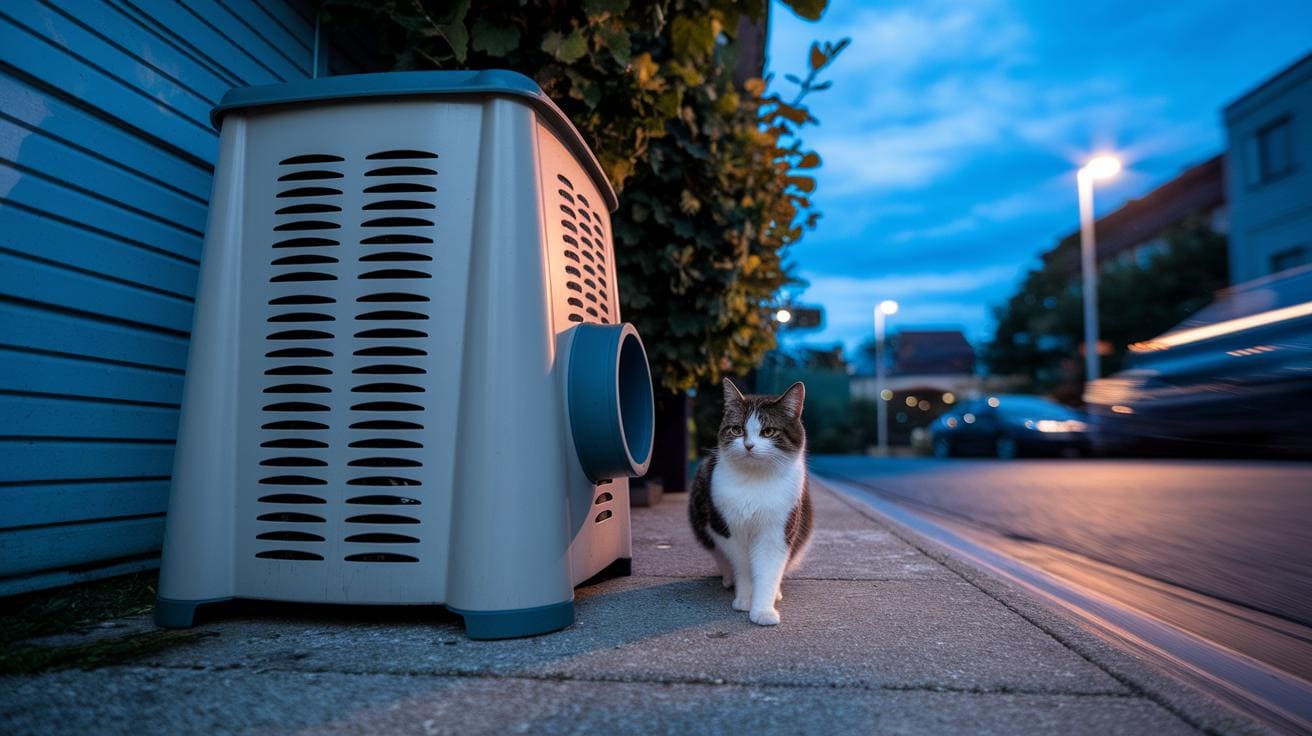
DIY litter box enclosure guide: step-by-step build

Who says a litter box needs to be an eyesore? Let’s make a bench that hides the litter, tames odors, and actually looks like furniture you’ll want in your home. It’s cat-friendly and budget-friendly, and your guests might not even notice it’s a litter spot.

This step-by-step guide takes you from raw boards to a finished 20.25" x 40" x 18.5" bench that your cat will love. You’ll get a clear cut list, tool tips, pocket-hole joins using a Kreg jig (pocket-hole jig), jigsaw cuts, plywood (layered wood sheet) panels, ventilation ideas, and finishing with stain (wood dye) and sealant (protective coating). Think of it like building a cozy little house for your cat that also hides the mess and the smell.

Materials you’ll need:

  • Plywood panels (layered wood sheet) for top, sides, and panels.
  • 1x lumber for frame and trim (standard dimensional lumber).
  • Pocket screws and wood glue for joins.
  • Activated charcoal (odor-trapping charcoal) or a small charcoal filter for odors.
  • Sandpaper, stain (wood dye), and sealant (protective coating).

Tools:

  • Kreg jig (pocket-hole jig) for pocket-hole joins (angled hidden screw joint).
  • Jigsaw (handheld saw with a small blade for curved cuts) for entrance holes and cutouts.
  • Drill, circular saw or table saw for straight cuts, and clamp(s).
  • Tape measure, square, and a sanding block.

Build tips you’ll actually use: make pocket-hole joins so fast, neat, and sturdy. Think of pocket-hole join like a hidden screw that pulls two boards tight. Drill and dry-fit pieces before glue so you can tweak things. Oops, let me rephrase that: dry-fit every board first.

Ventilation matters for smell and kitty comfort. Cut a couple of vent holes or add a small louvered panel so air can move. Layer a tray with a charcoal filter or a shallow bin of activated charcoal (odor-trapping charcoal) behind a removable panel for extra odor control. Sand all edges smooth so paws and whiskers don’t get scratched.

Finish like a pro but keep it cozy: stain (wood dye) to match your room, then seal with sealant (protective coating) so cleanup is easy. Let each coat dry and sand lightly between coats for a smooth top your cat can nap on. For busy days, toss an unbreakable toy on top before you leave , ten minutes of play and peace of mind.

Ready to make your room smell and look better? Your cat will probably inspect every corner, and then nap on top. Worth every paw-print.

Quick project snapshot: finished size, benefits, and what's included
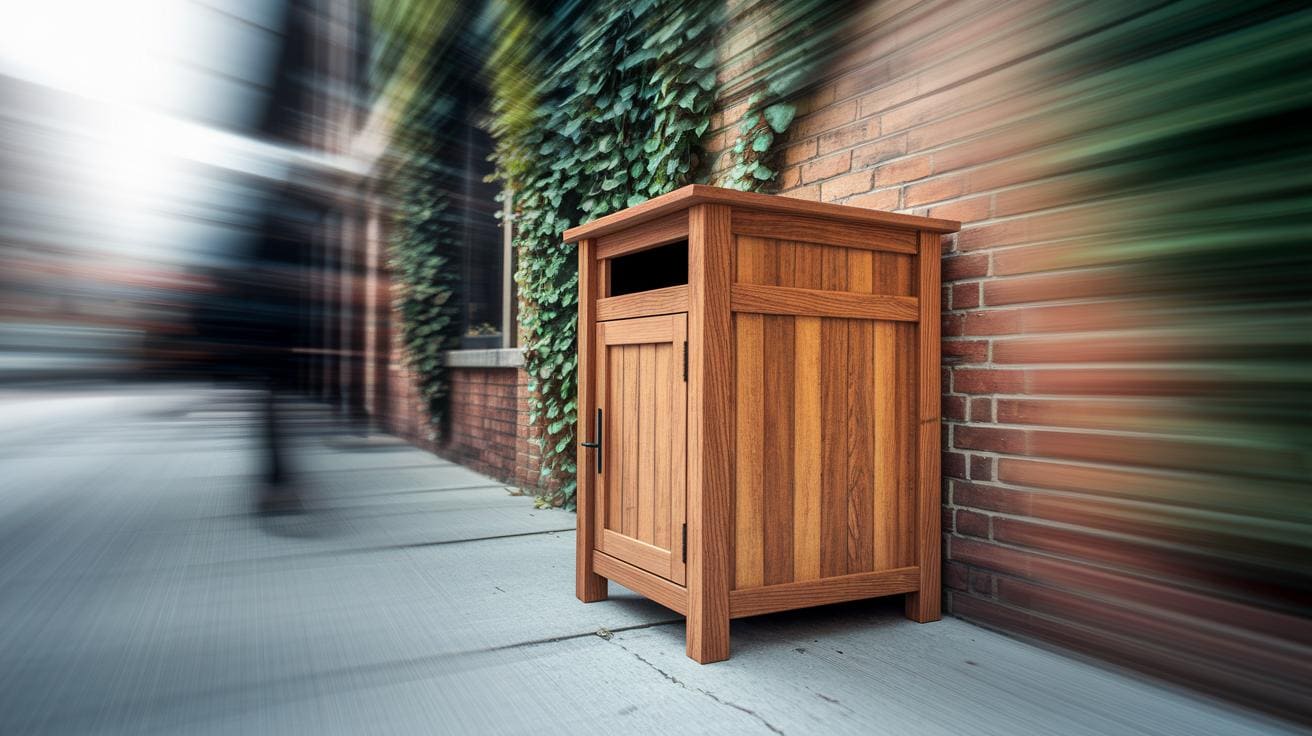
- Quick project snapshot finished size, benefits, and whats included.jpg

Finished piece: a bench-style litter box enclosure that measures 20.25" × 40" × 18.5". It hides the litter, makes your room look neater, tames odors, and costs less than buying a ready-made piece of furniture. Your cat still gets a private spot, and you get a stylish bench. Nice trade, right?

This guide walks you through the whole build. You’ll get everything you need to finish the project and keep your home smelling fresh. Here’s what’s included:

  1. Cut list
  2. Tools (and how to use them)
  3. Step-by-step assembly
  4. Ventilation plan to keep smells down
  5. Finishing and sealant guidance (how to stain or paint and protect the wood)
  6. Maintenance schedule so the box stays clean and long-lasting

Quick tools:

  • Kreg Jig (pocket-hole jig for making strong, hidden joints)
  • Jigsaw (handheld saw for curved or cutout work)
  • Drill (power drill for pilot holes and screws)

Materials: plywood (layered wood sheet), screws, wood glue (strong adhesive for joints). For finishes you might use stain and sealant (stain adds color; sealant protects against moisture and odors).

Time estimate: plan 4–8 hours for a basic cabinet build. If you stain and fully finish the piece, set aside up to one day. Suitable for crafters with basic woodworking experience. Ever watched your cat inspect every new box? This is about the same level of curiosity, but with a useful result.

For cut lists, diagrams, and full assembly steps see the "Materials, tools, and cut list" section and the "Step-by-step assembly plan" section.

Materials, tools, and cut list for a DIY litter box enclosure

- Materials, tools, and cut list for a DIY litter box enclosure.jpg

Start by buying the essentials first so you don’t end up with random extras. Grab 3/4" cabinet-grade plywood (plywood is layered wood with a stable core) in birch or oak veneer for the main panels. Add edge banding (thin tape that hides raw board edges), 1.25" Kreg pocket-hole screws (screws made for pocket-hole joinery), and good PVA wood glue (white wood glue). For finishing, plan on a stain like Minwax Dark Walnut and Minwax Polycrylic (clear protective finish) sprayed in 3–4 light coats. Don’t forget 220-grit sandpaper (fine grit for smoothing between coats).

Tools you’ll use over and over: a Kreg Jig set for 3/4" material (pocket-hole jig), an orbital jigsaw for curved entry cuts, and a miter saw or circular saw for straight cuts. A drill/driver, clamps, and a measuring tape are must-haves. An optional router can round openings for a nicer feel. On a tight budget? An IKEA cabinet or an upcycled dresser works fine instead of buying all raw materials.

Item Specification Typical cost estimate
Plywood 3/4″ cabinet-grade birch or oak veneer plywood (layered sheets with a stable core) $40–$80 per 4×8 sheet
Screws 1.25″ Kreg pocket-hole screws (for pocket-hole joinery) $6–$15
Wood glue Premium PVA wood glue (white glue for strong wood bonds) $6–$15
Hinges Concealed cabinet hinges or toy-box hinge support (for doors or lids) $8–$25 per pair
Edge banding Iron-on or adhesive wood veneer tape (covers raw edges) $5–$15
Stain Minwax Dark Walnut (example) $6–$12
Polycrylic Minwax Polycrylic spray (clear protective finish; plan 3–4 coats) $8–$15 per can
Shelf liner Waterproof liner for interior base (keeps moisture off the wood) $6–$20
Kreg Jig Pocket-hole jig set (3/4″ setting) $35–$120
Jigsaw Orbital jigsaw for curved cutouts (use a fine-tooth blade) $30–$120

Quick tips that save time and worry:

  • Set the Kreg Jig to the 3/4" thickness and run a couple test holes on scrap first. It’s worth it.
  • Use a fine-tooth jigsaw blade and feed slowly for cleaner curved entry cuts. Your cat will appreciate the smooth edge.
  • Use wood glue in pocket holes sparingly – wipe any squeeze-out right away. Glue is great, but messy glue is not.
  • Clamp joints while the screws set so faces stay perfectly flush.
  • Pre-drill and countersink hinge holes for a neat hardware fit.
  • Sand lightly between stain coats with 220-grit for a silky finish.
  • Apply edge banding with an iron, then trim flush with a utility knife and gently sand the seam.

A few practical notes: line the base with waterproof shelf liner (easy to replace) and test the door or lid for quiet operation so you don’t startle your cat. Ever watched your kitty poke a paw in to inspect a new box? Cute, and also proof that smooth, safe openings matter.

Worth every paw-print.

Precise measurements and sizing: from kittens to Maine Coons

- Precise measurements and sizing from kittens to Maine Coons.jpg

Think about inside room first, not just whether a tray fits. Your cat should be able to turn, dig, and step out without feeling cramped. For a really roomy large-box target aim for 28.5" × 32.5" × 26.5" , that’s plenty of breathing space. If you’re planning a bench-style DIY, use an exterior example of 20.25" × 40" × 18.5" to plan the overall footprint and how it will sit with your furniture.

  1. Kitten kit , minimum interior: 14" L × 10" W × 10" H (tray means the removable litter pan).
  2. Average adult , minimum interior: 18" L × 14" W × 14" H (most adult cats will fit comfortably).
  3. Large breeds / Maine Coon , target interior: 28" L × 20" W × 18" H (use this if your cat is long or broad; extra resource: litter box for maine coon cats).
  4. Self-cleaning unit accommodation , measure the outer dimensions of your unit and add 2–3" clearance on each side, plus a back hole for power cords. Self-cleaning unit means a mechanical box that sifts litter automatically.

Make the entry wide enough so your cat doesn’t have to squeeze. A good rule is 1.25 times your cat’s shoulder width. The build example uses an arch about 8.25" × 12" , a handy trick is to cut an 8.5" straight line first, then curve it into the arch. Pick a low-entry for older cats, or a higher-sided opening if you want splash control. Set the bottom of the opening about 3" off the floor for senior-friendly access.

How to measure your cat: measure shoulder width across the widest part of the shoulders. Measure body length from nose to the base of the tail. Add about 1–3" extra to the length so they don’t feel boxed in. Multiply shoulder width by 1.25 to get the entry width. If you have a self-cleaning box, measure the height with the lid closed, then add room for airflow and power access , and don’t forget clearance for the unit to operate smoothly.

Your cat’s comfort matters more than perfect symmetry. Give them room to spin, stretch, and dig , your sanity and their paws will thank you.

DIY litter box enclosure guide: step-by-step build

- Step-by-step assembly plan for a standard front-entry litter box enclosure.jpg

Get all your boards cut to the cut list and laid out so you can check grain direction and fit. Seeing the grain line up makes the finished piece look like real furniture, and it helps the front face match the bench vibe. Plus, it feels nice when everything snaps together.

  1. Cut all boards per the cut list, keeping grain direction consistent. Use plywood (layered wood sheet) where called for so the edges look right.
  2. Drill pocket holes into the sides, back, bottom, and middle using a Kreg Jig (a pocket-hole jig that makes hidden screw joints) set for 3/4" material. Pocket holes keep joints strong and give a clean look.
  3. Dry-fit every piece before gluing to confirm alignment; mark the middle divider about 11" from one side and make it flush with the front edge. Dry-fitting saves headaches later.
  4. Attach the bottom to one side with wood glue and 1.25" Kreg pocket-hole screws; clamp tight so the faces stay neat. You want snug, clean joins that don’t show gaps.
  5. Fasten the back panel next, then add the opposite side, keeping edges square and checking with a carpenter's square (right-angle measuring tool). Take your time here so the enclosure sits flat.
  6. Slide the middle divider in flush to the front (roughly 11" from the side) and secure with glue plus 1.25" screws; this hides the litter tray and helps cut litter tracking. Your cat will thank you for the privacy.
  7. Mark the entry opening centered between the side and divider; trace an 8.25" × 12" arch or adjust to fit your cat’s size. Ever watched a kitten squeeze through a tiny hole? Measure for comfort.
  8. Cut the opening with a jigsaw (jigsaw = handheld saw; use a fine-tooth blade) and tidy the edge with a router (edge-shaping tool) if you want a rounded, paw-friendly lip. Rounded edges feel nicer and stop little scratches.
  9. Edge-band visible plywood edges with iron-on tape, trim flush, and sand smooth for a furniture finish. That step turns plywood into something you’d be proud to show off.
  10. Stain parts now if you prefer finishing before final assembly; if you plan to spray polycrylic (clear protective finish) inside, wait until after assembly and protect the interior with shelf liner (non-slip protective mat). Both ways work, pick what fits your space.
  11. Install the top with two concealed hinges or use two 3" hinges if you want to skip a hinge jig; add a toy-box hinge support for a soft close so curious paws don’t get pinched. Soft close is a small luxury.
  12. Seal interior areas where dust and moisture collect so your enclosure stays fresh. Timeline estimate: cutting 1–2 hours, assembly 1–2 hours, finishing and sealing 2–4 hours over multiple coats. Worth every paw-print.

Finish-before-final-assembly vs finish-after note: Staining panels before final fastening keeps edges cleaner, but finishing after assembly makes sanding and final sealing easier. Pick the workflow that suits your workspace and patience. I once stained everything first and then ended up touch-up sanding in the garage, lesson learned, um, sort of.

Step Estimated time Skill level
Cutting 1–2 hours Beginner–Intermediate
Pocket-hole drilling 30–45 minutes Beginner
Assembly (glue + screws) 1–2 hours Intermediate
Entry cutout (jigsaw/router) 30–60 minutes Intermediate
Sanding and finish coats 2–4 hours (spread out) Beginner–Intermediate
Final hardware and hinge install 30–60 minutes Beginner

Ventilation, odor control, and interior layout for a closed litter box enclosure

- Ventilation, odor control, and interior layout for a closed litter box enclosure.jpg

Put ventilation slots or a small grill near the top or toward the back so stale air can creep out and fresh air can sneak in. Add a carbon filter slot (carbon = charcoal-based odor trap) right behind that vent so you can swap filters without tearing the whole thing apart. If you hide an automatic unit, make a back hole for power cords and leave a little extra space for airflow so the motor doesn’t overheat.

Pick a low-dust or silica litter (silica = crystal-like granules) so dust won’t choke the cabinet or coat everything in a funky film. Scoop daily to stop smells at the source, and give the inside a quick wipe-down once a week so buildup doesn’t get out of hand. Position vents so they don’t blow straight into your cat’s face , most cats prefer a draft-free, private corner. Ever watched your kitty wrinkle its nose? Yeah, they notice drafts.

Arrange the tray centered or tucked behind a shallow divider so scattered litter gets caught before it escapes. Line the base with a removable waterproof shelf liner (a thin plastic sheet that peels out for cleaning). Think about a shallow sifting drawer under the tray (a drawer that separates clean granules from tracked litter) to trap the mess your cat drags out. Keep a clear path for changing filters and emptying trays so maintenance stays quick , that’s the thing you’ll actually do when life gets busy.

  • Vent slots at top or back for passive airflow
  • Carbon filter slot (carbon = charcoal-based odor trap) for replaceable odor control
  • Daily scooping to stop smells where they start
  • Low-dust or silica litters (silica = crystal-like granules) to cut airborne dust
  • Removable shelf liner for waterproofing and easy cleaning
  • Shallow sifting drawer to catch tracked litter (filters litter back into the tray)
  • Activated charcoal pouch placed near the vent (activated charcoal = highly porous charcoal that traps smells), not loose in the litter

Swap carbon filters every 6 to 12 weeks depending on how many cats you have and how tight the space is: aim for 6 weeks with multiple cats or cramped spots, and toward 12 weeks for a single cat with good airflow. Check filters once a month and replace sooner if odors return. A bit of baking soda in a sealed container can help in a pinch, but sealed charcoal filters are less messy and easier to manage.

Worth every paw-print.

Accessibility, multi-cat strategies, and senior-cat design variants for litter box enclosures

- Accessibility, multi-cat strategies, and senior-cat design variants for litter box enclosures.jpg

Give each cat its own enclosure, and if you can, add one extra. That simple rule cuts fights and slashes sharing accidents, which means fewer surprises on the rug and calmer mornings. Place boxes in quiet, easy-to-reach spots with more than one way in when possible so shy cats have an escape route and bossy cats can’t block the door.

For cats with limited mobility use a low-entry opening (about 3" from the floor) and a hinged or removable top (a lid that swings open or lifts off) so cleaning is quick and painless. Put units where light is soft and traffic is low , your cat will appreciate the privacy. For placement ideas and spacing tips see positioning litter boxes for multi-cat households.

  1. Single large entry – one big opening that fits oversized trays and let’s multiple cats rotate through without crowding. It feels roomy and reduces that panic when two cats try to squeeze in.
  2. Two-entry cabinet – openings on opposite sides so cats can come and go without face-to-face meetings, which helps calm tensions. Think of it like separate doors on a tiny restroom.
  3. Low-entry ramp – a wide, gentle ramp leads into a lower opening for seniors and kittens (gentle slope, shallow steps). It’s easier on joints and looks inviting, like a little stair for comfort.
  4. Split-compartment with divider – two separate bays under one top; great for tight spaces when you want privacy for each cat and don’t have room for two boxes. You get privacy without extra floor clutter.
  5. Top-entry option – raises litter depth and cuts down on scatter; best for agile, younger cats and for hiding odors. It’s tidy and kind of fun for cats who love to leap.
  6. Additional external litter matting – heavy-duty mats or a shallow sifting drawer catch tracked litter and protect floors. A good mat means less sweeping and fewer tiny crunchy surprises under your couch.

Senior & Kitten Access Design

Keep ramps shallow , about an 18° max slope (that feels like walking up a small step). Make the entry height about 3" off the floor so arthritic or mobility-limited cats can step in easily. Use non-slip flooring like rubber shelf liner, textured EVA foam (soft, grippy foam mats), or a thin low-profile rubber mat that peels out for cleaning. These materials give traction and comfort, and they’re easy to wipe or shake out.

Bonus tip: for busy days tuck a simple scoop-and-go solution into your routine , toss a clean mat or replace a disposable tray, and you’ve bought everyone a quiet, clean hour. I once watched a senior cat happily nudge her way up a gentle ramp and you could see the relief , totally worth the small design tweaks.

Finishing, safety, cleaning schedule, and troubleshooting cats refusing the enclosure

- Finishing, safety, cleaning schedule, and troubleshooting cats refusing the enclosure.jpg

Pick non-toxic finishes and a low-VOC polycrylic (clear protective finish, low-VOC means fewer fumes) for any surface your cat can touch. Let paint or polycrylic dry in a well-ventilated room and follow the maker's cure times, since most clear coats need 24 to 72 hours to dry and a few days to fully harden. Keep curious noses and paws out of the workshop while you spray or brush, because even mild smells can bother pets.

Daily scooping stops odors before they start. Wipe the interior once a week with a mild, pet-safe cleaner or a vinegar-and-water mix (vinegar is a gentle acid that cuts grime). Do a deep clean every month: empty the tray, wash it in warm soapy water, dry it completely, and put in fresh liners and filters. Replace carbon filters (activated carbon, which traps smells) every 6 to 12 weeks depending on how many cats are using the box. Check hinges, screws, and soft-close hardware every few months so the lid won’t pinch paws.

Task Frequency Tools / Products recommended
Daily scooping Every day Scoop, disposable bag, rubber gloves
Weekly wipe Once a week Microfiber cloth, mild dish soap or vinegar solution
Monthly deep clean Once a month Warm water, mild soap, scrub brush, full dry time
Filter change Every 6–12 weeks Activated carbon odor filter, spare filters
Liner replacement Monthly or when damaged Waterproof shelf liner, scissors
Hardware check Every 3 months Screwdriver, small wrench, hinge lubricant

Try short, supervised visits to help a wary cat learn the enclosure. Leave the door or lid open and put familiar litter inside, then tempt them with a toy or a treat. Ever watched your kitty circle and sniff like a tiny detective? That’s progress.

Watch for stress signs: avoiding the box, peeing outside it, flattened ears, or hiding. Those are clues something’s off. If the location is noisy or high-traffic, move the box to a quiet corner , cats tend to prefer peace.

If they avoid the enclosure after you changed anything, switch back to the litter brand they like. You can also remove the top or lid for a while so they can peek in without feeling trapped. Rub a soft cloth on your cat and then wipe the entrance area to transfer their scent; it really helps make the space feel familiar.

If refusal keeps happening, check with your vet to rule out urinary issues or pain before you redesign the box. In truth, medical problems often show up as litter-avoidance, so it’s best to rule that out first. Worth every paw-print to be sure.

Optional upgrades, budget hacks, and build variations

- Optional upgrades, budget hacks, and build variations (IKEA hacks, sifting drawers, and integrating self-cleaning units).jpg

Quick note: I removed the duplicate "DIY litter box enclosure guide: step-by-step build" block and folded the useful bits into the right sections so the guide won’t repeat itself. Less clutter. More useful hacks. Your cat will approve.

  • IKEA upcycle hack , moved to Materials/Tools and Finishing. Tip: flip a corner base cabinet upside-down to hide a Litter-Robot for about $90. Finish the top with marble epoxy (epoxy is a hard resin that cures to a glossy, durable surface) for a slick, long-lasting look. Ever seen a cat inspect a new surface? That glossy finish gets a curious sniff every time.

  • Shallow sifting-drawer measurements , moved to Ventilation/Interior layout. Build a shallow drawer 2–3 inches deep so the sifting deck drops litter into the drawer, not onto the floor. It keeps mess low and clean-up quick. Your floors will thank you.

  • Removable-liner groove details , moved to Ventilation/Interior layout. Add a front-facing groove that holds disposable liners (single-use or compostable bags) for fast swaps. Slide it out, tuck a fresh liner in, slide back. Boom , swap and go.

  • Charcoal-filter pocket instruction , moved to Ventilation. Cut a small slot behind the vent to slip in an activated-charcoal pouch (activated charcoal is carbon treated to trap odors). Makes replacing filters a no-fuss job.

  • Activated-charcoal replacement cadence , moved to Maintenance. Swap activated-charcoal pouches every 6–8 weeks for steady odor control (so you don’t get surprised by a funky whiff).

  • Caster wheels for mobility , moved to Step-by-step assembly/top install steps. Install lockable casters (casters are small lockable wheels) so you can roll the unit out for deep cleans, then lock it in place. Handy if you like moving things around, or if a vacuum needs under-the-unit access.

  • Convertible bench-seat guidance , moved to Step-by-step assembly/top install steps. Reinforce the interior with bracing and add a cushion so the top doubles as a bench. Test the weight on the frame before you let guests sit, safety first, then comfy seating.

  • Peel-and-stick cosmetic finishes , moved to Finishing. Use peel-and-stick wallpaper or vinyl for a quick visual upgrade. It’s an easy refresh if you’re renting or just feeling creative.

  • Budget snapshot , added to the Materials cost table so readers see the price range at a glance.

Worth noting: folding these items into the proper sections keeps the article focused and avoids repeating build steps, while still keeping all the practical hacks and cost estimates easy to find.

Build Level Typical Cost
Budget build Under $50
Mid-range $150–$300
Premium upcycled build $300+

Final Words

Right in the action: you’ll end up with a bench-style cabinet about 20.25" × 40" × 18.5" that tucks litter away, cuts odor, and costs less than store-bought furniture.

We ran through the shopping list and cut list, exact sizes for kittens through Maine Coons, a clear 12-step assembly plan, ventilation and odor-control fixes, multi-cat and senior access ideas, finishing and maintenance routines, plus budget-friendly upgrades.

Use this DIY litter box enclosure guide to make a calm, tidy spot that keeps cats active, reduces stress, and saves you time. Paw-approved.

FAQ

FAQ

Where can I get a DIY litter box enclosure guide PDF or plans?

A DIY litter box enclosure guide PDF or plans gives finished dimensions (example 20.25″ × 40″ × 18.5″), plus a cut list, tools, step-by-step assembly, ventilation plan, finishing, and maintenance schedule.

Can I make a DIY litter box enclosure from IKEA furniture or use hidden litter box IKEA hacks?

An IKEA litter box enclosure hack uses Besta or a corner base cabinet flipped or modified, with back cord cutouts, ventilation slots, and shelf liner for easy cleaning and hiding self-cleaning units.

How do I build a cheap DIY hidden litter box or hide a litter box in a small apartment?

A cheap DIY hidden litter box for a small apartment uses upcycled dressers, curtain-covered tables, or basket conversions; add ventilation slots, a removable liner (waterproof mat), and a low-entry opening for seniors or kittens.

How do I build a double litter box enclosure DIY?

A double litter box enclosure DIY uses a central divider to create two compartments or a two-entry layout; size each compartment per cat and aim for one box per cat plus one extra when possible.

How do I make a homemade litter box for large cats?

A homemade litter box for large cats should target interior dimensions around 28″ L × 20″ W × 18″ H, with a wide entry and sturdy 3/4″ plywood (layered wood panel) for strength.

How wide should the entry cutout be for my cat?

The entry cutout should be at least 1.25× your cat’s shoulder width; measure shoulder width, add clearance, and use sample arch sizes like 8.25″×12″ or an 8.5″ straight top with curved sides.

Related Articles

Author

  • Isabella Tiu

    Isabella Tiu is a transcriptionist from Calhoun, Florida, known for her sharp attention to detail and her commitment to providing accurate and efficient transcription services. With a passion for language and communication, she thrives on transforming spoken words into clear, readable content for her clients.

    When she's not working, Isabella enjoys hiking and camping, finding peace and inspiration in the beauty of the outdoors. She often says, “The best lessons are often learned in nature,” a philosophy she embraces both in her work and personal life.

    Isabella’s love for both her craft and the natural world reflects her belief in continuous learning and exploration.

    View all posts

Similar Posts