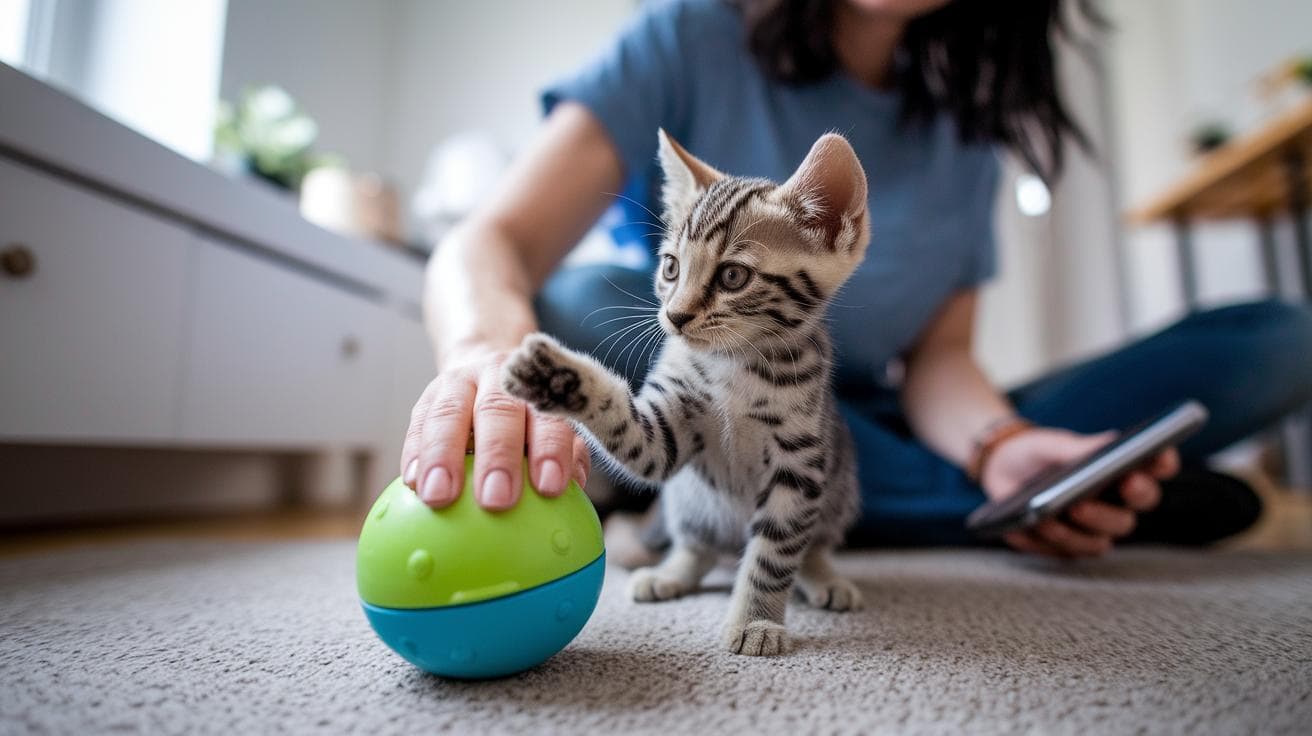
Controversial take: skip play and your kitten could grow into a shy housemate who watches life from the cat tree. I’ve seen kitties choose the top perch over people. Not ideal.
Play isn’t just fun. It’s training. Short, predictable sessions teach kittens that people and everyday noises are safe. Little steps can turn hiding into a curious hello. Ever watched your kitty flinch at a vacuum? This helps.
Here’s an exact 4-week play plan. Start with a 48-hour quiet adjustment, then introduce scent (smell), sound (noises), sight (visuals), and touch (gentle handling) in stages so each thing feels normal. You’ll get session schedules and quick wins you can use today.
Think of it like a gentle boot camp for kittens. Short wand-toy bursts (a teaser wand is like a fishing rod for cats) and tiny, predictable exposures build confidence. Twitching whiskers become confident pounces. Worth every paw-print.
Core 4-week play routine: exact session schedule and quick wins

This is the fast plan for socializing kittens through play. Day 1 is a 48-hour quiet adjustment (time alone to settle). Days 2–7 are 3–6 short sessions totaling about 20–30 minutes a day. Weeks 2–4 ramp up to roughly 2 hours a day split into 4–6 short bursts.
scent – sound – sight – touch. Staged exposure lowers stress and builds predictable signals your kitten can learn. See 'Social introductions' for protocols.
-
Get a small, safe room ready and start the 48-hour quiet adjustment (quiet adjustment = low-stress settling time). Keep handling light so the kitten can sniff, nap, and feel safe before play-based socializing begins.
-
Scent exposure (getting used to smells): swap bedding and wear different household clothing near the kitten so it learns friendly household scents. Your kitty will start to link those smells with calm people , whiskers twitching is a good sign.
-
Low-volume sound exposures (soft household noises): play short radio or TV clips at low volume near the room, then slowly add more types of sounds as the kitten stays relaxed. Think dishwasher hum, quiet chatter, or a ticking clock , small, predictable noises that say this place is normal.
-
Visual exposure: let the kitten watch people and other pets from a secure perch (a cat tree or behind a baby gate) so curiosity grows without pressure. It’s like window-shopping for social skills , safe, slow, and interesting.
-
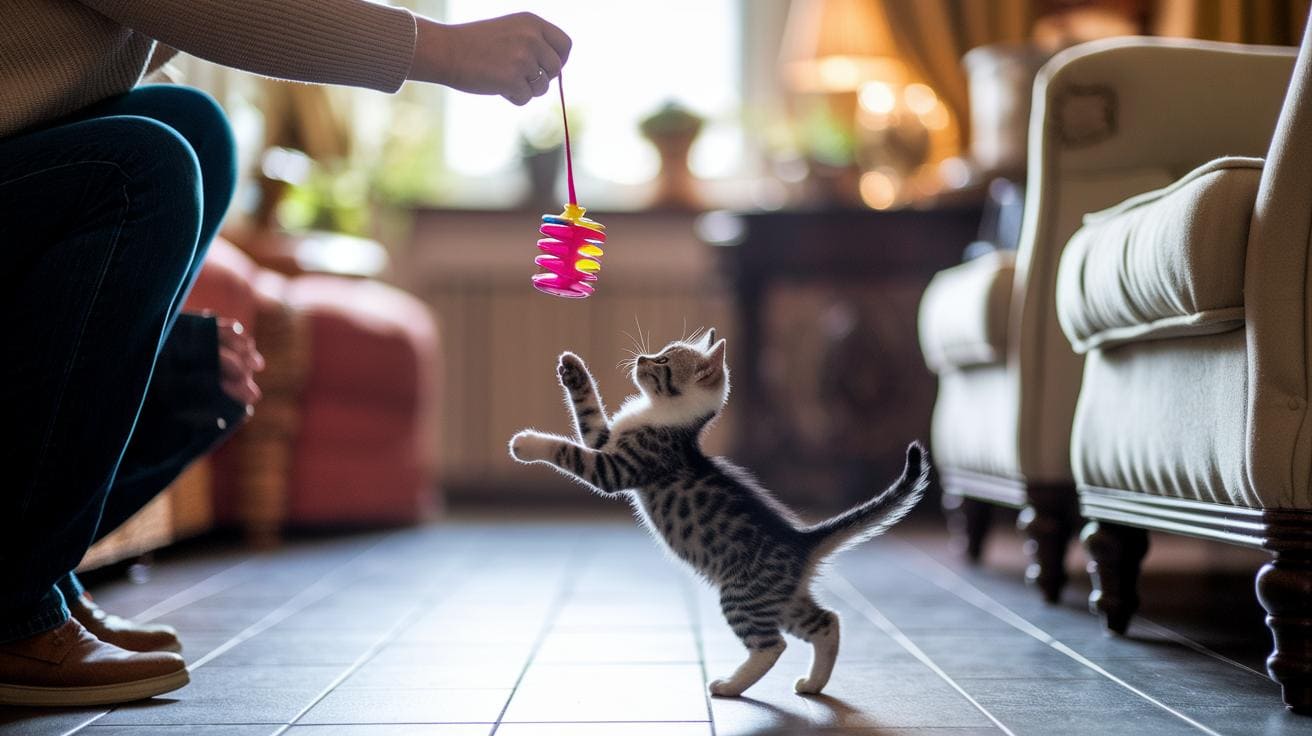
Short wand-toy sessions (wand-toy = a stick with feathers or ribbons): start with 1–3 minute bursts for the tiniest kittens, and lengthen sessions as focus improves. Move the toy in small, tempting ways so your kitten practices stalking, pouncing, and keeps play positive.
-
Follow the Playtime schedule for Weeks 2–4: add a little more time each day until you reach about 2 hours total, broken into 4–6 playful, reward-based sessions (reward-based = treats, praise, or a favorite toy). For busy days, toss an unbreakable ball before you head out , ten minutes of safe play goes a long way.
-
Only introduce touch (touch = gentle petting and short handling) after calm responses to scent, sound, and sight. Go slow and keep things positive so your kitten learns to trust hands and people.
If fear or aggression shows up, stop and back up a step. Move slower. For safety scripts, bite-inhibition wording, and signs of overstimulation, see Handling for exact cues and timed scripts.
Worth every paw-print.
Age-appropriate play activities and sample drills

Use the Step-by-step timing and daily totals for how long and how often to play. Start short and sweet, then slowly build sessions as attention grows. Think tiny bursts of fun, not marathon workouts.
Safety first. Never leave very young kittens with toys that have loose small parts or long strings unsupervised. Check toys often for shredding and pick non-toxic materials (safe if chewed). Wait on catnip until about 4 to 6 months, when most kittens respond to it. Always supervise handling, and keep things calm if your kitten hides, hisses, or seems overwhelmed.
Kittens’ focus grows fast. Newborns and 2 to 3 week olds mostly need sensory comfort and very brief social touches. By 3 to 4 weeks they start exploring and like low-intensity tug or crinkle play. At 4 to 6 weeks, pounce practice with a wand toy (a stick with feathers or ribbons) is perfect. By 6 to 8 weeks you can add short chases, small climbs, and tiny fetch drills, still in quick, playful bursts.
Refer to Step-by-step for the core routine and exact session totals; the examples below help you match play to age.
-
2–3 weeks: gentle scent and soft heartbeat stimulus, like a towel with a ticking clock to mimic a heartbeat. A few seconds of supervised hand presence helps social comfort. Use soft, high-contrast visuals such as a black-and-white cloth so their eyes get interesting input.
-
3–4 weeks: introduce crinkly fabric toys and very low-intensity dangling toys, like short ribbons on a short wand (short to reduce risk). Try short, assisted floor exploration with an adult nearby so they build confidence while staying safe.
-
4–5 weeks: bring in wand toys with feathers or ribbons to prompt pounce practice. Add shallow tunnels and cardboard or fabric hide boxes for ambush play, watch those whiskers twitch. Keep sessions short and upbeat.
-
6–8 weeks: play brief chasing games across a soft surface so they don’t slip. Use small plush mice (soft stuffed toys) for pounce accuracy, low climbing steps for balance, and gentle fetch drills with soft toys for quick practice.
Session length expands with age per Step-by-step. Use these toy types and play styles to fill your daily totals, keep play joyful, and stay safe. Worth every paw-print.
Toys and tools that support social play and skill building
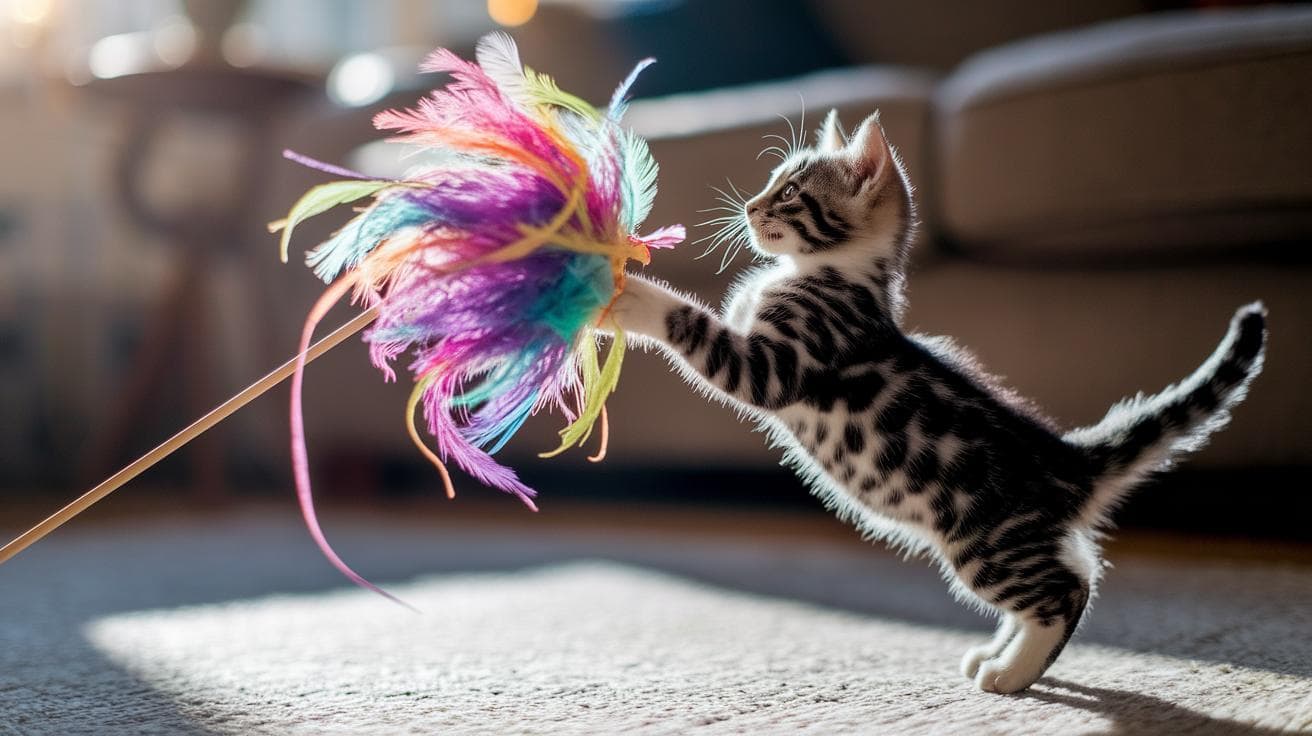
Rotate toys every 3-5 days and keep about 4-6 options out so kittens do not get bored or overstimulated. It helps them stay curious and gives each toy a novelty boost. I swap toys every few days; Mr. Whiskers attacks the feather like it is brand-new prey.
Around 8+ weeks, introduce puzzle feeders (toys that release food when the kitten bats or nudges them) so kittens can practice foraging and problem solving. For busy days, toss an unbreakable ball before you leave – that buys you ten minutes of safe solo play.
Do a quick safety check every day. Look for non-toxic materials (safe if chewed), no loose small parts, and no long strings that can tangle. If stuffing is showing or stitching is coming apart, retire the toy. Quick test: give the toy a gentle tug and squeeze; if fuzz or bits come loose, it is time to toss it.
Delay catnip until about 4-6 months so young kittens do not get overwhelmed.
| Toy Type | Suggested introduction age (purpose) |
|---|---|
| Wand / fishing pole | 3+ weeks (approach-and-chase, bite redirection) |
| Tunnel / box | 3+ weeks (hiding, confidence, pounce practice) |
| Crinkly toys | 3+ weeks (curiosity, gentle stalking) |
| Small plush / toy mice | 6+ weeks (fetch, pounce accuracy) |
| Climbing posts / trees | 6+ weeks (vertical exploration, safe climbing) |
| Puzzle feeders | 8+ weeks (foraging, treat-driven engagement) |
Daily safety check example: "Give the toy a gentle tug and a squeeze; if fuzz or bits come loose, it's time to toss it."
Refer to Step-by-step for session totals and how long to use each toy during play. Worth every paw-print.
Sample session schedules and adjustments
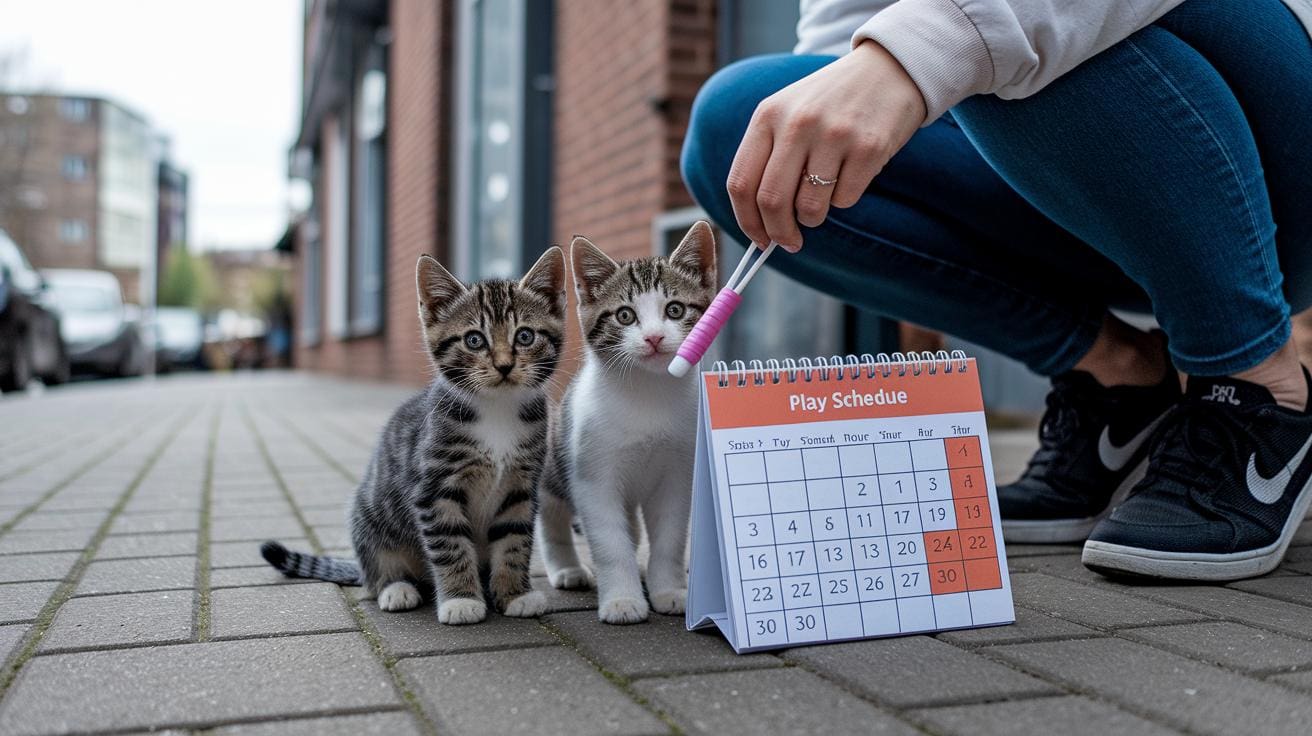
Short, frequent bursts of play keep kittens engaged and prevent overwhelm. Break your day into several tiny sessions, and save a lively chase right before lights-out to help calm nighttime zoomies. It’s a simple playtime plan that actually works.
Short sessions for young kittens are about quality, not length. Quick focus, then a break. Your kitten learns more from a few intense minutes than from a long, sleepy game.
Watch their energy windows. Kittens often wake hungry and curious, or slow and sleepy after a nap. Match the game to that mood , gentle grooming-play after sleep, fast wand sprints when they’re zooming around. A wand toy (string or feather on a stick) is great for quick bursts. A puzzle feeder (a toy that hides food) buys supervised exploration time. Newborns need micro-stints. Older kittens can do more repeats and longer bursts.
- Morning (7:30): 5-7 minute gentle play with grooming mixed in to wake them up and bond.
- Midday (12:30): 5-10 minute focused wand play with small treats for rewards.
- Early afternoon (16:00): Supervised exploration plus a short puzzle feeder session to slow them down and work their brains.
- Early evening (18:00): 5-10 minute interactive play and simple recall games with treats when they come back.
- Pre-bed (21:00): 10-15 minute chase and pounce session to burn off energy before sleep.
- Post-play calm: Short petting and a quiet snack to wind down. Worth every paw-print.
These are templates. Use Step-by-step for the master progression and exact daily minutes. If you see fear, hissing, or frozen posture, shorten sessions and back up a step until your kitten shows calm behavior. Ever watched a whisker-twitching pounce? That’s the good stuff.