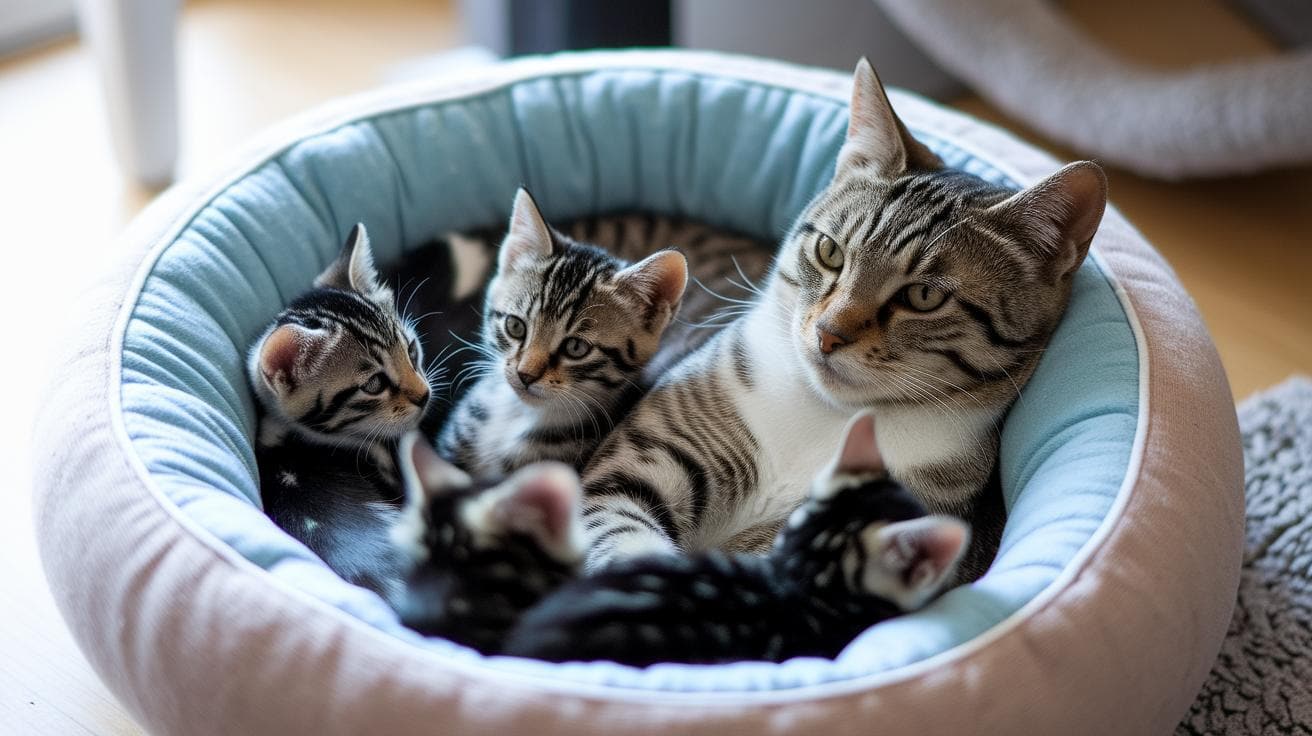
Ever peek under your cat’s cozy nest and spot little red drops? I thought “oh meow, what’s that?” But that light streak is just mama cat’s natural cleanup after her kittens arrive!
Most new cat moms pass lochia (post-birth fluid made of blood and mucus). It looks slimy, kind of like a slow paintbrush swipe on a soft blanket, um a messy little art project. You’ll see it for up to two weeks while her womb gently shrinks back.
In this post we’ll walk you through what’s normal, calm those racing thoughts, and show you when it’s time to check in with your vet. Ready to feel feline fine? Let’s go!
Cat Bleeding After Giving Birth: Normal Lochia Timeline
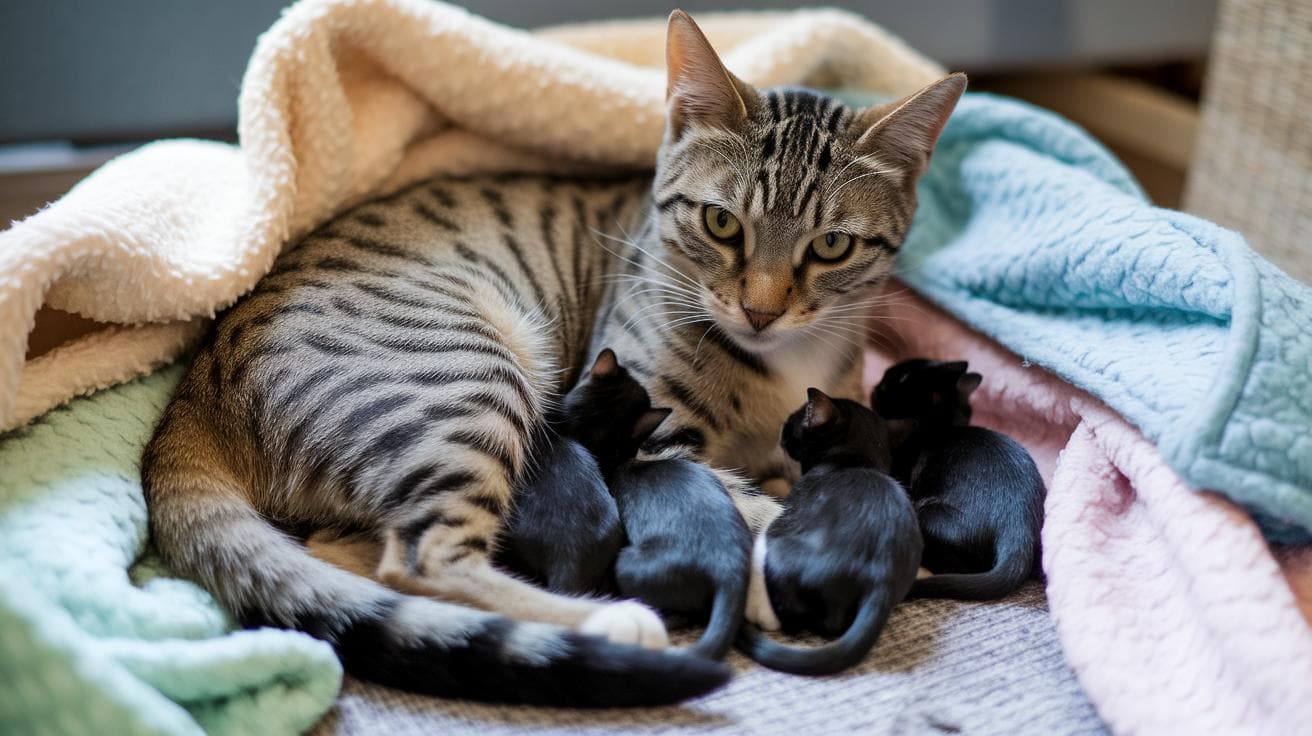
Have you ever spotted a tiny red dot on the blanket after your kitty gives birth? When a queen cleans up after delivery, she passes lochia (a mix of blood, mucus (that slimy stuff), and bits of uterine lining (the womb’s inside layer)). Oops, let me rephrase that: it’s a gentle trickle, not a heavy flow.
Bleeding usually starts within 24 hours of the last kitten’s grand entrance. Most queens spot for about 10–14 days, though a few may linger at light dots for up to three weeks. I saw Luna’s dark smudge on day two, totally normal. No big clumps should show up, just that steady clean-up.
Your cat’s bedding might collect little drops at first. Bright red shifts to dark green or black during week one. By week two, it turns brownish. Then around week three you’ll notice a pale yellow or clear discharge that’s barely there. It’s kind of like watching paint fade on an old fence.
Some queens breeze through all this in just a week, with slim spotting by day five. Others hold on to those light speckles for the full three weeks. It all depends on how fast her uterus shrinks back to normal. Keep fresh bedding handy and give your mama cat plenty of space, you know? Tracking those color changes is a simple way to relax your mind.
Worth every paw-print.
| Color | Timeline | Volume |
|---|---|---|
| Bright red | Days 1-3 | Moderate spotting |
| Dark green/black | Week 1 | Light to moderate |
| Brownish | Week 2 | Light |
| Yellowish/clear | Week 3 | Very light |
Warning Signs & When to Call the Vet
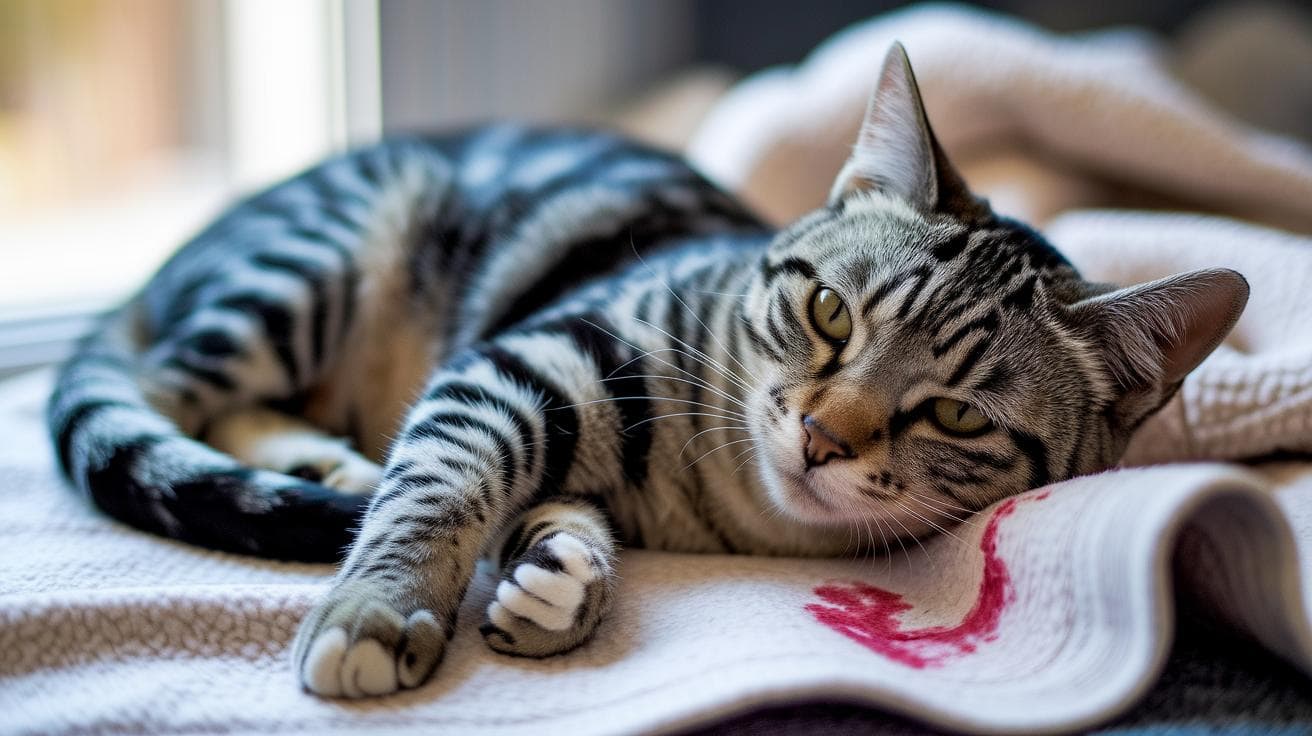
It’s normal for your queen (mom cat) to have some light spotting after birth. That’s lochia (the usual afterbirth fluid). But you know your kitty best, and if something feels off, pay attention! Ever felt that little pause in her purr? Before trouble claws its way in.
Here are the red flags to watch for:
- Bright red flow that keeps going past day three, hinting at something more than routine spotting.
- Large blood clots or a sudden gush of blood, classic signs of postpartum hemorrhage (heavy bleeding after birth).
- Yellowish or green discharge with a bad smell, warning you of uterine infection (metritis is an infection of the uterus).
- Noticeable fever or a body that feels too hot and shivery. Her fur should be warm, not burning up.
- Severe tiredness, like she can’t even lift her head to nuzzle her kittens.
- Refusing food or water, which often goes hand in paw with belly pain.
- A swollen, tender belly that makes her wince when you gently touch her side.
When to Call the Vet
If you see any of these lasting signs, don’t wait, give your vet a call:
- Bleeding stays moderate to heavy for a full week with no sign of easing up.
- Bright red spotting won’t let up after three days.
- Extreme lethargy where she ignores her kittens or toys. No purrs, no play.
- She skips meals or pushes her kittens away, because loss of appetite can mean trouble.
- Sudden kitten loss or no peeing for 24 hours. Those are real emergencies.
Causes of Abnormal Bleeding After Giving Birth in Cats
Ever notice little bits of afterbirth hanging around your queen? Sometimes those tiny placenta pieces (the tissue that feeds kittens before birth) stick like unwanted crumbs. They can lead to metritis (infection in the uterus), making her feverish, off her food, and uninterested in her kittens. Yikes, that’s your cue to call the vet!
And when bacteria move in, that’s a uterine infection (infection in the womb) at work. You might catch a whiff of smelly, greenish or yellowish discharge and see her acting sluggish. It’s like she’s saying, “Um, I’m not feeling so claw-tastic right now.”
Fluid buildup in her uterus can feel like an overinflated water balloon pressing on her belly. All that extra fluid can slow healing and stretch her womb walls, so spotting hangs around longer. Your cat may seem bloated or restless, pacing or licking her tummy more than usual.
Sometimes her uterus doesn’t tighten back quickly, that’s delayed uterine involution (when the womb fails to shrink). Normally it snaps back in about three weeks, but if it stays soft and spongy, blood and discharge just linger. It’s kinda like leaving the door open for more mess.
Occasionally, an unborn or nonviable kitten (a kitten that can’t survive) can jam the birth canal and cause trauma. If your queen seems in pain or keeps straining and you still see bleeding, that obstruction is serious. Don’t let her handle that on her own.