
Ever wonder if a cat’s tail has a mind of its own? Watching a cat flick its tail or hold it high might seem like pure instinct, but there’s more to it. Cats have impressive control over their tails, much like a gymnast balancing on the beam. This blog dives into the mechanics and communication behind feline tail control. We’ll explore how structure and nerves work together to give cats this skill. Whether you’re curious about how your cat moves or wants to understand their mood, stick around to unravel the mystery.
Do Cats Control Their Tails?
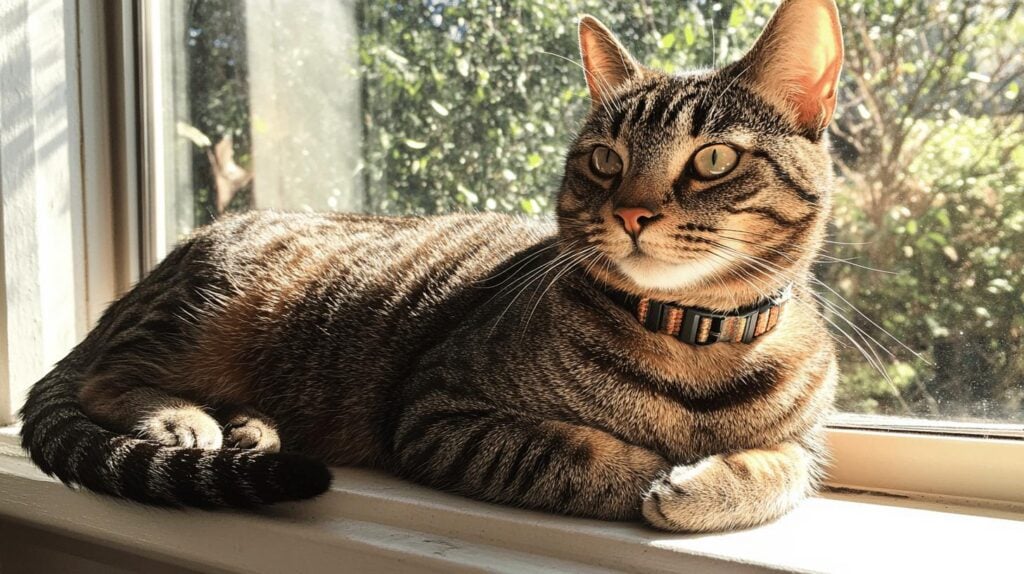
Cats have remarkable control over their tails, much like a skilled acrobat mastering balance and movement. The tail is an extension of the spine, composed of 19 to 23 vertebrae, which give it a high degree of flexibility. These vertebrae are connected by six muscles on each side, allowing for a wide range of motion and precise control. Whether your cat is balancing on a narrow ledge or expressing curiosity, the tail’s structure supports these activities with ease. The flexibility and strength of the tail are essential for a cat’s agility, playing a key role in their ability to perform graceful maneuvers.
The control over a cat’s tail is not just about physical structure; it’s also about the neurological system at work. Cats can move their tails with voluntary actions much like how we decide to move our hands. These movements are orchestrated by the nervous system, allowing the tail to react quickly to environmental stimuli. Reflex actions, such as a quick flick in response to a sudden noise, demonstrate how the tail can respond without conscious thought. This combination of voluntary and reflex actions makes the tail an effective tool for communication and interaction.
- Vertebrae: Provide the structural support and flexibility needed for diverse movements.
- Muscles: Enable precise control over the tail’s position and motion.
- Ligaments: Contribute to the stability and flexibility of the tail.
- Tendons: Connect muscles to the vertebrae, assisting in controlled movements.
- Nerves: Facilitate the coordination between neurological signals and tail movement.
Cat Tail Language and Communication

Cats have a complex system of communication that goes beyond mere vocalizations, and one of their primary tools is their tail. This enigmatic appendage serves as a crucial indicator of a cat’s emotional state and intentions. By observing the positions and movements of a cat’s tail, we can gain insights into what they might be feeling or intending to do. Understanding cat tail language is essential for anyone living with a feline friend, as it helps build a stronger bond and improves interactions by interpreting their non-verbal cues.
Tail positions in cats can reveal a lot about their mood. A high-held tail often signifies a happy or confident cat eager to interact. It might even have a slight curve at the tip, indicating curiosity or friendliness. On the flip side, a low tail pointing downward might suggest fear, submission, or even potential injury. It’s an important signal that the cat might be in distress or feeling threatened. When a cat tucks its tail close to its body, it could mean the cat is feeling scared or is in pain.
The movements of a cat’s tail can also tell us a great deal. A wagging tail in cats is not necessarily a sign of friendliness, as it is in dogs. Instead, it might indicate irritation or excitement. A twitching tail can mean the cat is focused or mildly agitated, often seen when they are about to pounce on a toy. Meanwhile, a thrashing tail that makes a “thump” sound usually signals that the cat is unhappy and might soon act out aggressively if the situation continues.
By understanding these tail movements, we can better interpret a cat’s behavior and respond appropriately. For instance, if a cat’s tail is twitching while playing, it might be about to pounce, making it the perfect moment to engage with a toy. Conversely, if a cat’s tail is thrashing, it might be best to give it some space to avoid an unexpected swat or scratch. Recognizing these signals allows us to create a more harmonious living environment for both cats and humans.
Tail language is also apparent in how cats interact with humans and other animals. A friendly cat might approach with its tail held high, sometimes wrapping it around a human’s leg as a sign of affection. This gesture is a form of communication, indicating trust and comfort. In interactions with other cats, a high tail can signal dominance or friendliness, whereas a low, tucked tail may indicate submission or fear.
| Tail Position | Emotion or Intention |
|---|---|
| High Tail | Happiness or Confidence |
| Low Tail | Fear or Submission |
| Flicking Tail | Focus or Mild Agitation |
| Thrashing Tail | Irritation or Aggression |
| Wiggling Tail | Excitement or Anticipation |
