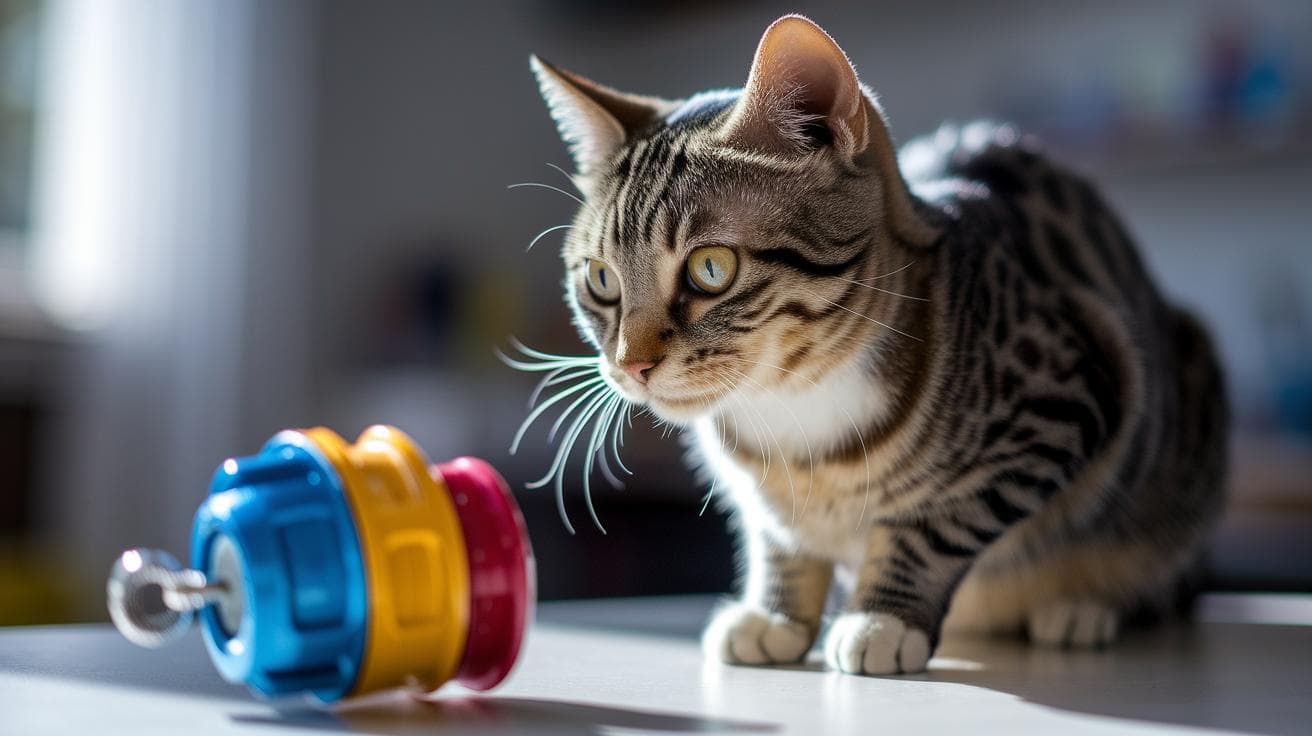
Ever watched your kitty tiptoe along a fence rail? It’s like watching a furry acrobat – really impressive. Those whiskers aren’t just for show. They’re tiny tightropes keeping her steady.
Inside her head, her vestibular system (the tiny balance sensors in her inner ear) does most of the heavy lifting. Those stiff whiskers – keratin hairs (same stuff as your nails) – add the finesse. A whisper of air or a gentle brush tells her exactly where her paws should land.
That teamwork gives your agile ninja cat the amazing stability she’s famous for. No wobbling. No slips. Just smooth leaps and graceful landings. It’s claw-tastic!
How Whiskers Influence Feline Balance
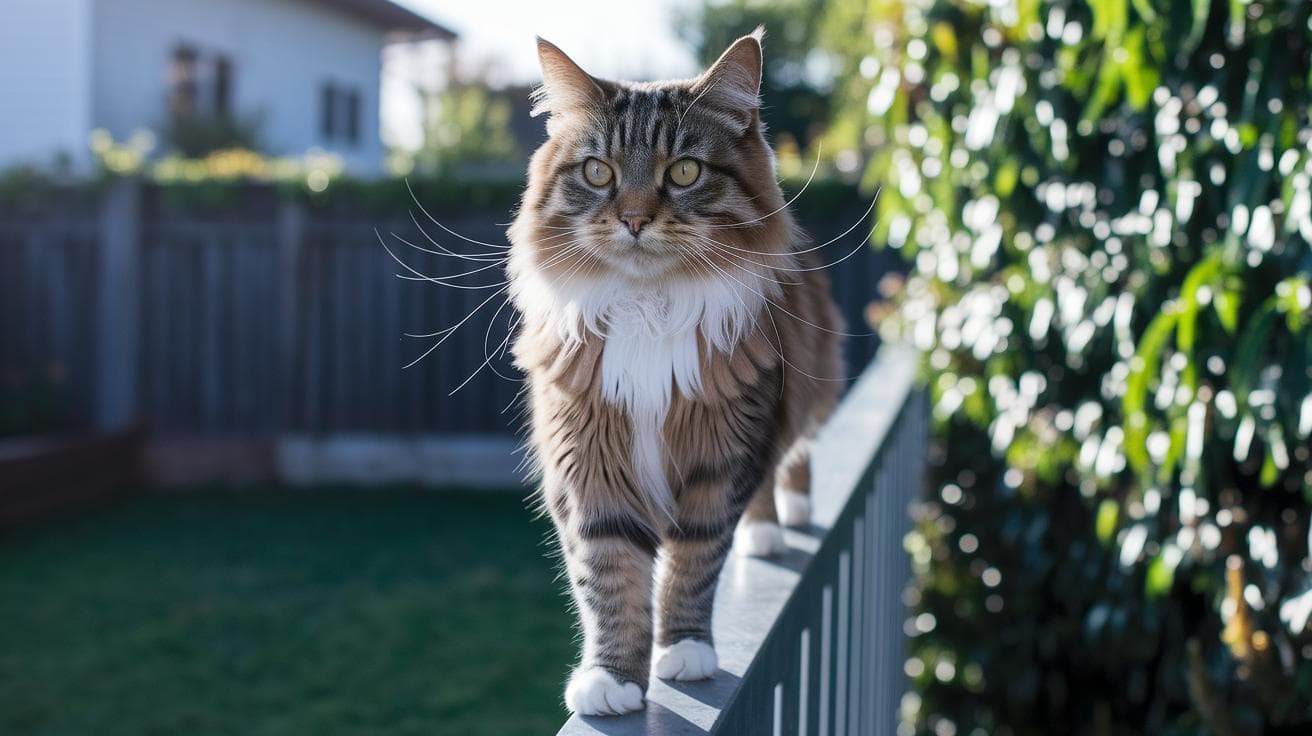
Ever watch your cat land on her paws like a furry ninja? She’s got a gadget called the vestibular system (balance sensors in the inner ear) living in those semicircular canals (tiny fluid-filled tubes). But wait, those whiskers on either side of her face aren’t just for show. They act like soft antennae, sensing a brush of air or a gentle touch to help her move with extra purr-fection.
- Vestibular system (inner-ear balance sensors) uses semicircular canals (tiny fluid-filled tubes) to detect head turns and tilts.
- Whisker proprioceptors (sensors in the hair roots) feel each whisker bend and pick up air currents to map nearby obstacles.
- Without whiskers, cats still right themselves but might bump into things or misjudge narrow ledges.
So do whiskers keep your cat from toppling over? Not exactly. They don’t replace that inner-ear magic. Instead, they give extra info for small posture tweaks when your kitty is creeping or hopping on a thin fence rail. Take them away and you’ll see more hesitations, second guesses, and a tiny “uh-oh” before any jump.
And here’s a quick myth-buster. Trimming whiskers won’t send your furball flat on her back, it just takes away her handy feelers, which can leave her a bit frazzled or off balance. The real work of staying upright is done deep inside her skull, whiskers or not.
Vibrissae Anatomy: Structure and Placement of Cat Whiskers
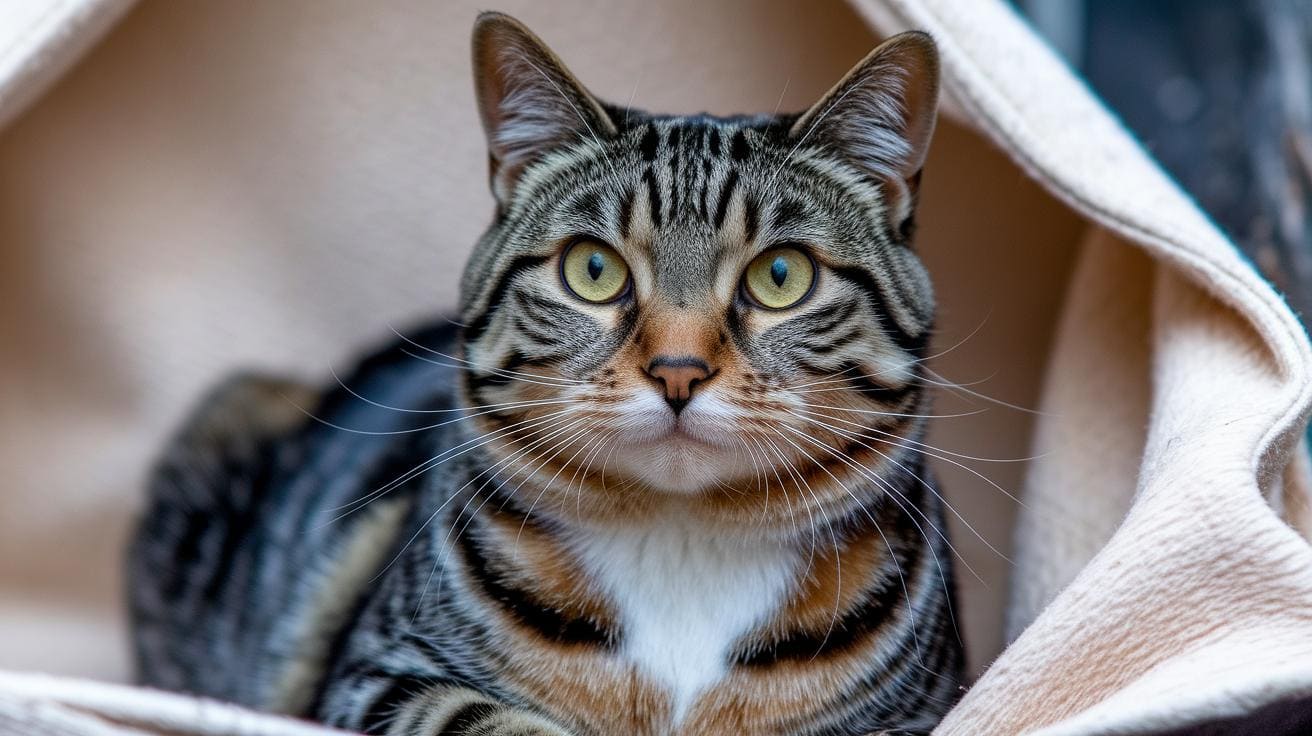
Let’s talk whiskers. Whiskers (a.k.a. vibrissae) are stiff hairs made of keratin (the same stuff in your hair and nails). Each one grows from a special pocket packed with blood vessels and tiny touch sensors (mechanoreceptors). They turn your cat’s face into live radar, sensing the tiniest air moves or a soft brush on a surface.
Your cat usually has about twelve mystacial whiskers on each side of her muzzle. They sit just as wide as her body so she can tell if she’ll fit through a gap. Ever watched your kitty slip through a tight box? That’s mystacial whiskers at work.
Above each eye you’ll find two superciliary whiskers that act like blink guards, making your cat shut her eyes when things get too close. Genal whiskers on the cheeks feel nearby objects. Under the chin, mandibular whiskers pick up ground-level hints, perfect for sniffing out hidden treats.
And on the back of each front leg are carpal whiskers that give extra feedback when your kitty pounces or scales a fence. Um, it’s pretty claw-tastic.
It’s a tiny whisker orchestra.
Together, these touch sensors map out a 3D playground of feel and space – your cat’s secret for stalking, climbing, and exploring.
| Whisker Type | Location | Primary Role |
|---|---|---|
| Mystacial | Sides of the muzzle (about 12 each side) | Measuring space for tight squeezes |
| Superciliary | Above each eye (2 per side) | Triggering blink reflex to shield eyes |
| Genal | On the cheeks | Feeling nearby objects |
| Mandibular | Under the chin | Sensing ground-level details |
| Carpal | Back of front legs | Feedback during hunts or climbs |
Neural Pathways from Whiskers to the Brain
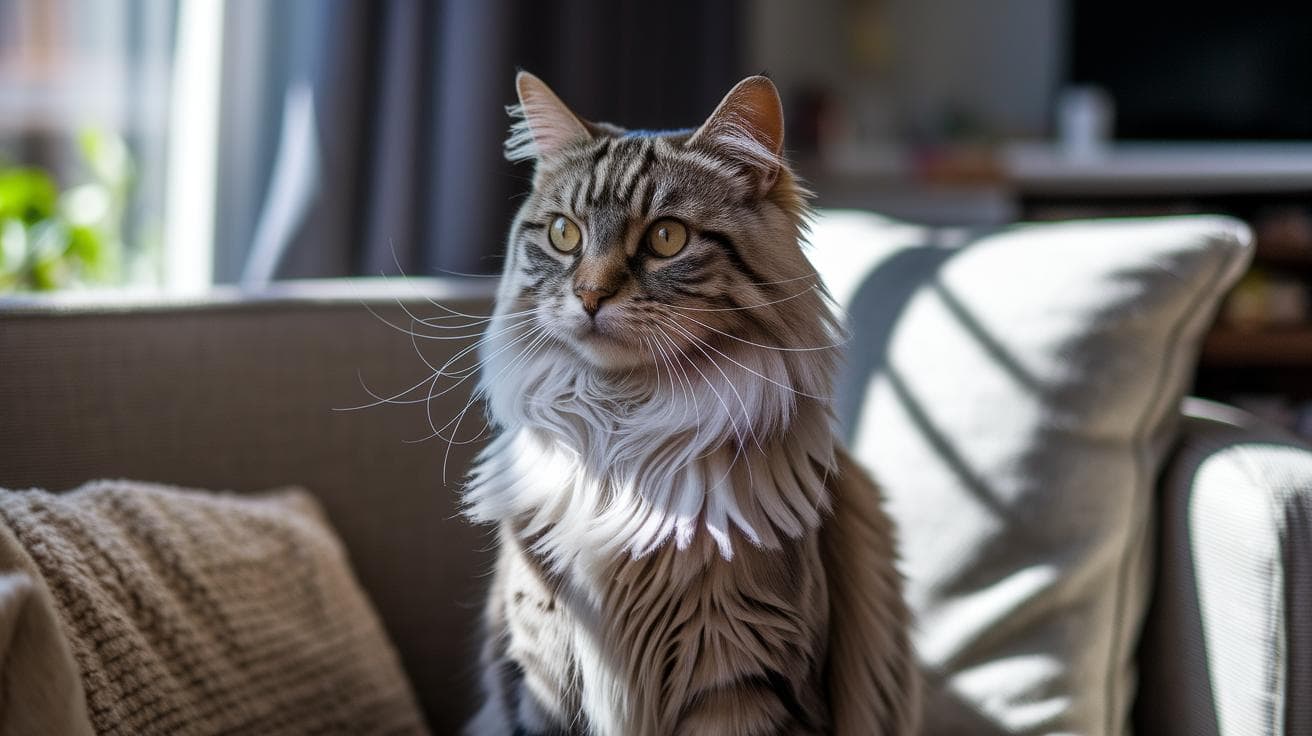
Your cat’s whiskers are part of a super-sensitive system. Each whisker root has mechanoreceptors (cells that feel tiny bends) and cutaneous receptors (skin touch sensors). They pick up the faintest air currents, barely-there vibrations, or soft brushes against surfaces. Ever noticed how your kitty’s whiskers twitch before a pounce? It’s feline radar at work.
When a whisker bends, those receptors fire an electrical signal along the trigeminal nerve (a big bundle of nerve fibers). That signal speeds on to the somatosensory cortex (the brain’s touch center). You could call it your cat’s personal touch hotline.
Mechanoreceptors in Whisker Roots
Deep inside each whisker root lie clusters of mechanoreceptors tuned to bends of just a few degrees. These purr-fect sensors tell whether a whisker brushed a blade of grass or sensed a tiny bug scuttling by. In effect, whiskers beam live feedback about objects just inches away, no radar dish required.
How Whiskers and Balance Team Up
Once whisker info arrives in the brain, it links up with the vestibular system (your inner ear balance network). Proprioception (the sense of body position) blends those signals to fine-tune posture and poise. That combo helps your cat adjust mid-leap or land with paws perfectly placed. Ever watched your furball nail a landing? Worth every paw print.
Whisker Function in Spatial Awareness and Navigation
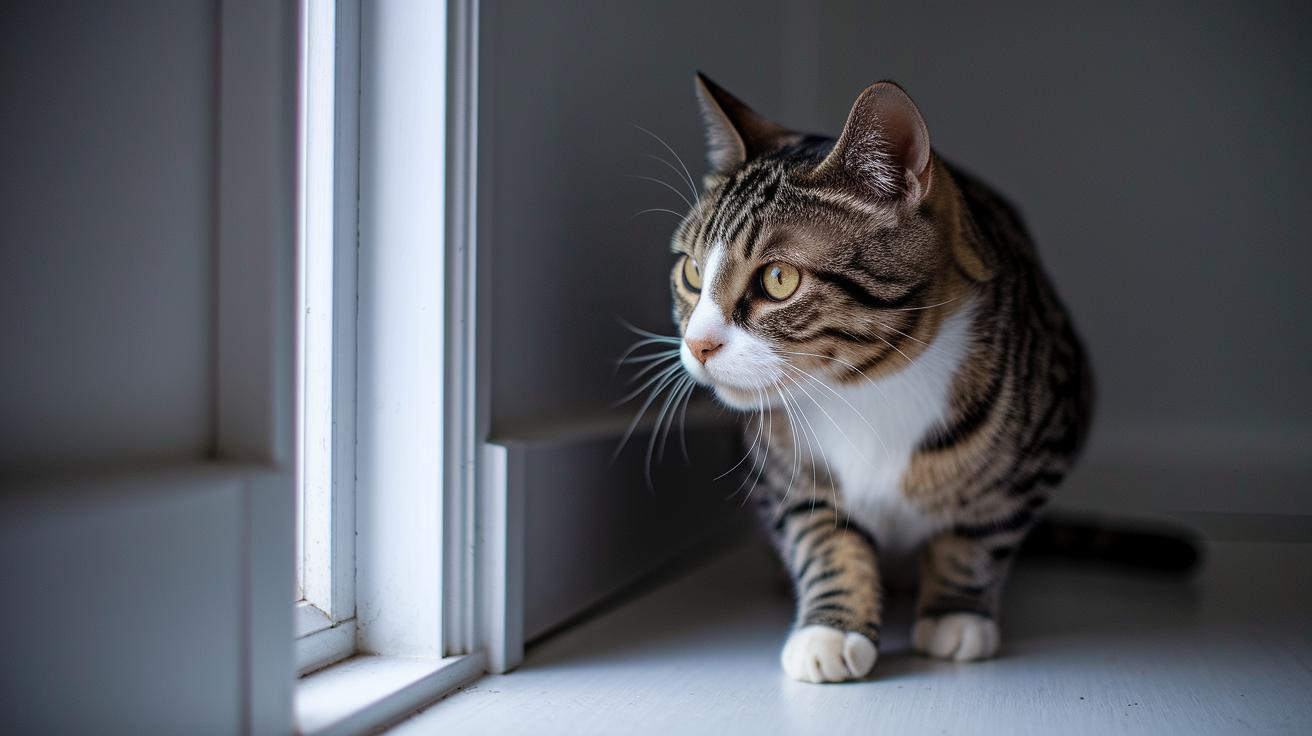
Ever watched your cat slip through a tight crack in the door? Those whiskers – vibrissae (stiff, touch-sensitive hairs) – act like furry rulers, measuring if the gap is wide enough for their body to pass. It’s like a built-in tape measure right on their face!
They also pick up air currents around nearby objects, so your kitty glides past chairs and walls without a single bump. Think of them as little radar antennas, always on guard. And when prey rustles in the dark, those whiskers sense the tiniest vibration shifts (like a mini-sonar for the hunt)! Next, they guide each silent step in low light, mapping out the room when eyes can’t.
Pure whisker wizardry, right? It’s one more reason to admire your cat’s gear. Ever wondered how your feline friend stays so graceful? Thank those amazing whiskers.