how often should you feed a kitten

How often should you feed a kitten?
Kittens are tiny engines that burn through calories fast, so one or two meals won’t cut it. They grow quickly and then burst into goofy zoomies, so frequent, small feedings keep them happy and healthy.

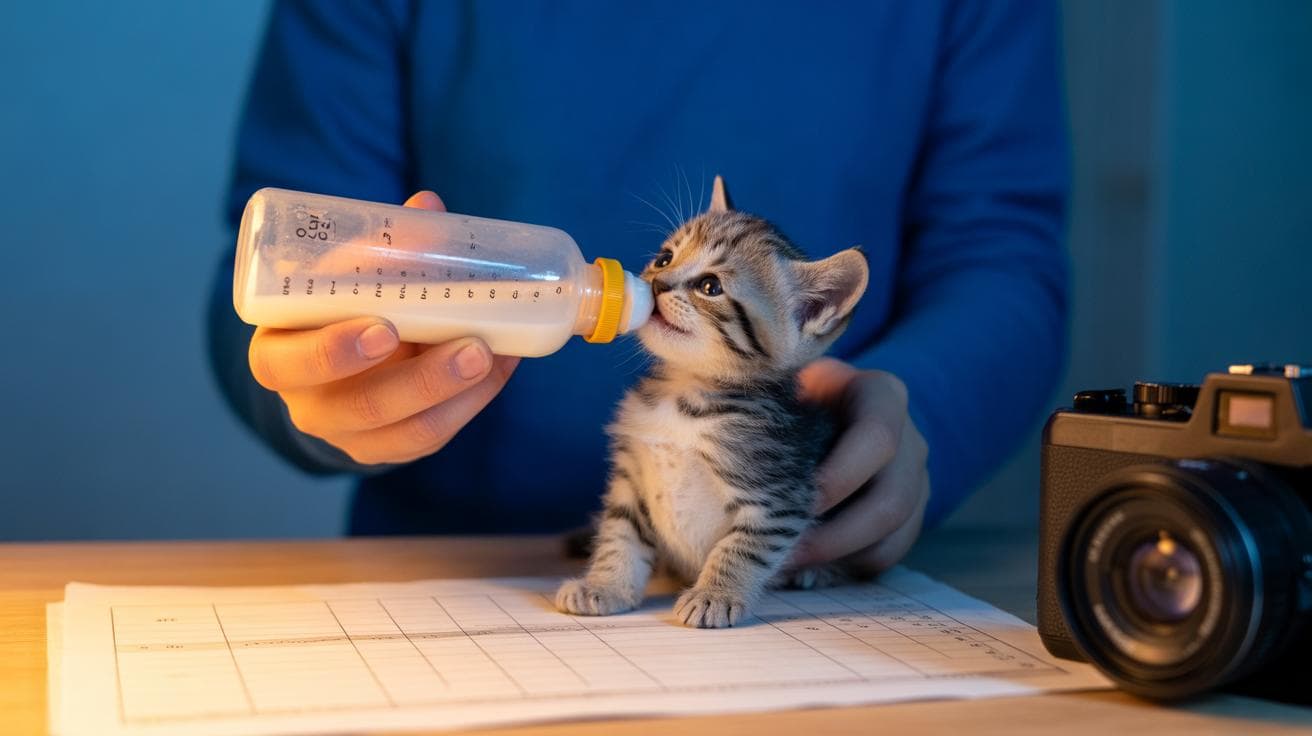
Use an age-based plan. Newborns need round-the-clock bottle feeds with kitten formula (cat milk replacer). As they get older, they move to three to four small meals a day, and by about a year most cats are fine on two meals daily. Think of it like training wheels for eating – slowly give them bigger, less frequent meals.

Quick cheat sheet:

  • Newborns: feed every few hours, day and night, using kitten formula (cat milk replacer).
  • Young kittens: switch to 3 to 4 small meals a day as they start eating solids.
  • Around one year: most cats settle into two meals a day.

When to call the vet: if your kitten won’t eat for a day, seems listless, has diarrhea or vomiting, isn’t gaining weight, or looks dehydrated, get help right away. Trust your gut – if something feels off, ring the vet.

Worth every paw-print.

Feeding Frequency Answered: Age-Based Quick-Answer Table
- Feeding Frequency Answered Age-Based Quick-Answer Table.jpg

Age range Typical feeds per day Night feed notes
Neonate 0-2 weeks (newborn kitten) About 8 bottle feeds/day (use cat milk replacer (kitten formula); avoid cow’s milk) Round-the-clock feeds every 2-3 hours, including overnight
2-4 weeks 6-8 small feeds/day (mix brief bottle or syringe feeds (small syringe used to feed) as needed) Still needs frequent night feeds; caregiver wake-ups are common
4-8 weeks 4-6 small meals/day; start solids around 5-6 weeks (weaning – switching to solid food) Overnight feeds taper off; many kittens eat mostly during the day by 8 weeks
2-4 months 3-4 meals/day Generally daytime-focused with a small evening snack
4-6 months 3-4 meals/day (higher energy needs at this stage) Night feeds usually not needed; offer the last meal in the evening
6-12 months 2-3 meals/day, moving to 2 meals by about 12 months Typically no overnight feeding; morning and evening meals

Think of this as a quick cheat sheet for feeding frequency. Match your kitten to the age row and follow the feeds-per-day column, then pick portion sizes from the portions chart in Section 2 or ask your vet to tweak amounts for weight and health. Ever watched your kitty pounce mid-meal? Feeding on a steady schedule helps with behavior and growth.

If your kitten is orphaned, sick, underweight, or acting odd, call your veterinarian instead of making big changes at home. Seriously. A vet can give precise amounts and timing for special cases.

Night feeding is normal for neonates and during early weaning – expect interrupted sleep and feeds every few hours. As kittens move through the 4-8 week window, overnight feeds drop off and most cats become daytime eaters by 8 weeks. By about one year most cats have settled into two meals a day. Worth every paw-print.

Kitten Feeding Chart: Exact Portions, Wet/Dry Conversions and Calorie Steps
- Kitten Feeding Chart Exact Portions, WetDry Conversions and Calorie Steps.jpg

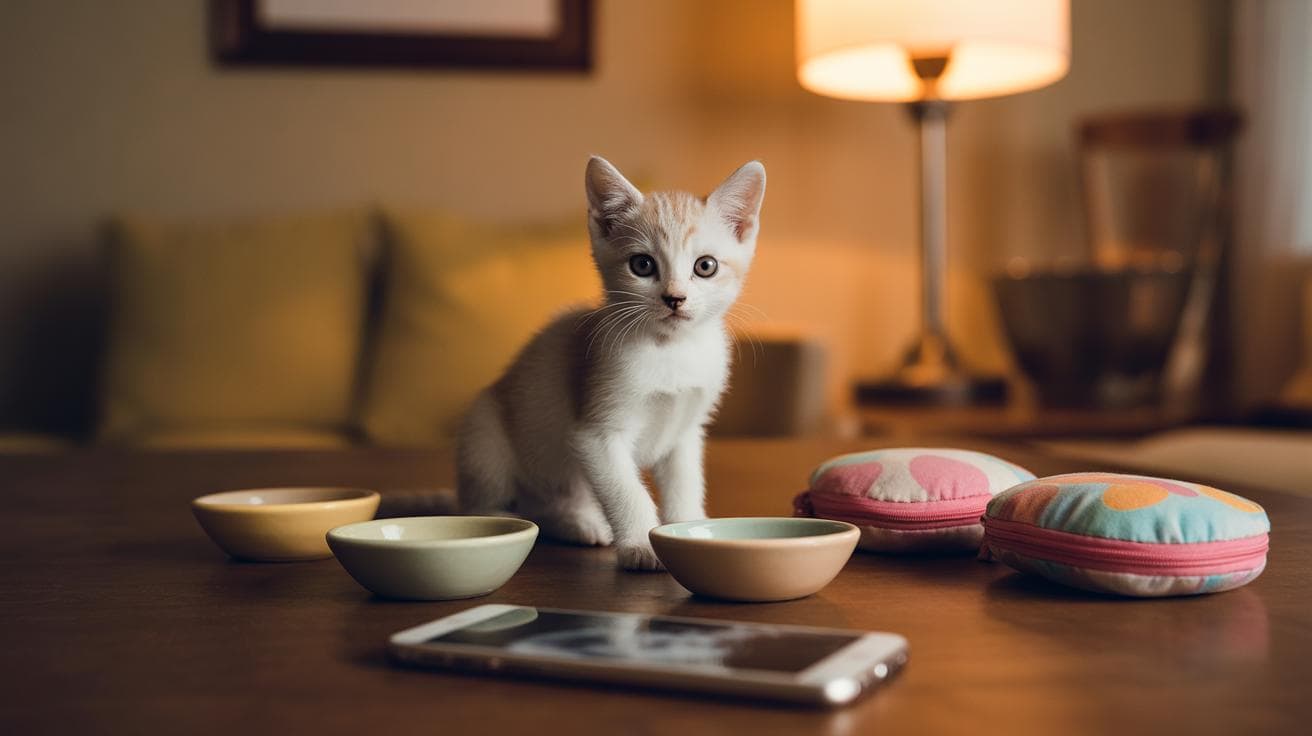
This chart is a quick, friendly reference for grams, pouch equivalents (1 pouch = 100 g), calorie steps (kcal = food calories listed on the label), and common reasons you might change portions. Use it when you’re measuring meals or comparing labels. Think of pouches as 100 g each to make the math easier. Ever watched a kitten tuck into a pouch and go all happy paws?

Age range Wet food (grams / pouches per day) Dry food (grams per day) Approx daily kcal (example) Notes
Neonate (bottle) Bottle-fed (use weight-based ml chart; not listed in grams here) 0 Varies by formula (follow product label and vet guidance) Use kitten milk replacer (KMR) and follow the newborn weight chart
4 weeks 30–60 g (0.3–0.6 pouches) 0–10 g (taste amounts) About 30–100 kcal/day (wet ≈1 kcal/g; dry ≈4 kcal/g) Just starting tastes. Make wet food soupy to encourage eating
8 weeks 100–150 g (1–1.5 pouches) 10–15 g About 140–210 kcal/day Most kittens are weaned and mostly on solid food
2–4 months 150–200 g (1.5–2 pouches) 15–20 g About 210–280 kcal/day Typical mix: around two thirds of calories from wet, one third from dry
4–6 months 200–250 g (2–2.5 pouches) 15–20 g About 260–330 kcal/day Energy needs stay high. Watch body condition as growth slows
6–12 months 300 g (3 pouches) wet-only OR 200 g (2 pouches) wet (mixed) 0 (wet-only) OR 20–25 g (mixed) Wet-only ≈300 kcal/day; Mixed ≈280–300 kcal/day By about 12 months start a gradual transition to adult food

These numbers are starting points, not a one-size-fits-all rule. Match the grams and pouch counts to your feeding schedule and tweak for your kitten’s weight, breed, and activity level. If a product’s label lists different kcal per pouch or per cup, use that number for the conversion below.

  1. Find kcal on the product label (kcal per pouch or per gram/cup).
  2. Multiply that kcal by the daily pouch or gram total from the chart to get total daily kcal.
  3. Compare the total to your vet’s target or the product’s recommended kcal for your kitten’s age and weight, then adjust portions as needed.

Common signals that you should change portions:

  • Slow weight gain – compare your kitten’s weight to the expected growth curve and raise portions a bit, or check with your vet for medical causes.
  • Rapid weight gain or signs of obesity – reduce portions slowly and follow a vet-recommended plan.
  • Persistent loose stool or poor stool quality – cut treats, try a single food to test, and consult your vet before big diet changes.
  • Big drops or spikes in activity – more active kittens may need extra calories; calmer kittens may need less. Track for a week and then adjust.

Oops, one more tip: weigh your kitten every week for the first months to catch trends early. Worth every paw-print.

See Wet vs. Dry sidebar for a short comparison and recommended mix ratios that match this chart.

Newborn and Orphan Kittens: Bottle-Feeding Volumes by Weight, Night Routine, and Safety
- Newborn and Orphan Kittens Bottle-Feeding Volumes by Weight, Night Routine, and Safety.jpg

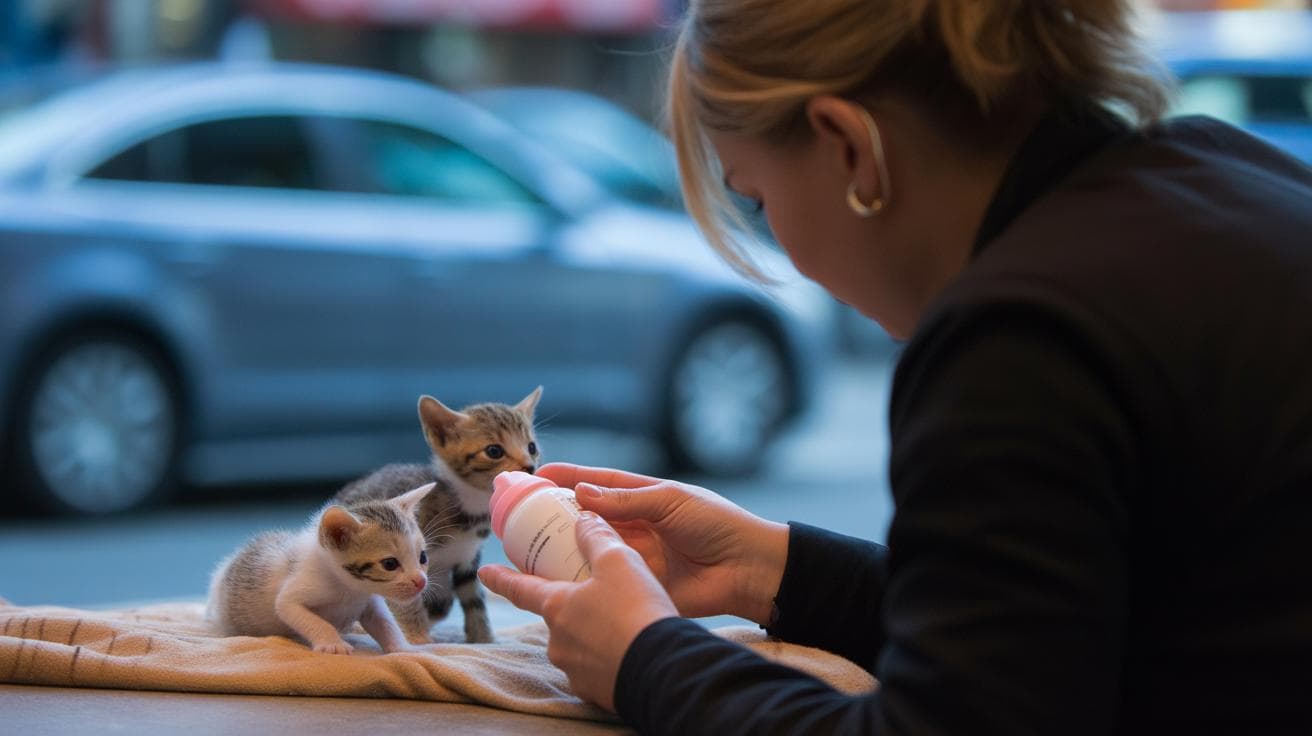
This section shows bottle-feeding volumes by weight, a sample 24-hour caregiver routine, and simple safety checks. Use the Feeding Frequency table in Section 1 for the exact number of feeds per day for each age or special case.

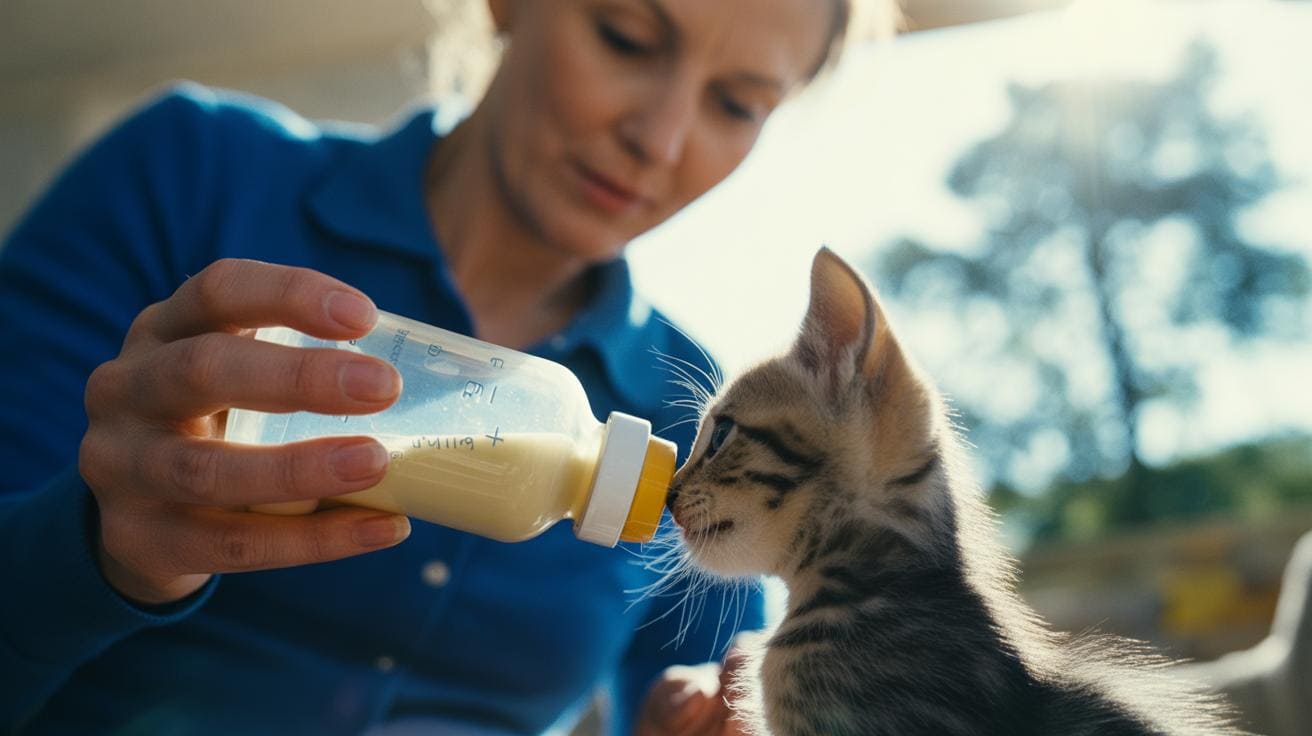
Mother's milk is best. If the queen can't feed, use a kitten milk replacer (KMR) (commercial formula that mimics mother’s milk). Don’t give cow’s milk , lactose (milk sugar) can upset tiny tummies. Warm formula to about body temperature and test it on your wrist. Follow the product label or your vet for ml per feed based on the kitten’s weight.

Kitten weight (g) Volume per feed (ml) Example nipple size/flow
350–450 g 10–15 ml (approximate; follow product or vet for exact ml) Small, slow-flow nipple (tiny hole to slow milk)
450–600 g 15–20 ml (approximate; follow product or vet for exact ml) Small, slow-flow nipple
600–800 g 20–25 ml (approximate; follow product or vet for exact ml) Medium, slow-flow nipple
800–1000 g 25–30 ml (approximate; follow product or vet for exact ml) Medium, slow-flow nipple
1000+ g 30–40 ml (approximate; follow product or vet for exact ml) Medium, gentle-flow nipple (slightly larger hole)

Sample 24-hour night routine (use with the feeds-per-day guidance in Section 1):

  1. 12:00 AM , feed using the volume-for-weight table and Section 1 guidance.
  2. 3:00 AM , feed as above.
  3. 6:00 AM , feed as above.
  4. 9:00 AM , feed as above.
  5. 12:00 PM , feed as above.
  6. 3:00 PM , feed as above.
  7. 6:00 PM , feed as above.
  8. 9:00 PM , feed as above.

Feeding tips and safety checks

  • Hold the bottle at a natural nursing angle so the kitten's head is slightly up, not straight up. It feels more like mom does it.
  • Use gentle, slow-flow nipples (small hole to slow milk). The kitten should suck, not gulp.
  • Warm formula to about body temperature. Test a drop on your wrist , it should feel warm, not hot.
  • Burp after feeding by holding the kitten upright and rubbing the back softly. A tiny burp helps.
  • Watch for aspiration (milk going into the lungs). Signs include coughing, noisy breathing, or milk coming from the nose. If that happens, stop feeding and call your vet.
  • Call your veterinarian right away if the kitten chokes, refuses to feed, feels very weak, or has trouble breathing.

Preventing Aspiration

Keep the head a little elevated and angle the bottle so milk flows slowly. Pause often to let the kitten swallow. If the kitten coughs, gags, or you see milk at the nose, stop feeding and call your vet right away. Better safe than sorry , and worth every paw-print.

Weaning Timeline and Transition: When Kittens Start Wet and Dry Food
- Weaning Timeline and Transition When Kittens Start Wet and Dry Food.jpg

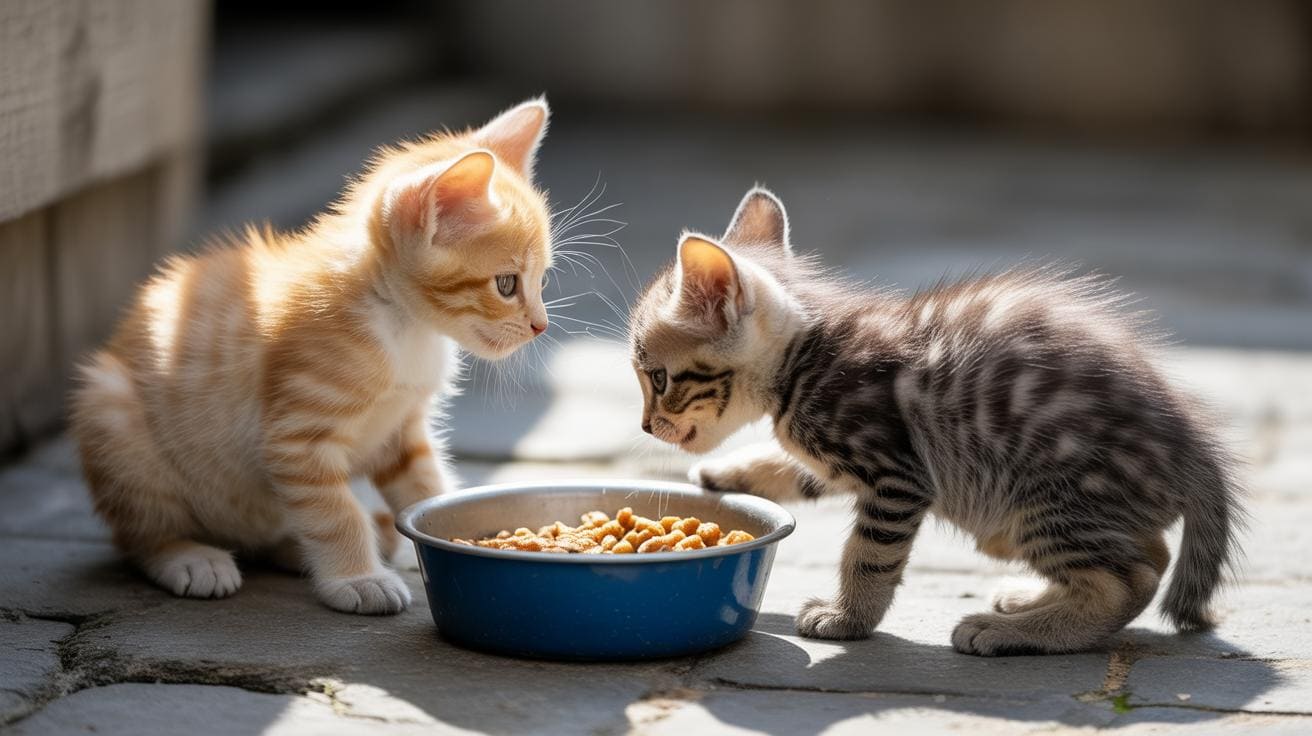
Kittens usually start poking at solids around 3 to 4 weeks old. They’re often ready to try real food at 5 to 6 weeks, and many are mostly off the bottle by 7 to 8 weeks. Go slow so their tiny tummies and baby teeth can keep up. You want gentle progress, not a frantic switch.

Mixing Formula with Wet Food (ratios and technique)

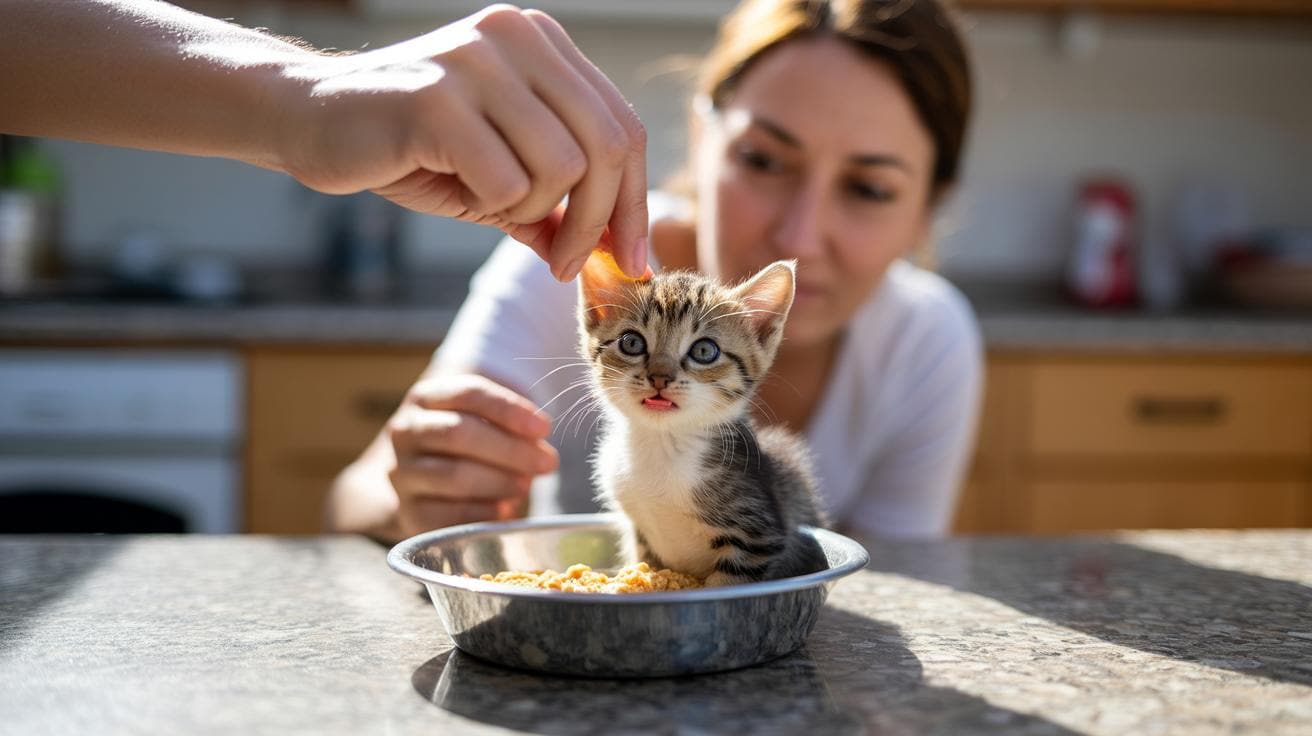
Start with a porridge that’s easy to lap. Mix three parts kitten milk replacer (KMR) (kitten formula that mimics mother’s milk) with one part wet kitten food so it’s mushy and spoonable. Put the mix in a shallow dish so the kitten can tip in and practice lapping. Expect it to be messy and adorable.

Warm the mix to about body temperature, then test a drop on your wrist. If your kitten was bottle-fed, replace just one bottle feed first, at 5 to 6 weeks, and cut volumes slowly. Don’t stop cold turkey.

Over one to three weeks push the mix toward a 1:1 ratio, then toward mostly wet food. You can add a little softened dry kibble (small dry pellets of kitten food) once they handle the 1:1 texture. Keep meals small and frequent while they learn.

Signs your kitten is ready to wean

Look for chewing interest, standing in the bowl, shorter nursing sessions, and playful nibbling at food. Spotting tiny baby teeth and steady weight gain are good signs too. If your kitten sniffs, laps, and comes back for more, that’s a thumbs up. Ever watched whiskers twitch while a ball of mush rolls away? Same focus.

A few simple cues to watch for

  • Chewing motion or trying to bite at food.
  • Standing in or over the dish instead of clinging to the mom.
  • Shorter nursing sessions and more curiosity about meals.
  • Clear weight gain and normal stool.

Week by week plan

  1. Week 1: Offer a shallow dish of 3:1 formula to wet porridge once a day. Keep the usual bottle schedule for other feeds.
  2. Week 2: Offer porridge 2 to 3 times daily and reduce one bottle feed by the same volume you remove.
  3. Week 3: Move to a 1:1 mix, add a little softened dry kibble if you want, and drop another bottle feed.
  4. Week 4: Serve mostly wet kitten food in small, frequent meals. Keep a bottle only if the kitten really needs it.
  5. Finish: Aim for full solid meals by 7 to 8 weeks. Watch weight and stools and check with your vet if anything seems off.

Tips and little realities
Warm food, be patient, and expect mess. Talk to your vet if a kitten won’t eat, is losing weight, or has diarrhea. For busy days, leave an easy porridge meal before you go out and let them practice solo. Worth every paw print.
Wet vs. Dry for Kittens: Concise Comparative Sidebar Linking to the Portions Chart

- Wet vs Dry for Kittens Concise Comparative Sidebar Linking to the Portions Chart.jpg

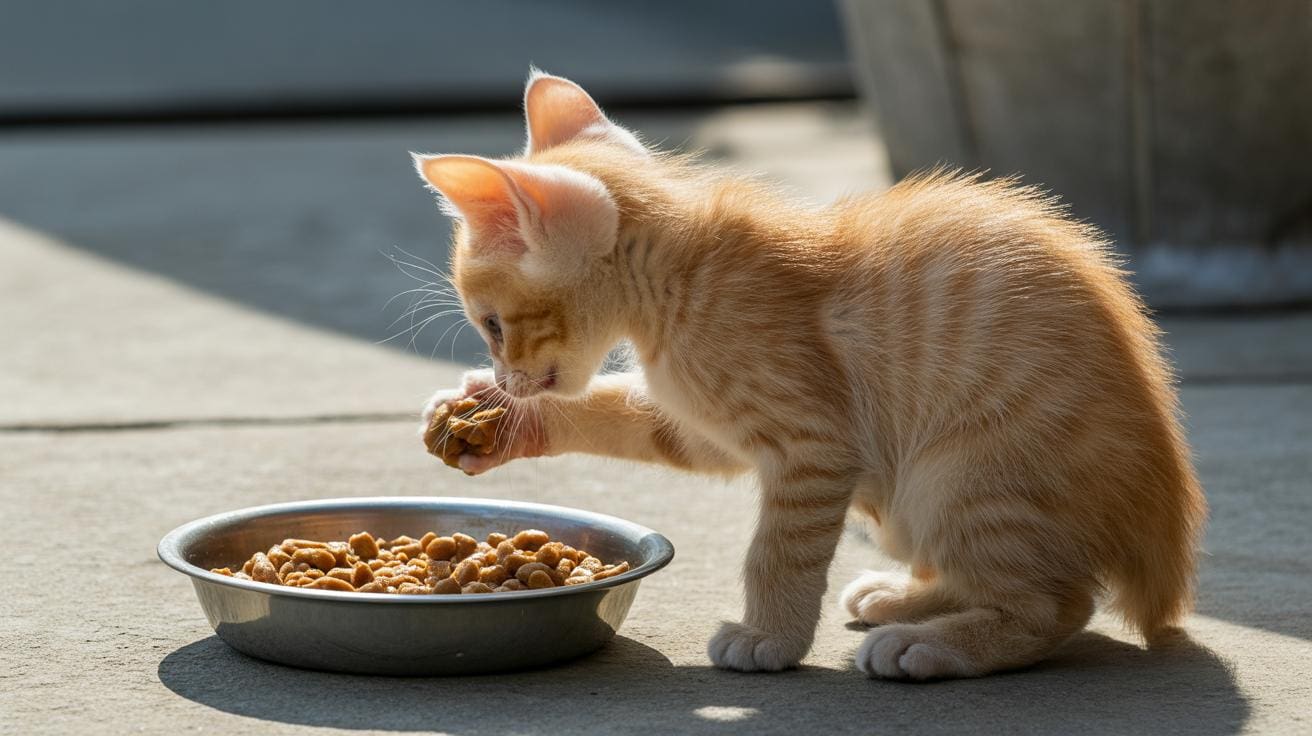
Wet food brings extra moisture and a stronger smell, so kittens usually eat it faster. It’s easy to mix meds into wet food, and the soft bite is gentle on baby teeth and tender gums. Ever watched a kitten bury its face in a saucer of wet food? Cute.

  • Wet – high moisture and aroma that tempts picky eaters and helps with hydration.
  • Wet – mixes easily with supplements or meds when a kitten won’t eat or needs extra fluids.
  • Wet – soft textures that are kind to developing teeth and gums.
  • Dry – handy for free-feeding during busy days, so food is available all day.
  • Dry – longer shelf life after opening, so you toss less food.
  • Dry – chewing gives mild dental abrasion, which can help reduce soft plaque.

See Kitten Feeding Chart for exact mix ratios.

For grams and calorie conversion steps, check the chart too. See Kitten Feeding Chart.

how often should you feed a kitten

- Sample Daily Feeding Schedules by Age Practical Timetables (Reference the Canonical Table for FeedsDay).jpg

Check Section 1 (Feeding Frequency Answered) for the exact number of feeds per day that match each life stage. The times below are ready-to-use daily timetables you can tweak to fit your routine.

  • Neonate (newborn kitten that needs bottle feeds)
    Feed every 2 to 3 hours around the clock. Example clock times: 12:00 AM, 3:00 AM, 6:00 AM, 9:00 AM, 12:00 PM, 3:00 PM, 6:00 PM, 9:00 PM. Match the number of feeds to the table in Section 1. These little guys eat a lot. Their tiny bellies empty fast.

  • 4-week (starting to wean, mixed bottle and soft food)
    Spread feeds across day and night as they learn solids. Example times: 1:00 AM, 5:00 AM, 9:00 AM, 1:00 PM, 5:00 PM, 9:00 PM. Match the number of feeds to the table in Section 1. Expect messy faces and enthusiastic nibbles.

  • 8-week (mostly daytime feeds, learning routine)
    Shift most meals into the daytime so nights are quieter. Example times: 7:00 AM, 10:00 AM, 1:00 PM, 4:00 PM, 7:00 PM. Match the number of feeds to the table in Section 1. Your kitten will start showing real appetite and zoomies after meals.

  • 3-month (day-focused with an evening snack)
    Most kittens do fine on set daytime meals plus a small evening feed. Example times: 7:00 AM, 11:30 AM, 4:00 PM, 8:00 PM. Match the number of feeds to the table in Section 1. It’s a good time to build a consistent routine.

  • 6-month (energy still high; routine stabilizes)
    By now feeding usually settles into three regular meals. Example times: 7:30 AM, 12:30 PM, 5:30 PM. Match the number of feeds to the table in Section 1. Keep play sessions after meals to help burn off that kitten energy.

  • 10–11 month (moving toward two meals)
    Most cats transition to two meals a day around here. Example times: 7:30 AM, 6:30 PM. Match the number of feeds to the table in Section 1. Almost adult-sized appetite, but still playful.

Shift these clock times to match your day. Watch how much your kitten actually eats and weigh weekly to spot trends. If appetite drops, stools change, or weight stalls, call your veterinarian before you tweak the schedule. Worth every paw-print.

Portions, Calories and Tracking: When to Change How Often You Feed a Kitten

- Portions, Calories and Tracking When to Change How Often You Feed a Kitten.jpg

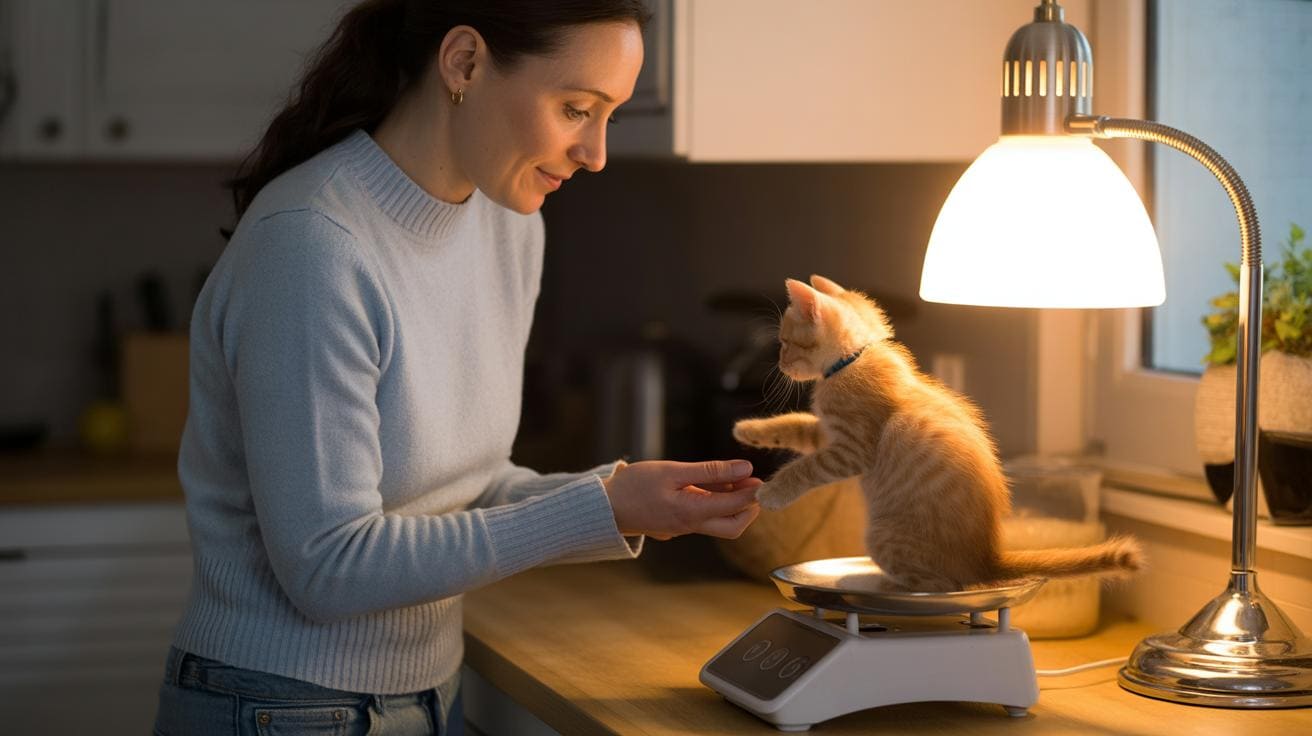
First, check the food label for kcal per pouch or per cup (kcal = food calories). Use your Kitten Feeding Chart totals to pick a daily energy target. Multiply kcal-per-pouch (calories in one pouch) or kcal-per-gram (calories in one gram) by how much you plan to feed to get the daily kcal total.

  1. Weigh your kitten on the same digital scale at the same time of day once a week and write it down. (Digital baby or parcel scale works great for little kitties.)
  2. Log every meal: grams, pouches, and kcal (or cups), plus the time. Use a kitchen scale for food and a simple app or spreadsheet to keep it tidy.
  3. Compare the weekly weight to expected growth for the kitten’s age and breed. Flag it if gains are too slow or too fast. Ever watch a kitten pack on weight one week and barely budge the next? Yeah, that.
  4. Adjust portions slowly based on the trend – small 5 to 10 percent changes. Check with your veterinarian before you make bigger shifts. Oops, better safe than sorry.
  5. After any change, re-weigh and review the log weekly for at least a month to make sure your kitten stays on a steady track.

Practical tools that make tracking easy: a kitchen scale for food, a digital baby/parcel scale for the kitten (a small, accurate scale for pets or packages), and a tracking spreadsheet or pet-feeding app to store grams and kcal. If you see steady weight loss, persistent diarrhea, big appetite changes, or lethargy, call your vet, these are reasons to change feeding frequency or test for medical issues. And if you’re short on time, toss a clean, unbreakable treat ball before you head out for a short burst of safe play.

Metric How to measure Frequency
Weight Digital scale (same scale and same time each week) Weekly
Intake log Kitchen scale + app or spreadsheet (record grams, pouches, kcal) Daily
Stool and hydration checks Visual inspection and gentle belly/skin check Daily

Red Flags and Troubleshooting: When Feeding Frequency or Portions Need Veterinary Attention

- Red Flags and Troubleshooting When Feeding Frequency or Portions Need Veterinary Attention (Reference Feeding Frequency Table for Stage Context).jpg

See Section 1 (Feeding Frequency Answered) for stage-specific feeding targets before you change amounts or timing.

Quick troubleshooting and emergency signs (see linked sections below for details):

  • Persistent diarrhea: Check Portions, Calories and Tracking for stool and hydration tips. Watery or frequent poops can dehydrate a tiny kitten fast, so weigh and watch energy levels. Call your vet if diarrhea lasts more than 24 hours or the kitten looks unwell.

  • Failure to gain weight: Weigh weekly and use Portions, Calories and Tracking to log trends. If your kitten isn’t putting on weight, talk to your vet to rule out infections or nutrient needs and to adjust calories. It’s better to ask sooner than later.

  • Dehydration: See Portions, Calories and Tracking for first-aid steps. Dehydration means too little fluid in the body (look for dry gums, skin that doesn’t snap back, or less pee). Offer small sips if the kitten can drink, and call your vet if there’s no quick improvement.

  • Repeated vomiting: Pause feeding for a short time and check Portions, Calories and Tracking for dehydration risk and when to call the vet. Vomiting can make a kitten lose fluids and energy fast. Example: Pause feeds for 30 minutes, give a few tiny sips of water, then call your vet if vomiting continues.

  • Aspiration during bottle feeds: Aspiration means liquid went into the lungs (watch for coughing, noisy breathing, or milk from the nose). Stop feeding and follow the newborn bottle-feeding safety section in Newborn and Orphan Kittens. Seek veterinary help right away if you suspect aspiration.

  • Hypoglycemia in neonates: Hypoglycemia is low blood sugar and shows as shaking, tremors, or very weak suckling. See Newborn and Orphan Kittens for immediate first-aid. Warm the neonate gently and call your vet now. Example: Wrap the neonate in a warm towel and phone your vet.

Emergency action: If you see collapse, seizures, continuous vomiting, severe trouble breathing, or marked hypothermia (very low body temperature), get emergency veterinary care immediately. Worth every paw-print.

Quick FAQ: How Often Should You Feed a Kitten – Short Answers with Pointer to the Canonical Table

- Quick FAQ How Often Should You Feed a Kitten  Short Answers with Pointer to the Canonical Table.jpg

Short answers below. See Sections 1–2 for full tables and charts.

  1. Q: How often do newborn kittens need feeding?
    A: Newborn kittens need feeds every 2 to 3 hours, day and night. Newborns = neonates, the first tiny days and weeks. See Section 1 (Feeding Frequency Answered) for exact feeds per day and Section 2 (Kitten Feeding Chart) for portion grams and pouch conversions (pouch = single wet-food packet).

  2. Q: When should I introduce wet or dry food?
    A: Start offering soft wet food for weaning at about 5 to 6 weeks. Weaning means slowly moving from milk to solids; begin with mashy wet food and go slow. See Section 1 for timing and Section 2 for portions and wet-to-dry guidance (how to mix wet food and kibble).

  3. Q: When do kittens move to three meals a day?
    A: Many kittens are eating three meals a day by about 4 to 6 months. Some get there sooner, some later. Check Section 1 for age-based feed counts.

  4. Q: How do I transition from kitten to adult food?
    A: Mix adult food in gradually over several days near the end of the first year. Ease the change so their tummies don’t protest. Use Section 2 for pouch-to-gram conversions (pouch = single wet-food packet).

  5. Q: What if my kitten is ill or won’t eat?
    A: Call your veterinarian right away. They’ll give a feeding plan and medical advice. Once your vet clears them, follow the stage-appropriate feeds in Section 1.

  6. Q: Is night feeding normal and when does it stop?
    A: Night feeds are normal for neonates and usually taper off during weaning. See Section 1 for stage-specific night-feed guidance. Ever had a 3 a.m. chorus of meows? Yep, that’s common.

  7. Q: Can I feed dry-only and how often then?
    A: Dry-only can work if fresh water is always available. Dry-only means kibble only, so watch hydration and calorie intake. Follow Section 1 for feeds per day and Section 2 for calorie and portion conversions.

  8. Q: How should bottle-fed kittens shift to solids?
    A: Replace one bottle at a time with a mushy wet mix during the weaning window. Bottle-fed means using a kitten feeding bottle. See Section 1 for feed counts and Section 2 for portion sizes.

  9. Q: When should I consult a vet about feeding frequency?
    A: Contact a veterinarian for poor weight gain, ongoing diarrhea, sudden appetite loss, or severe lethargy. Don’t wait on these signs.

  10. Q: How do I match portions to activity or growth changes?
    A: Track your kitten’s weight and how much they eat, then adjust grams or pouches using Section 2. Spread those portions across the daily feeds listed in Section 1. Weigh-ins once a week help a lot.

Final Words

In the action, we gave a clear age-based feeds-per-day table, a portions chart with grams and pouches, bottle-feeding volumes, weaning steps, sample schedules, tracking tips, and red-flag signs.

Use the tables as your quick guide: match feeds to age, measure portions from the chart, and call your vet for worrying signs like weight loss or persistent diarrhea.

If you want a short answer to how often should you feed a kitten, check the age table at the top and start there. Healthy, playful kittens are worth it.

FAQ

How often should you feed a kitten?

How often you should feed a kitten depends on age: neonates (newborns) need about eight tiny feeds daily, 2-6 months three to four, and about twice daily by 12 months; ask your vet for tweaks.

How often do kittens eat at 1 week?

One-week-old kittens eat about every 2–3 hours, roughly eight feeds in 24 hours; use warmed kitten milk replacer (KMR) if orphaned and never cow’s milk.

How often should you feed a 2- to 3-month-old kitten?

A 2-3 month kitten should eat about 3–4 times daily, spaced evenly; adjust portions as they grow and use a feeding chart or vet guidance for exact grams.

How much food should I feed a 3-month kitten or a kitten in general?

How much you should feed a kitten depends on age, weight, and product calories; a 3-month kitten often needs around 150–200 g wet plus a small dry portion—check kcal (food energy) on labels.

Can you overfeed kittens?

You can overfeed kittens; excess calories cause unhealthy weight and joint stress—watch growth, follow portion charts, and consult your vet if weight climbs quickly.

How do I know if my kitten is hungry and should I let it eat as much as it wants?

You know a kitten is hungry by vocalizing, pacing, nibbling at the bowl, or rooting for food; free-feeding isn’t ideal—scheduled meals keep growth and weight purrfectly healthy.

How often should you feed a kitten by weight or using a calculator?

Feeding frequency by weight uses weight-based volume charts for neonates and kcal targets for older kittens; use a kitchen scale with the feeding chart to match portions and check growth with your vet.

Related Articles

Author

  • Lucas Turner

    Lucas Turner is an urban photographer based in Chicago, Illinois, known for his captivating images that highlight the pulse of city life. With a unique perspective, he captures the vibrant contrasts between architecture, people, and the urban environment, telling stories through his lens.

    Outside of photography, Lucas enjoys coffee shop hopping, exploring the diverse cafes around the city. He finds that each coffee shop has its own vibe, offering a perfect setting for creativity to flow. As he often says, “A good cup of coffee and a new view always inspire my best work.”

    Lucas’s photography is a reflection of his love for the city’s energy and the quiet moments found within it.

    View all posts

Similar Posts