What if the soft, round cat you love is actually a ticking medical time bomb?
Morbid obesity in cats can lead to hepatic lipidosis (fatty liver disease). It can also cause dyspnea (trouble breathing) and metabolic problems from blood-sugar and electrolyte imbalances (issues with sugar and mineral levels). So fast clinic triage matters.
Ever set a panting kitty on the exam table? Yeah, that needs attention now. This post gives a fast intake checklist and urgent safety flags. It also lists realistic weekly weight-loss targets to protect health and welfare, plus practical tips for safe handling and owner follow-up.
Worth every paw-print.
Immediate clinic intake checklist and urgent safety flags for morbidly obese cats
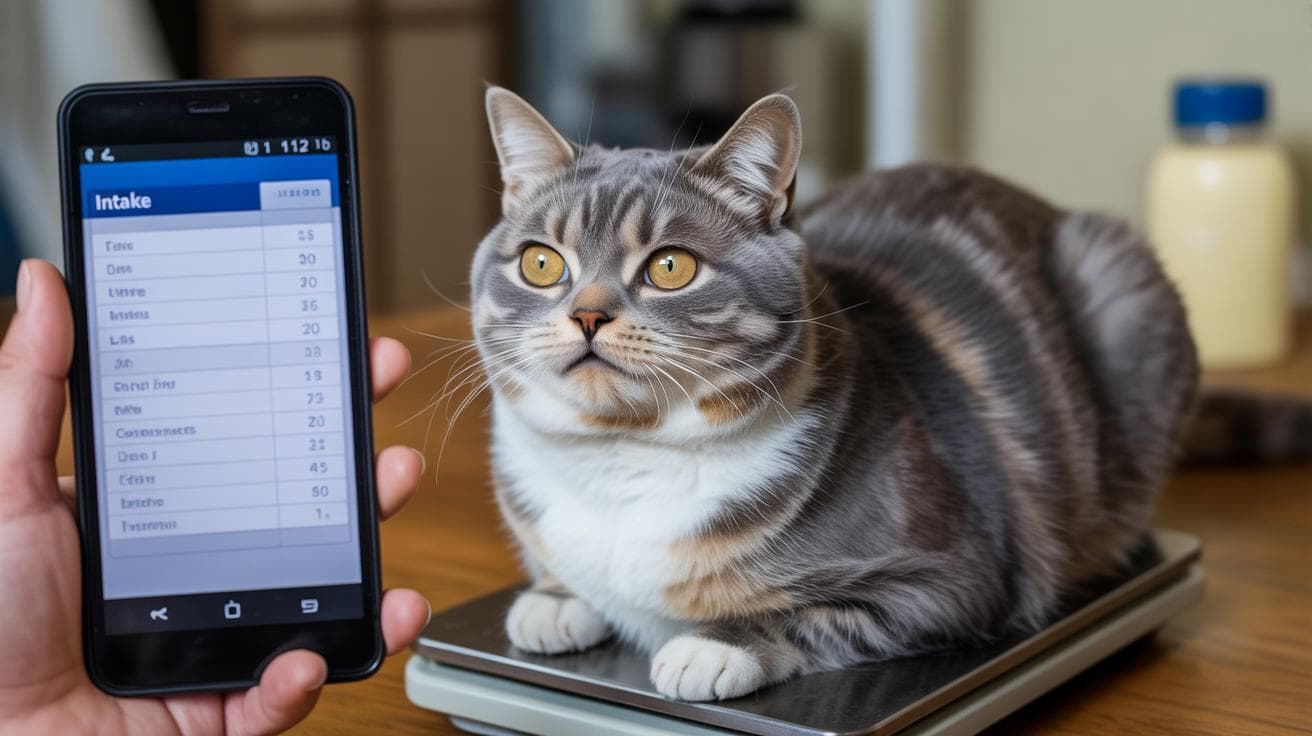
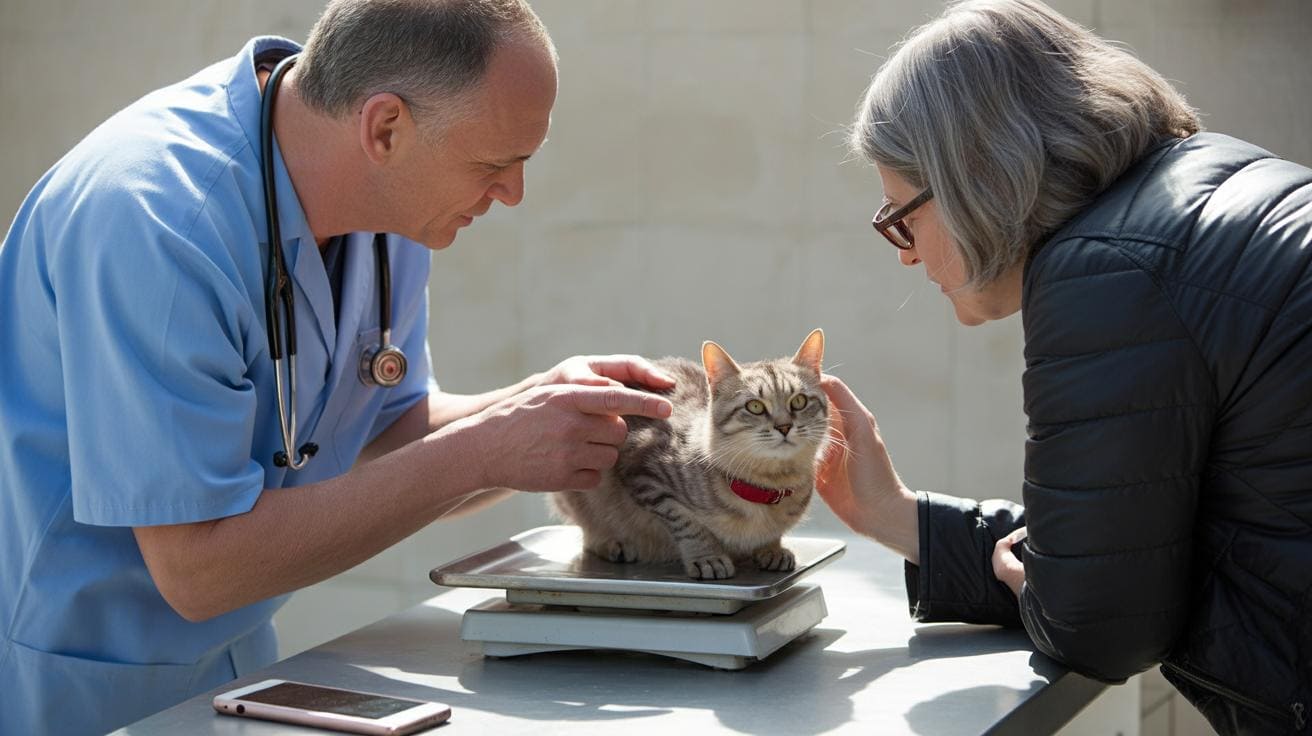
Why act fast? A quick intake helps us spot cats at immediate risk of fatty liver disease (hepatic lipidosis), trouble breathing (dyspnea), or blood-sugar and electrolyte problems (metabolic compromise). It also tells the team how to handle the cat safely and which same-day tests to run. Ever seen a big, panting kitty on the exam table? Yeah, that needs attention now.
Note: full lab and imaging protocols live in Diagnostics. This section only flags same-day concerns.
Triage checklist (one-line): record current weight, body condition score and percent excess; screen for acute flags (anorexia over 48 hours, vomiting, trouble breathing, collapse, severe lameness, seizures); review meds; check feeding access; assess owner capacity; choose and document a weekly weight-loss target.
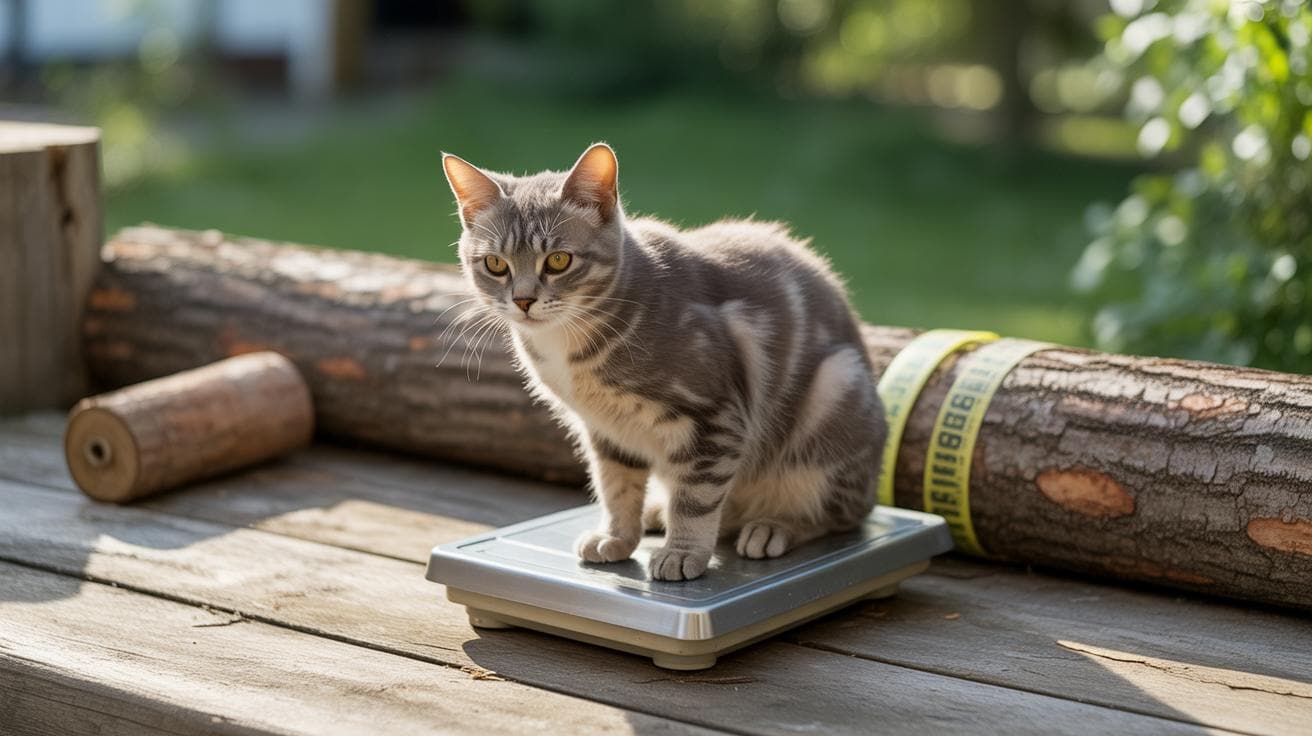
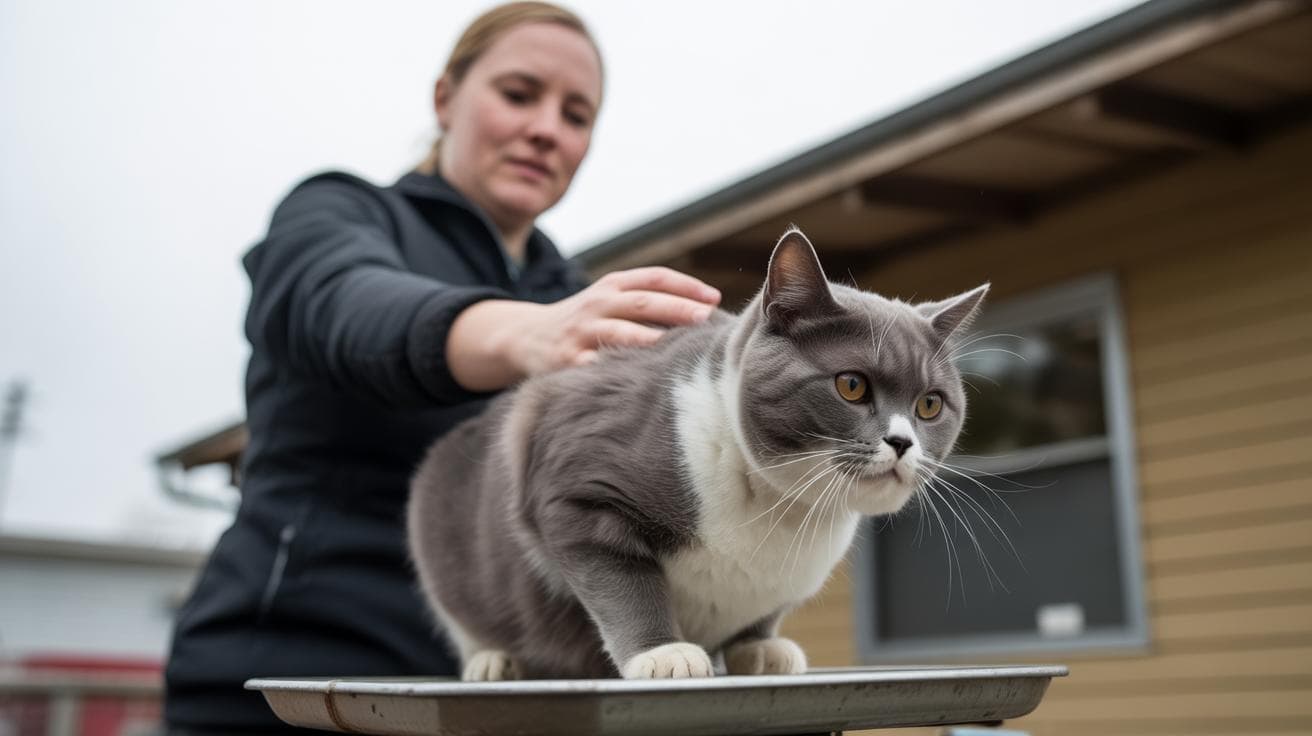
- Current weight and body condition score (BCS). Use clinic scale and the 1-9 BCS system. Also record percent excess above ideal weight (percent above estimated ideal).
- Acute safety flags that need urgent workup: anorexia over 48 hours, repeated vomiting, new trouble breathing or blue gums (cyanosis), collapse or fainting, severe lameness, or seizures. If any of these are present, triage now.
- Recent or current medications, especially corticosteroids or insulin, and when the last doses were given.
- Owner-reported appetite and recent intake pattern, plus immediate feeding risks like multi-cat access, scavenging, or free-feeding.
- Owner priorities and ability to return for appointments, plus capacity for home monitoring (having a scale, keeping a food diary, transport help).
Goal setting and immediate plan: pick a numeric weekly target and write it down. For morbid cases start low at 0.5% body weight per week. Typical clinical range is 0.5-2% per week. Estimate a provisional timeline by dividing percent excess by your chosen weekly percent. For example, 20% excess divided by 0.5% per week gives about 40 weeks. Record clear stop criteria: anorexia lasting 48-72 hours, weight loss faster than 2% per week, ketones in urine (ketonuria), new lethargy, or new vomiting/diarrhea. Do same-day urgent testing only if acute flags are present. Suggested same-day tests: CBC (red and white blood cell check), chemistry panel (kidney, liver, and electrolytes), blood glucose (blood sugar), urinalysis (urine check), and blood pressure.
Use a short owner script to set expectations. Try something like: "We need to check weight and do bloodwork if there are worrying signs, then start a slow, safe plan. Can you come back in 7 days?" Simple, clear, and honest.
Worth every paw-print.
| Quick Reference | One-line Content |
|---|---|
| Triage checklist | Weight, BCS (% excess), acute flags, meds, feeding access, owner capacity, document chosen % target. |
| Numeric weekly targets | Morbid cases: 0.5%/wk; common range: 0.5-2%/wk; rapid loss above 2%/wk → urgent review. |
| Cross-references | See Diagnostics; Nutritional management; Feeding logistics; Monitoring. |
| Immediate escalation triggers | Anorexia over 48 hr, repeated vomiting, trouble breathing, collapse, seizures, rapid loss over 2%/wk. |
| Sample owner script | “We need to check weight and do bloodwork if there are worrying signs, and start a slow, safe plan; can you return in 7 days?” |
Diagnostics and comorbidity screening for managing morbidly obese cats
A tight, focused screening changes the diet and monitoring plan because hidden problems like diabetes, thyroid issues, kidney disease, liver changes, or painful joints shift calorie needs, protein goals, and how fast we can safely reduce weight. The intake checklist will flag same-day urgent concerns. This section lays out the baseline and follow-up tests you’ll use to tailor therapy and keep everyone on the same page.
Consolidated laboratory and endocrine protocol
Start with a compact, prioritized panel so you can catch endocrine drivers of obesity or treatable comorbidities early. Fast when a test needs fasting and note how long the cat was fasted.
- CBC (complete blood count – a check of red and white blood cells) to spot infection, anemia, or inflammation.
- Chemistry panel including liver enzymes and electrolytes (basic metabolic snapshot of organ function and minerals).
- Fasting blood glucose (blood sugar after withholding food – helps detect diabetes).
- Fructosamine (three-week average of blood sugar control) if glucose is abnormal or you suspect insulin resistance.
- Total T4 (thyroid hormone screening) to rule out hyperthyroidism or low-thyroid effects on metabolism.
- Serum electrolytes/renal profile to assess kidney function and correctable imbalances.
- Urinalysis (urine check for glucose, ketones, infection signs).
- Urine culture when urinalysis shows pyuria (pus in urine) or with recurrent urinary signs.
- Blood pressure measurement to screen for systemic hypertension (high blood pressure – often silent).
Add advanced endocrine testing like insulin assays or C-peptide (markers of insulin production and resistance) when there’s unexplained persistent high blood sugar, ongoing increased thirst or urination, or unstable diabetes control. Document fasting duration when applicable.
Orthopedic and pain assessment
Weight loss only helps mobility if we measure baseline pain and function. Observe and score so you know if the plan is helping.
- Gait observation: watch the cat walk and trot; note stiffness or asymmetry.
- Timed up-and-go or similar mobility test: time to stand, walk a short distance, and return.
- Joint palpation with a graded pain score 0-10 (press the joint and note reactions).
- Muscle condition score (look for muscle loss under fat).
- Radiographs (x-rays) when there’s focal severe pain, suspected instability, or surgical planning.
Refer to a specialist if there’s no improvement after a reasonable weight-loss interval despite pain control, severe or worsening lameness, suspected joint instability, or neurologic deficits.
Specific findings should change the plan. If diabetes or marked insulin resistance shows up, favor low-carbohydrate, higher-protein diets and tighter glucose monitoring. If kidney disease is present, adjust protein targets and slow the weight-loss rate to protect lean mass and electrolytes. Significant orthopedic pain means slowing progression, starting analgesia early, adding physiotherapy (range-of-motion work, controlled low-impact exercise), and sometimes referring for joint-specific medical or surgical care.
Always document how each abnormal result changed your calorie target and follow-up timing so the whole team knows why you chose that plan. Worth every paw-print.
Nutritional management: diet selection, caloric calculations and transition protocol
Start with the goal: cut the cat’s calorie intake while protecting lean mass and vitamins/minerals so the cat loses fat, not muscle. Therapeutic weight-loss diets are made for that. They lower energy density (calories per gram), boost protein to spare muscle, and pack vitamins and minerals so a smaller amount of food still meets nutrient needs.
Calorie math made simple. Use the resting energy requirement (RER – the calories a cat needs at rest) based on the cat’s ideal weight. RER = 70 × (ideal kg)^0.75. Example: ideal weight 4.0 kg → RER ≈ 70 × 4^0.75 ≈ 242 kcal/day. Many clinicians start a prescription at RER × 0.8 → 0.8 × 242 ≈ 194 kcal/day. Write down the exact percentage you pick.
Turn kcal/day into grams/day using the diet’s label (kcal per 100 g). One way: grams/day = (kcal/day ÷ kcal per 100 g) × 100. Example: canned diet 90 kcal/100 g → 194 ÷ 0.9 ≈ 216 g/day. Measure with a kitchen scale and record grams/day exactly. Ever watched your cat judge a bowl like it’s a five-star critic? This helps avoid guesswork.
What to look for in a diet:
- High protein per kcal (protein helps keep muscle; list grams of protein per 100 kcal if you can).
- Low carbohydrate proportion (carbohydrate means sugars and starches; lower carbs can help insulin-sensitive cats).
- Controlled energy density (fewer calories per gram than regular maintenance food).
- Concentrated micronutrients (vitamins and minerals packed in so restricted calories still meet needs).
- Palatability options (different flavors or textures to help picky eaters).
- Higher moisture in canned diets (more water helps satiety and lowers kcal density).
Transition plan (typical total ~3 weeks; slow or speed up if the cat has tummy trouble):
- 25% new food / 75% old , 2 to 3 days. Watch for vomiting or loss of appetite.
- 50% new / 50% old , 2 to 3 days. Pause if appetite drops or stools loosen.
- 75% new / 25% old , 2 to 3 days. Slow the change if GI signs continue.
- 100% new food , start full prescription. If the cat refuses, try palatability tricks and check for underlying issues with diagnostics.
| Type | Typical kcal/100g | Pros | Cons |
|---|---|---|---|
| Canned | 70–120 | More water (feels fuller), lower calorie density, often higher protein per can | Heavier to weigh out, usually costs more |
| Dry | 300–450 | Easy to measure small volumes, long shelf life, fits many puzzle feeders | High calorie density, can be overeaten if not weighed in grams |
Treat rules: keep treats to 10% or less of daily calories and subtract treat kcal from the daily prescription. Point owners to Feeding logistics for device and puzzle calorie accounting. Recheck calories and adjust based on weight trends and diagnostics. For example, diabetes usually needs lower carbs and tighter glucose checks, while kidney disease may mean slower weight loss and adjusting protein. Worth every paw-print.
Feeding logistics, portion control, devices and multi-cat strategies
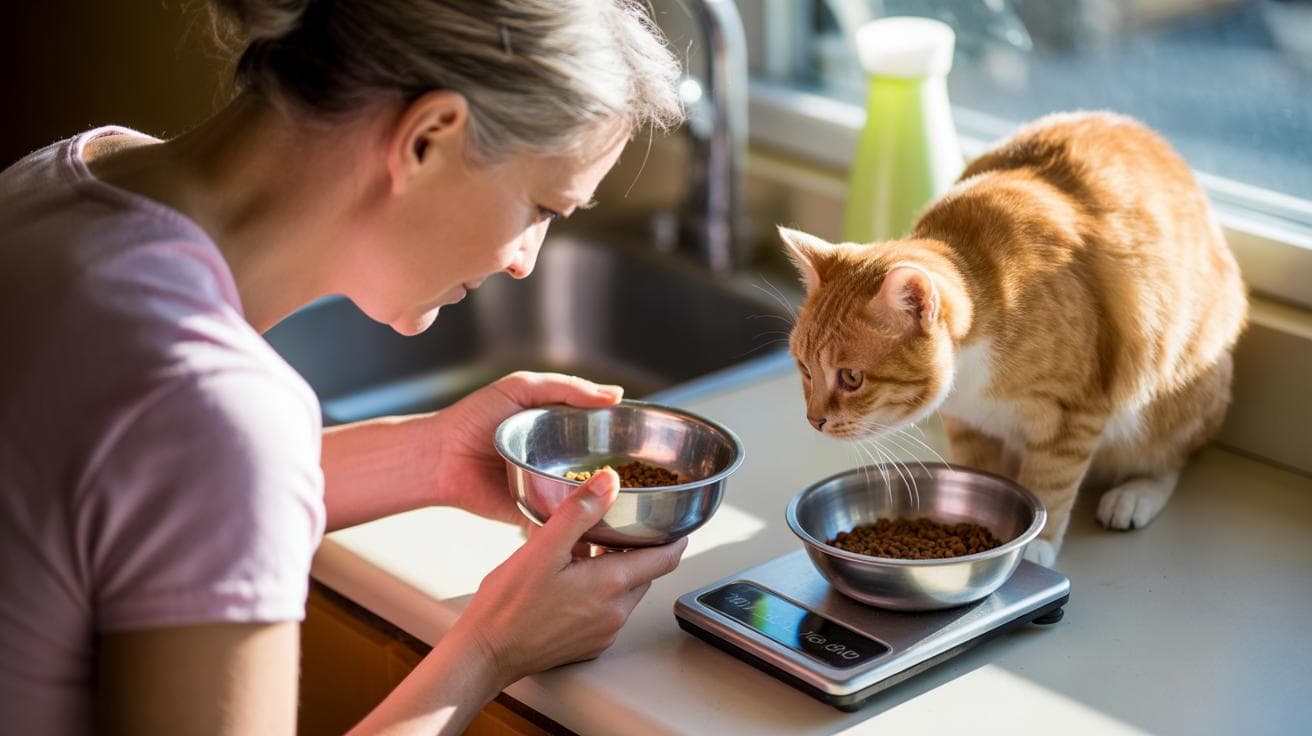
Start by measuring every meal in grams with a kitchen scale (small digital kitchen scale is fine). Write down grams per feed and convert to kcal (kilocalories, the “Calories” on the label) using the diet label so you never have to guess with cups. Timed, measured meals cut the extra calories that sneak in with free-feeding and show the cat’s true intake patterns. Short, supervised meal windows stop grazing that adds up over the day. Ever watched your kitty nibble all day and wonder where the weight came from? This fixes that.
Make feeding an activity. Use slow-feed bowls, food puzzles, timed dispensers, and feeder toys so eating also becomes play. Microchip-activated feeders let the target cat eat alone at its station (no more food policing). Put puzzles and slow feeders on non-slip surfaces and spread them around the house so your cat takes a few steps between bites. That small movement matters. See Nutritional management for calorie math before you add puzzle portions, and check Monitoring for home-weighing and food-log tips.
- Kitchen-scale measurement: show owners clinic dosing in grams, then have them repeat the measurement before leaving so they’re confident at home.
- Timed supervised meals: offer food for 15 to 30 minutes, once or twice a day as planned, and remove leftovers so grazing stops.
- Microchip feeders: program the cat’s ID and train them to use their feeder so each cat gets only their food.
- Slow-feed and puzzle placement: floor-level for seniors, elevated for shy eaters, and spaced across rooms to encourage movement.
- Scheduled timed dispensers: use for small meals or afternoon snacks to break up long fasting stretches.
- Cross-reference: see Nutritional management for treat calorie allocation and Monitoring for home-weighing protocols.
Sample daily schedule (easy to follow, and you’ll see progress): weigh the cat weekly and record it. Morning: measured breakfast (grams → kcal) plus 5 to 10 minutes of wand play so whiskers twitch and paws get moving. Midday: timed dispenser snack or a short puzzle session, note grams released. Late afternoon: 10 to 15 minute puzzle feeding session to slow things down and add fun. Evening: measured dinner, 10 minutes of interactive play, and any treats that day deducted from the kcal budget. In the food log write date, time, grams offered, grams remaining, calculated kcal for that portion, and device-dispensed calories so clinic reviews match true intake.
Worth every paw-print.
Behavioral enrichment, non-food activity progression and adaptations for arthritic/senior cats
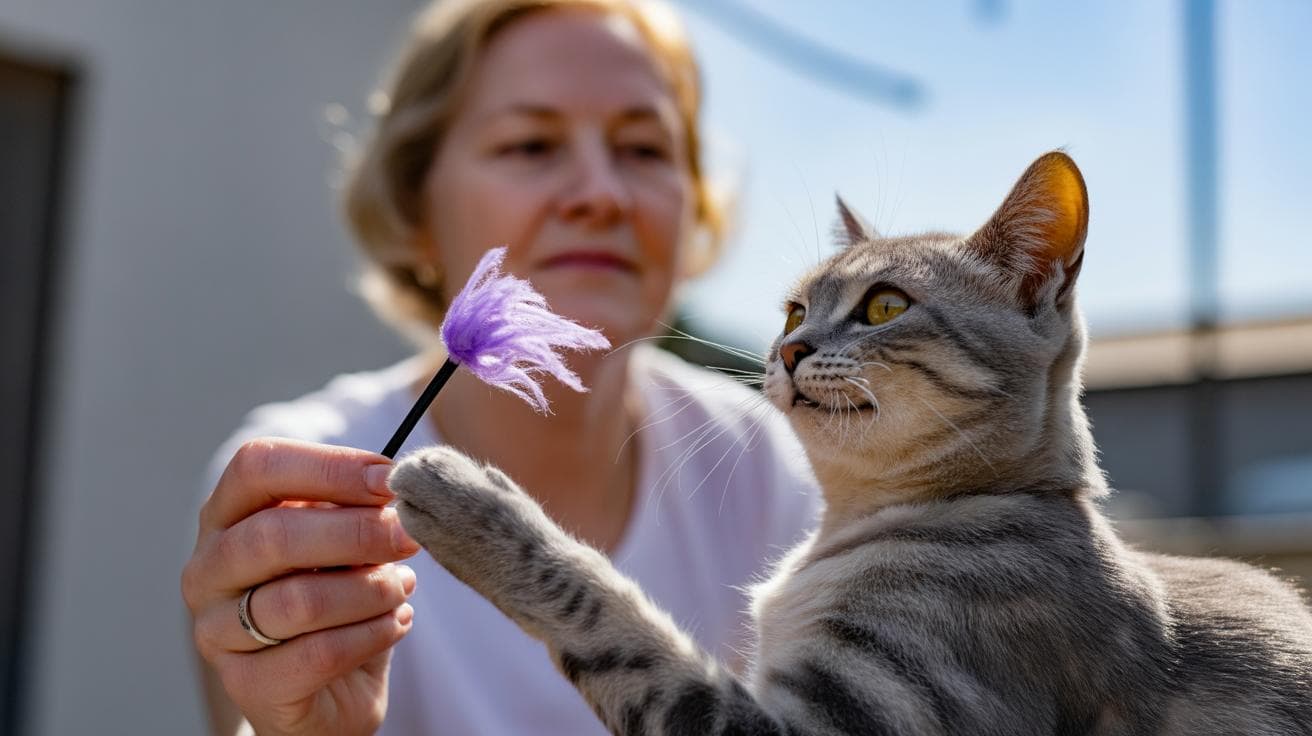
Principles first. Short, frequent play beats one long gym session for most cats. Non-food enrichment wakes up natural hunting instincts, burns energy without adding calories, and keeps motivation high. Think light, repeatable sessions your cat can win at; small wins build confidence and momentum.
Practical non-food activities to prescribe and demo in clinic:
- Feather wand: 3–5 minutes, three times a day. Move it like a tiny fleeing bird so your cat’s whiskers twitch, then let them “catch” the prey at the end for a satisfying finish.
- Clicker or target training: 5 minutes, twice a day. Clicker training uses a small click sound as a marker (a quick noise that tells the cat they did the right thing). Start with touching a stick and build up to tricks that add movement.
- Short leash walks: 5–10 minutes if the cat tolerates it. Use gradual harness training steps first and stop right away if you see panting or stress signs.
- Laser sprints: 1–2 minutes, three times a day. Keep it fast and fun, then finish by pointing the laser at a physical toy so your cat can actually nab something.
- Vertical exploration hops: Encourage 3–5 short hops onto a low perch, repeated 3–4 times daily. Even small vertical moves get muscles working and make perching feel rewarding.
- Scent trails: 5–10 minute sniff games using safe scents on paper or toys (catnip, a dab of food scent). This promotes movement without big bursts of running.
- Play tunnel or hiding-box fetch: 5–10 minutes, once or twice a day. Toss a toy into a tunnel or box and let them dash and pounce for short chase bursts.
- Gentle fetch with a soft ball: 2–5 minutes, two times a day for cats who like carrying things. Short tosses, soft landings, and the joy of bringing it back.
Progression tips and adaptations for senior or arthritic cats. Increase the number of sessions first, then slowly add time, then add repetitions. A simple rule: add one extra 2–3 minute session each week until your cat’s tolerance is clear.
For mobility-limited cats favor floor-level play, raised food bowls, and short low ramps for perches so they don’t have to jump. Assisted ROM (range-of-motion) exercises mean gently flexing and extending joints through their safe motion (short, gentle sets). These help keep joints moving without overdoing it.
Refer to physiotherapy (professional rehab) when pain scores rise, lameness gets worse, or mobility doesn’t improve after a reasonable trial with pain relief (analgesia) and gentle activity adjustments. In truth, catching problems early means better outcomes and more comfy purrs. Ever watched a senior cat find their spring again with the right tweaks? It’s worth the effort.