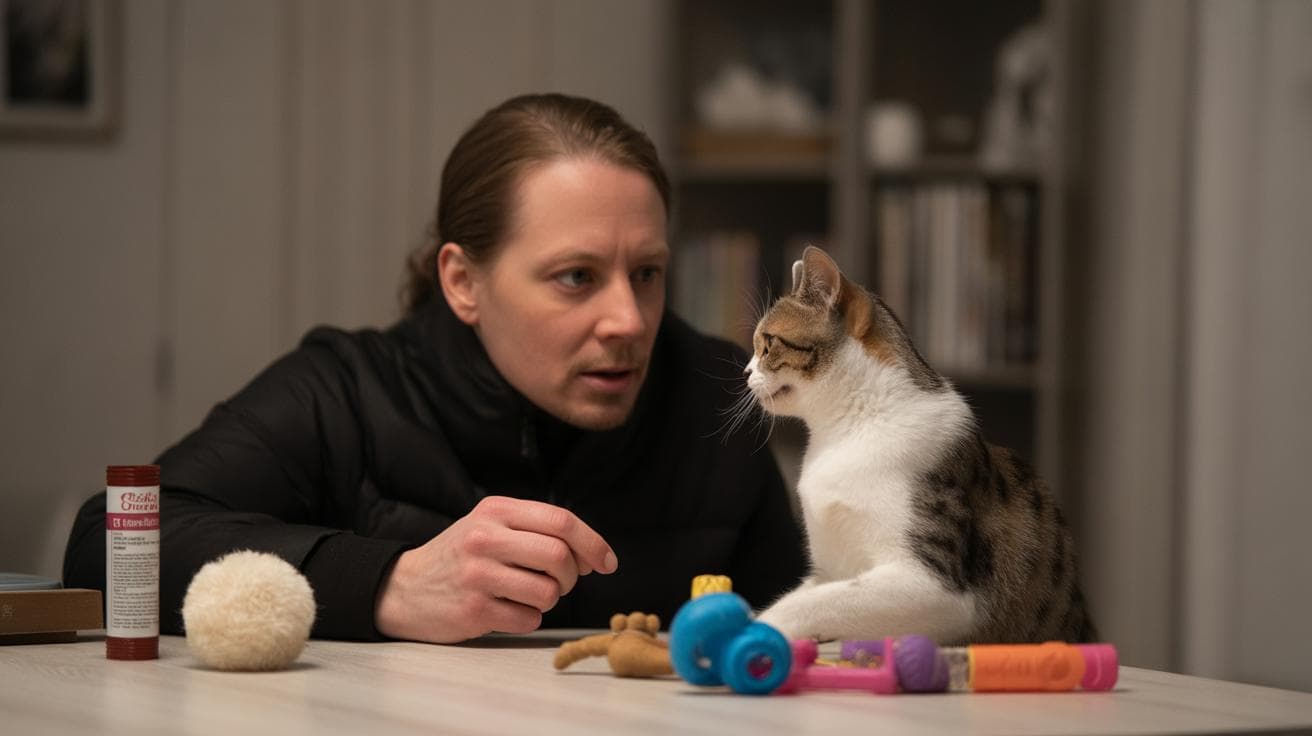
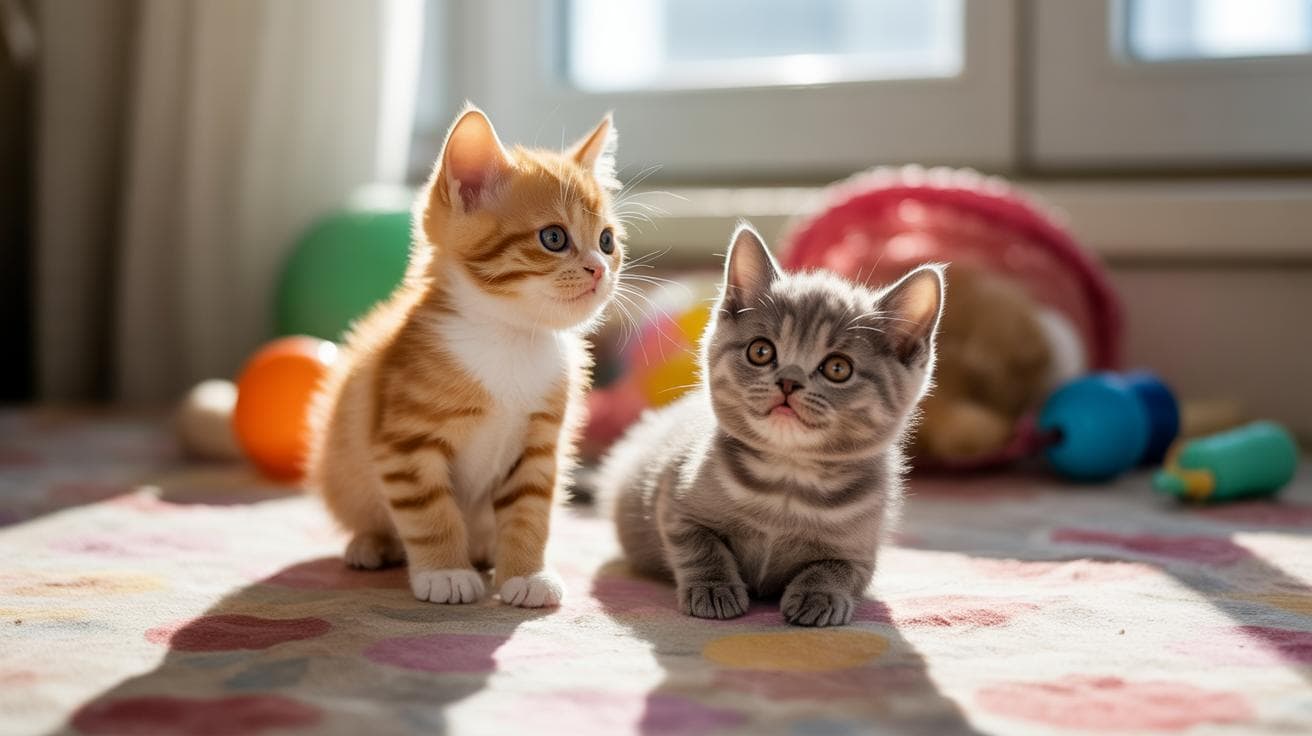
Think Munchkins are too delicate for play? Think again – play just needs to be different. Their short legs change how jumping and landing move through the spine (backbone), so high drops are a no-go.
Keep sessions low, short, and frequent. Aim for 2 to 5 minutes, a few times a day, to build hunting skills, cardio, and coordination without dangerous launches. No big airborne stunts. Really.
Try these simple strategies and toy picks:
- Low-floor wand work (move the wand just above the floor, like a fishing rod for cats) to mimic prey without big jumps. My Luna once leaped six feet for a wand like it was an olympic moment , but we stick to low now, you know, smarter play.
- Rolling balls that make a satisfying thud so your kitty chases and pounces without launching off furniture.
- Gentle ramps (tiny stairs your cat can climb) to let them get vertical play without the impact of high drops.
- Puzzle feeders (toys that hide food and make your cat work for treats) for brainy hunting and slow, safe bursts of activity.
Keep it playful, watch their landings, and adjust if they seem sore. Worth every paw-print.
Munchkin cat: play considerations and safe toys
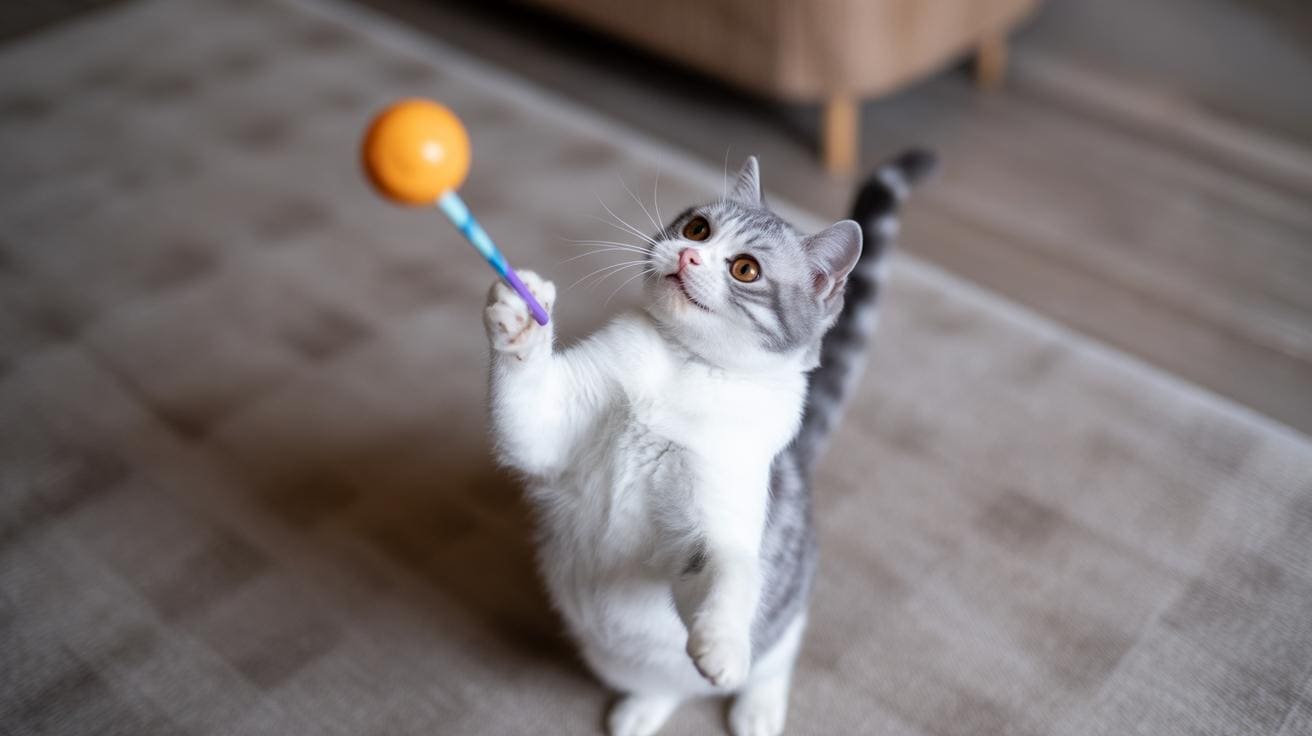
Munchkin play looks different from other breeds because those short legs change how impact and reach affect their bodies. Keep play low, short, and frequent so your cat gets hunting practice without risky vertical forces. Think quick bursts that build coordination, not big jumps that strain the spine (backbone) or hips. Your kitty will still love to pounce, but we want happy landings and not ouch moments. Ever watched a Munchkin chase a rolling ball and do a tiny, perfect tumble? Cute, and safer.
Munchkins come from an autosomal dominant mutation (a genetic change that shows up if one parent passes it on), so their limbs are about half the length of a typical cat while the body stays medium and rectangular. Adults usually weigh around 5 to 9 pounds and live about 12 to 14 years. Those facts guide play choices: low-floor wand work, rolling toys, and gentle ramps that give access without big drops. Think of ramps like short stairs for cats – easy to climb, no dramatic launches.
Watch for urgent red flags: a sudden limp, favoring a limb, not bearing weight, new swelling, a visible curve in the spine, or a kitty that suddenly hides and stops eating. If you see any of those, check the Anatomy & Strain section for exact vet timing and next steps. Don’t wait, especially if your cat seems in pain.
- DO: low-floor wand play – tease the toy along the ground so she chases, not jumps. Let her stalk and pounce without launching sky-high.
- DO: rolling balls and soft chaser toys that glide across the floor with a satisfying thud or roll.
- DO: puzzle feeders for portioned, brainy foraging that keeps activity gentle and interesting.
- DO: low ramps or steps to favorite perches so your Munchkin can climb without big drops.
- DON'T: encourage high jumps or tall vertical toys that prompt big launches. Those can strain the spine or hips.
- DON'T: leave long tassels or strings out unsupervised – put them away after play.
- DON'T: use toys with small detachable parts that can be chewed off and swallowed.
Follow the Maintenance & Buying section for the inspection checklist and shopping tips that help you pick safe toys. Next, read Anatomy & Strain for clinical warning signs and guidance on when to call the vet. Worth every paw-print.
Munchkin anatomy and recognizing orthopedic strain (clinical signs + vet timing)
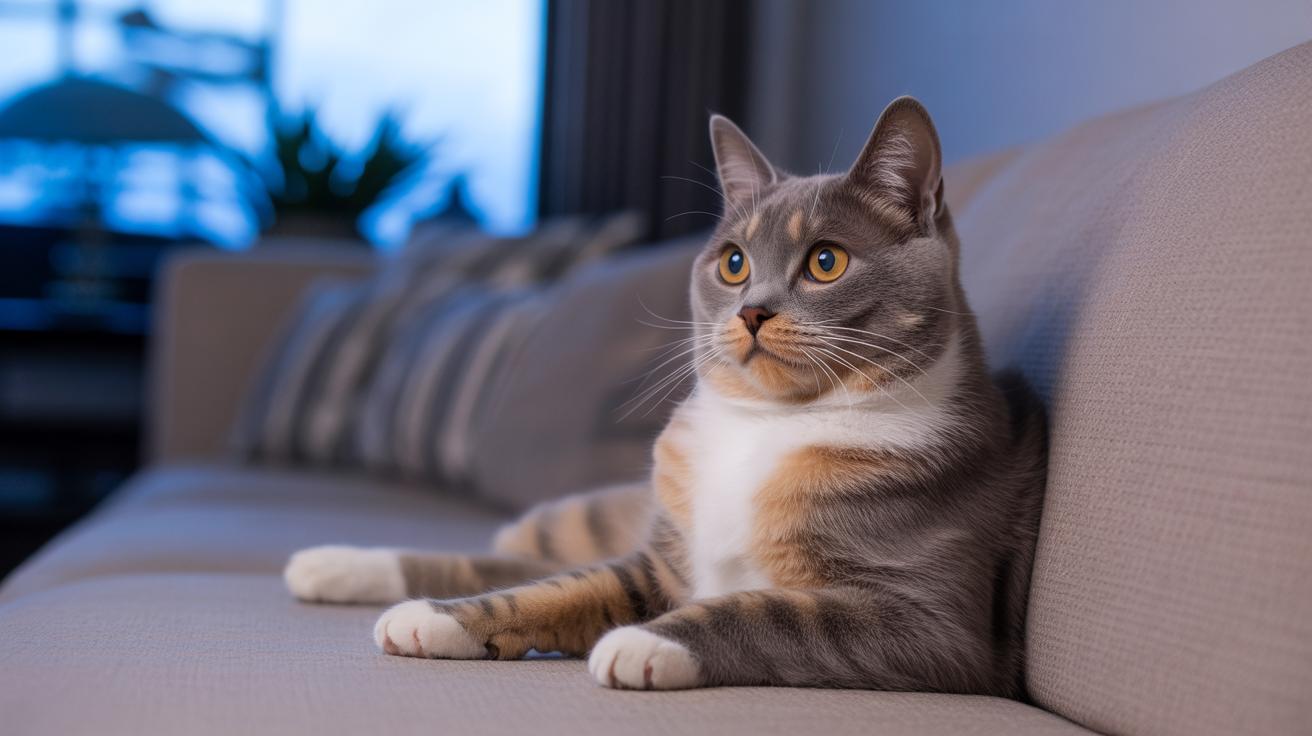
Munchkins have those adorable short legs, but that build changes how their body handles movement. A shortened limb (a genetic change that can show up even if only one parent has it) shifts more weight into the spine and chest when they walk and jump. Over time that can encourage problems like lordosis (an extra inward curve of the lower spine) and pectus excavatum (a sunken breastbone that can make breathing harder). Breeders usually avoid mating two short-legged cats because the risk of serious kitten health problems goes up. Keeping an eye on your cat for life makes sense, small signs picked up early help a lot.
Because their skeleton and muscles work a bit differently, play and daily care should match the build. Low-impact fun is best. Think ground-level chases, short ramps, and puzzle feeders that get them moving without big drops. Comforting images: your cat’s whiskers twitch as a toy rolls across the carpet, not a scary leap from a tall shelf. Nutrition helps too. High-quality protein builds muscle. Glucosamine (a joint-support supplement) and omega-3 fatty acids (anti-inflammatory fats) can protect moving parts. Keep portions in check so extra pounds don’t add risky load.
You can do quick checks at home. Watch how they walk, how high they jump, and whether they suddenly nap more than usual. Little changes matter. Pair those home checks with routine vet screenings so subtle issues are caught before they become big problems.
Signs that need quick action
- Sudden limp or favoring a leg – call the vet same day.
- Can’t put weight on a limb at all – seek immediate care.
- Visible swelling of a limb or joint – contact the vet within 24 hours.
- New or worse spinal curve (you can see the back shape change) – schedule a vet evaluation promptly.
- Lameness that lasts more than 24 hours – book an appointment.
- Big behavior shifts – not eating, hiding more, or crying when moving – urgent check-up.
Plan for prevention
Get annual or twice-yearly mobility checks with your vet. Ask about a nutrition plan with good protein and joint-support nutrients. Set a healthy weight target with your clinician so extra pounds don’t overload the spine. If you notice small changes in gait or posture, request diagnostic imaging or a specialist referral sooner rather than later.
Worth the watch. Your little Munchkin may be short on legs, but with smart care they can stay playful and comfortable for years.
Low-impact exercise and play strategies for Munchkin cats
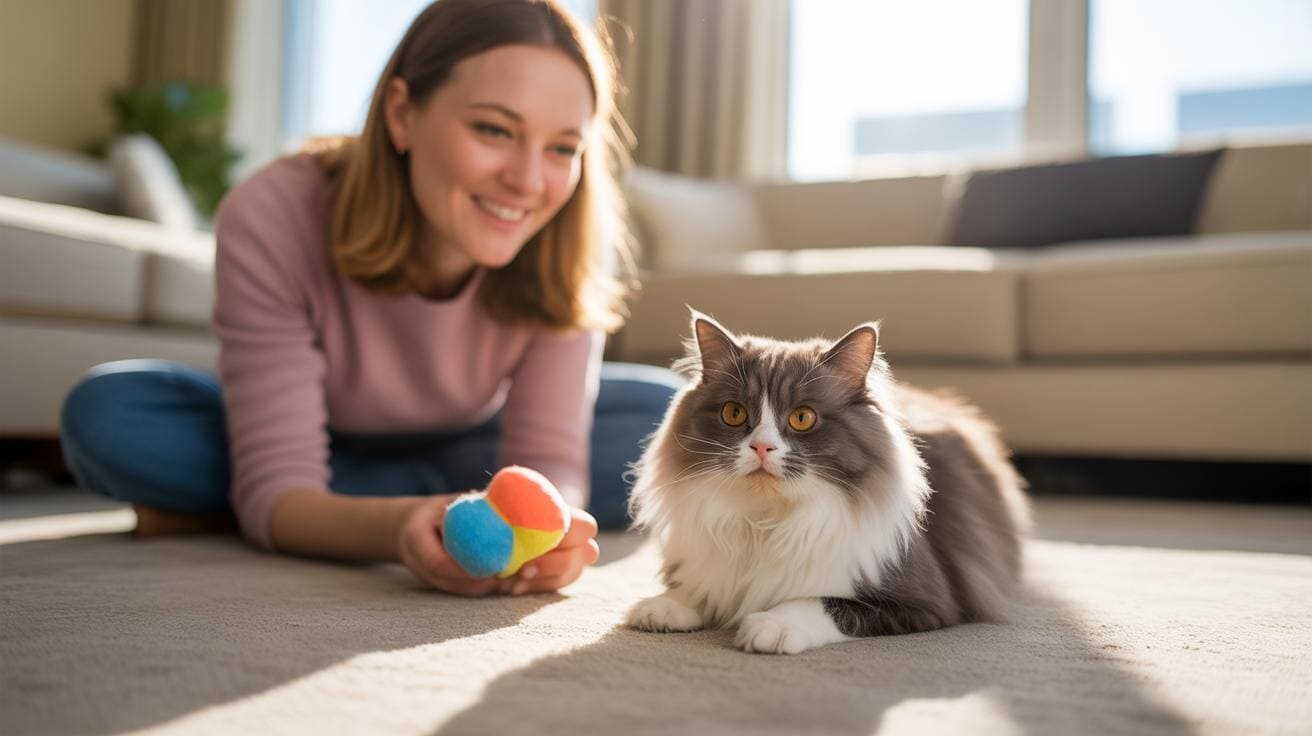
Short, floor-focused play helps protect the spine and builds the core and leg muscles that support a short-legged frame. Keep moves low, slow, and close to the ground so landings stay soft and joints don’t get stressed. Think gentle bursts of fun, not marathon zoomies.
DO: Introduce a leash and harness indoors using a lightweight vest-style harness (covers the chest for gentle support). Start with very short sessions. Example: "Put the harness on for five minutes, let your cat explore the living room, then take it off." Repeat a few times a day until your cat is comfortable.
Keep play in focused bursts of about 5 to 10 minutes instead of long, unfocused sessions. See the Munchkin play basics quick-reference in the lead for exact session lengths and the top don'ts.
- Low-arc wand play along the floor. Use short strokes and a low arc, and finish by letting your cat catch a soft toy (teaser wand = a stick with a toy on the end).
- Rolling balls and low-floor chases. Let the ball roll across carpet or a rug so your cat can pounce without high jumps.
- Short, straight-line fetch on the floor. Toss gently and keep returns short so they stay on solid ground.
- Puzzle-fed treat foraging sessions (puzzle feeder = a toy that dispenses treats; choose one with size-appropriate openings and a non-slip base).
- Step-style climbing with low risers and ramps (low risers = small steps, ramps with a shallow incline and a non-slip surface). Keep platforms under about 12 inches.
- Short tunnels and hide-and-seek. Use cushioned entrances and avoid any steep drops; short tunnels feel safe and fun.
- Slow leash or harness walks indoors. Let your cat set the pace and follow along slowly.
- Scent-based tracking games for low-effort engagement. Hide a smelly treat or a favorite toy and let your cat sniff it out.
Ever watched your kitty chase shadows? These options give that same thrill but with less risk. Worth every paw-print.
Safe toy types and materials for Munchkin cats
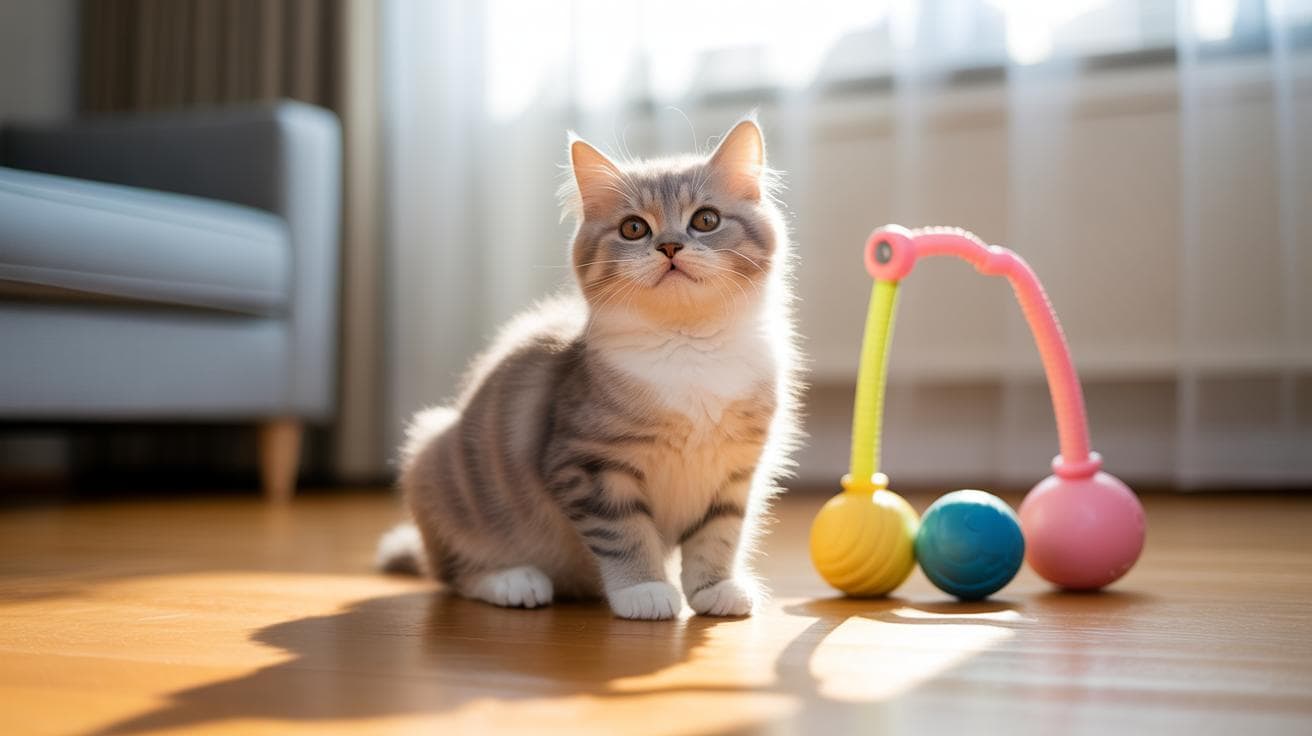
Munchkin cats have short legs and long spines, so we want toys that keep the action low to the floor and gentle on their bodies. Think low-floor wand toys, rolling balls that glide instead of bounce, short tunnels, low steps or mini trees, puzzle feeders, soft plush toys without tiny parts, and chew toys made from tough rubber. Focus on how things are built and whether they’re safe, not just bright colors. Your cat will thank you when playtime doesn’t end in a sprawl or a startled hop.
When you shop or inspect toys, use a short checklist to keep things simple. Look for:
- Non-toxic labeling and clear material info.
- Chew-resistant materials like solid rubber (firm, non-toxic rubber that resists chewing) and tightly woven natural fiber rope (like thick cotton rope).
- No detachable parts smaller than about 2 centimeters (small enough to swallow).
- No long tassels left on toys when unsupervised.
- Washable surfaces so you can clean drool and fur.
- Screw-locked battery compartments for electronic toys.
- A weekly inspection habit: check seams, loose parts, and wear before play.
For a single, consolidated shopping and inspection checklist, see the Maintenance & Buying / inspection checklist.
Wand play is great when you keep the lure low. Aim for short sessions, five to ten minutes total. Do quick 5–10 second bursts of movement, then pause so your cat can reset their stalking brain. Finish by giving a soft “catch” toy your cat can grab and carry; that little win matters. Practical technique tips and step-by-step wand moves are moved to the Low-impact exercise and play strategies subsection so you can follow them there.
Worth every paw-print.