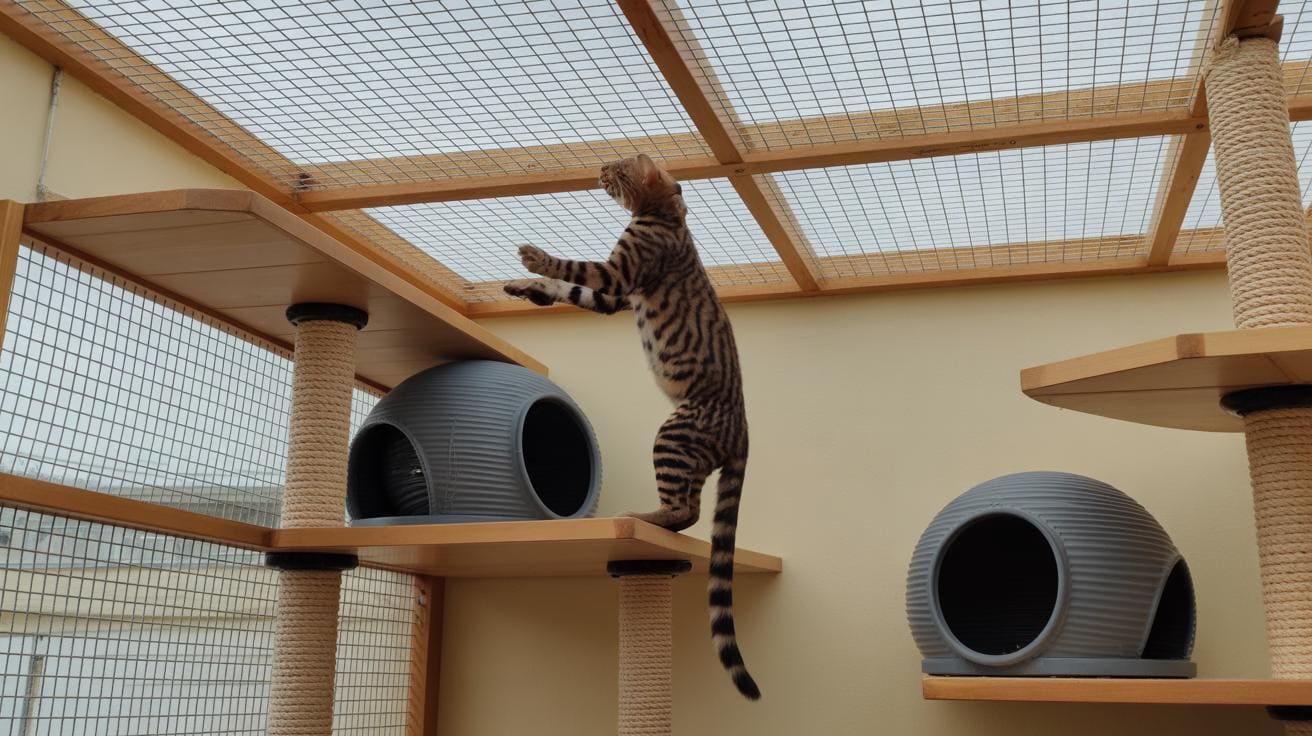
Think Toygers are mellow lap cats? Not really. They act like tiny leopards in workout clothes, all focused stalks and sudden zoomies. Ever watched one crouch, then explode after a toy? You'll grin every time.
They do best with 2 to 3 short play bursts a day, about 5 to 10 minutes each, and one longer chase for really active cats, around 15 to 20 minutes. Think quick sprints plus a longer run. For busy days, toss a toy before you leave and call it a mini workout.
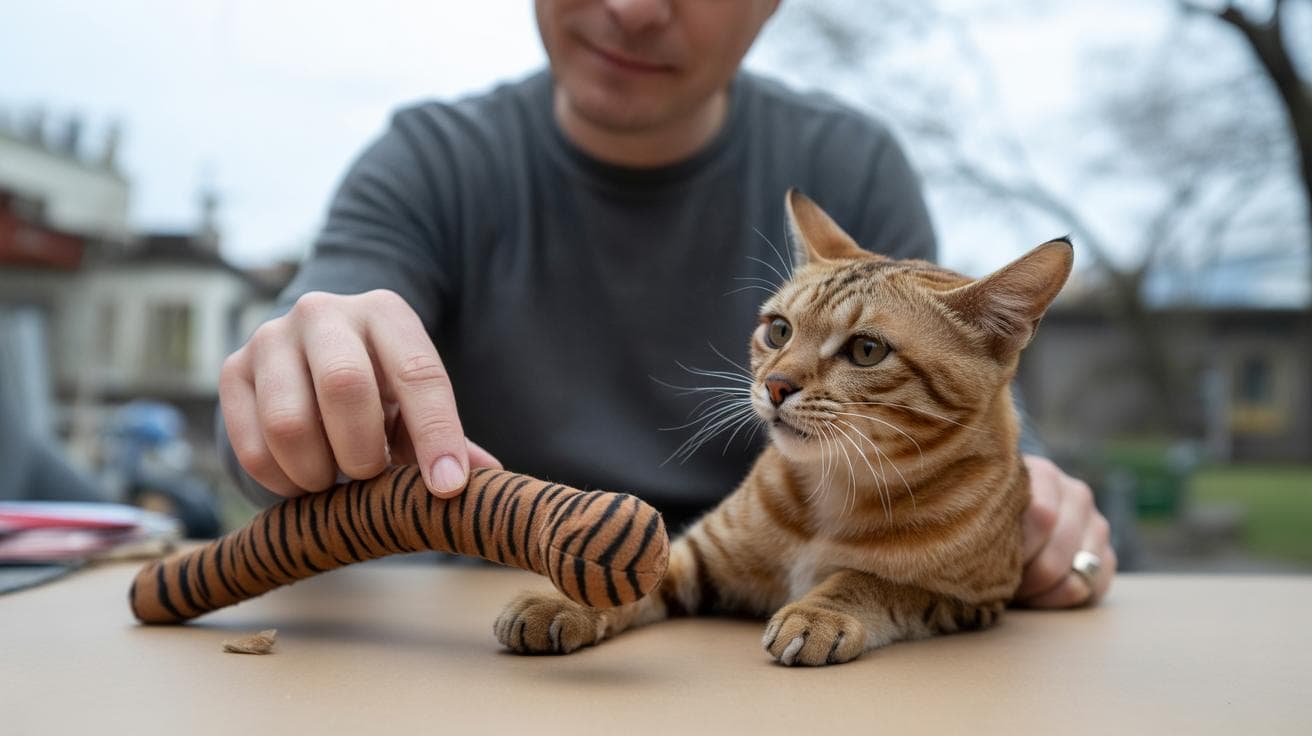
Bring out an interactive wand (a stick with string or feathers), a puzzle feeder (treat-dispensing toy), and a sturdy plush prey (a soft stuffed toy built to take pounces). The flutter of feathers, the rattle of kibble, the satisfying thud of a plush, that’s the good stuff.
Check seams and battery compartments (where batteries live in a toy) regularly, and retire any toy with loose bits that could be swallowed. If a battery compartment is loose, toss the toy or fix it right away. Safety first, then play.
Worth every paw-print.
Toyger cat: activity needs and safe toys
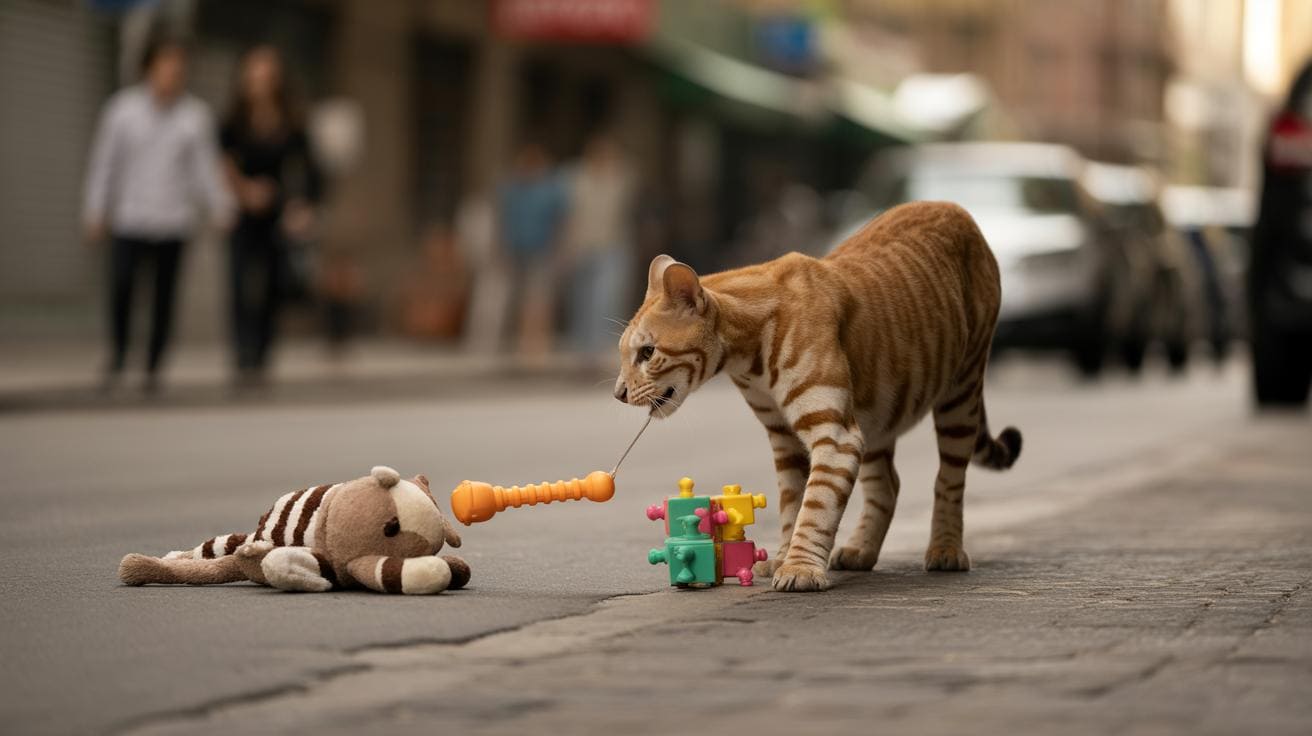
Short, action-ready checklist to get a Toyger moving and keep play safe – do these today. Think of it like a quick care routine you can actually stick to, and hey, your cat will thank you with zoomies.
-
Start a daily play rhythm: do 2 to 3 short active sessions (5 to 10 minutes each) plus one longer chase for very active Toygers (15 to 20 minutes). Aim main play at dawn and dusk when their hunting instinct peaks. Ever watched a Toyger wake up and go full sprint? For life-stage schedules, see: Toyger age-specific play and training
-
Pack three core toys each day: an interactive wand (a stick with string or feathers that mimics hunting), a puzzle feeder (a toy that hides food and makes your cat work for treats), and a robust plush prey (a sturdy stuffed toy made to be grabbed and tossed). These cover hunt, brain, and capture play. For per-toy pros/cons and care tips, see: Toyger-safe toy types
-
Stop play right away for these red flags: loose parts or open stitching, exposed battery or chewed plastic, or any small pieces that go missing or might be swallowed. Pull the toy out of circulation and retire it. For inspections and retirement rules, see: Toyger toy safety
-
Rotate toy groups weekly – swap sets, tuck some toys away for a week, then bring them back to renew interest. Hiding a toy for a few days makes it feel brand new again. For DIY rotation tactics, see: DIY toys, rotation tactics, and low-cost options
-
Inspect returned toys before reintroducing: probe seams with your fingers, open and test battery compartments (battery compartment – where batteries live in a toy), and do a quick smell-check for mold or odd odors. If anything feels wrong, toss it. For inspections and retirement rules, see: Toyger toy safety
-
Offer dependable solo options when you’re busy: rechargeable motorized toys (battery-powered toys with a small motor) or a silent running wheel give safe, engaging alone-play – but supervise the first few sessions to make sure your cat uses them properly. For buying guidance and vetted models, see: Toyger product picks, buying checklist, and consolidated comparison table
-
Match toys to life stage and energy: kittens = wand-heavy and short bursts; adults = a mix of puzzle feeders and chasers; seniors = softer, joint-friendly choices and slower-moving toys. Adjust as your cat ages or after medical changes. For life-stage schedules, see: Toyger age-specific play and training
-
Call a pro if you see sudden loss of interest, repetitive obsessive play, sudden aggression spikes, or repeated ingestion incidents. These can signal stress, pain, or medical issues and are worth checking out. For guidance on when to seek help, see: Toyger age-specific play and training
Editors/writers: embed internal anchor links from each checklist bullet to the corresponding H2 headings named above.
Worth every paw-print.
Toyger activity profile: energy, hunting instincts, and life-stage differences

Toygers are built like little athletes – muscular, alert, and tuned to hunt. They love to leap, sprint, and stalk, with whiskers twitching and tails flicking when something moves. Toys that act like prey really click for them, especially motorized mice (battery-powered toys that skitter like real prey) or a small running wheel (an indoor wheel for sprinting).
Motorized mouse example – "The little mouse twitches, zips under the chair, and your cat freezes, then launches."
Most cats sleep about 70% of the day, so Toygers pack play into short, intense bursts around dawn and dusk. Try five to ten minutes of hard play, a few times a day, and you’ll see that focused hunting energy melt away. For full life-stage toy lists and session templates, see Toyger age-specific play and training.
Toyger-safe toy types: per-toy function, pros/cons, and one-line care tips
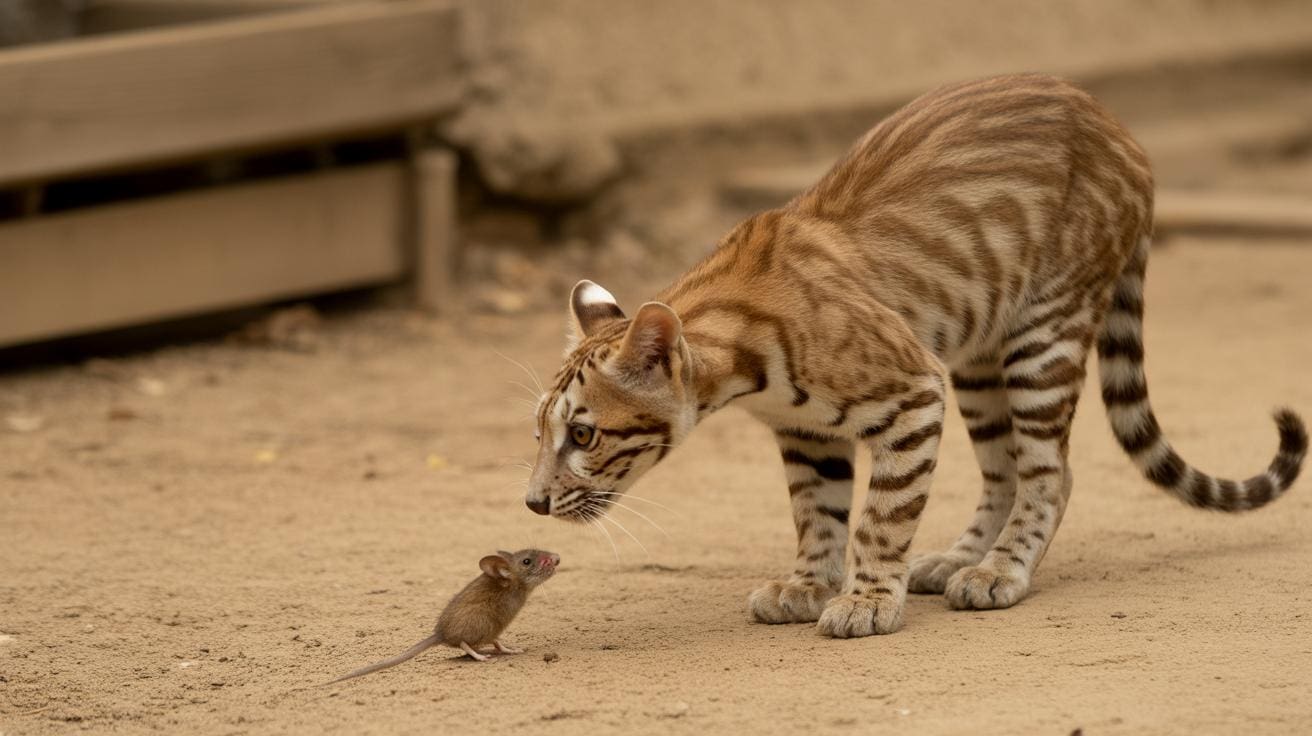
Each toy entry below says what the toy does for a Toyger, gives three clear pros and two trade-offs, plus a one-line care tip. These notes focus on play value and how to keep the toy safe and working. See Toyger toy safety for inspection/retirement rules.
Wand toys
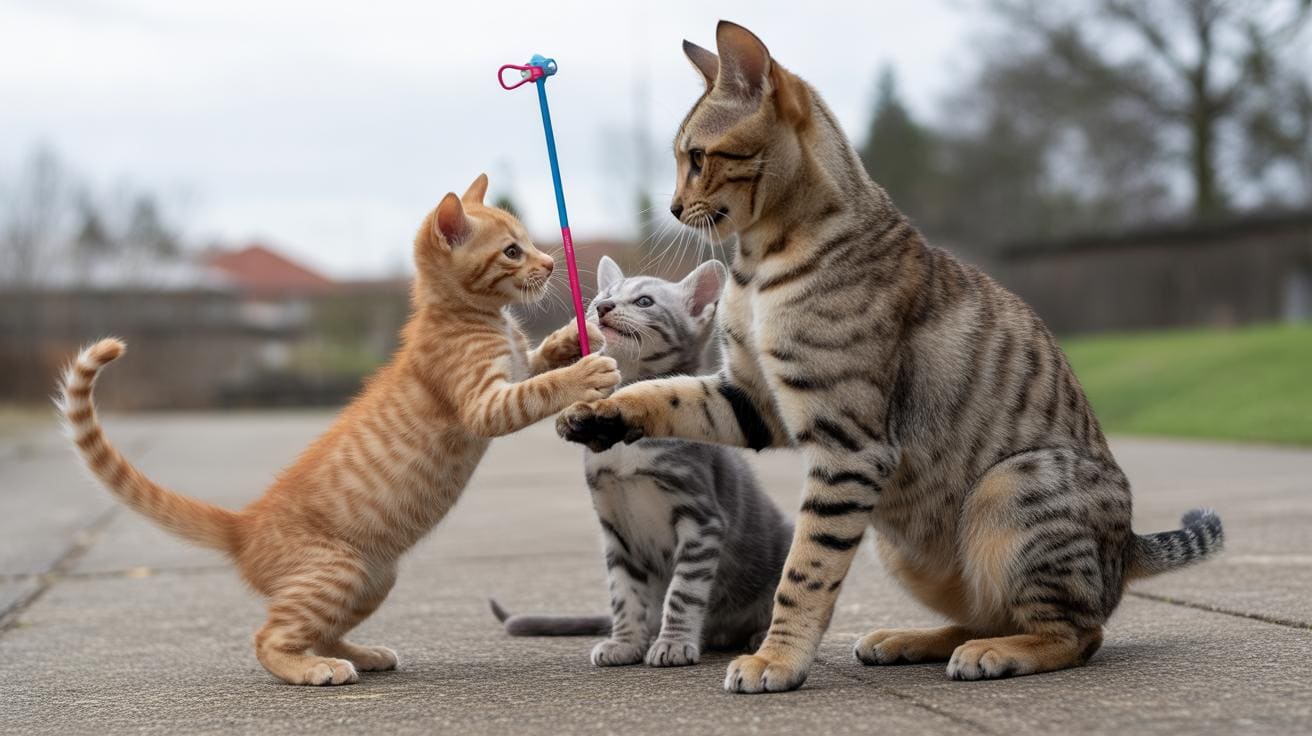
Wand toys copy prey movement by letting you flick feathers, ribbons, or faux fur on a string so your Toyger can stalk and pounce. They turn solo hunting into a play session you share with your cat, and they’re great for training recall or impulse control.
- Pros:
- Hands-on play boosts your bond and lets you guide hunting energy.
- Variable speed and direction keep the chase fresh.
- Cheap to replace parts and easy to repair (swap the toy end).
- Cons:
- Strings and ribbons can be dangerous if left where a cat can chew or swallow them.
- The lure or attachment usually wears out faster than the wand itself.
- Care tip: Store the wand out of reach when you’re done and replace frayed lure pieces; check knots and seams before each play.
Puzzle feeders
Puzzle feeders hide food or treats so your Toyger works for meals, which slows down gulping and gives the brain a workout. Think of it as foraging practice indoors.
- Pros:
- Slows eating and helps weight control while building focus.
- Gives a solo challenge that mimics natural hunting.
- Many models let you raise difficulty as your cat gets better.
- Cons:
- Some designs can crack from strong bites.
- They can scatter tiny kibble or crumbs, making a bit of a mess (tiny food pieces).
- Care tip: Wash food-contact parts weekly and check for bite cracks after heavy use.
Motorized toys
Motorized toys move on their own using a small motor (the electric part that makes it move) and usually a rechargeable battery (a battery you plug in to charge), so your Toyger can chase without you there. They’re great for when you’re busy but want your cat to have live-like motion.
- Pros:
- Hands-free play that keeps kitties active while you do other things.
- Unpredictable motion mimics real prey and sparks hunting instincts.
- Rechargeable options cut down on battery waste.
- Cons:
- Exposed or damaged battery compartment (where batteries sit) can be hazardous if chewed.
- Noise or vibration can scare shy cats.
- Care tip: Supervise the first sessions and check battery compartment seals after rough play.
Plush prey and crinkle toys
Soft, prey-shaped plushes invite grabbing, biting, and carrying, while crinkle layers give sound feedback that many Toygers find irresistible. They’re comforting and perfect for stalking-to-carry play.
- Pros:
- Great for carry-and-stalk behavior and comfort play.
- Mix of textures and crinkles rewards capture and toss.
- Easy to swap into rotation for novelty.
- Cons:
- Little sewn-on eyes or decorations can loosen and become choking hazards.
- Stuffing (soft filling) may be pulled out over time by determined biters.
- Care tip: Machine-wash covers if allowed and restitch seams that start to open.
Ball and tug toys
Balls that roll and ropes you can tug with fuel short sprint sessions and quick captures; use them for fetch-style play or a fast burst of exercise. They’re perfect for carpet chases or tile zoomies.
- Pros:
- Fantastic for short sprints and fetch-style retrieval.
- Work well on carpet, tile, or hardwood.
- Usually inexpensive and easy to replace.
- Cons:
- Small balls can be choking risks for strong biters.
- Tug ropes (braided cord) may fray under heavy chewing.
- Care tip: Pick size-appropriate balls and trim frayed rope ends right away.
Running wheel
A running wheel gives a Toyger a safe way to do sustained aerobic exercise and sprint training indoors. It’s like a little cardio track for your cat, handy for high-energy kitties.
- Pros:
- Burns excess energy in a controlled way.
- Quiet, smooth models fit apartment life nicely.
- Regular use can cut down on nighttime zoomies.
- Cons:
- It takes up floor space and needs to be stably placed.
- Wrong-sized wheels can strain joints, so sizing matters.
- Care tip: Choose a wheel rated for your cat’s weight and check bearings (the round parts that let it spin) and surface wear monthly.
Toyger toy safety: inspection routines, retirement rules, and 8-point weekly checklist
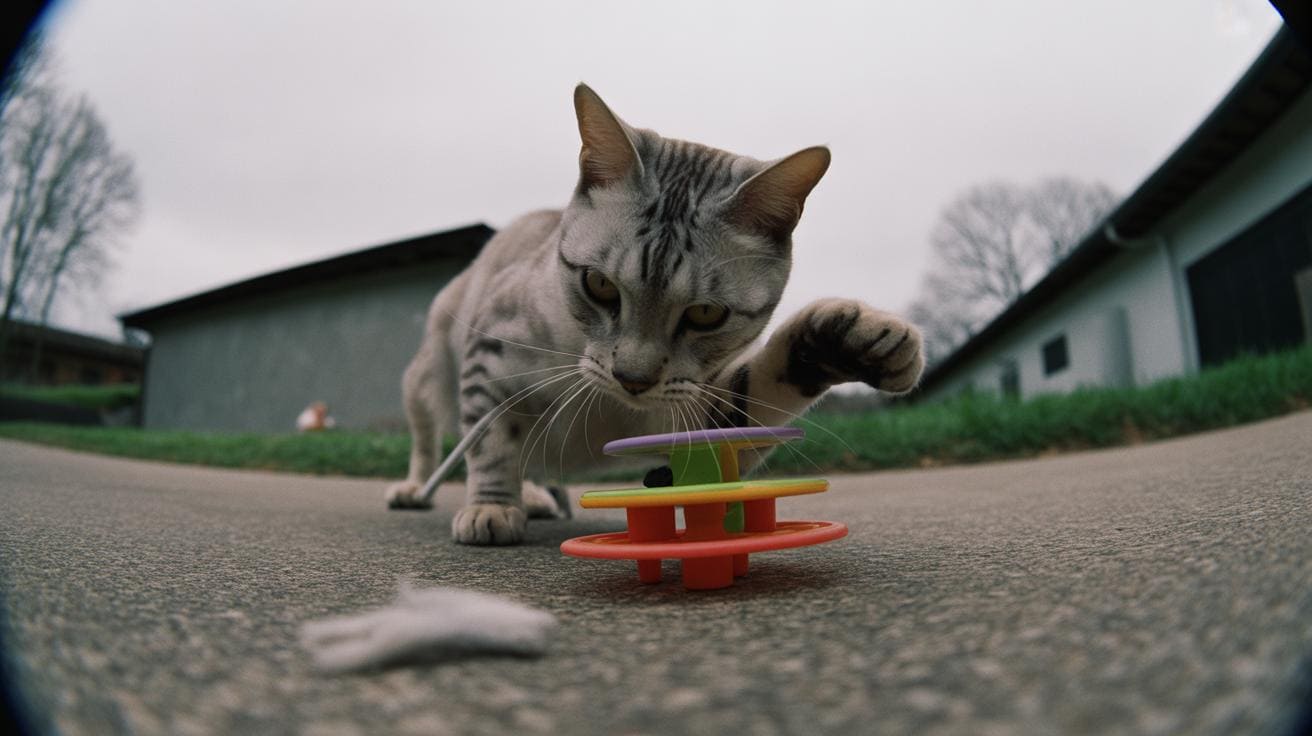
This is your go-to safety guide for every toy in your Toyger’s box. Think of it as the single checklist wands, motorized toys, plushies, and feeders can link to. Check toys before you rotate them and again after play.
Start each inspection with your hands and nose. Run your fingertips along seams, squeeze plush toys, lift lids, and give a quick sniff for anything off. Retire any toy that shows these clear signs of trouble:
- Seams with gaps larger than 1/4 inch (about the width of a pencil) or any visible stuffing.
- Cracked or brittle plastic (thin cracks that can spread when pressed).
- Battery compartment (where batteries sit) missing screws, showing rust, or rattling.
- Persistent damp or musty smell after washing.
- Missing or loose eyes, buttons, or beads.
- Strings, feathers, or lures with frays longer than 1 inch.
- Any stiff or sharp edge you can feel with your fingertip.
If a toy hits any of the above, retire it. Replace it or repair it with reinforced stitching, a secured battery cover, or a tougher fabric patch. Isn’t it nice when a toy just lasts?
Weekly checklist (do this every 7 days and after heavy sessions):
- Check seams and stitching for gaps or pulls.
- Probe for loose parts like eyes, buttons, or beads.
- Test battery compartments and seals for rattles, corrosion, or exposed wires.
- Smell for mold, dampness, or sour odors after washing.
- Squeeze soft toys to find hidden hard bits or broken innards.
- Inspect strings, feathers, and lures for fraying longer than 1 inch.
- Confirm washable covers and seams survived the wash cycle.
- Log any issues and retire toys showing any of the above.
Supervised play matters. Watch new motorized toys, wheels, and wand attachments for the first few sessions; keep an eye on chewing, repeated mouthing, or odd behavior and stop play if you see it, um, right away. If your cat swallows parts, suddenly avoids certain toys, starts obsessively spinning one toy, or shifts into aggressive play, call your veterinarian or a behaviorist. For scratch alternatives and the trade-offs between nail caps and durable scratchers, see do cat nail caps work.