Did you know up to 63% of adult cats in developed countries are carrying extra weight? That extra fluff ups the risk of diabetes, sore joints, and a shorter life. But don’t panic, this is fixable with a vet’s help and a few simple home changes.
Ready for a quick action plan you can start today? Here we go.
- Book a vet visit for a body condition score (BCS , a quick hands-on check of fat and muscle) and baseline bloodwork (basic blood tests to check organs and blood sugar). That gives you a starting point.
- Stop free-feeding (leaving food out all day) and measure calories (the energy in the food). You’ll be surprised how much those sneaky nibbles add up.
- Switch to scheduled meals (set times and measured portions) so you know exactly what they eat. Consistency helps weight come off.
- Add 10–15 minutes of interactive play every day , think teaser wand or rolling ball , so your cat gets moving and has fun. Picture their whiskers twitching as the toy zips across the floor.
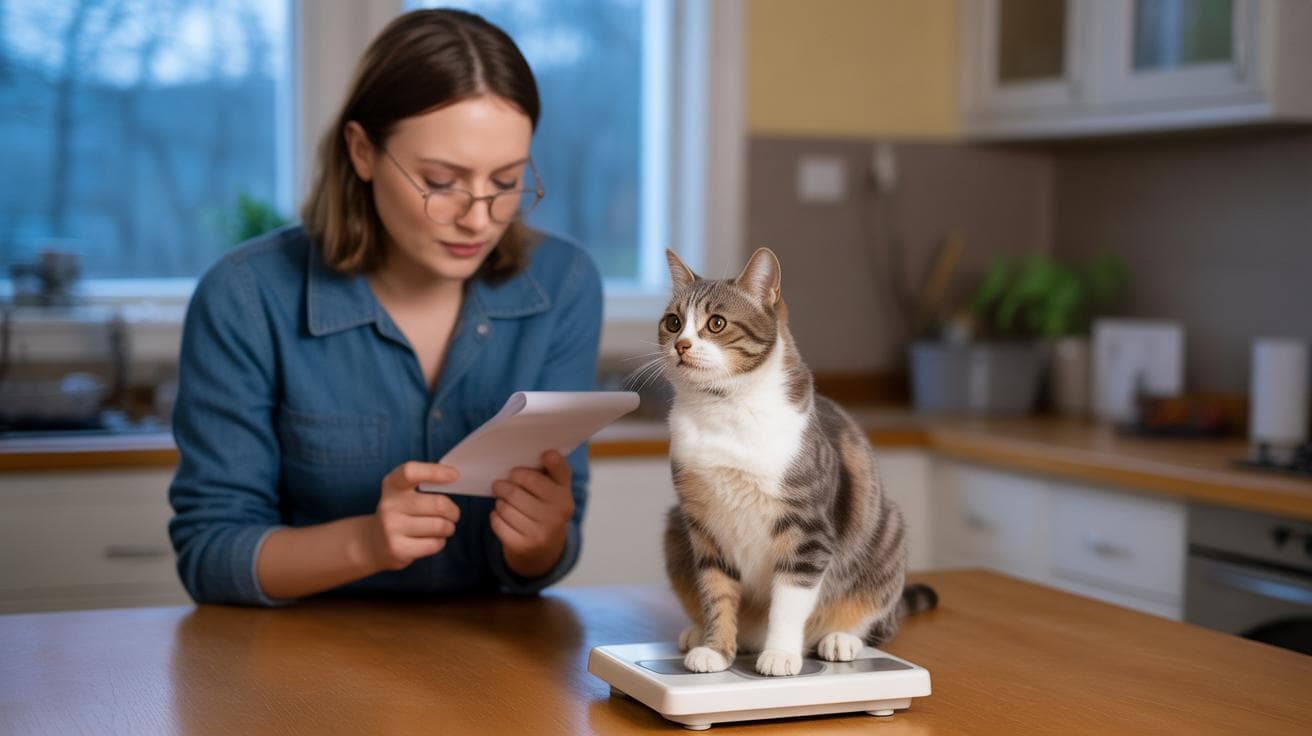
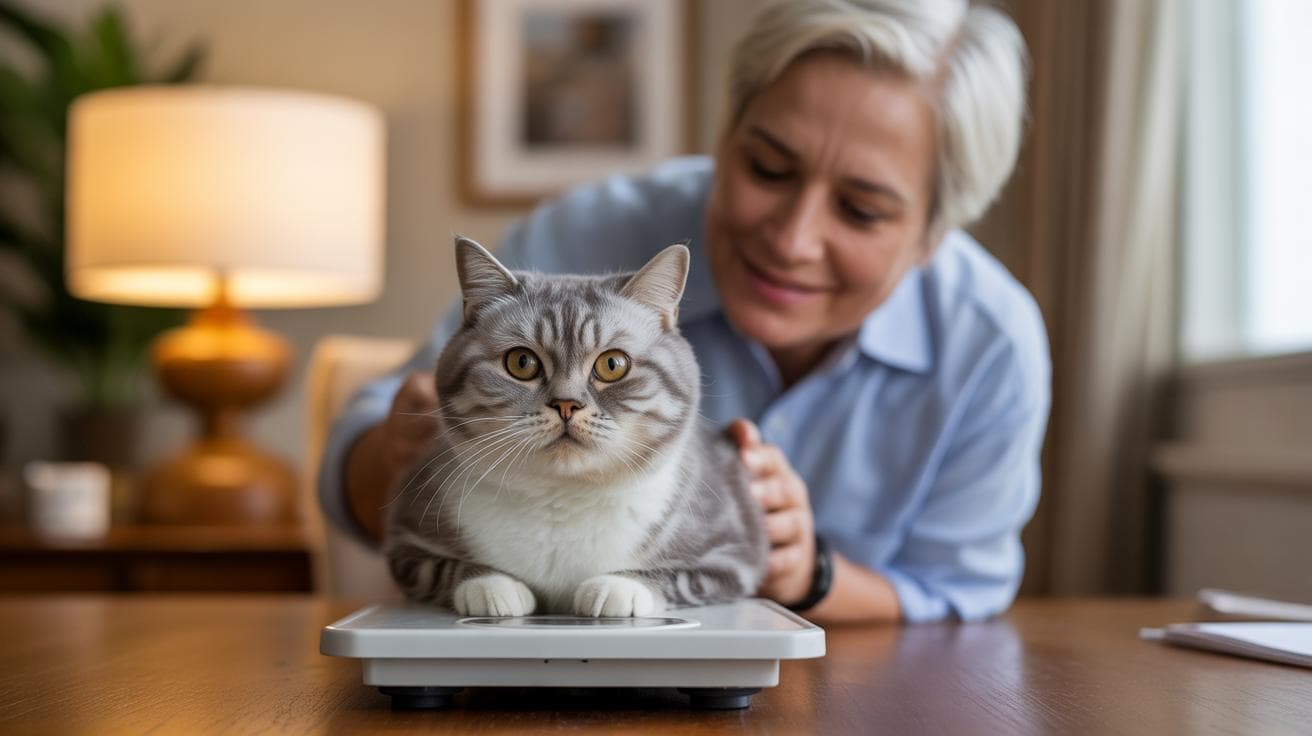
- Weigh your cat once a week and celebrate small wins. Seeing a tiny change makes it feel doable.
Worth every paw-print.
Immediate plan for treating obesity in cats: veterinary and home strategies to start now
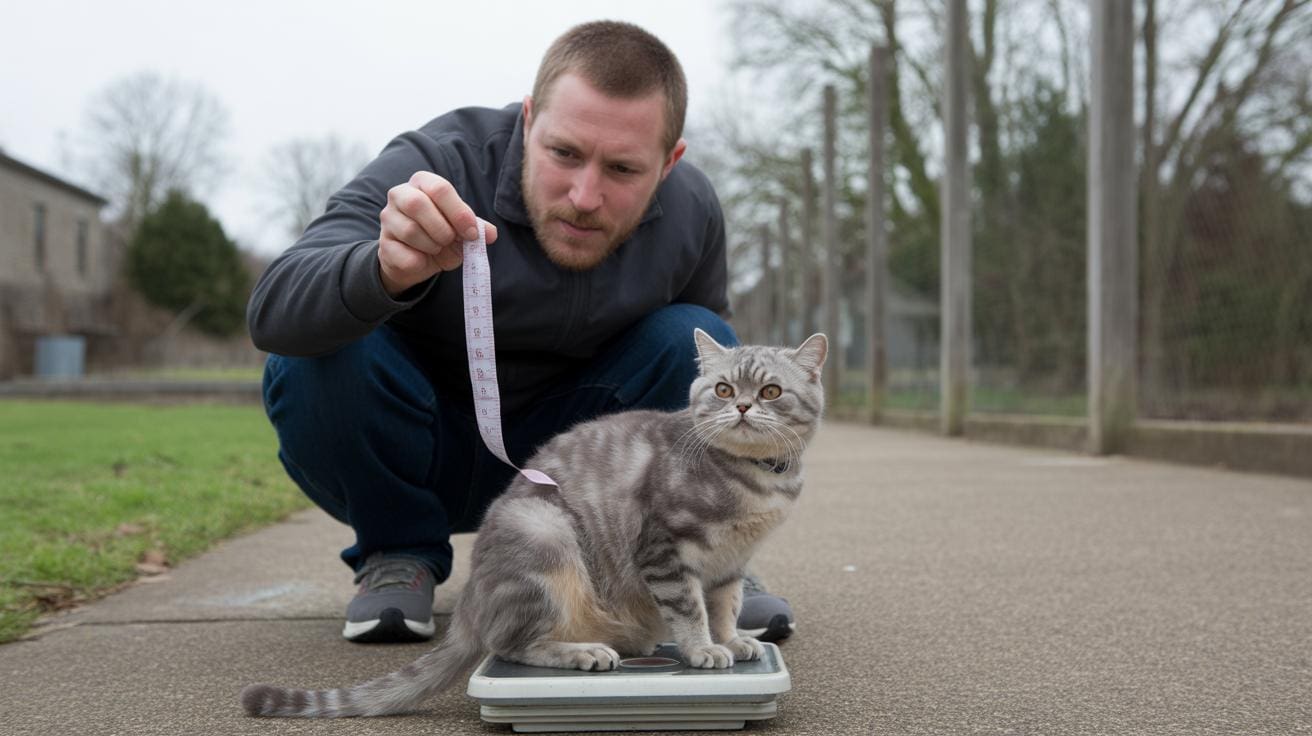
Book a vet appointment for a body condition score (BCS) (a simple visual and hands-on check that rates fat and muscle) and baseline screening tests (bloodwork and urine tests to check organs). Stop free-feeding (food left out all day) and start measuring and recording daily calories so you know current intake. Switch to scheduled meals, close up any food-stealing loopholes between roommates, and do 10–15 minutes of interactive play each day. Start weekly weigh-ins so you can see small wins.
Remember: up to 63% of adult cats in developed countries are overweight. A safe weight-loss goal is about 0.5–2% of body weight per week. A typical clinical caloric deficit, once you know current intake, is roughly 20–25%. If your cat stops eating for more than 48 hours, that is a red flag , call your vet right away.
This is an action-first checklist to get you moving in the next 24-72 hours. For the full how-to, see Assessing for diagnostics and target-setting, Feeding Logistics for feeders, wet vs dry tactics and multi-cat solutions, Sample Plan for calorie math and portion examples, and Monitoring for the full red-flag checklist and weigh-in protocols. Detailed portion examples, microchip feeder setup, and calorie-calculation formulas were intentionally left out here so this intro stays decisive.
Quick safety notes: very rapid weight loss risks hepatic lipidosis (fatty liver), so work with your veterinary team and plan rechecks about every 4-8 weeks. Also, writers , present numeric examples (calorie math, portion examples, target percentages) only once in Sample Plan / Assessing / Monitoring and reference those canonical numbers elsewhere to avoid conflicting figures. Oops, let me rephrase that for clarity.
Worth every paw-print.
Assessing cat obesity: body condition score, diagnostics, and setting a target weight
Start by weighing your cat and assigning a body condition score, or BCS, on the 1–9 scale (5 is ideal). Then order baseline lab tests: CBC (complete blood count), serum biochemistry (blood tests for organ function), urinalysis (urine test), blood glucose or fructosamine (fructosamine reflects a 2–3 week average of blood sugar), and total T4 (thyroid hormone test). Check for arthritis or breathing problems that might limit activity, and review food and treats so you can estimate current calories and pick a realistic target weight. Obesity usually means more than 30% body fat, so use the BCS plus weight to choose an ideal goal and plan a slow loss of about 0.5–2% of body weight per week with veterinary oversight.
Figuring out if there’s an underlying illness matters. Conditions like diabetes, thyroid disease, or organ problems can hide weight trends or make weight loss unsafe, so lab testing before starting a diet is standard. If you already know how many calories your cat eats, vets often reduce intake by about 20–40% depending on the situation. If you don’t know calories, calculating the resting energy requirement, or RER, for the ideal weight gives a clean baseline to apply a weight-loss multiplier. Work closely with your veterinarian to pick the right multiplier and to monitor bloodwork and clinical signs , small tweaks along the way protect muscle and liver while mainly losing fat.
How to calculate target body weight and RER
RER estimates daily energy needs with this formula: RER = 70 × (ideal weight in kg)^0.75 (RER is resting energy requirement). Use RER as the starting point when your vet picks a safe weight-loss factor. The Sample Plan section has step-by-step calorie math and worked examples to help you do the numbers.
Diagnostic checklist:
- Measure current weight and assign BCS (1–9).
- CBC (complete blood count) and serum chemistry (blood tests for organ function) to check organs.
- Urinalysis (urine test) and glucose/fructosamine for diabetes screening.
- Total T4 (thyroid hormone test) for thyroid screening.
- Assess for arthritis or orthopedic pain that may limit activity.
- Review diet, treats, and feeding pattern to estimate current calories.
| BCS (1–9) | Visual/tactile description | Action recommended |
|---|---|---|
| 1 | Extremely thin; ribs and spine stick out, little muscle | Full diagnostic workup; rule out illness before changing food |
| 2 | Very thin; ribs visible, pronounced waist | Check diet quality and appetite; plan gradual condition correction |
| 3 | Underweight; ribs easy to feel, small waist | Set modest weight gain goals if needed; screen for disease |
| 4 | Lean; ribs palpable with slight fat cover | Maintain or make small adjustments to reach ideal (5) |
| 5 | Ideal; ribs palpable with minimal fat, visible waist | Keep routine and monitor weight |
| 6 | Some extra fat; waist less obvious | Estimate calories and start a controlled feeding plan |
| 7 | Clearly overweight; fat pad on belly | Run full diagnostics and begin a vet-guided weight program (0.5–2% per week) |
| 8 | Marked obesity; ribs hard to feel under fat | Vet-led plan with lab monitoring and activity changes |
| 9 | Severe obesity; large fat deposits, limited mobility | Comprehensive medical evaluation, possible specialist referral; calorie examples in the Sample Plan section |
Veterinary weight management for treating obesity in cats: prescription diets, comorbidity adjustments, and referrals
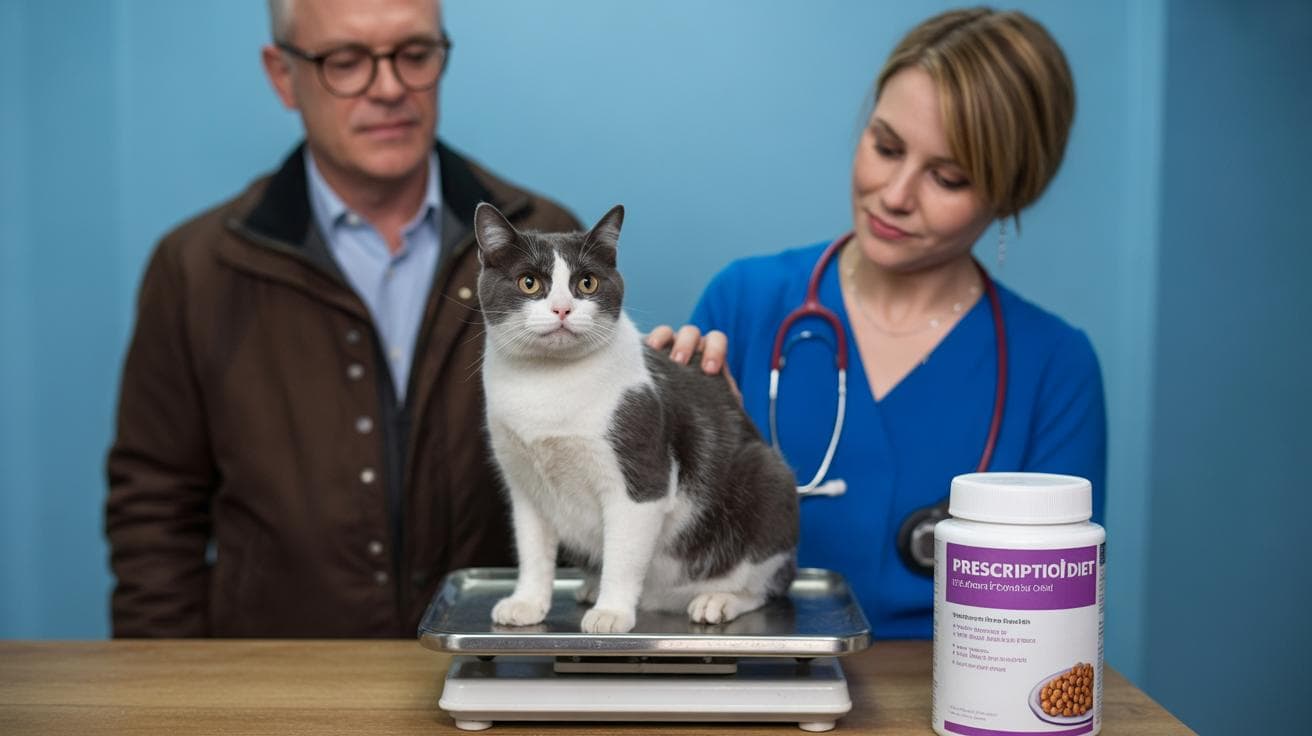
Helping a chunky kitty slim down is a team effort between you and your vet. The plan usually includes a vet-prescribed therapeutic food to protect muscle while cutting calories, scheduled rechecks and lab tests, activity and behavior changes, and a decision about when a specialist or rehab program should step in. Think of it like a tailored play-and-diet plan so your cat loses weight safely and keeps its pep.
Prescription weight-loss diets: what they do and how to transition
Prescription weight-loss cat foods give full nutrition with fewer calories and focus on preserving lean mass (the muscles and organs that keep your cat strong). They tend to have higher protein (the building blocks of muscle), fewer carbohydrates (sugars and starches that raise blood sugar), and extra fiber (plant parts cats can’t digest that help them feel full). You’ll see these diets as canned or kibble based on what your cat likes and how much moisture you want in each meal.
Switch foods slowly over 7 to 10 days, mixing more of the new food each day so your cat’s tummy and appetite adjust. Sudden swaps can make a picky cat stop eating. Cost and supply differ by brand and clinic, so ask your vet about alternatives if budget or availability is a problem. See the Sample Plan for exact calorie targets and portion examples.
Medical management, specialist referral, and when surgery or meds are considered
Sometimes food alone isn’t enough. If medical problems, tricky diets, or slow progress come up, your vet may refer you to a veterinary nutritionist (a specialist who designs custom diets for pets). For diabetic cats, vets usually cut carbs and do more frequent glucose checks (blood sugar checks) while the cat loses weight. Cats with chronic kidney disease may need different protein levels and a slower pace of weight loss to protect their kidneys.
Medications or surgery are rare for simple obesity and are saved for cases that don’t respond to conservative steps or that have serious coexisting conditions (comorbidities). Rehab clinics can help with guided exercise and joint-support plans, think gentle, safe workouts and tips to keep sore joints comfy. If your vet prescribes a specific weight-loss diet, follow their lab schedule and rechecks while you’re transitioning the food. It keeps things safe and helps you know what’s working.
Feeding Logistics for treating obesity in cats: portion control, feeders, wet vs dry, and multi-cat solutions
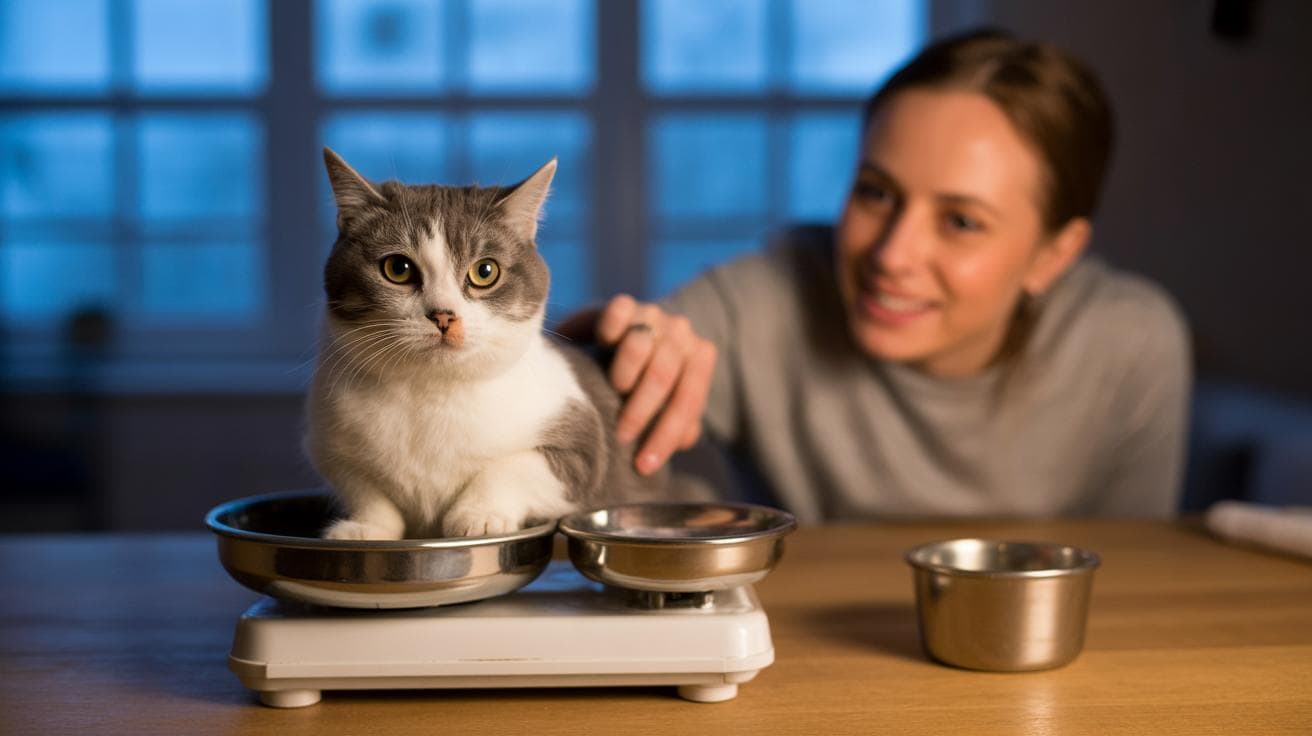
Start by measuring and writing down every bit of food and every treat for a few days. Stop free feeding – no food left out all day. Commit to measured portions so you actually know what your cat eats. Keep a simple log with time, item, and measured amount, and bring that to your vet visit so the plan is based on real data.
Portion control is the quiet hero here. If you don’t know what they’re eating, you can’t change it. A quick food log helps you and your vet make realistic, steady changes. It also lets you spot sneaky nibblers or late-night treat parties.
Wet versus dry food matters for fullness and calories. Canned food has more moisture and can fill a cat faster with fewer calories, while dry food is convenient but calorie-dense. Read labels for kcal (kilocalorie, the food energy listed on packages) per 100 g (grams) or per can/kibble serving, and compare by weight, not by cup. If your cat loves crunch, try mixing a little wet with dry during the switch so appetite stays steady.
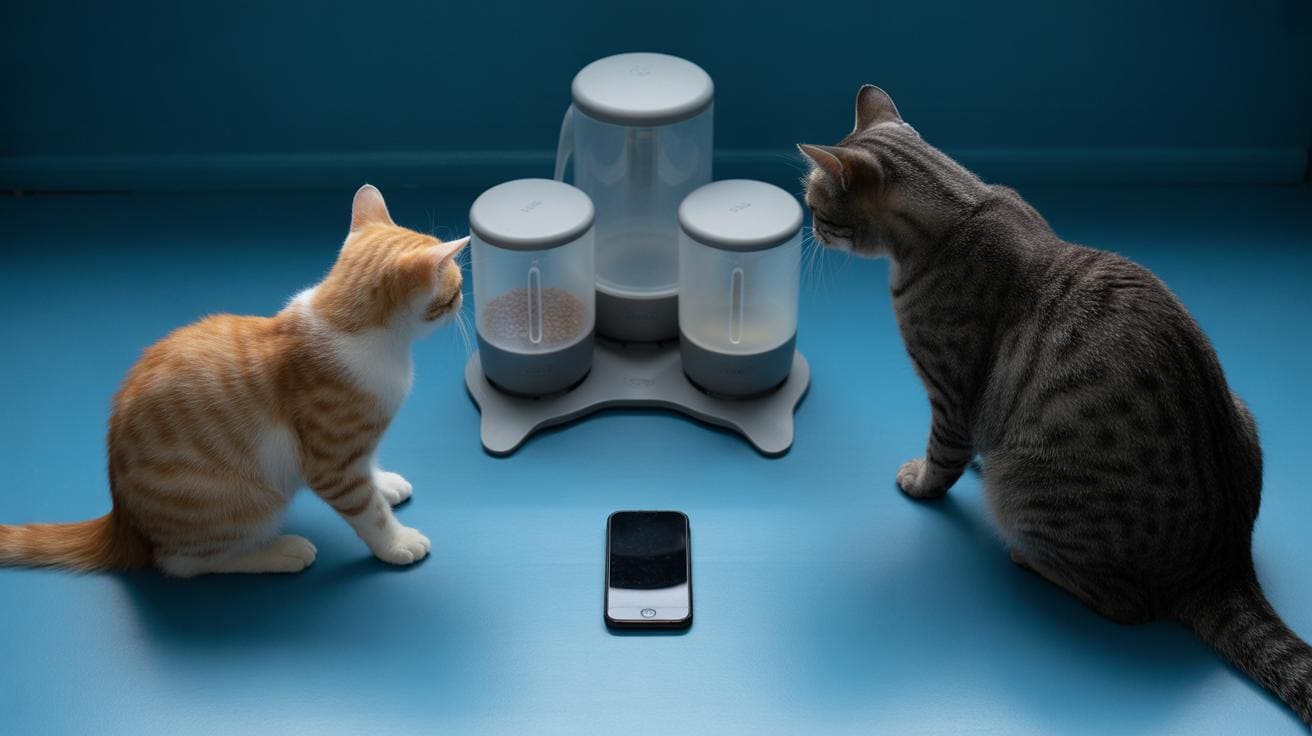
Use tools and a bit of tech to make portion control doable and to stop meal theft. Slow feeders and puzzle toys turn mealtimes into exercise and thinking time. Smart feeders with microchip recognition (microchip means a tiny implanted ID tag) only open for the assigned cat, so roommates don’t swipe food. Timed feeders keep meals regular. And when money is tight, a gated room or closed door works as a simple, low-tech fix.
- Microchip-enabled feeders: assign portions by cat ID and cut down theft.
- Timed electronic feeders: deliver meals on schedule for single or multiple feedings.
- Slow feeders and puzzle feeders: slow the gulping and add mental play.
- Manual separation (gated rooms / closed doors): cheap, effective, low-tech option.
Managing food in a multi-cat home takes a short training window and a routine you can actually keep. Stick to these quick steps:
- Calculate each cat’s daily allotment (see Sample Plan) and load feeders with those portions.
- Feed in separate areas or train cats to microchip feeders so each gets only their food.
- Supervise the first few meals until the routine sticks, then switch to weekly weigh-ins and monitoring.
For full calorie math, portion cup guidance, worked examples, and microchip feeder setup troubleshooting see the Sample Plan. For red-flag signs and weighing protocols see Monitoring. Don’t worry about numbers here; the Sample Plan has all the calorie and portion figures so everything stays consistent.
Enrichment and exercise plans for treating obesity in cats: practical daily routines
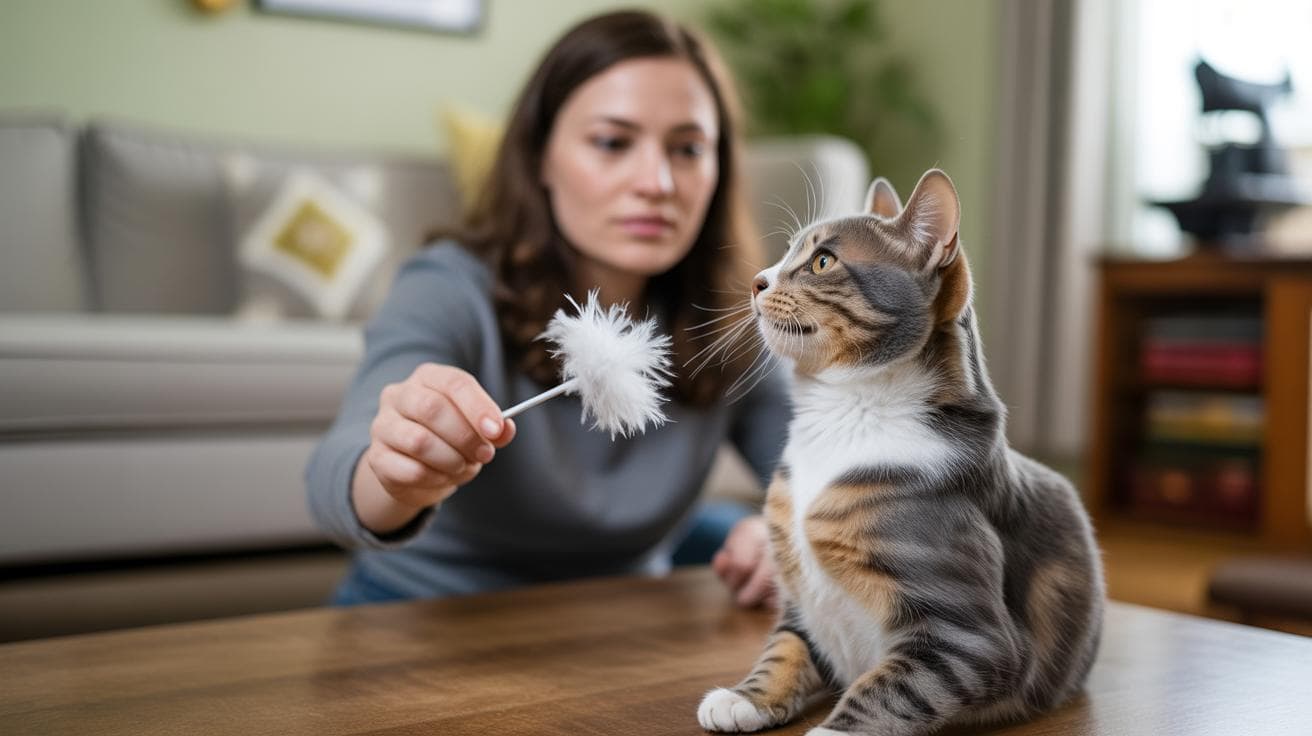
Short, focused play beats one long, boring workout for most cats. Aim to raise your cat's heart rate and get muscles moving with three 10-minute sessions spread through the day, or one focused 15-minute interactive session plus short play bursts later. It helps your cat burn extra calories and stay mentally sharp. Think feather wands (fluttery, chaseable toys), laser play that finishes with a real capture (a toy or treat so your cat doesn't get frustrated), and food-dispensing toys (a toy that releases kibble or treats when batted) to turn meals into movement.
Here’s a week-ready routine to try. AM: a short 10-minute food-dispensing toy hunt to kickstart activity and curiosity. Mid-day: two 3–5 minute chase bursts or a quick puzzle to break up loafing. PM: a 10-minute high-energy session with a feather wand or wand plus a toy capture, then 2–3 minutes of slow, vertical play on a cat tree or wall shelf (vertical spots for climbing and jumping). If you prefer one main session, do a focused 15-minute chase and add brief bursts later. Supervised harness walks (a secure vest-style leash setup) or time in a safe outdoor enclosure are great variety when your vet approves. For weigh-in cadence and safety checks, see Monitoring; for rehab programs and tailored exercise, see Veterinary Management.
For senior or arthritic kitties, swap high-impact leaps for low-impact games. Try rolling treat balls, short paw-target work (touching a target with their paw), and raised feeding spots to cut down on bending. Keep sessions shorter and repeatable. Watch for limping, heavy breathing, or stiffness, and stop if your cat seems uncomfortable. Rehab clinics can help with joint-friendly routines and step-by-step progress plans, so talk with your vet before increasing activity.
I once watched a lazy tabby suddenly spring to life over a treat ball. Really. Small, steady changes like that add up , and your cat will thank you with extra zoomies and a softer, healthier purr.