Ever stumbled upon something mysterious in your cat's usual puke spots, only to wonder if it’s just another mess or a hairball? Knowing what cat hairballs actually look like can be eye-opening for cat owners.
They’re not just tufts of fur; these elongated, dense clumps reveal quite a bit about your cat's health. Spotting these regularly can hint at grooming habits or even digestive issues. In this guide, I’ll walk you through identifying cat hairballs so you can keep a better eye on your furry friend's well-being.
Understanding What Cat Hairballs Look Like
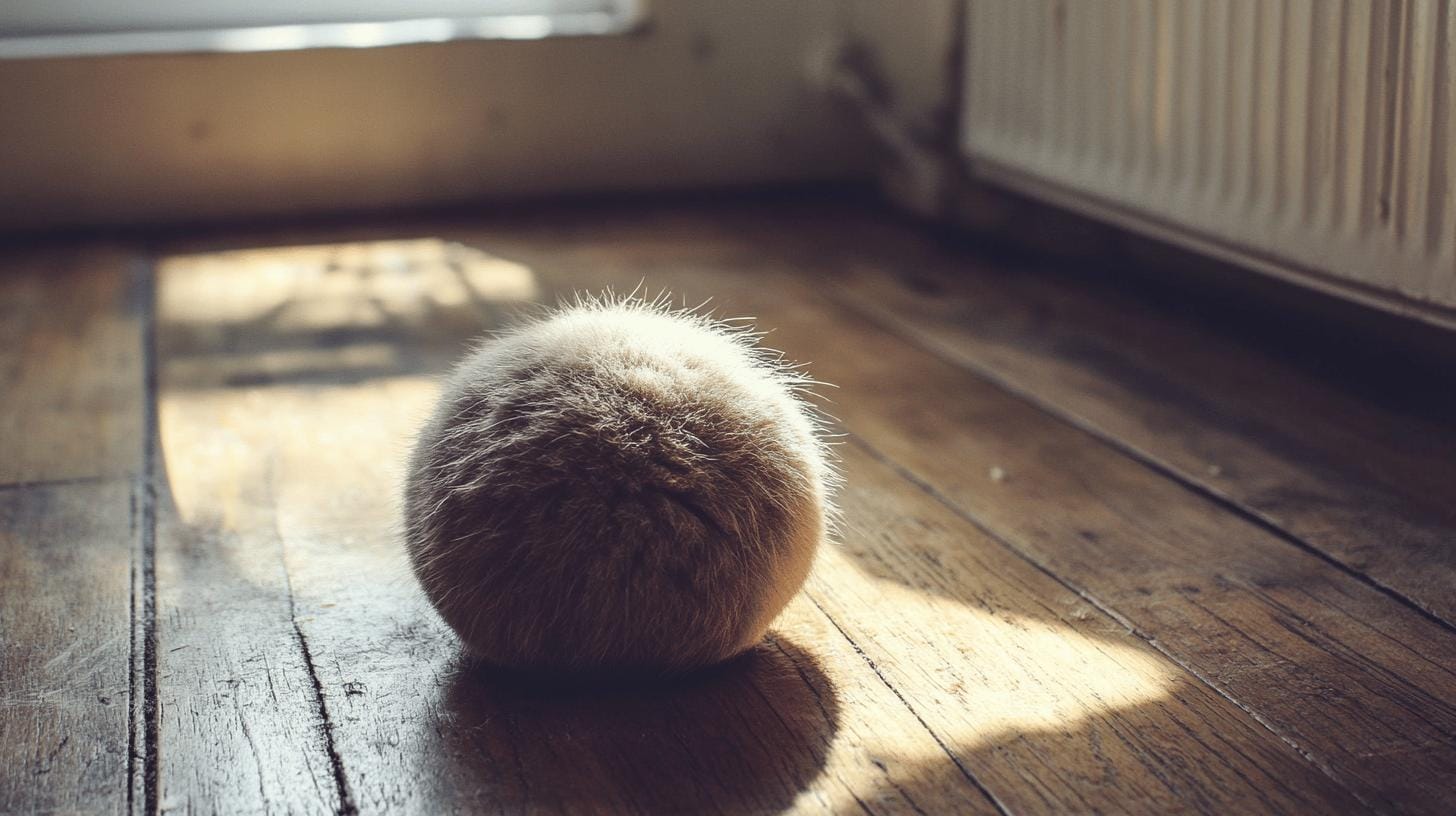
Cat hairballs typically appear as elongated, cylindrical masses, closely resembling the shape of a cat's digestive tract. These hairballs are usually about 1 to 2 inches long, akin to the size of a human finger.
Their dense, matted texture is primarily composed of tightly packed hair, making them more structured compared to typical vomit. This unique form results from the way hair accumulates in the stomach, gradually forming a solid mass as the cat grooms itself.
The color of hairballs can vary significantly, influenced by several factors such as stomach acids, food, or bile. This can lead to an array of shades, including brown, green, or orange. The consistency is both slimy and coarse, containing hair and mucus. These variations in color and texture are natural and can offer insights into the cat's diet and digestive health.
| Characteristic | Description |
|---|---|
| Shape | Elongated, cylindrical, similar to a cat’s digestive tract |
| Size | Approximately 1 to 2 inches long, comparable to a human finger |
| Color | Shades of brown, green, or orange, influenced by stomach acids and food |
Causes and Formation of Cat Hairballs
Cats are meticulous groomers, spending about 30% of their day cleaning themselves. During this grooming ritual, their rough tongues pick up loose fur, which is then swallowed. Over time, this fur accumulates in the stomach, forming what we recognize as hairballs. The grooming process is natural and essential for maintaining a cat's coat, but it also means that they regularly ingest hair.
Not all cats develop hairballs. This mainly depends on the type of coat they have. Long-haired breeds or those that shed excessively are more prone to hairballs. Nevertheless, if a cat frequently produces hairballs, it could signal overgrooming due to stress or skin issues. In such cases, it's a good idea to consult a vet to rule out underlying health concerns.
When cats try to expel a hairball, they may vomit or cough without producing one. This can be attributed to digestive discomfort or blockages caused by the hairball. If your cat experiences persistent vomiting or seems to struggle while coughing, it may indicate a more serious digestive issue that requires veterinary attention.
Recognizing Normal vs. Problematic Hairballs
Normal hairballs are usually an occasional event for most cats, manifesting no more than once a month. They are a natural consequence of a cat's grooming habits, and while they may be unpleasant to clean up, they generally don't pose a health risk if infrequent. A healthy cat should manage to expel hairballs without too much difficulty, making them a typical, albeit messy, part of feline life.
However, when hairballs become frequent or a cat shows signs of discomfort, it could indicate a problem. Symptoms of problematic hairballs include repeated vomiting, gagging without producing a hairball, loss of appetite, or signs of digestive discomfort such as lethargy or constipation. These symptoms suggest that the hairball may be causing irritation, or that the cat is having difficulty passing it through the digestive system.
The dangers of serious hairball blockages shouldn't be underestimated. A blockage can lead to severe digestive issues, such as impaction, where the hairball obstructs the digestive tract.
This situation can prevent food from passing through the intestines, potentially leading to a life-threatening condition. In rare cases, a hairball can cause choking, which requires immediate veterinary intervention.
Seek veterinary advice if your cat experiences frequent hairballs or any signs of distress associated with them. A vet can help determine the cause of the problem and suggest appropriate treatments or preventive measures. It's better to address these issues early to ensure your cat remains healthy and comfortable.