Controversial take: cats can be easier to clicker-train than dogs, if you bribe them right. I know, I said it. But hear me out, cats are clever, food-motivated, and wildly dramatic when something tasty appears.
The right tiny treat will turn a bored flick of the tail into a full-on sprint across the living room. Your cat’s whiskers will twitch, paws will skitter, and before you know it there’s a graceful pounce and the satisfying pat of success. Ever watched a kitty suddenly remember how to move like a ninja? It’s glorious.
Keep treats to about 10% of your cat’s daily calories (that keeps treats from replacing meals). Break those treats into pebble-sized bits, seriously tiny, so you can reward lots of quick wins during a session without overfeeding. Think rice-grain or pea-sized pieces, handed out fast and often.
Go for micro-rewards that hold attention: freeze-dried chicken (moisture removed, flavor concentrated) is perfect because it’s powerful and crumbs easily. Lickable purées (soft, spoonable wet treats cats lick right off your finger) are another great pick for sustained focus. Both let you reward instantly, which is the secret sauce for clicker training.
Save the big stuff for real jackpots: tiny flakes of tuna or salmon are high-value fishy treats that make cats try harder when a trick is tough. And don’t worry, there are budget-friendly options, like plain cooked chicken or affordable crunchy kibbles you crumble up, so training isn’t expensive.
So you’ll be clicking for results and feeling feline fine. Ready to give it a try? Your cat might just amaze you.
Best Treats for Clicker Training Cats: Top Picks
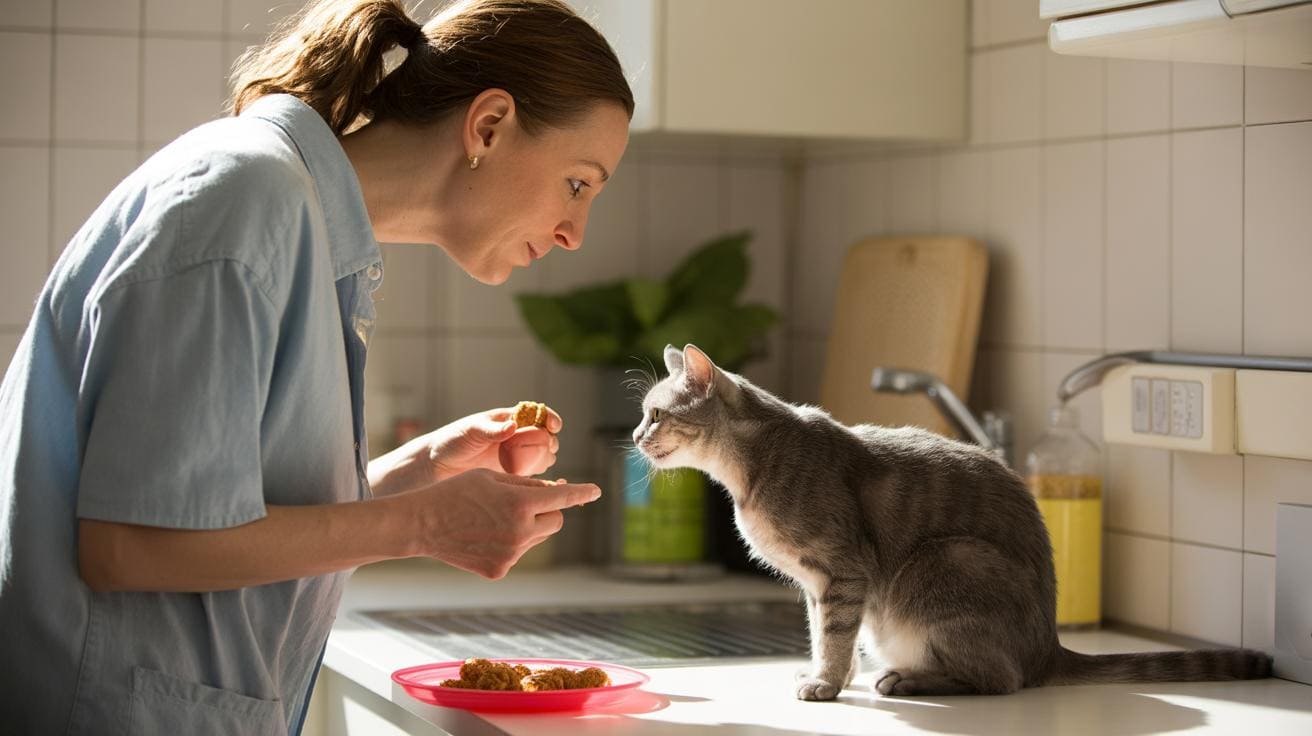
Quick note before we start: for training, treats should be about 10% of your cat’s daily calories. Keep portions tiny. Ever watched a cat zoom for one pebble-sized bite? That’s the magic.
My top three go-tos right now are PureBites, Shameless Pets, and Inaba Churu. PureBites and Shameless are great for fast micro-rewards. Inaba Churu is perfect when you need a slow, lick-by-lick focus.
-
PureBites freeze-dried chicken , single-ingredient, easy to break into tiny bits, and super smelly in the best way (freeze-dried means moisture is removed so flavor is concentrated).
Use: fast micro-rewards during shaping and high-rep sessions. Your cat will hurry back for more. -
Shameless Pets salmon bites , moist, low-calorie pieces with salmon listed first and a gentle texture that’s easy on sensitive tummies.
Use: everyday training and practice on the go. -
Inaba Churu lickable purées , squeezable tubes of tasty paste that your cat licks, lick, licks (lickable purée means a squeezable, lick-ready snack).
Use: handling work, grooming, and nail trims when you need the cat’s full attention. -
Bonito flakes , single-ingredient dried fish flakes with a big fishy aroma (think thin, flaky tuna-like bits).
Use: high-value jackpot or lure during tricky or distracted tasks. -
Temptations crunchy treats , cheap, crunchy, and most cats adore them; higher in carbs but great for lots of quick rewards.
Use: high-frequency home sessions when budget matters. -
Feline Greenies dental bites , crunchy, VOHC-approved pieces that help scrape teeth and freshen breath a bit.
Use: dental training or when texture helps motivate chewing. -
Crunchie Munchie catnip bites , small, low-cal treats with catnip and mixed proteins to spark extra interest.
Use: novelty rotations and short-session excitement boosts. -
Homemade steamed chicken pieces , plain cooked poultry cut into tiny bits, single-ingredient and low-fat.
Use: everyday shaping, kittens, or cats with sensitive stomachs. -
Homemade baked fish flakes , baked, crumbled fish with strong appeal but watch sodium and mercury.
Use: occasional jackpot; save for big wins. -
Small cooked egg pieces , soft, protein-rich bites with a bold aroma.
Use: rare jackpot only. They’re rich, so keep them occasional.
Worth every paw-print.
A few quick tips: keep treat pieces tiny, mix low-cal and jackpot treats, and rotate to avoid boredom. For busy days, toss a few micro-rewards before you leave. Your cat gets play, you get peace. Win-win.
| Treat | Type | kcal per treat | Best training use |
|---|---|---|---|
| PureBites | Freeze-dried chicken (moisture removed to concentrate flavor) | ≈2 kcal/treat | Fast micro-rewards, shaping |
| Shameless Pets | Salmon bites (moist, salmon-first ingredient) | ≈1.5 kcal/treat | Everyday, portable low-fat rewards |
| Bonito flakes | Single-ingredient flakes (thin dried fish pieces) | ≈5 kcal/serving | High-value jackpot or lure |
| Inaba Churu | Lickable purée (squeezable, lick-ready paste) | ≈6 kcal per 2-oz tube | Handling, grooming, nail trims |
| Temptations | Crunchy budget treats (flavorful, higher-carb) | varies | High-frequency, low-cost sessions |
| Feline Greenies | Dental crunchy bites (VOHC-approved texture) | ≈2 kcal/treat | Dental training, texture rewards |
| Crunchie Munchie | Catnip bites (small, low-cal, mixed proteins) | <2 kcal/treat | Novelty rotation, excitement boosts |
| Homemade steamed chicken | Plain cooked poultry (single-ingredient, low-fat) | varies | Sensitive stomachs, everyday shaping |
| Homemade baked fish flakes | Baked, crumbled fish (high-appeal, watch sodium) | varies | Occasional jackpot, high-appeal |
| Small cooked egg pieces | Cooked egg (soft, protein-rich) | varies | Rare jackpot for major wins |
Timing, size, texture and flavor: how to choose treats that speed learning
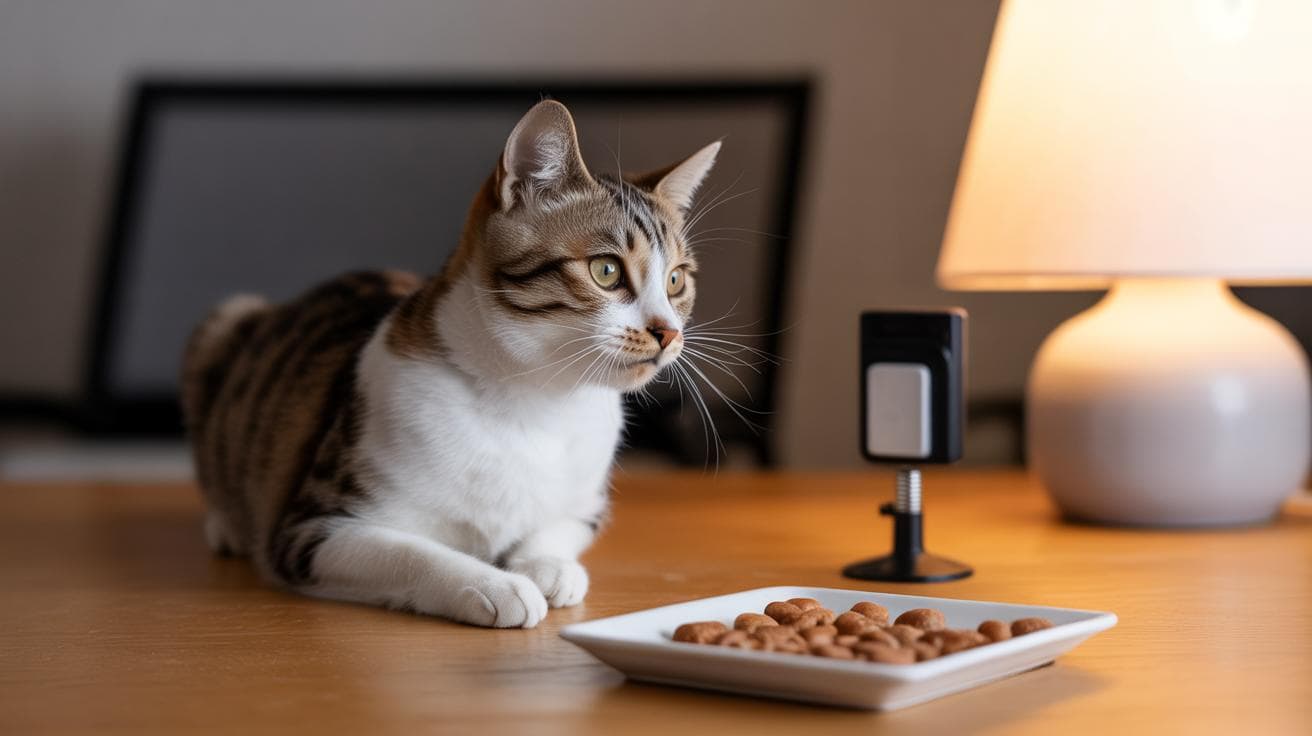
Speed matters. Click, then treat. Fast delivery and an ultra-small bite let you pile on repetitions without your cat losing focus or gulping a huge reward.
Micro-reward sizing means tiny, quick-to-eat pieces so you can reward lots of tiny steps. Think pinhead bits that disappear in one chew. Freeze-dried (moisture removed to lock in flavor) proteins are perfect for this, break them into flakes for rapid repeats. Save lickable puree (squeezable paste) for when you need slow, focused attention; limit it to a few licks so it doesn’t become a full snack. Ever watched your cat get hypnotized by a lickable treat? It’s oddly satisfying.
Match texture and flavor to the job and to your cat’s body. Strong-smelling fish or organ flavors work when you need peak motivation for stubborn or distracting tasks. Milder poultry flavors are great for everyday shaping. Soft purees or finely shredded proteins help kittens and cats with dental wear (worn or missing teeth). Dry crunchy bites are handy for quick, portable training when chewing is fine.
Plan sessions like tiny sprints. Aim for five to ten minute bursts with rapid-fire tiny rewards at first. As the behavior becomes reliable, lengthen pauses and cut back on treat frequency. Then swap some food rewards for praise or a short two-minute play burst once your cat is responding well, and save the highest-value textures for the tricky steps.
A quick tip from my kitchen experiments: I once split a freeze-dried chunk into dust and got twenty perfect repeats during a door-target drill. Worth every paw-print.
How to match treats to uses:
- Lickable purees (squeezable paste) = handling, grooming, nail-trim focus
- Freeze-dried proteins (moisture removed, intense flavor) = high-rep shaping and mobile training
- Single-ingredient flakes = jackpot lures for distracted cats
- Poultry-flavored soft bits = routine, low-distraction shaping
- Soft/puree textures = kittens, seniors, and dental-sensitive cats (dental wear = worn or missing teeth)
- Crunchy low-kcal pieces (low-calorie) = portable, low-value rewards for many repeats
Short, simple sessions. Mix textures smartly. And, um, have fun watching that whisker twitch.
Calorie math, sample budgets, and simple calculators for safe portioning
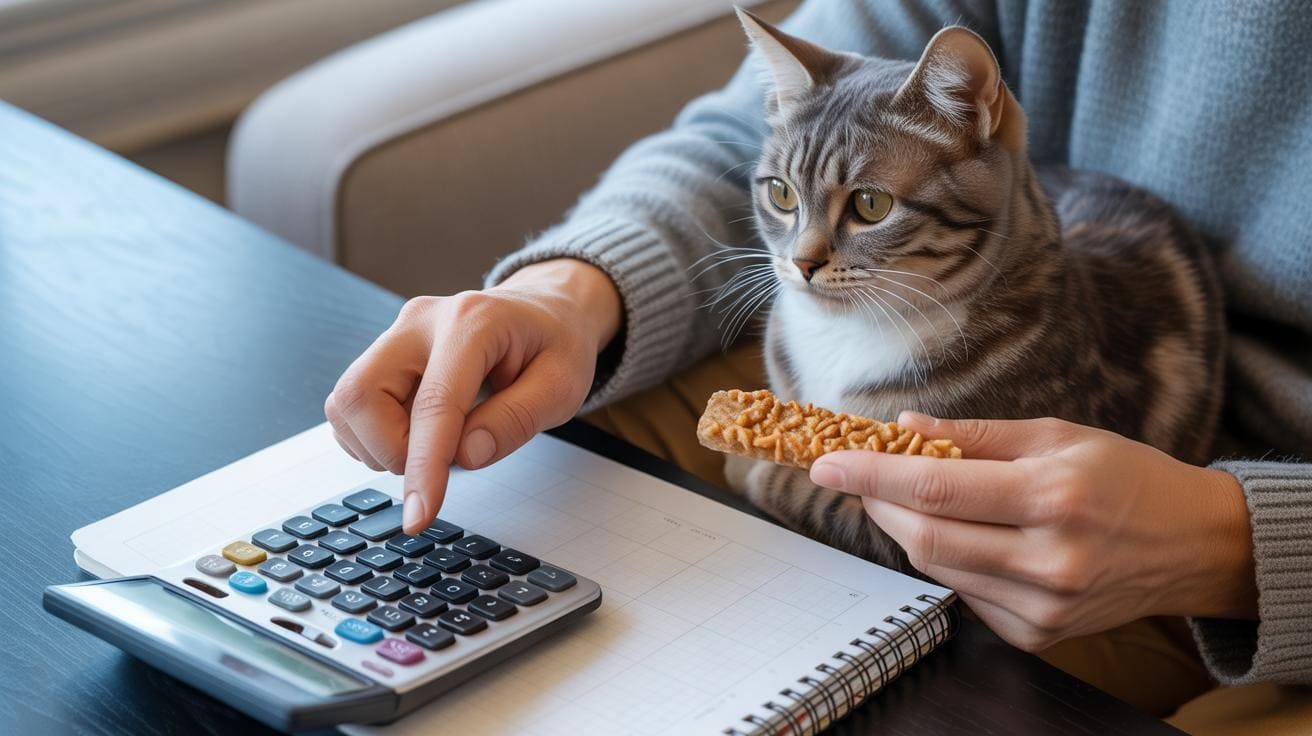
Treats should be about 10% of your cat's daily calories (kcal = food calories). If you hand out richer or higher-calorie rewards, cut back the meal portions so your kitty's total intake stays steady and they don't pack on extra weight. Ever watch those pleading eyes? Yeah, me too.
Quick formula: treat budget (kcal) = daily kcal × 0.10. Then number of treats = treat budget ÷ kcal per treat (kcal again means food calories). Simple math. Friendly for humans. Useful for kitties.
Example 1: a 10 lb cat eating about 250 kcal/day gives 250 × 0.10 = 25 kcal for treats. If each freeze-dried chunk is roughly 2 kcal (a small, dry bite), that’s 25 ÷ 2 = 12.5 treats , round down to 12 small pieces to be safe. Example 2: a 15 lb cat at about 300 kcal/day gets 30 kcal for treats; 30 ÷ 2 kcal = 15 treats. If you use higher-calorie rewards, count those too , bonito flakes (dried fish flakes) can be around 5 kcal per serving, and lickable tubes like Inaba Churu (a lickable puree treat) are about 6 kcal per 2-oz tube. Those add up fast, so give fewer micro-rewards when you use them.
If your cat needs to lose weight, drop the treat budget to around 5% while losing weight. Pick lower-kcal options (1–2 kcal pieces) and swap some food rewards for a short play burst or praise to keep motivation high without extra calories. Toss a tiny ball, watch the whiskers twitch, and save a handful of calories.
| Cat weight (lbs) | Daily kcal (approx) | 10% treat allowance (kcal) | Example treats per day (based on 2 kcal/treat) |
|---|---|---|---|
| 6 lb | 180 kcal (approx) | 18 kcal | ≈9 treats |
| 10 lb | 250 kcal (approx) | 25 kcal | ≈12 treats |
| 15 lb | 300 kcal (approx) | 30 kcal | ≈15 treats |
- Estimate your cat's daily kcal (examples: 6 lb ≈ 180, 10 lb ≈ 250, 15 lb ≈ 300).
- Multiply that number by 0.10 to get your treat-kcal budget.
- Divide the treat-kcal budget by the kcal per treat (use ≈2 kcal for a baseline freeze-dried or chunk treat).
Worth every paw-print.
Treat recommendations for kittens, senior cats, and cats with sensitivities (categories, not brands)
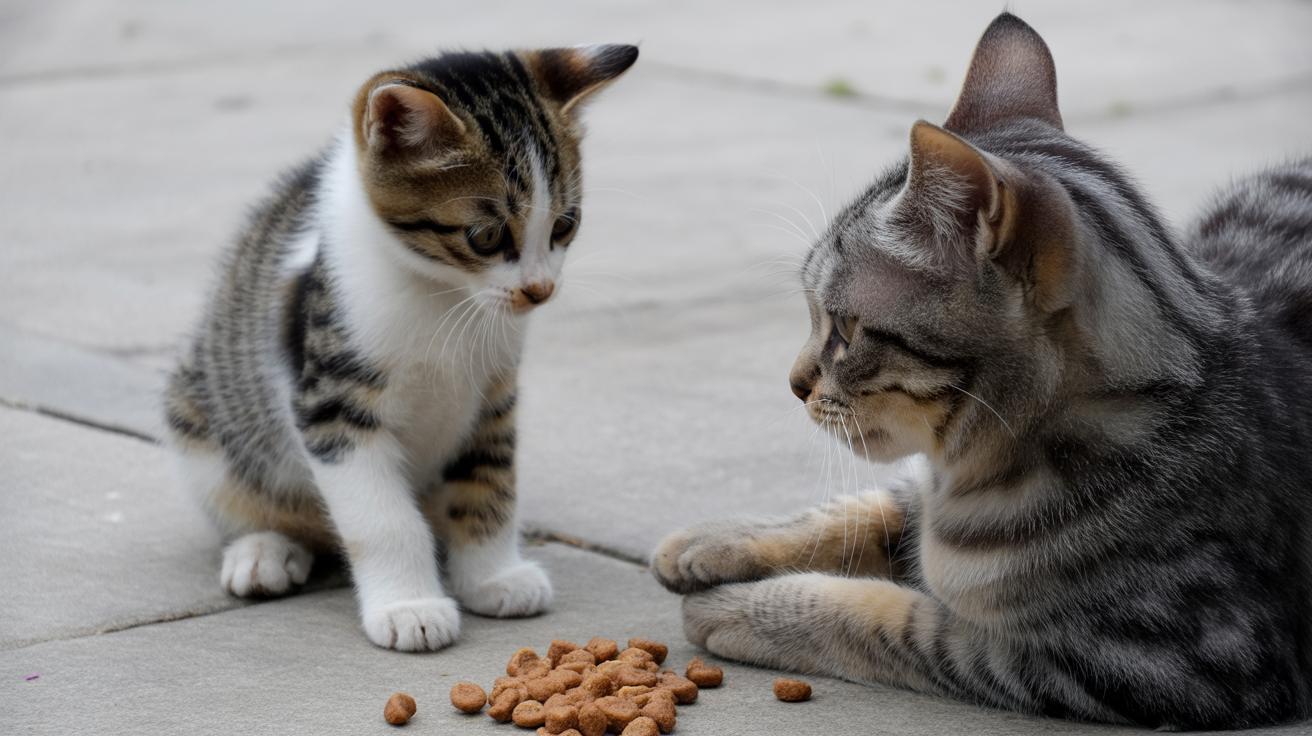
Pick treat types that match your cat’s life stage and health. Think lickable purees (squeezable paste), single-ingredient freeze-dried proteins (moisture removed to preserve flavor), tiny soft-cooked bites (tender cooked pieces), and low-carb animal-protein morsels (few added carbs) for sensitive or diabetic kitties. Match texture and carbs to needs, not to the cutest packaging. Your cat will thank you with purrs.
Kittens
Go tiny and soft. Use morsels that dissolve or mash easily in the mouth so little throats don’t struggle. Lickable purees and finely shredded soft-cooked pieces work best for weak chewing and tiny teeth. Cut portions into 3-5 mm bits and give lots of quick rewards so they learn fast without getting full. Hydration matters, pick moist options to help growing bodies and make swallowing easy. Ever watched a kitten chase a wet dab of puree? It’s adorable and effective.
Senior cats
Choose higher-moisture, softer textures to make eating comfy for older mouths. Purees and finely shredded slow-cooked protein pieces are gentle on worn or missing teeth (dental disease means fragile or absent teeth). Offer smaller portions to lower choking or stomach-upset risk. Try slightly warmed treats to boost smell and interest for picky seniors. Worth every paw-print when it gets them eating again.
Sensitive or diabetic cats
Stick to single-ingredient proteins (just one protein, nothing else) and low-carb animal-protein morsels to limit tummy trouble and blood sugar spikes. Freeze-dried single-protein pieces (moisture removed to concentrate flavor) and tiny plain cooked shreds are great swaps for grainy crunchy treats that can hide carbs. Introduce anything new slowly and watch stool and energy for a few days. If you spot loose stool or sudden changes, pause and reassess.
Check with your veterinarian before big diet changes, especially for kittens, seniors, or cats on meds. Keep an eye on weight, stool consistency, and appetite. Call the vet if vomiting, ongoing diarrhea, or sudden appetite loss shows up.