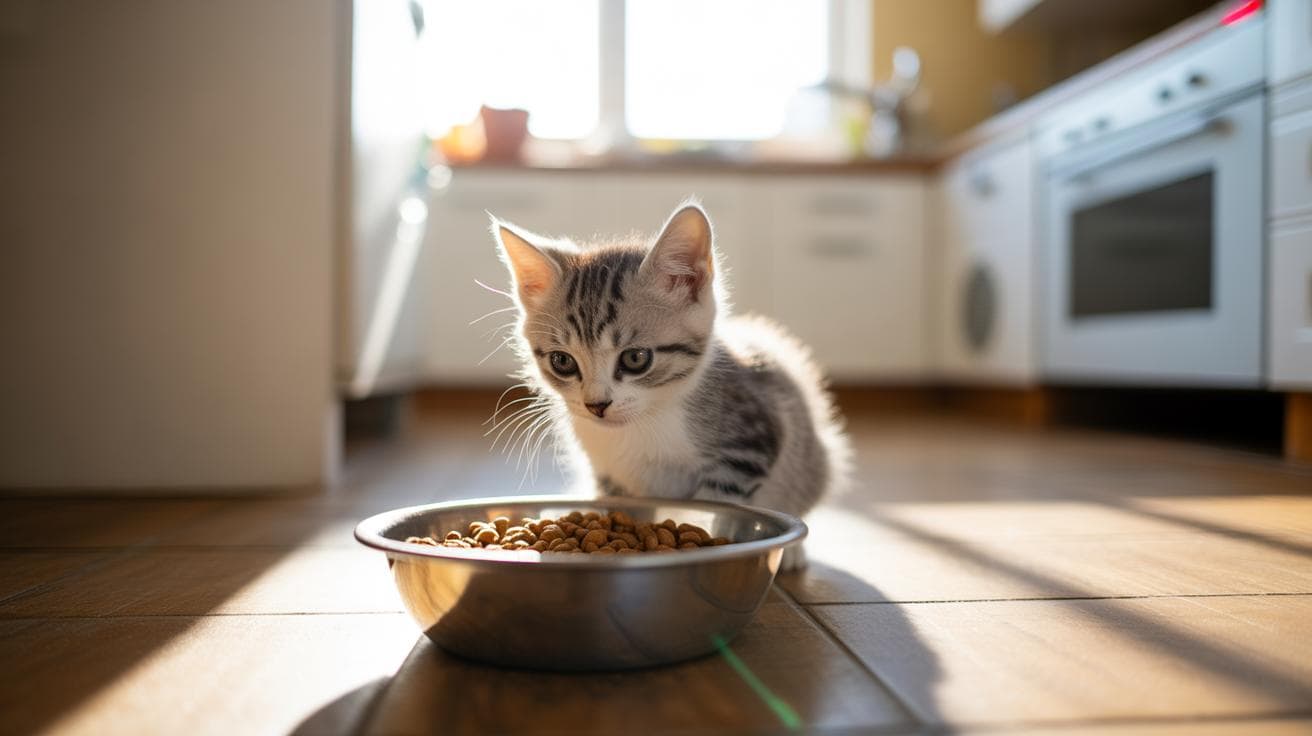
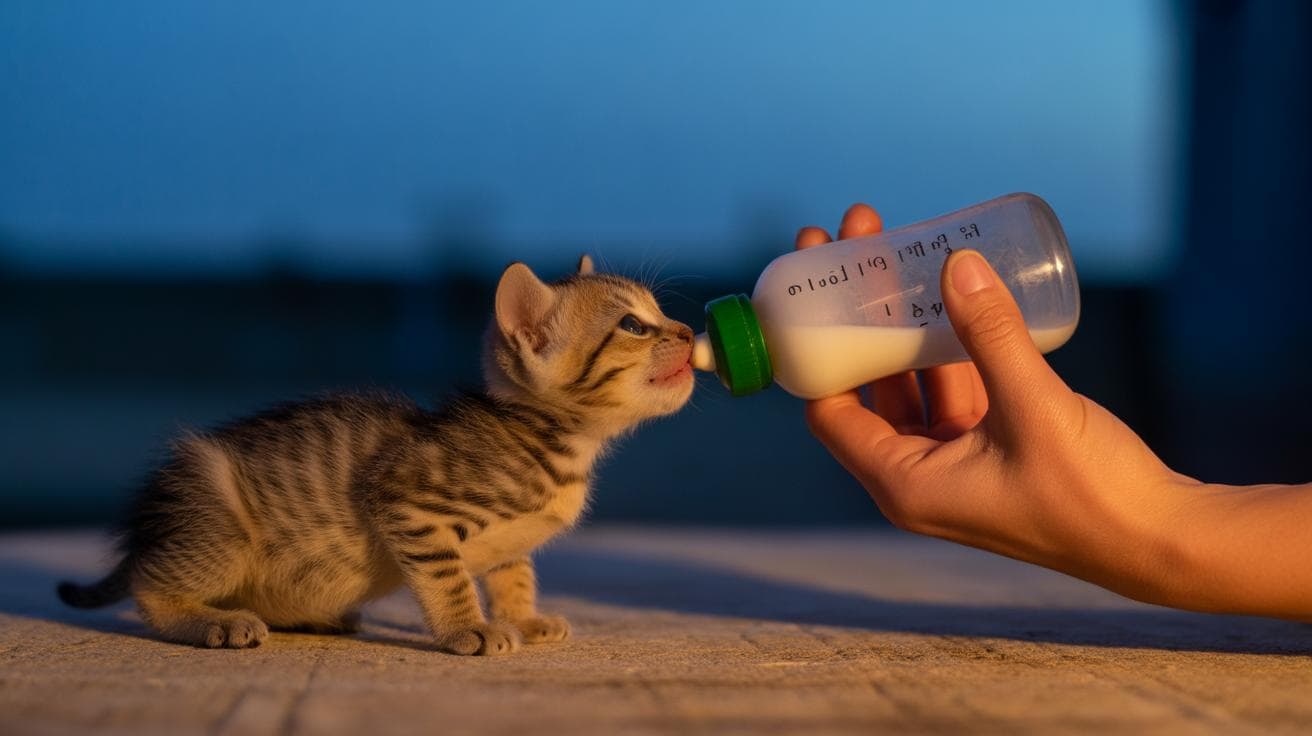
Thinking of switching your kitten to dry kibble the minute they wobble out of the nest? Not so fast, your kitten needs a few milestones first. Ever watched their whiskers twitch as they sniff new textures? Cute, right?
Start offering moistened dry kibble or a little gruel (soft, wet mash) at about 4 to 6 weeks. Around five weeks you’ll often see nibbling and the arrival of premolars (back baby teeth that help chew). That nibbling is a good sign to keep trying the new textures.
By 8 to 10 weeks most kittens handle dry or mixed diets. Many weigh about 2 pounds by eight weeks, and that weight plus clear chewing is your green light to switch safely. If their weight stalls or they aren’t eating well, call your vet , don’t wait.
Worth every paw-print.
When Can Kittens Eat Dry Food Safely
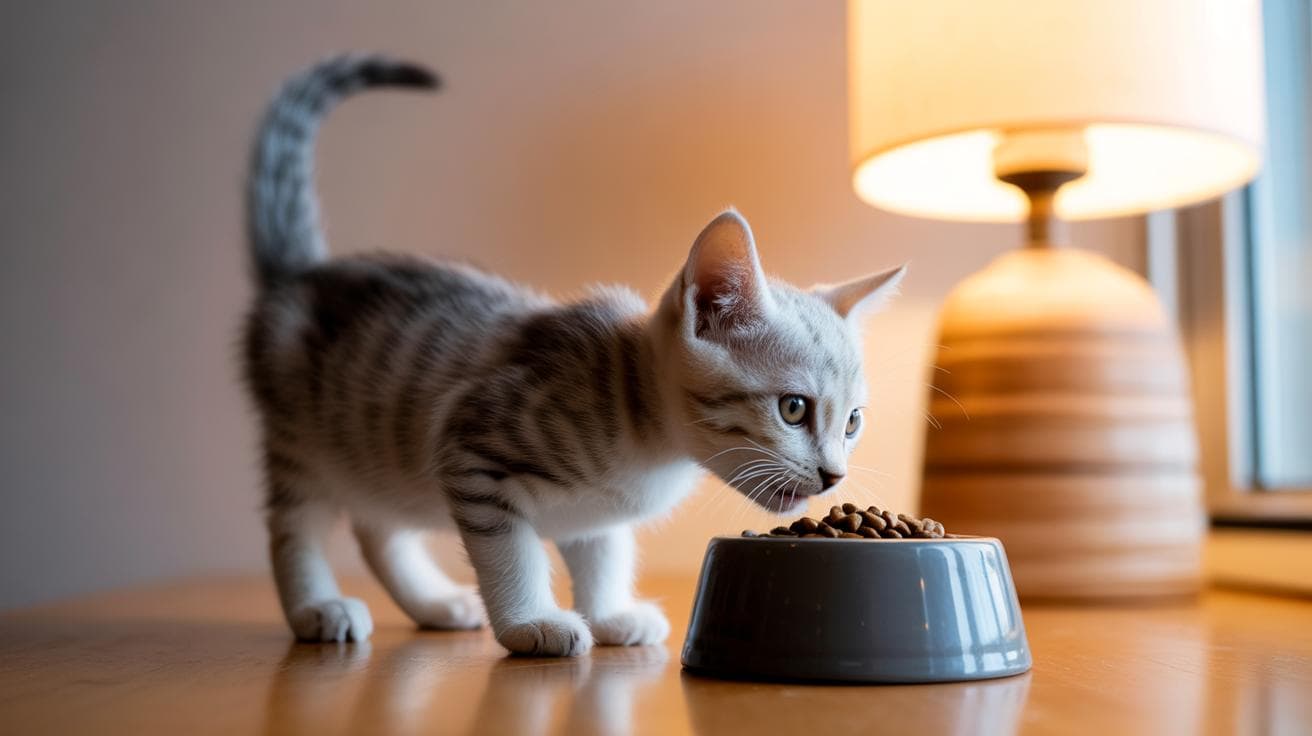
Start offering moistened dry kibble or a little gruel (soft, wet mash) at about 4-6 weeks. Most kittens are happily eating dry or mixed diets on their own by 8-10 weeks. Your kitten’s whiskers will twitch as they sniff and paw at new textures, cute, right?
Watch for clear readiness signs. Nibbling and soft mouthing often show up at 3-4 weeks. Around 5 weeks you’ll see premolars (back baby teeth that help chew) starting to come in. You might notice real curiosity about food and tiny attempts to take bites instead of just nursing.
Use weight as a simple checkpoint. Many kittens weigh about 2 pounds by 8 weeks. If weight gain stalls or the kitten loses weight while weaning, call your veterinarian for advice and a quick health check.
- 3-4 weeks: Offer the first supervised tastes and watch for nibbling and soft mouthing.
- 4-6 weeks: Begin with moistened kibble or gruel (soft, wet mash) and see if they can chew.
- 6-8 weeks: Move to firmer textures as premolars (back baby teeth that help chew) strengthen and the kitten handles bites better.
- 8-10 weeks: Expect most kittens to eat dry or mixed diets independently; recheck weight and contact a vet if gains stall.
Worth every paw-print.
How to transition kittens to dry food safely and gradually
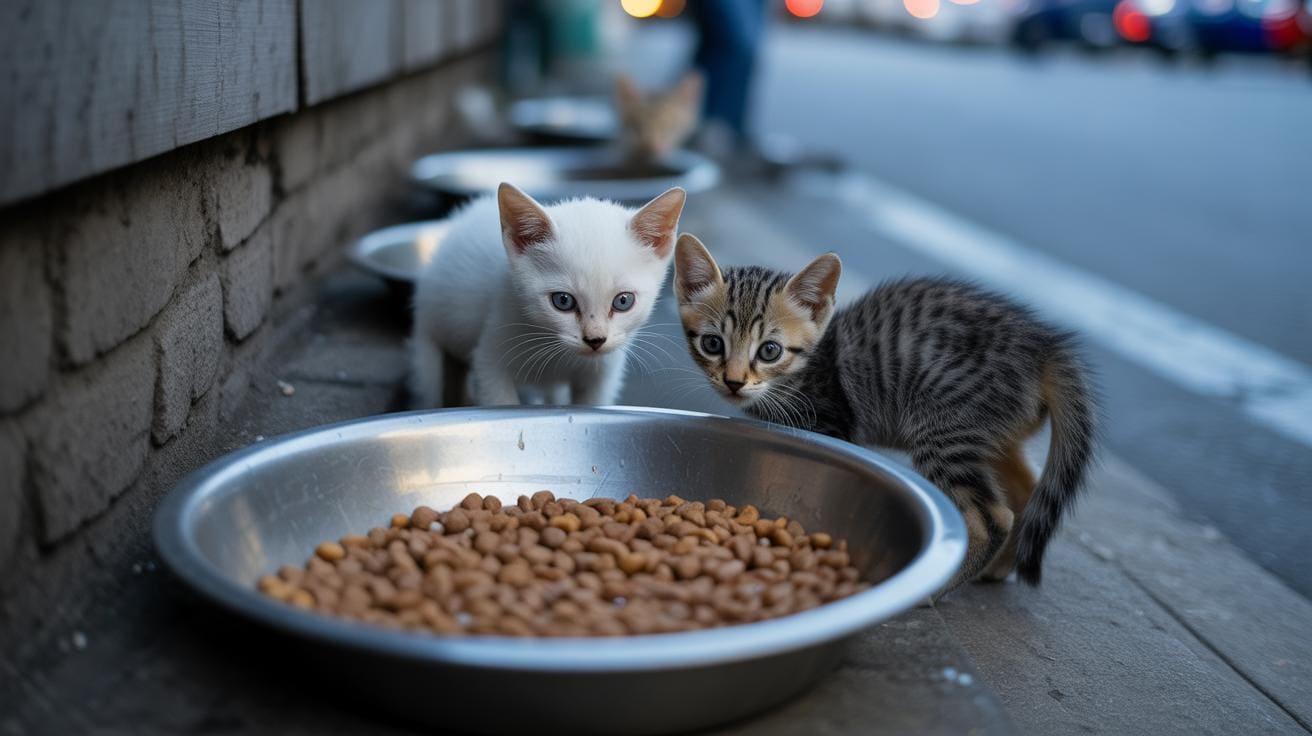
Start slow. Over about two weeks you’ll move kittens from a thin gruel to firmer textures, and you should let each kitten set the pace. Mix canned kitten food with warm KMR (kitten milk replacer, a commercial milk substitute) or warm water into an oatmeal-like gruel. Then add tiny pieces of softened kibble and slowly cut back the liquid until the kitten can handle dryer bites. For wet-food options to make gruel, check wet cat food brands. Ever watched a kitten lap at a spoon? Cute and useful.
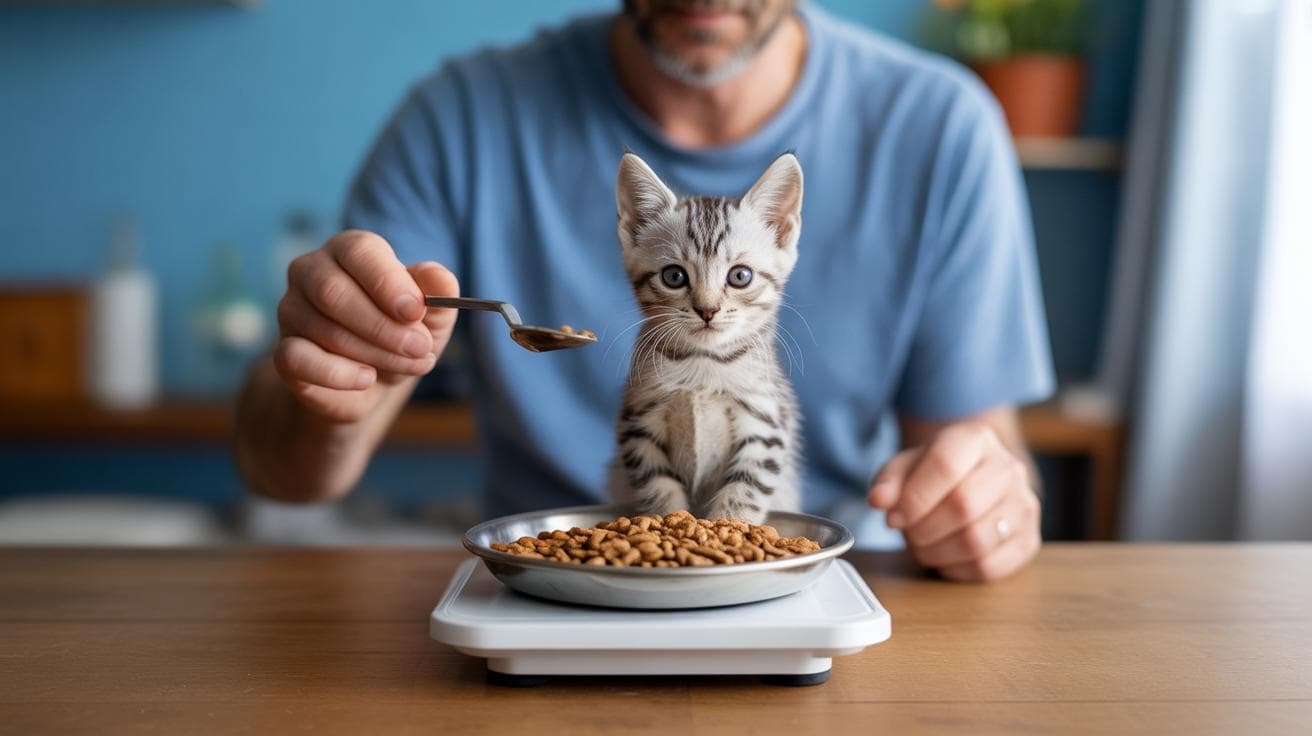
Keep daily steps simple and steady. Offer small amounts in a shallow dish so little faces can reach easily. Warm the food to about body temperature, not hot. Let the kitten come and nibble at her own speed. If she seems shy, try spoon-feeding a few bites or bringing the spoon close to her mouth. Always have fresh water available. And keep nursing or bottle support with KMR if weight gain slows.
Clean setup helps meals go well. Rinse dishes after each feeding and dry the surface so things don’t get sticky. Change towels that collect food. Warm food in a water bath (a bowl in warm water) instead of using a microwave so temperatures stay even. Pick a quiet spot for meals so your kitten can focus.
Watch weight and attitude like a hawk. Weigh kittens daily on a kitchen scale and jot down the numbers. If a kitten refuses food or loses weight at any step, go back to the previous texture and give bottle supplements with KMR until weight climbs again. Call your veterinarian right away if weight drops, or if you see repeated vomiting or severe lethargy.
Week-by-week transition plan
This is a gentle, stepwise two-week plan. If a kitten stalls, return to the prior step and add bottle feeds.
-
Step 1 , Days 1–2: Mix 3 parts canned kitten food with 1 part warm KMR or warm water. Aim for a smooth, oatmeal-like texture. Serve small spoonfuls and supervise.
(Troubleshoot: no interest? Try tiny spoon-fed bites and keep nursing/bottle support.) -
Step 2 , Days 3–4: Mix 2 parts canned with 1 part warm KMR or water. Texture should be a thicker porridge. Put a small smear in a shallow dish.
(Troubleshoot: if weight stalls, go back to Step 1 and supplement.) -
Step 3 , Days 5–6: Mix 1 part canned with 1 part KMR or water and add 1–2 teaspoons of small kibble that’s been pre-soaked for 10 minutes. Texture becomes chunky porridge.
(Troubleshoot: hand-feed a couple bites and watch appetite closely.) -
Step 4 , Days 7–8: Mix 3 parts canned with 1 part KMR and stir in 1–2 tablespoons of softened kibble soaked 5 minutes. Kitten starts practicing crunching.
(Troubleshoot: if chewing is weak, drop back to Step 3.) -
Step 5 , Days 9–10: Mix 1 part canned with 3 parts softened kibble soaked 2–3 minutes. Most of the bowl is small-kibble pieces that still yield to the tongue.
(Troubleshoot: low intake? Offer extra bottle feedings overnight.) -
Step 6 , Days 11–12: Mostly dry kibble with a quick 30–60 second soak if needed. Kibble should be manageable by premolars (the back chewing teeth).
(Troubleshoot: slow progress? Keep brief soaks and offer a wet topper.) -
Step 7 , Days 13–14: Dry kibble freely available. Keep fresh water handy and monitor daily weight and stool quality.
(Troubleshoot: if weight drops, resume short soaks plus KMR supplements until recovery.)
Tools and feeding setup
Have these basics ready so mealtime is calm and clean:
- Shallow dishes with low lips so kittens can reach easily.
- A small spoon or spatula for mixing and spoon-feeding.
- A kitchen scale to weigh kittens every day.
- A separate shallow water dish that’s easy to reach.
- Clean towels and a washable feeding surface for quick cleanup.
Worth every paw-print. Watch the little whiskers twitch as they figure it out. If something feels off, step back one stage and give extra bottle support. You’ve got this.
Choosing kitten-formula dry food and appropriate kibble size
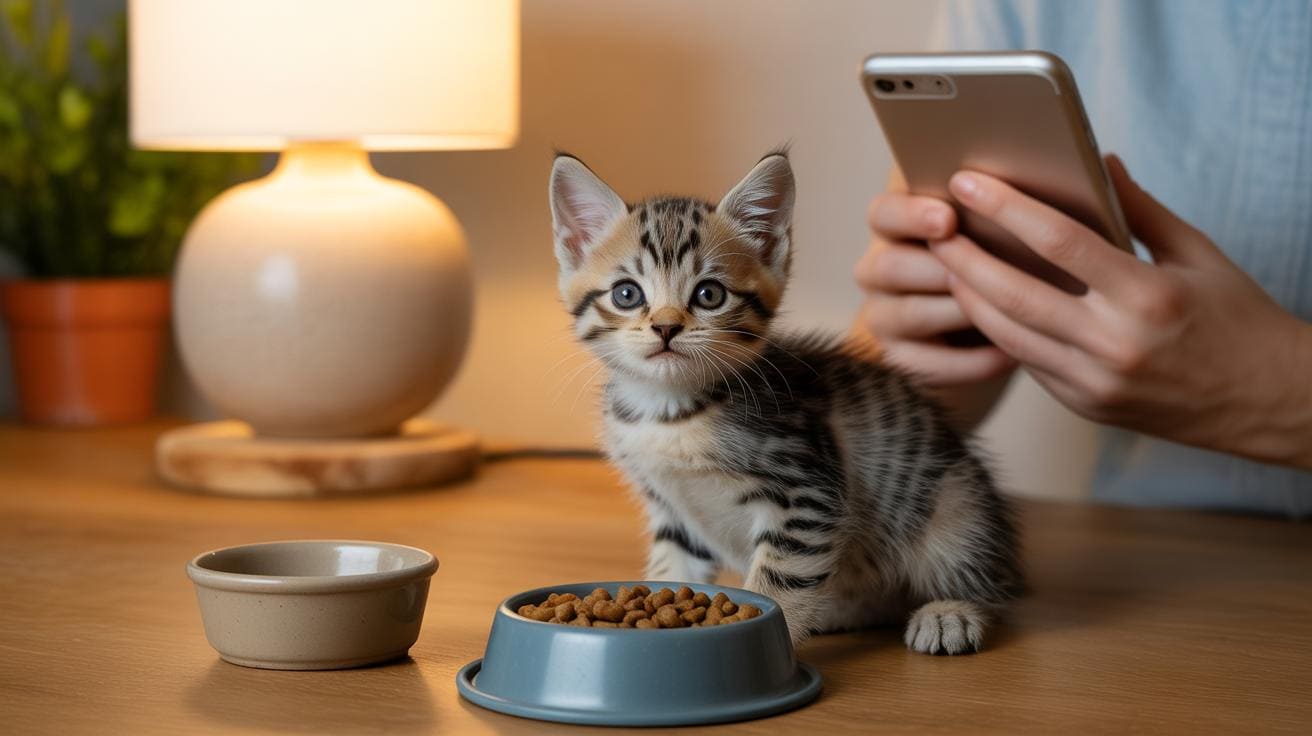
Pick a kitten formula that puts growth first. That means higher protein and fat than adult foods, plus extra nutrients to help the brain, bones, and eyes develop. Think of it as a mini power-packed meal for growing paws.
Look for DHA (an omega-3 fatty acid that helps brain and eye development) and taurine (an amino acid cats need for a healthy heart and vision). Short, clear labels that show a guaranteed analysis make it easy to compare protein and fat percentages. Oops, let me rephrase that, those numbers tell you how much protein and fat are actually in the food.
Use the feeding chart on the bag as a starting point, then watch your kitten’s weight and body shape and adjust. Tiny mouths need tiny pieces, so kibble shape matters as much as the recipe. If the pieces are too big, chewing gets awkward and the kitten might gag.
- High-quality animal protein (chicken, turkey, or fish listed by name)
- DHA (an omega-3 fatty acid for brain and eye development)
- Taurine (an amino acid critical for heart and vision)
- Enough fat for healthy growth and energy
- Named micronutrients like calcium, phosphorus, and vitamin A
- Small, round or pellet-shaped kibble that's easy for premolars (the back baby teeth that start chewing) to grip
Kibble should be small and uniform so premolars can handle bites without fuss. Too-large chunks make chewing hard and can lead to gagging or wasting food. Try a few small trial bags, watch how your kitten chews and what their stool looks like, and tweak the choice if they seem uncomfortable or gain weight too fast. Ever watched a kitten try to crush a giant kibble? Cute, but not ideal, pick something that fits their little mouth and keeps playtime pawsitive.
How much dry food should a kitten eat, feeding frequency, and hydration
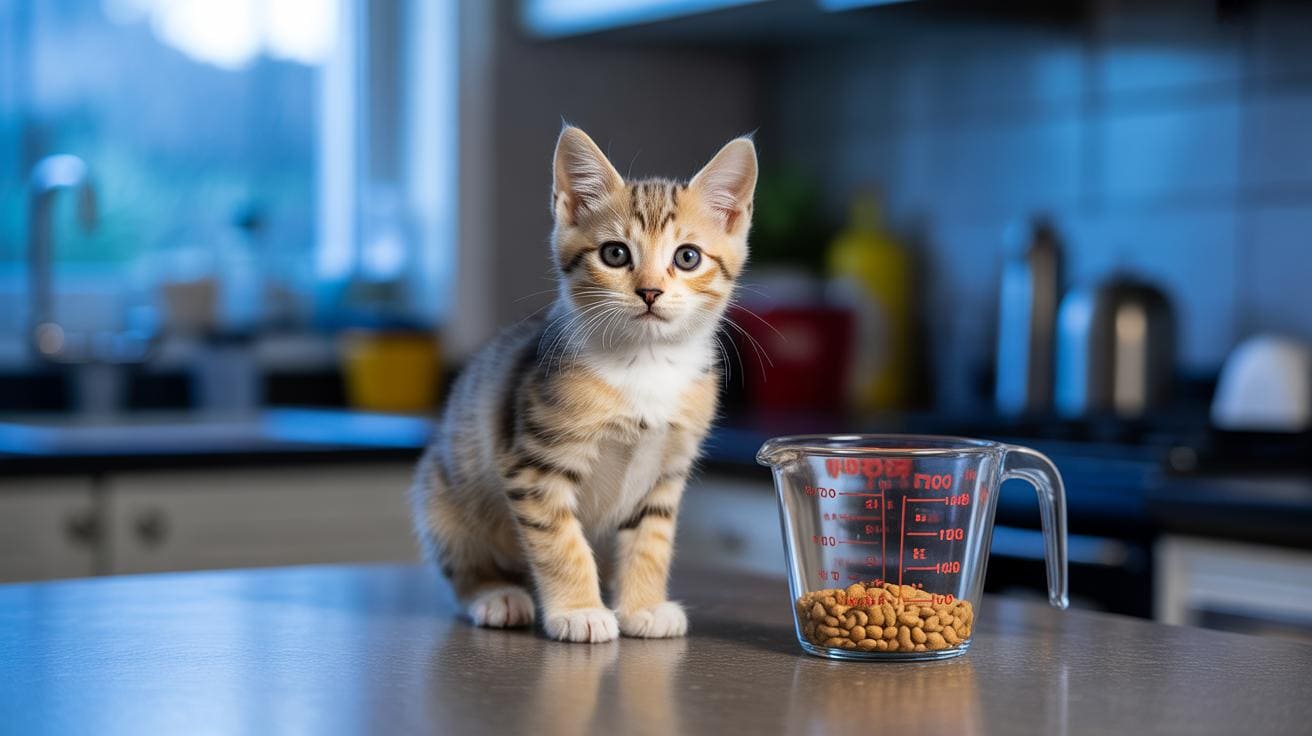
Most kittens around 8 weeks weigh about 2 pounds and need roughly 160 kcal per day (kcal = kilocalories, the "calories" you see on pet food). That usually works out to about 3/8 to 1/2 cup of typical kitten kibble (kibble = dry cat food pieces), or roughly 35–50 g (grams). Kibble varies a lot in calories per cup (energy density – how many calories are packed into a cup), so use the bag’s feeding chart as a starting point and measure with the same dry cup or a kitchen scale each time for consistency.
During early weaning offer small, frequent meals , think up to six times a day , then step down as the kitten gets used to solids to at least three meals daily. When you’re feeding three times a day, split the total into equal thirds so each meal is predictable. A steady routine helps you spot if they’re eating less or more, and it keeps a hungry kitten calmer. Ever watched your kitty bat at a bowl like it’s a drum? Yeah, routine helps with that.
Weigh kittens often at first: daily during weaning, then every few days once their growth evens out. If weight climbs too fast, cut portions a bit. If growth stalls or weight drops, increase calories and call your veterinarian. Always leave fresh, shallow water out when serving dry kibble to help digestion and hydration , kittens often prefer a shallow bowl so their whiskers don’t touch the sides.
Worth every paw-print.
| Age/Stage | Sample daily portion (notes) | Meals per day |
|---|---|---|
| Weaning (4–8 wks; starting solids) | 30–60 g (0.25–0.5 cup) mixed wet/dry; recheck if weight gain is slow | 4–6 |
| 8 wks–20 wks | 35–50 g (≈0.4 cup ≈160 kcal/day); weigh weekly during rapid growth | 3 |
| 5–7 months | 1/3–1/2 cup (≈45–75 g); reduce as growth rate slows, recheck monthly | 2–3 |
| 7–12 months | 1/2–1 cup (≈75–150 g); monitor for excess weight and adjust | 2 |