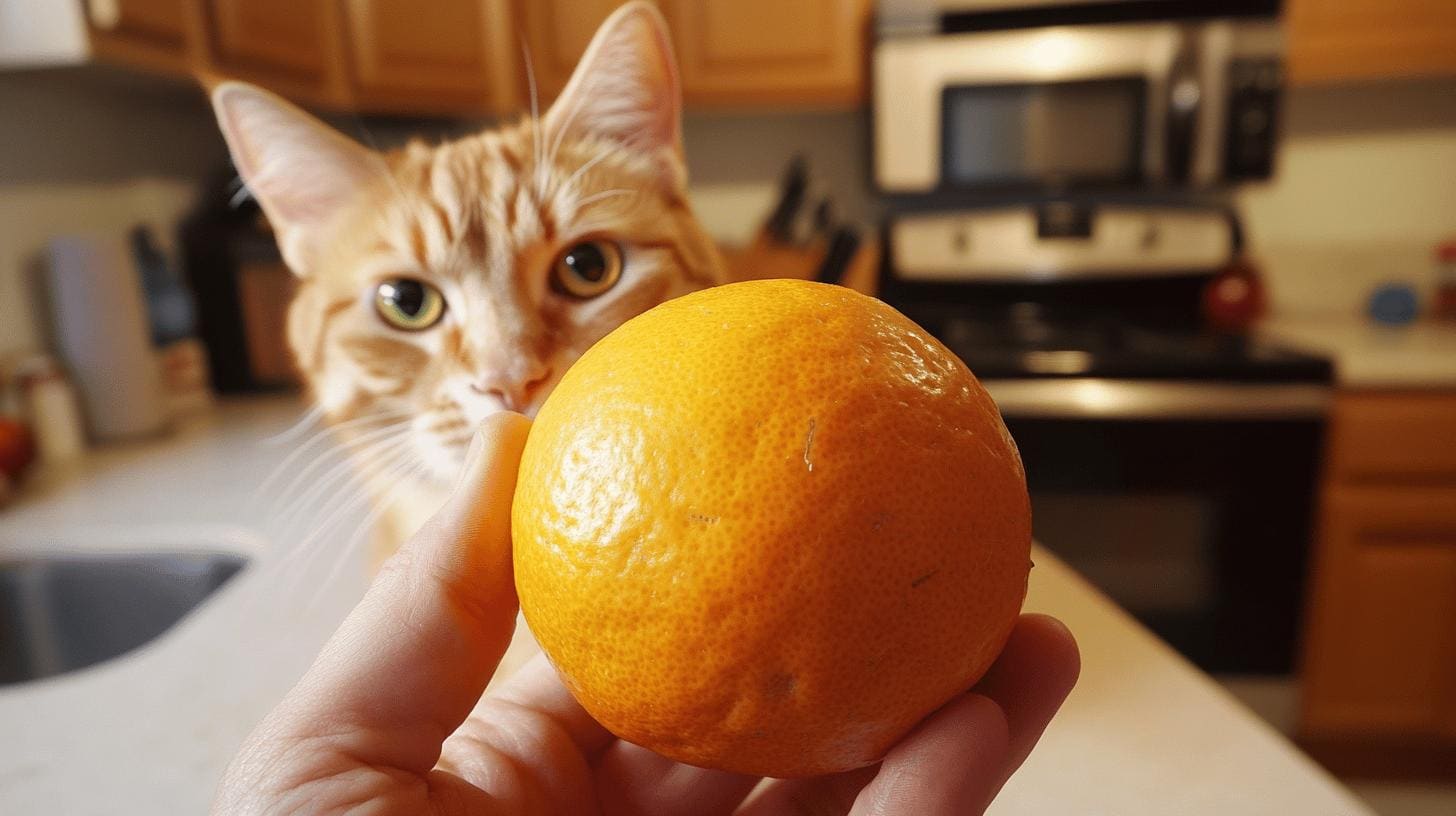
Did you know that tangerines, despite their juicy goodness, are bad news for our furry feline friends? It’s true! These citrusy treats might be a hit at your kitchen table, but they are a no-go for your cat’s diet. The essential oils and citric acid in tangerines can mess with their digestive system. This can lead to discomfort and upset tummies. Read on to uncover the full story behind why sharing this snack with your cat is not a good idea and what to do if it happens by accident.
Can Cats Safely Eat Tangerines?
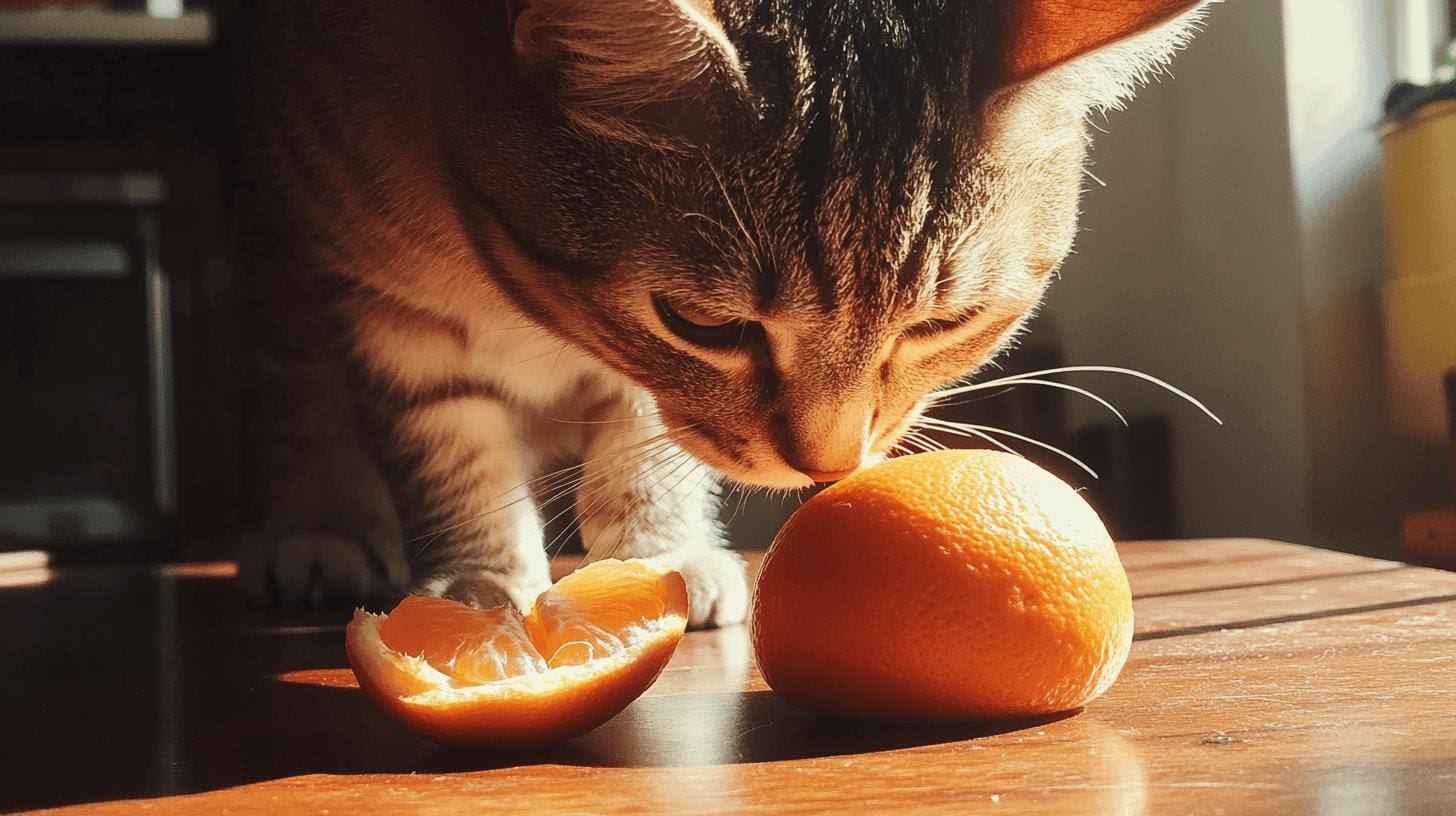
Tangerines are toxic to cats and should not be part of their diet. These citrus fruits contain compounds that can harm feline health, making them unsafe for cats to consume. The main culprits are essential oils and citric acid found in tangerines, which can lead to digestive issues and other health problems in cats.
Here’s a breakdown of the specific compounds in tangerines that are harmful to cats:
- Essential Oils: These can cause irritation to a cat’s digestive system and may lead to other health complications.
- Citric Acid: This can upset a cat’s stomach, leading to vomiting and diarrhea.
- Psoralens: Found in various citrus fruits, psoralens can be toxic in large doses, causing further digestive upset.
- Limonene and Linalool: These compounds can be harmful in certain concentrations, contributing to the overall toxicity of citrus fruits for cats.
- Sugar Content: While not toxic, the high sugar content in tangerines is not suitable for a cat’s diet and can lead to weight gain and other issues.
If a cat ingests tangerines, it may experience symptoms of citric acid poisoning, such as an upset stomach, vomiting, and diarrhea. These symptoms indicate that the cat’s body is reacting negatively to the fruit. It’s crucial to seek veterinary attention immediately if you suspect your cat has consumed any part of a tangerine. Prompt medical care can prevent further health complications and ensure the well-being of your furry friend.
Risks and Symptoms of Tangerine Ingestion in Cats
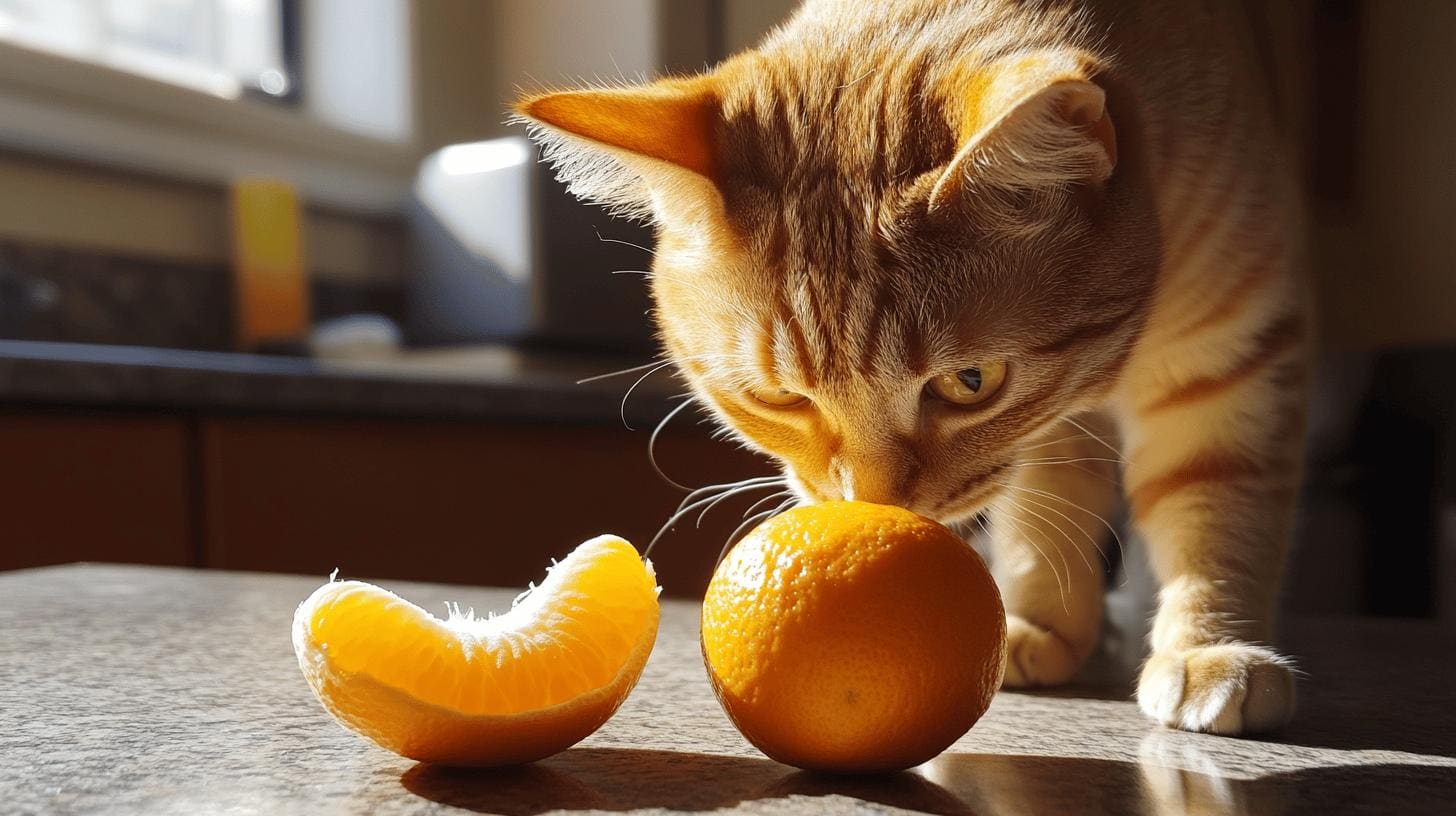
Tangerines contain essential oils and citric acid, which can irritate a cat’s digestive system. Cats lack the enzymes to digest these compounds, leading to potential health risks.
Symptoms of citrus poisoning include:
- Upset stomach
- Vomiting
- Diarrhea
- Lethargy
- Loss of appetite
Cats naturally dislike the scent of citrus, which often deters them from eating tangerines.
Safe and Healthy Alternatives to Tangerines for Cats
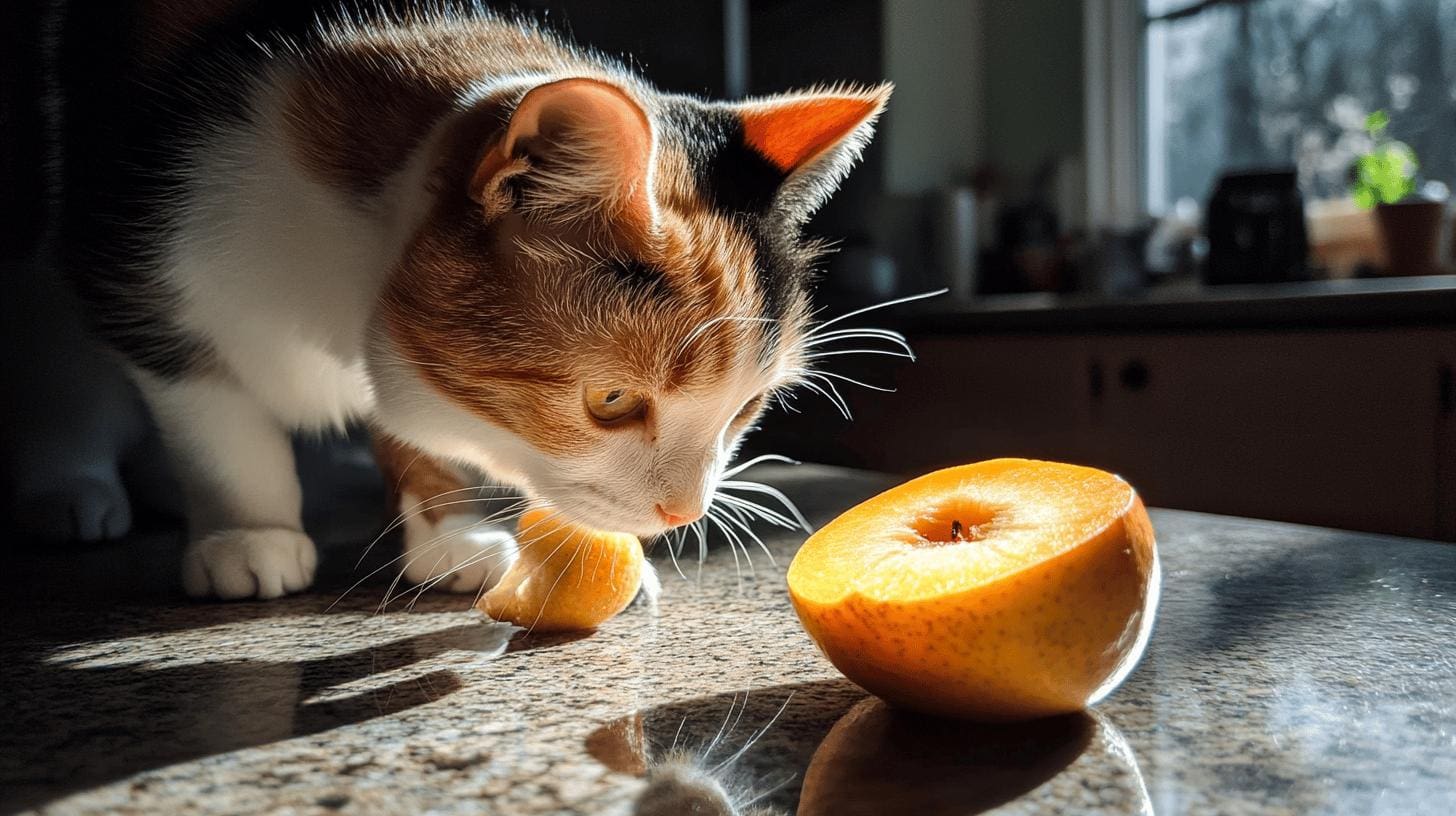
Cats are obligate carnivores, which means their diet should primarily consist of animal-based proteins. While tangerines and other citrus fruits are harmful, non-citrus fruits can offer a safe alternative for occasional snacking. These fruits should only be given in small amounts as treats, ensuring they don’t disrupt a cat’s primary nutritional needs.
Here are some safe fruit options to consider:
- Persimmons: These are generally safe for cats when offered in small, bite-sized pieces without the skin or seeds.
- Blueberries: Packed with antioxidants, blueberries can be a fun and healthy treat for your cat.
- Apples: Remove the seeds and core, then offer small slices to your cat as a crunchy snack.
- Bananas: High in potassium, a small piece of banana can be a delightful treat for your feline.
- Watermelon: Seedless watermelon can be refreshing and hydrating, just make sure to remove any seeds.
While these fruits can add variety, remember that a cat’s diet should be based on meat to meet their essential nutritional requirements. Fruits should make up a very small portion of their intake, no more than 2% of their diet. By focusing on their meat-based dietary needs and offering fruits sparingly, you can keep your cat healthy and satisfied.