Think your chunky kitty is just fluffy? Not quite. A little extra weight can slow their pounces and steal years of playful life. Check out our guide on Cat Training Treats.
Too much weight raises the chance of diabetes (a blood-sugar disease), makes joints ache, and can lead to other health problems. Your cat might nap more, sneeze less in play, or struggle to jump up on a favorite perch, little signs that matter.
This post gives clear target weights for common breeds, shows an easy wellness Body Condition Score check (BCS: a quick look and gentle feel to compare fat and muscle against your cat’s bones and overall shape), and points out the signs that mean a vet visit is urgent. Ever watched a cat try to squeeze into a box and fail? That’s a hint.
Read on for simple, practical steps to keep whiskers twitching and paws springy. Worth every paw-print.
Healthy Cat Weight: Immediate Benchmarks, Core Risks, and When to See a Veterinarian
There’s no single perfect weight for every cat. Most house cats sit around 8 to 12 lb (3.6–5.4 kg). Big-boned breeds like the Maine Coon often run 12 to 18+ lb, and Ragdolls can reach about 20 lb. Sleek breeds, like the Siamese, tend to be lighter. Age, sex, spay/neuter status, and diet all affect healthy weight ranges—, and medical history all help decide a healthy target.
Body Condition Score (BCS) is the quick clinical way vets judge whether a cat’s body fat and muscle fit its frame. (BCS = compares fat and muscle to the cat’s bones and overall shape.) You can think of it like trying on clothes , does the coat look fitted, or is it snug and bulging? Vets will feel for ribs and check the waistline. Ever watched your kitty’s whiskers twitch as they chase a toy? That kind of play helps tell the story, too.
Extra weight raises real health problems:
- Diabetes and insulin resistance (when the body doesn’t respond well to insulin, so blood sugar stays high).
- Arthritis and joint pain (extra pounds speed up wear and make movement sore).
- Shortened lifespan (overweight cats often pick up more chronic illnesses).
- Higher anesthesia and surgical risk (fat changes drug dosing, recovery, and wound healing).
Top reasons to call your vet now: sudden, unplanned weight loss; a fast gain of more than 10% of body weight; not eating for 48 to 72 hours; or big changes in activity, appetite, or litter-box habits. A quick weigh-in is helpful, but BCS plus a medical check gives a clearer picture than the scale alone. See Monitoring for urgent-care details and step-by-step red-flag guidance.
If you want a simple next step, try this: feel your cat’s ribs gently , you should feel them under a light layer of fat, not see them sticking out. Small changes now can make a big difference later. Worth every paw-print.
How to Assess Cat Weight at Home: Body Condition Score, Home Weighing, and Practical Checks
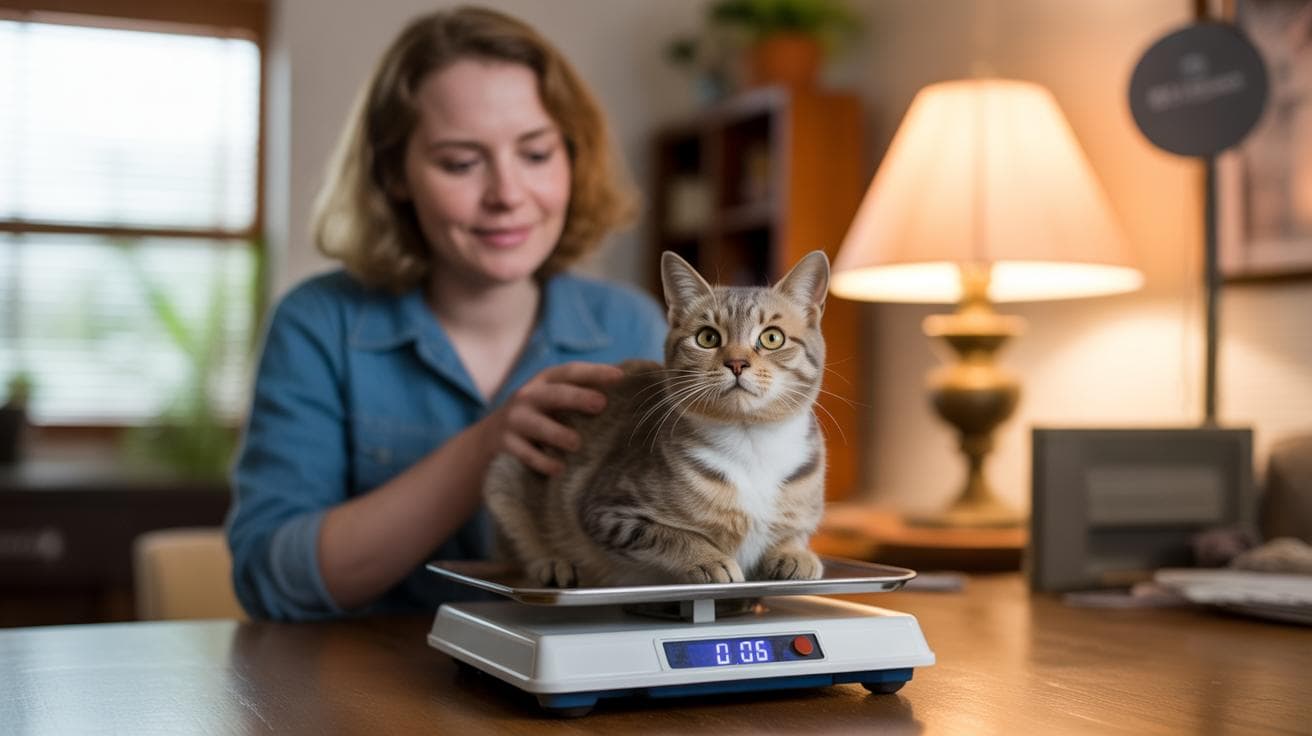
Scales give you a number, but how your cat looks and feels tells the full story. The Body Condition Score helps you see whether weight is muscle or extra padding. Ever watched your kitty chase a sunbeam and wondered if they look a little heavy or just fluffy? This is the quick way to know.
The nine-point Body Condition Score
Body Condition Score (BCS) is a 1 to 9 scale vets use to judge fat and muscle on a cat’s frame, not just pounds. Two cats can weigh the same and look very different under the fur, so BCS shows the real picture.
Scores 1 to 3 mean underweight. Bones stick out, there’s almost no fat, and muscle wasting (when muscles shrink and feel hollow) is common. Your cat may look bony and frail.
Scores 4 and 5 are the sweet spot. You should feel ribs with light pressure under a thin fat layer, see a waist from above, and notice a tummy tuck from the side. Muscles look filled out, not sunken. Think of it like a softly padded sweater over a lean frame.
Score 9 means obesity. There’s a heavy fat pad, no waist, a big belly bulge, and fat over the ribs so you can’t feel them. This can make moving and jumping harder.
When you palpate (feel with your hands), ribs should be felt without pressing hard , they shouldn’t be sharp ridges. The lumbar spine and pelvic bones should not stick out. The belly should tuck up behind the ribs. To tell fat from muscle loss, notice texture: fat feels soft and squishy. Muscle wasting makes the spine and shoulders feel thin and hollow.
Weighing at home and a simple trick
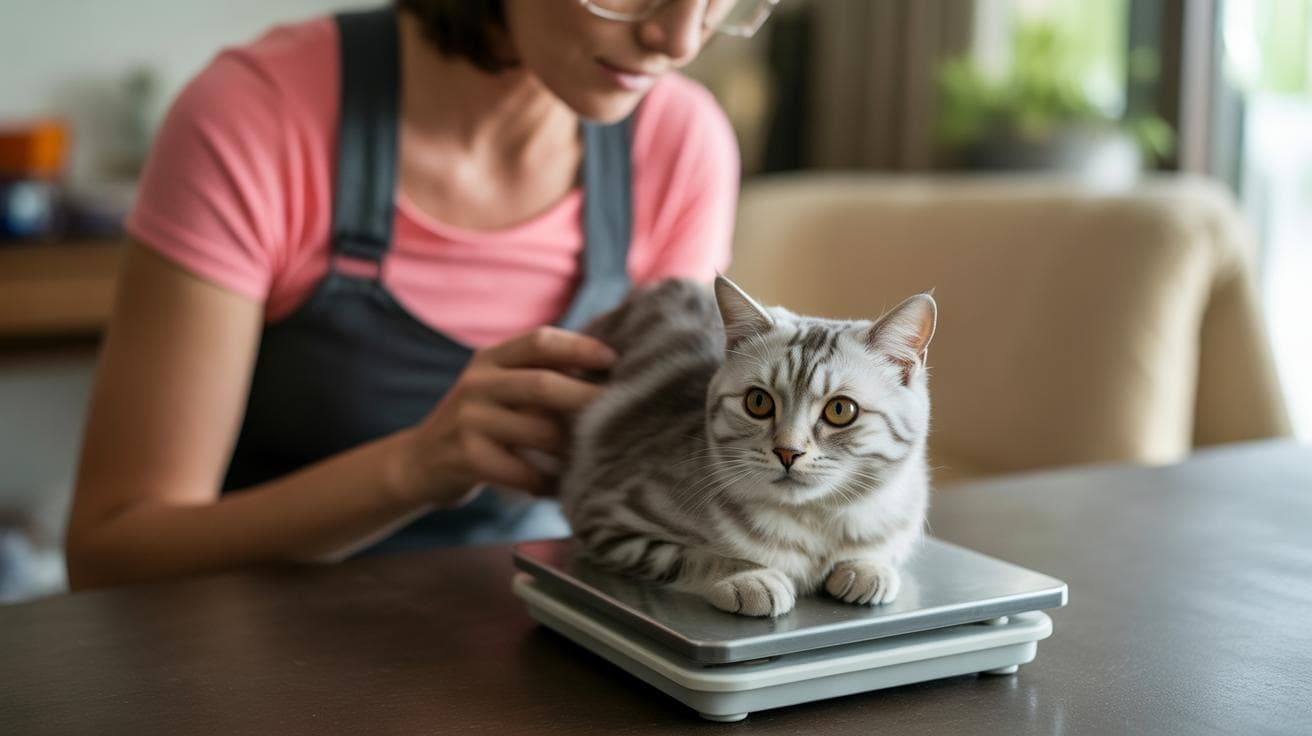
A reliable home method is to weigh yourself, then weigh yourself holding the cat and subtract. Example: you weigh 150 lb, you plus cat weigh 158 lb, so the cat is 8 lb. Use the same scale, similar clothing, and the same time of day for each check so results are consistent.
Vet scales are often more precise, but trends matter more than a single reading, so pick one method and stick with it. If you use a bathroom scale, take two or three readings and average them to cut down on wiggle-room error.
Three quick daily checks
- Run your hands lightly over the ribcage. Ribs should be felt under a thin layer of fat, not sharp or buried.
- Look down from above. You should see a narrowing behind the ribs , a little waist.
- Watch appetite and activity. A sudden drop in eating or play can be a sign something’s wrong.
Worth every paw-print.
Cat Weight Ranges and Breed-Specific Healthy Weights
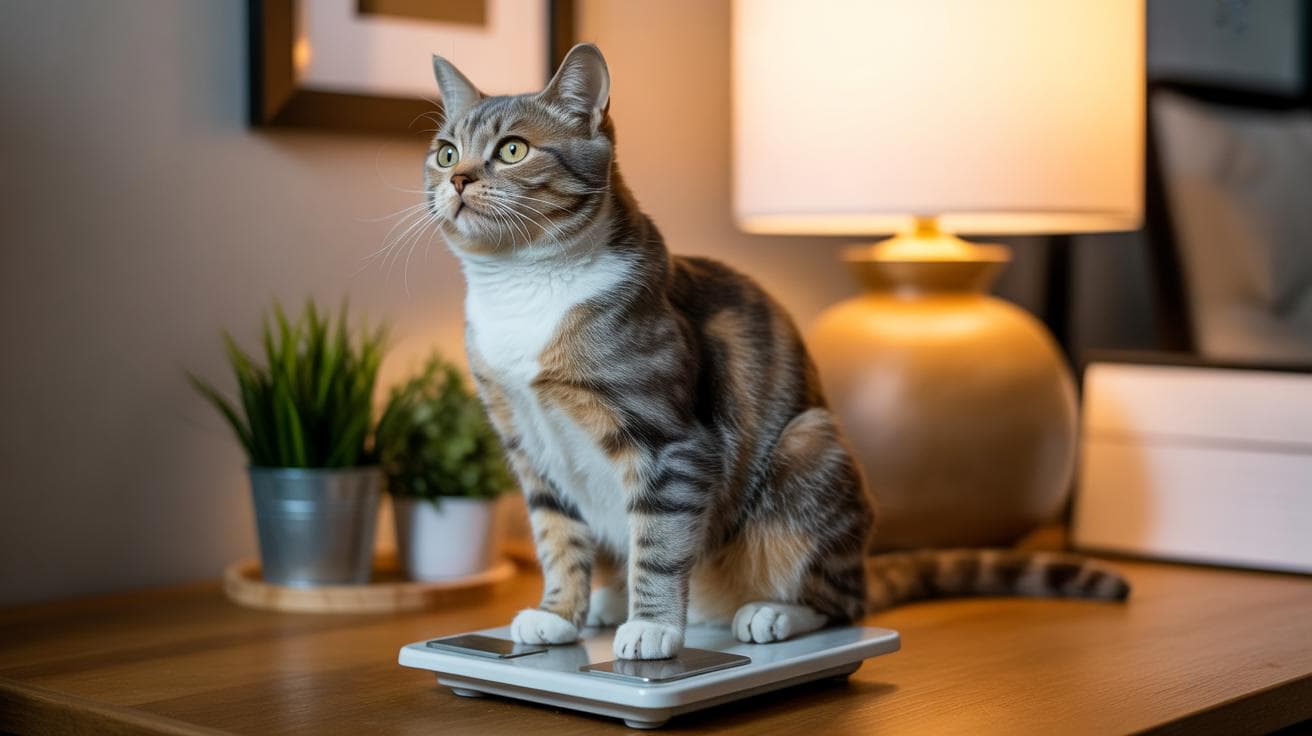
Breed, frame, age, and sex all help set what a healthy weight looks like for your cat. Big-boned or long-framed cats can carry more pounds without being overweight, so don’t just trust the scale. Pair numbers with a Body Condition Score (BCS, a simple way to check fat versus muscle; see How to Assess) to tell whether those pounds are muscle, fat, or both.
| Breed | Typical healthy weight (lbs) | Notes |
|---|---|---|
| Domestic shorthair | 6–12 | Most land 8–12 lbs; size varies by frame and activity. |
| Maine Coon | 12–18+ | Very large frame; males often heavier. Usually muscular. |
| Ragdoll | Up to ~20 | Big and sturdy; 12–20 lbs can be healthy depending on frame. |
| Persian | 7–14 | Compact body with dense coat; fur can hide extra weight. |
| Sphynx | 6–12 | Lean, feels muscular since there’s little to no fur. |
| British Shorthair | 9–18 | Rounder, stocky build with heavier bone and muscle. |
| Exotic Shorthair | 8–13 | Like Persians but a bit chunkier; coat masks contours. |
| American Shorthair | 7–12 | Medium, balanced frame; males usually larger than females. |
| Devon Rex | 6–9 | Small, lithe body with fine muscle tone. |
| Siamese | 6–10 | Sleek and long-bodied; tends toward the lighter end. |
Numbers are a starting point, not the whole story. Use BCS (see How to Assess) to read fat versus muscle, and watch trends over weeks instead of fixating on one weigh-in. Your cat should have a visible waist and a slight tummy tuck, and you should be able to feel ribs with a thin layer of fat over them.
Males and neutered cats often run heavier, and many breeds hit their peak weight around 6–10 years. If your cat is above the listed range but feels solid and athletic with a clear waist, that weight can still be healthy for that frame. If a thick coat hides the shape, gently run your hands over the ribs and spine to check, think of it as a quick, respectful hug.
When in doubt, weigh, score, and check with your vet so any plan to lose or gain weight fits your cat’s age, activity level, and medical history. Worth every paw-print.
Calorie Needs and Safe Weight-Change Targets for Cats
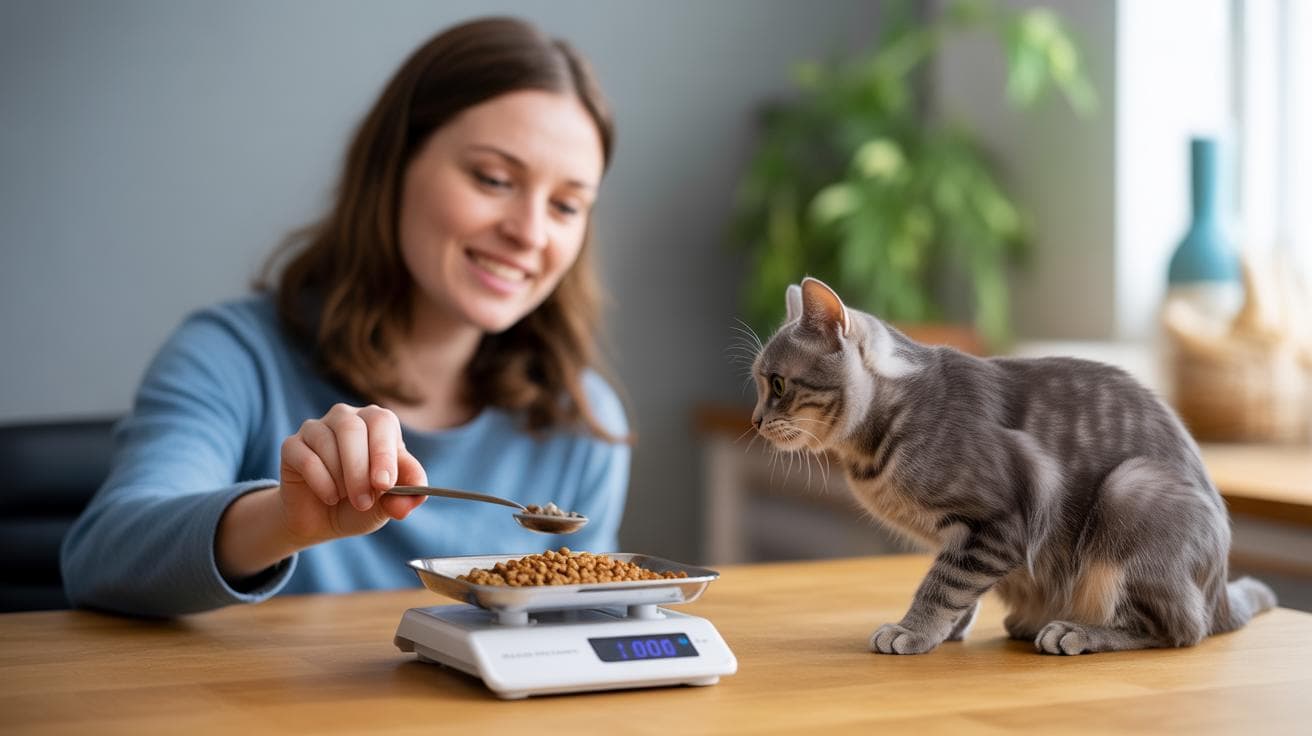
A good rule of thumb is about 20 kcal per pound of body weight per day for most adult cats. Kcal (calories) is what we mean here. It’s just a starting point, not a strict law. Use it to get close, then tweak based on your cat’s age, activity level, and health history.
For example, a 10-lb adult needs roughly 10 × 20 = 200 kcal/day for maintenance (the calories to keep current weight). If your target weight is 8 lb, that’s 8 × 20 = 160 kcal/day. Clinicians often reduce current intake by about 20-25% while moving toward the goal. So a 20% cut from 200 kcal lands at 160 kcal , neat, right? As your cat loses weight, recalc monthly using new weight × 20 kcal and adjust portions so calories follow the new target, not the old one.
Go slow. Cutting calories too fast or letting a cat stop eating can cause hepatic lipidosis (a serious liver condition that happens when a cat suddenly stops eating and their body breaks down fat too quickly). Don’t crash-diet your cat. Work in small steps, watch appetite and behavior, and keep your vet involved. If appetite drops or weight changes unexpectedly, see Monitoring for hepatic lipidosis signs and refeeding guidance for next steps.
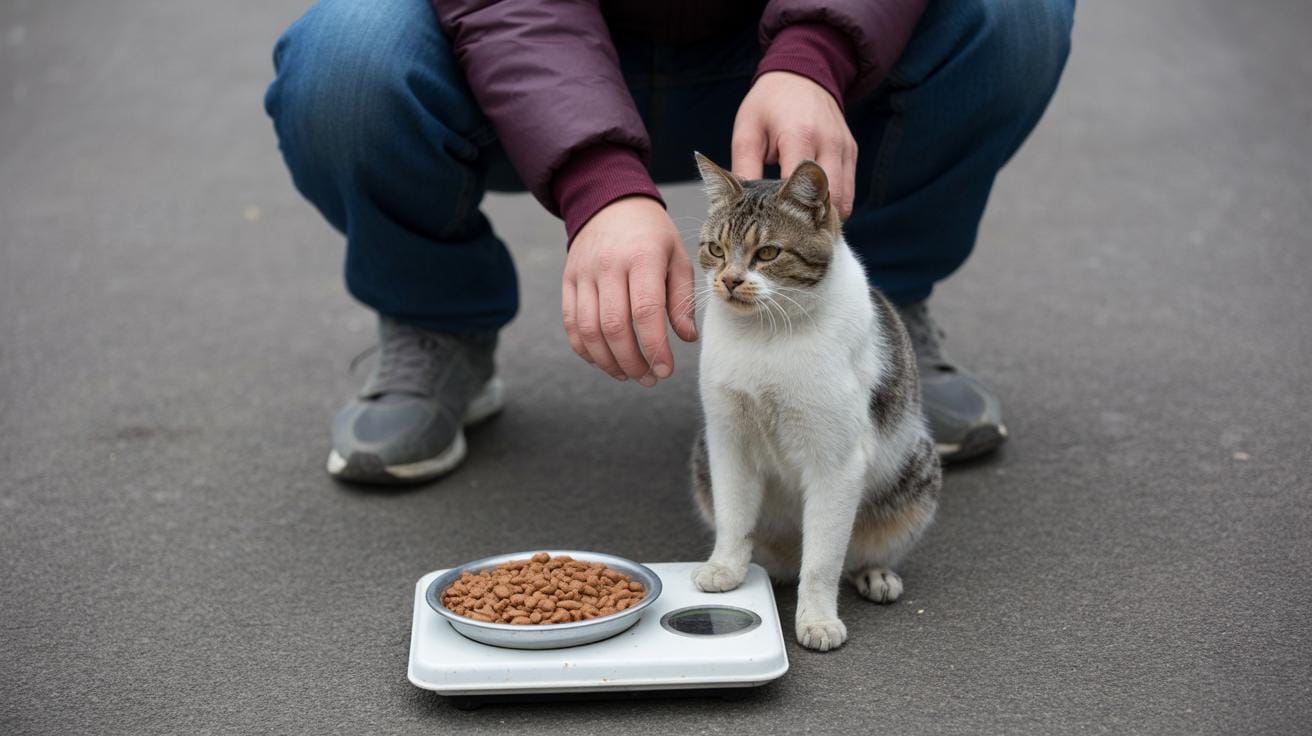
Measure food accurately. Use a gram food scale (a small kitchen scale that reads grams) or the manufacturer’s calibrated scoop, and always check the label for kcal per cup or per can. Don’t forget treats , they add up fast , so include them in the daily kcal total. Try to measure with the same tool at the same time of day for consistent tracking.
Think of this like tuning a radio – small knob turns, then listen and adjust. Your cat’s whiskers twitch, they pounce a bit more, and you tweak again. Worth every paw-print.