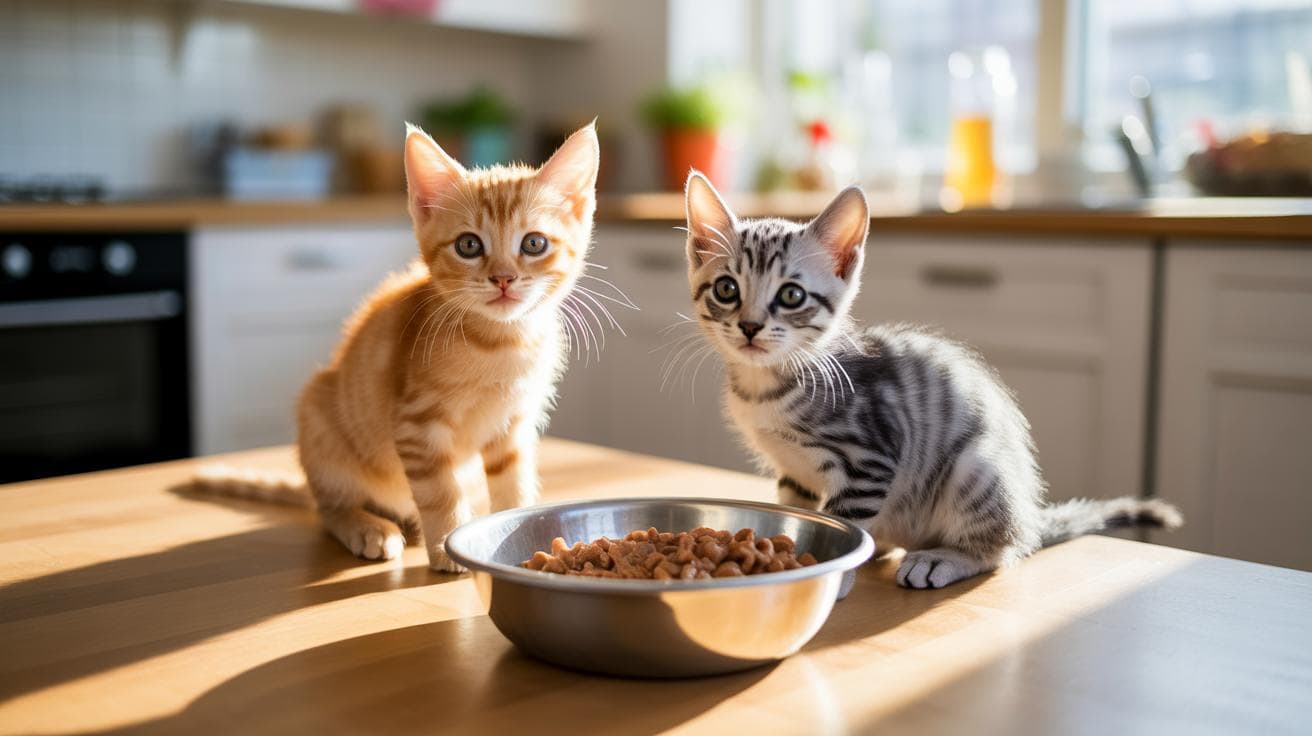
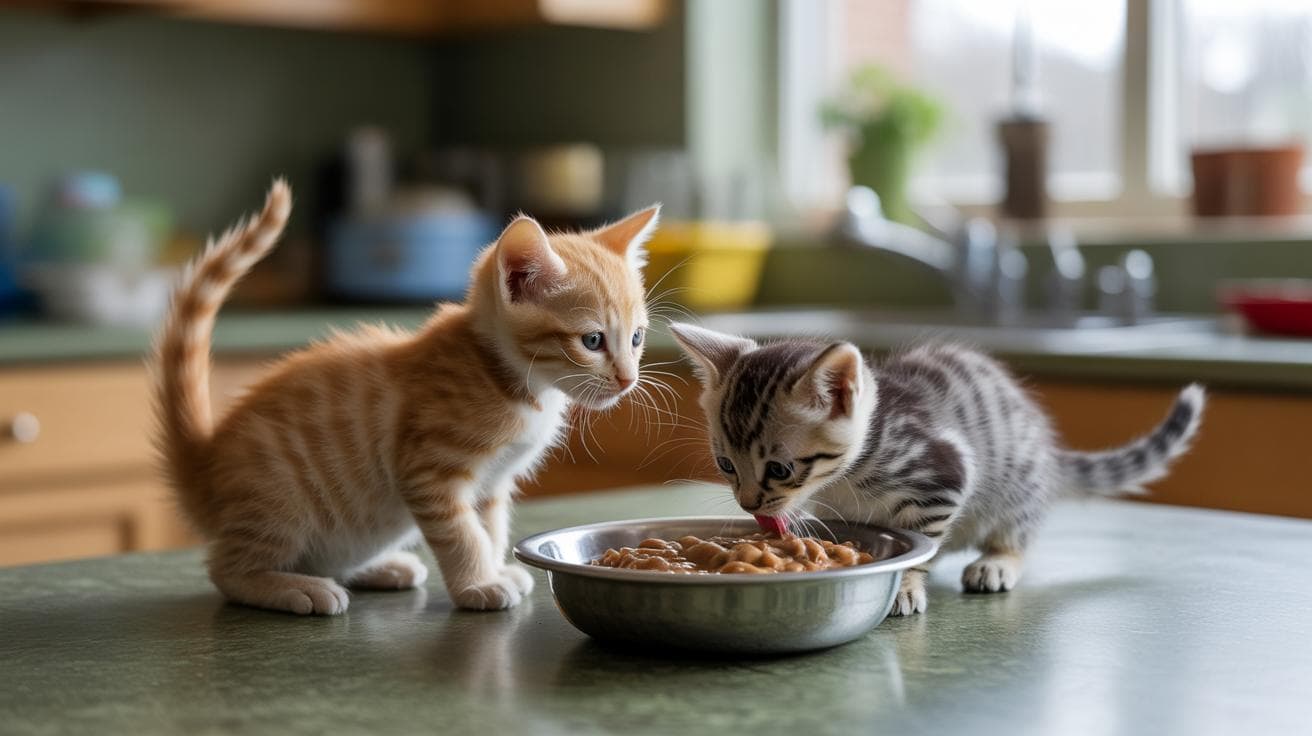
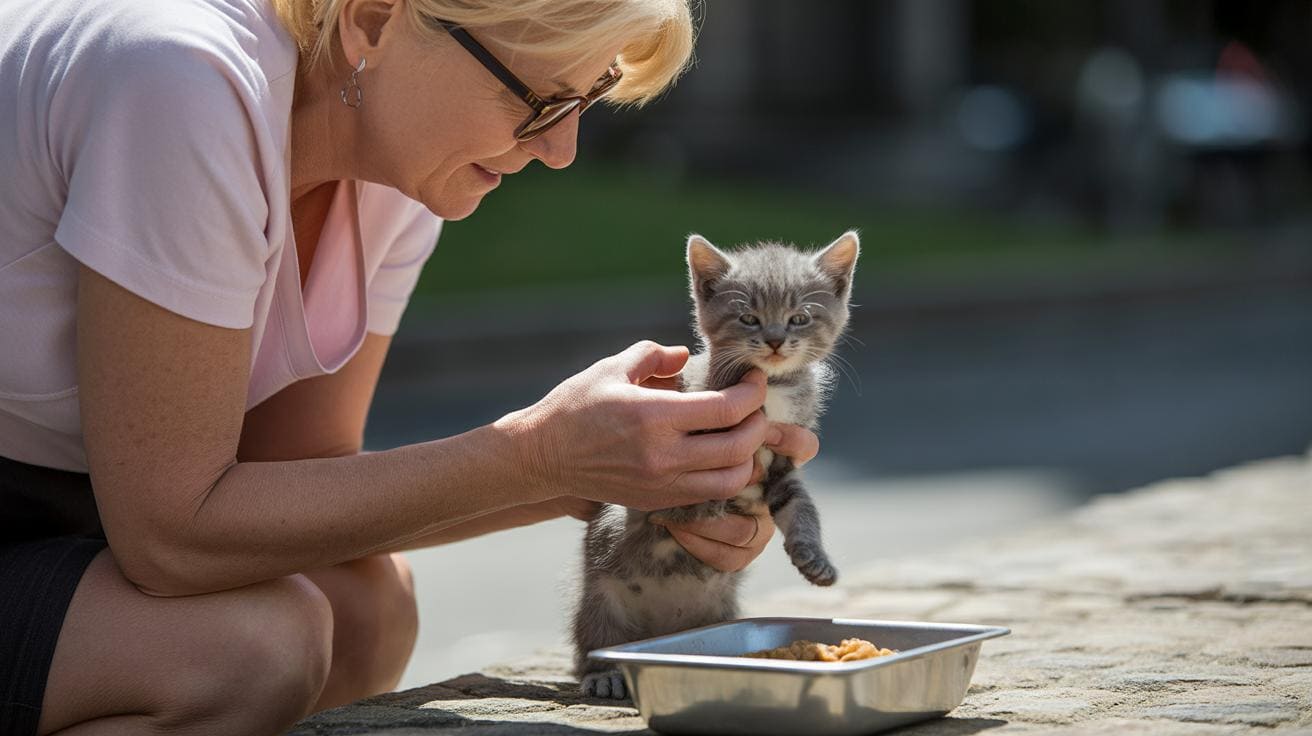
Ever watched a kitten try to lap up food and end up wearing more of it than eating? It’s messy and hilarious, whiskers full of gravy, tiny paws sliding, so yeah, we’ve all been there.
Start offering tiny tastes of wet food at 3 to 4 weeks. Around 5 weeks, begin staged weaning: mix canned kitten food (soft, wet food made for kittens) with KMR (kitten milk replacer, a milk substitute) until the mix is spoonable, like thick applesauce. Most kittens are fully weaned by 8 to 10 weeks, though some need a little more time.
Look for the signs: erupting teeth (the tiny white tips poking through), steady weight gain week to week, and real curiosity about the bowl, sniffing, licking, batting at it. Move slowly. Offer tiny spoonfuls, warm the food a bit, and let them make a glorious little mess while they learn. Gentle praise helps, and short, supervised sessions beat long, stressful ones.
Worth every paw-print.
When Can Kittens Eat Wet Food: Age Tips
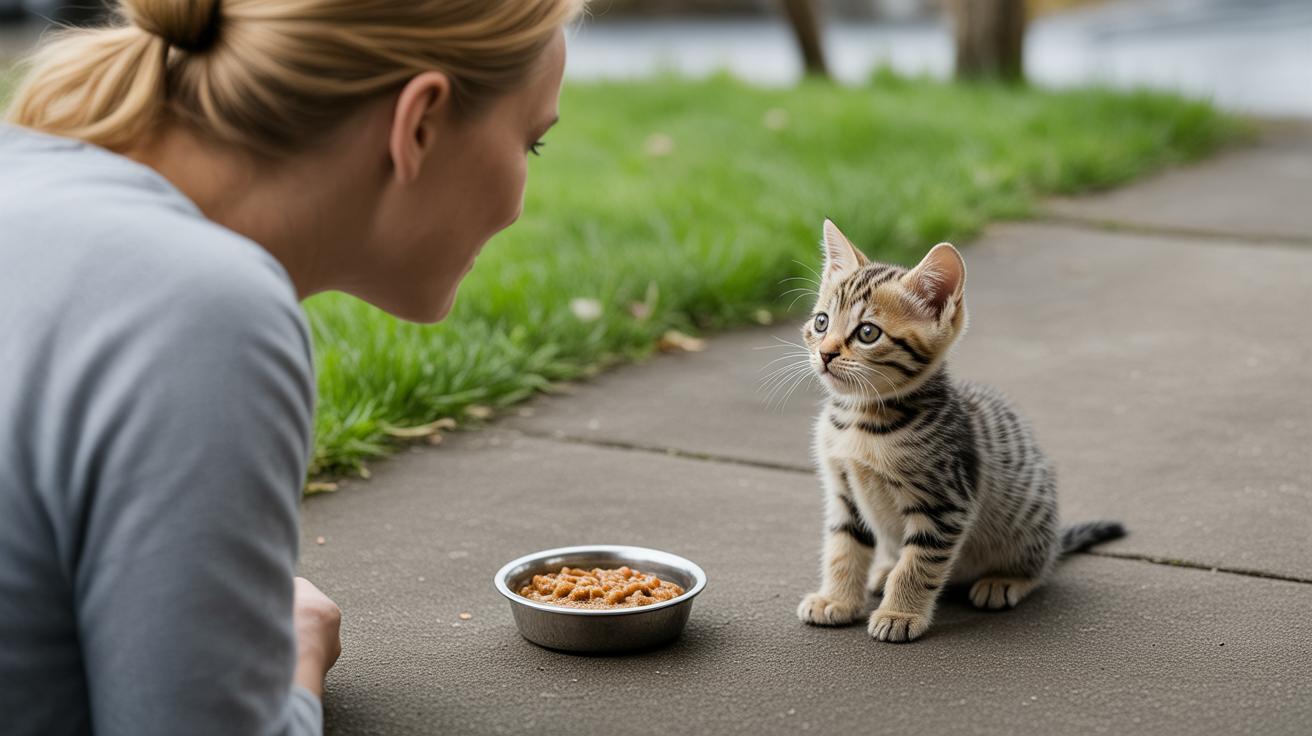
Start offering tiny tastes of wet food around 3 to 4 weeks old. At about 5 weeks begin staged weaning – offer a spoonful of gruel (a soft, spoonable mix) made by stirring canned kitten food with KMR (kitten milk replacer) or warm water until it’s easy to lap. Most kittens are fully weaned by 8 to 10 weeks, though some take a little longer.
Go slow. Try a shallow dish so they can lap without struggling. Your kitten’s whiskers will twitch, they might nudge the bowl, and before you know it they’re batting at the food like it’s a new toy. Ever watched a kitten figure out lapping? It’s adorable and kind of educational.
If you see signs of trouble, pause the transition and call your veterinarian. Watch for dehydration, fast weight loss, or persistent diarrhea or vomiting. Those problems need help, pronto.
Look for these readiness signs:
- Erupting teeth, especially back premolars (new teeth pushing through the gums).
- Can lap from a very shallow dish without sucking.
- Shows interest in the mother’s or an offered dish of food.
- Steady weight gain while still nursing regularly.
A quick tip: if a kitten won’t eat, try warming the food a bit to boost the smell. It often does the trick. Worth every paw-print.
When Can Kittens Eat Wet Food: Age Tips

Weaning is a step-by-step move from milk to canned food. Many folks start around five weeks old and usually make the change over 3-10 days, but some kittens need a much gentler pace. Think of it like teaching them to taste and chew, one tiny spoonful at a time.
This section gives the practical how-to: what to offer first, how to mix wet food with kitten milk replacer (KMR) (kitten milk replacer, a milk substitute for kittens), how textures should change, and quick tricks for picky eaters. For exact meal volumes and a sample daily chart, see the Portions section below or your vet’s guidance.
If a kitten refuses food or gets an upset tummy, slow down, step back a stage, or try a different texture or flavor. Use the Weighing and monitoring section below for daily weighing tips and the red flags that mean you should call your vet.
- Step 1: Get a very shallow, wide dish and warm the wet food a little so it’s close to body temperature. Warm food smells stronger and that helps curious noses investigate.
- Step 2: Offer a tiny spoonful of gruel (soft, spoonable mix) near the kitten’s mouth and let them sniff and taste on their own time. No pressure.
- Step 3: Encourage lapping by dipping a clean fingertip and letting the kitten follow it, or let the mother show the way if she’s around. It’s like teaching them to drink from a shallow puddle.
- Step 4: Give short exposures to the dish several times a day while you keep supplemental nursing or bottle feedings with KMR (kitten milk replacer) until intake from solids is steady.
- Step 5: Only move to the next texture once the kitten comfortably accepts the current one; follow the Mixing and texture progression below from gruel to pate to small chunks.
- Step 6: If you have a litter, separate slow eaters for short supervised turns so every kitten gets enough without being pushed away by siblings.
- Step 7: Weigh each kitten daily at first and watch the trend; see the Weighing and monitoring section for target gains and red-flag thresholds.
- Step 8: Switch to canned-only meals when the kitten reliably eats solids, laps cleanly, and shows steady weight gain. Worth every paw-print.
Mixing and texture progression
Start thin and spoonable, then slowly thicken the mix as chewing gets better. Warm mixtures are more enticing and small sample bowls cut down on waste.
- Gruel (about 3-5 weeks): 1-2 tablespoons canned wet food plus 2-4 tablespoons KMR or warm water to make a spoonable mush.
- Mid-stage mash (about 5-6 weeks): roughly 2 parts canned food to 1 part liquid for a soft pate consistency.
- Chunky (about 6-8 weeks): use less liquid so small minced pieces or chunks in gravy appear; the kitten should lap without sucking.
- Canned solids (around 8 weeks): offer plain canned kitten food if the kitten accepts minced textures; keep portions small so they don’t overload their tummies.
A quick tip: if a kitten sniffs and walks away, try offering a little on your finger again or warm a tiny bite between your palms. Ever watched your kitten chase shadows? Same curiosity, just slower.
Weighing and monitoring during weaning
Use a small digital kitchen or postal scale that reads in grams and weigh at the same time each day before feeding. Tracking trends matters more than any single number. Weigh daily during the first week of the swap, then every other day once gains look steady.
Red-flag checklist:
- Weight loss over 24-48 hours.
- Consistent gain under about 5 g per day.
- Persistent diarrhea.
- Ongoing vomiting.
- Signs of dehydration like sunken eyes or tacky gums.
Keep a simple log with date, time, and grams for each weigh-in and note stool and appetite changes. Bring that record to your vet if trends look off or if symptoms stick around. It helps them help you faster, and, um, your kitten will thank you with purrs.
Kitten wet food nutrition: labels, key nutrients, and calorie notes
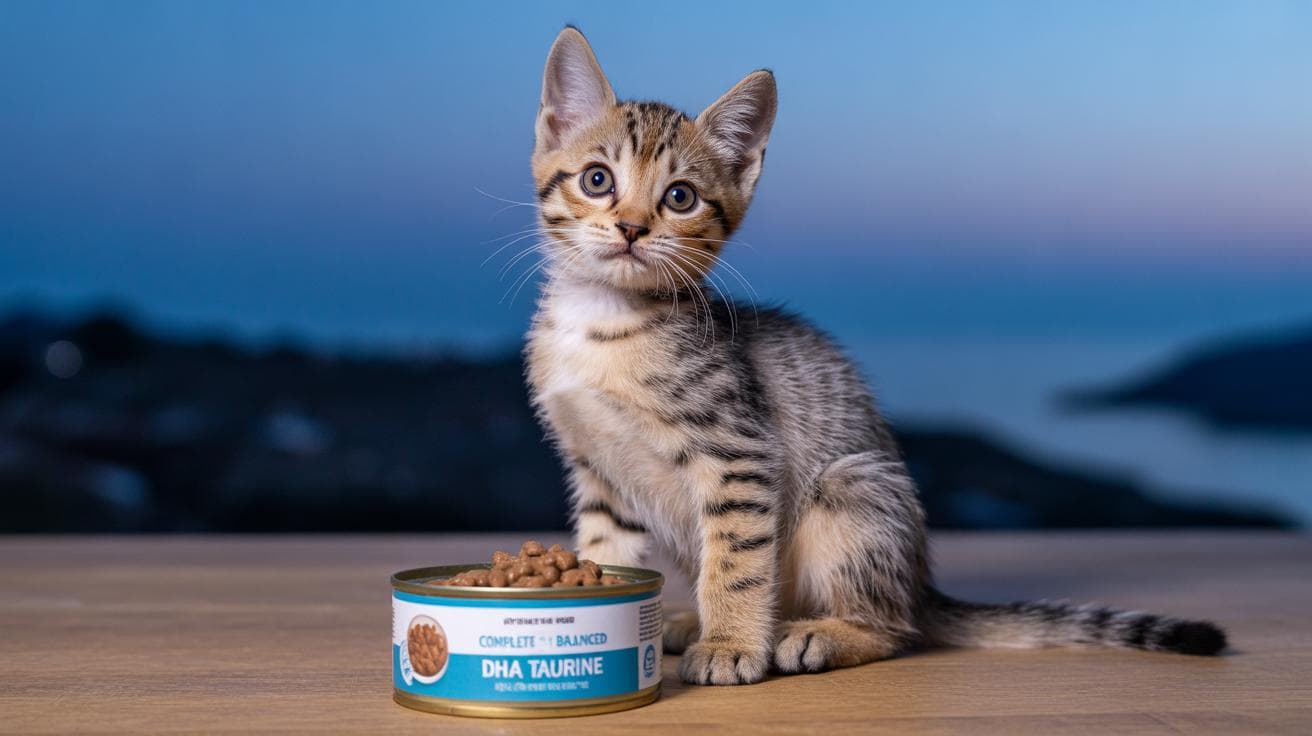
Pick canned foods that say "complete and balanced" for growth on the label. AAFCO (Association of American Feed Control Officials, the U.S. pet food standard) lets you know the food was tested for growing kittens. Growth formulas are richer than adult foods so tiny tummies get the fuel they need to play, learn, and grow.
Look for these key nutrients: protein (protein – building blocks for muscles and organs), fat (fat – concentrated energy and fat-soluble vitamins), DHA and EPA (DHA/EPA – omega-3 fats that help brain and eye development), and taurine (taurine – an amino acid important for heart and vision). Wet food also adds water to your kitten's day and packs calories into small servings, which helps little eaters keep up with fast growth. Ever watch a kitten chase a wobbling meatball? That extra moisture and calories make energy bursts possible.
Not sure how many calories your kitten needs? Ask your veterinarian to calculate kcal targets by age and weight. Bring the can label or the calories-per-ounce info and a recent weight so the vet can give a tailored portion plan and convert amounts into cups, grams, or tablespoons you can use at home.
| Nutrient | Why it matters | Target / Notes |
|---|---|---|
| Protein | Supports quick tissue growth and development | Higher than adult formulas; prefer named animal proteins (chicken, turkey, etc.) |
| Fat | Dense energy and essential fatty acids | Higher fat to meet calorie needs of growing kittens |
| DHA / EPA | Supports brain and eye development | Look for DHA on the label (an omega-3) |
| Taurine | Needed for heart function and vision | Must be included in kitten formulas |
| Calories (kcal) | Guides portion sizes and daily needs | Check label; your vet can convert kcal to grams or tablespoons |
When Can Kittens Eat Wet Food: Age Tips

Most kittens eat three meals a day until about four months old, then many drop to two meals a day after roughly 16 weeks. Some kittens, though, like to nibble small amounts all day. Start with tiny sample spoonfuls during early weaning so you don’t waste canned food, 3 oz and 5 oz cans are common, and smaller cans help single-kitten homes.
Keep an eye on weight (see the Weighing and monitoring section). Steady weight gain means the portions are right. Slow gains mean offer a bit more or keep supplementing with KMR (kitten milk replacer, a milk substitute).
| Age (weeks) | Meals per day | Suggested wet food per day (approx) | Notes |
|---|---|---|---|
| 3–4 | Sample spoonfuls / short sessions | A few teaspoons total (gruel) | Mix canned with KMR or warm water to a spoonable mush (gruel); use a very shallow dish |
| 5–6 | 3 meals | 1–2 tbsp per meal (3–6 tbsp/day) | Keep some supplemental nursing or bottle feeds; thin the food slightly so it’s easy to lap |
| 7–8 | 3 meals | 1–2 tbsp per meal | Reduce added liquid so texture is pate-like (soft, smooth canned texture) or minced; offer canned-only bites |
| 9–12 | 3 meals | 2–3 tbsp per meal (6–9 tbsp/day) | Most kittens handle canned solids by now; watch appetite and stool for signs of tolerance |
| 12+ | 2–3 meals (drop to 2 after about 16 weeks) | 3–6 tbsp/day, varies by size and activity | Adjust based on weight trends; small 3-oz cans cut waste for one kitten |
If your kitten’s weight is creeping up slowly, add a little more at each meal or slip in an extra short feeding. If weight stalls or drops, go back to supplemental KMR and slow the texture change while you and your foster coordinator or veterinarian troubleshoot, um, calmly.
Sample feeding adaptations for single vs multiple kittens
When several kittens share a bowl, the fast eaters can crowd out the shy ones. Weigh kittens daily during the transition and feed timid ones separately for short supervised sessions. Use multiple shallow dishes, stagger feeding times, or put a slow eater in a quiet room for a few minutes so everyone gets their fair share.
Worth every paw-print.