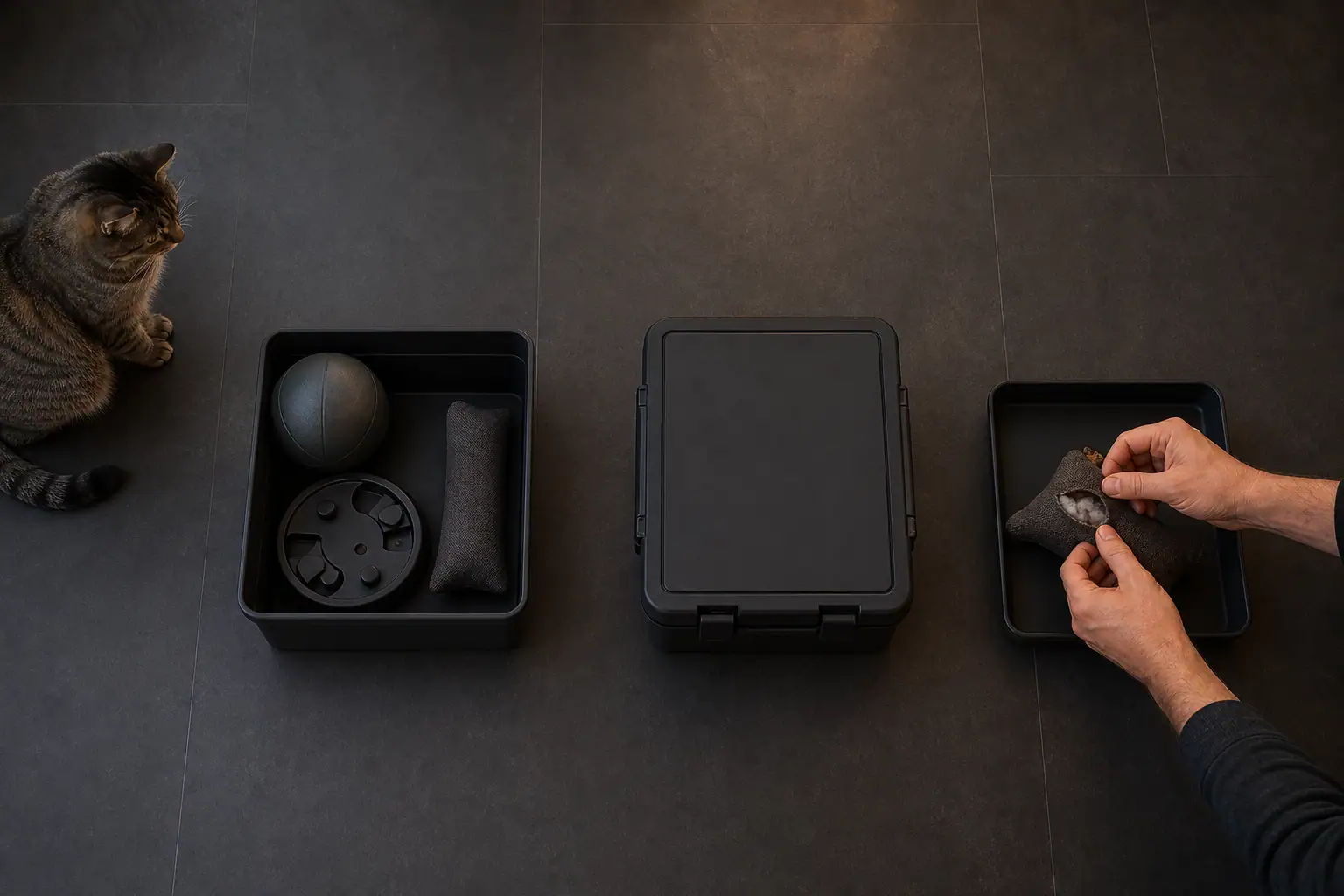
The best cat toy bin is low, stable, washable, and free of parts your cat can snag, chew, or pull loose. It should hold a small set of toys your cat has already used safely, not every wand, string, battery toy, and damaged mouse in one tempting pile. Keep supervised-only gear in a separate closed container and give dirty or questionable toys their own wash-or-retire tray.
That simple setup keeps the floor clearer, but its bigger value is control. You can rotate toys before they become boring, inspect rough-play favorites before they fail, and prevent a damp kicker or frayed feather lure from vanishing at the bottom of a basket.
What Makes a Good Cat Toy Bin?
For most homes, start with a shallow bin that your cat cannot easily tip. A washable plastic tub or tightly woven fabric bin is usually easier to maintain than an ornate basket. The opening should be wide enough for you to see the contents without digging and low enough that an approved toy does not become trapped behind a tall wall.
Check the container as carefully as the toys. Skip long loop handles, loose rope ends, exposed staples, sharp wire frames, splintering wicker, peeling coatings, and a heavy lid that could fall. If your cat chews fabric, cardboard, or basket fibers, do not assume the storage container is exempt from that habit.
| Bin type | Best use | Watch for |
|---|---|---|
| Washable plastic | Easy cleaning, active toys, food puzzles | Cracks, sharp edges, chew marks, tipping |
| Tightly woven fabric | Light toys in a living space | Frayed seams, foam inserts, loop handles |
| Wood or wicker | Decorative closed storage out of reach | Splinters, staples, loose reeds, hard-to-clean gaps |
| Lidded tote or cabinet box | Wands, cords, refills, and supervised toys | A lid or door the cat can open; trapped moisture |
The right size is not the biggest one you can fit beside the sofa. A huge, overfilled bin makes inspection harder and encourages forgotten toys to collect at the bottom. Choose enough room for one active rotation with a little air space, then keep reserve toys elsewhere.
Open Bin or Closed Bin? Use Both for Different Jobs
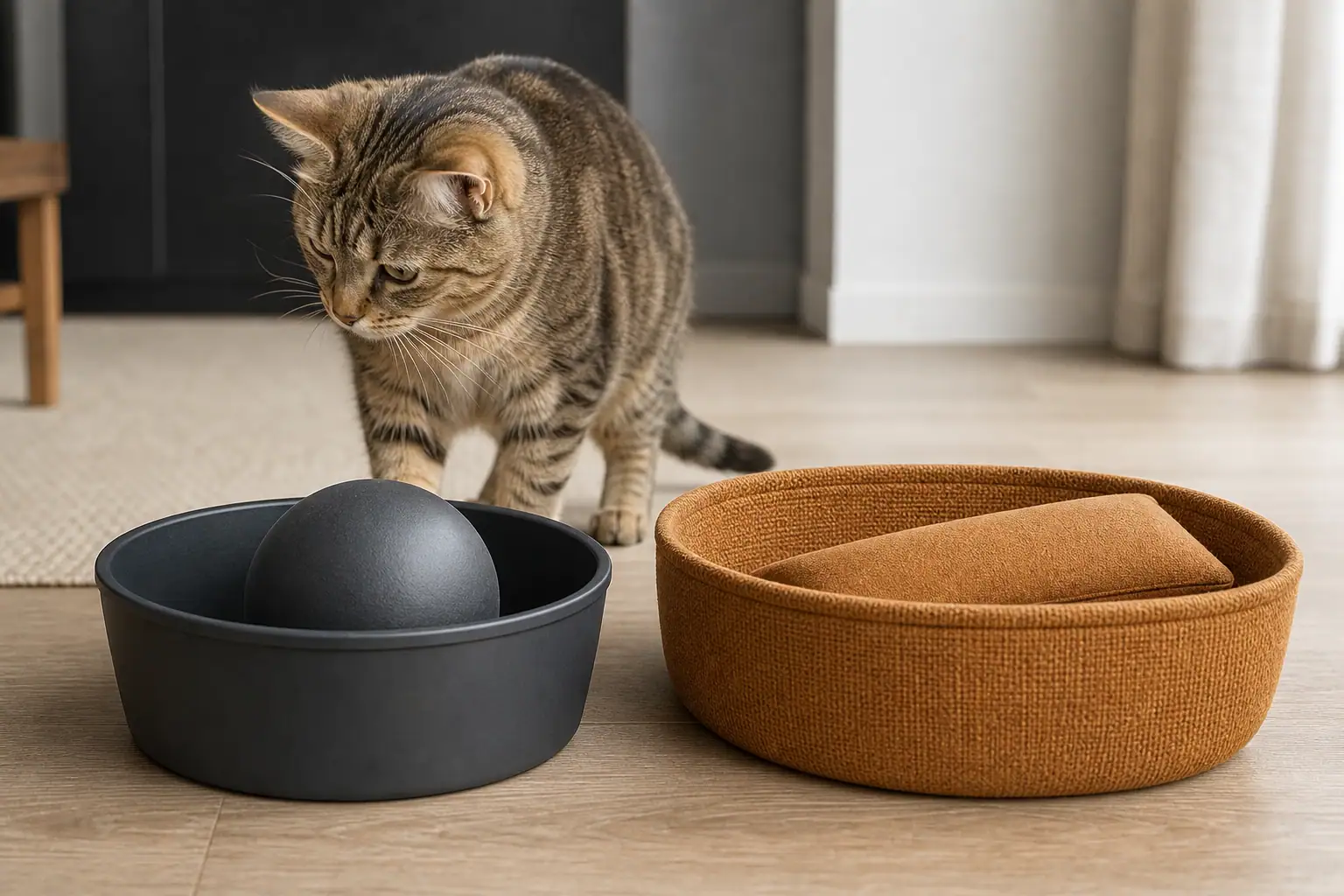
An open cat toy bin is convenient for sturdy toys that your cat has repeatedly used without chewing pieces off. It can also become part of the game: some cats enjoy choosing a ball or carrying a kicker away. But open access is not appropriate for every toy or every cat.
Use closed storage for wands, ribbons, elastic, feather attachments, small removable pieces, electronic toys, catnip refills, and anything your cat tries to dismantle. The AAFP and ISFM feline environmental needs guidelines recommend rotating toys to reduce boredom and specifically say that toys with string or potentially ingestible parts should be put away after play.
A closed bin must be genuinely inaccessible. A loose lid on the floor is not closed storage for a cat that can nose it open. Put the container in a latched cabinet, closet, or high location that the cat cannot reach, and wrap wand cords loosely so they do not kink while still remaining contained.
If you want a broader comparison of storage boxes, subscription boxes, and DIY activity boxes, see the Titan Claws cat toy box guide. For a storage bin, the core rule is simpler: open access only for toys your cat has earned through observed safe use; everything else stays closed.
Sort Toys Into Three Clear Zones
Do not organize only by color or toy type. Sort by what should happen next.
1. Active bin
Keep four to six intact toys available: perhaps a large ball, an enclosed track toy, a sturdy toss toy, a simple food puzzle, and a rugged kicker. The exact mix depends on your cat. A toy that is a reasonable leave-out choice for a gentle carrier may be supervised-only for a seam-focused chewer.
2. Supervised and reserve storage
Store wands, string toys, delicate feathers, electronics, replacement lures, and the toys currently resting between rotations in a closed container. New toys start here until you have watched several play sessions and learned whether your cat bites, pries, carries, or swallows parts.
3. Wash-or-retire tray
Give dirty, damp, incomplete, or damaged toys a separate shallow tray outside the play area. This prevents an open seam from going back into the active bin during a quick cleanup. A tray is temporary: clean the toy by its care instructions, repair it only when that can be done safely, or retire it.
Cornell Feline Health Center advises avoiding small pieces and strand-like parts such as feathers and string that can separate during chewing and be swallowed. If an attachment is missing, keep the toy out of circulation until you find the piece or can account for what happened.