Think "unbreakable" cat ball is just clever marketing? Ever watched your kitty pounce on a toy and destroy it in seconds. Let’s dig into what those claims really mean, and have a little fun along the way.
First, the materials and what they actually do. Silicone (soft, nonporous rubber-like material that resists grime) feels gentle on paws and is easy to clean. TPE (thermoplastic elastomer, a bendy plastic that springs back) gives a nice bounce and a slightly squishy texture. Vulcanized rubber (rubber made stronger with heat treatment) stands up to heavy chewers and takes a beating. Polycarbonate (very strong, impact-resistant plastic used in safety gear) adds durability and structural strength.
Now, combos matter. A polycarbonate core with a silicone outer layer gives a paw-friendly feel and keeps the ball from cracking. All-rubber or vulcanized-rubber toys survive hardcore chewers, but they can be heavier and less bouncy. TPE layers make lightweight balls that zoom across carpet with a satisfying thud. Ever watched your cat chase a ball and stop to bat it with the perfect little nibble sound? That’s the texture you’re after.
Safety checks you should look for. Sharp-edge testing (makes sure broken bits don't leave cutting edges) prevents accidental cuts. Toxicology screening (checks for harmful chemicals like BPA or heavy metals) keeps mouths and bodies safe. Also check seam strength, small-part/choking hazard tests, and whether the toy is truly washable or dishwasher-safe for easy cleanup. Oops, make that three must-check labels: tested materials, clear safety reports, and an easy-clean tag.
Quick tips for busy people and kitten parents. For daily play pick a ball that’s easy to toss and clean, ten minutes of supervised play before you leave is gold. For heavy chewers choose vulcanized rubber or polycarbonate cores. For shy or older cats choose softer silicone or TPE textures that don’t hurt their paws.
Pick a toy that’s been safety tested, feels right to your cat, and survives a few royal pounces. Worth every paw-print.
How Are Unbreakable Cat Balls Made: Materials & Safety
Think of an unbreakable cat ball like a tiny fortress of fun. Makers pick a few core materials to balance chew-resistance, how the ball feels under paw, and how easy it is to clean. The usual lineup: silicone (a soft, nonporous rubber-like material), TPE (thermoplastic elastomer, a bendy plastic that bounces back), vulcanized rubber (rubber treated to be tougher), polycarbonate (a very strong, impact-resistant plastic), polyurethane foam or PU foam (light, squishy core material), and nylon/fiber blends (strong synthetic threads for reinforcement). Each one plays a role in keeping the toy safe and fun.
| Material | Key properties relevant to cat toys | Common use in “unbreakable” balls |
|---|---|---|
| Silicone (soft, nonporous rubber-like) | Easy to wash, stretchy, gentle on teeth | Outer shells and washable covers for chew-friendly designs |
| TPE (thermoplastic elastomer) | Resists chewing and rubbing, bonds well when molded | Flexible shells, overmolded grips, soft-touch layers |
| Vulcanized rubber (crosslinked, toughened rubber) | High tear and abrasion resistance under repeated bites | Solid chew cores and durable outer layers for heavy chewers |
| Polycarbonate (impact-resistant plastic) | Very strong, rigid without shattering | Hard-core inserts or solid play-balls where stiffness is wanted |
| Polyurethane (PU) foam (lightweight cushioning foam) | Light, cushions impacts, adjusts weight and bounce | Weighted or soft inner cores that change feel and bounce |
| Nylon/fiber blends (synthetic reinforcement) | Adds tear resistance and structure without metal | Internal layers or embedded scrim to help stop punctures |
Design choices matter a lot. Some balls are hollow so they wobble and bounce, others are solid to survive the toughest chewers. Makers often use multi-layer shells by overmolding (pouring one material over another in the mold) to get a soft outside and a tough inside. Thicker walls usually last longer, but they feel heavier and bounce differently, so it’s a tradeoff. Shore A hardness (a simple scale that measures how soft or firm rubber is) helps pick a surface that resists claws but won’t hurt teeth.
Cleaning and chemical resistance steer material picks, too. Nonporous silicone and stable TPEs stand up to repeated washing and drool better than soft foams, which can soak up gunk. That means easier cleanup and fewer stinky surprises.
One more thing: metal inserts are usually avoided. Metal can rust, form sharp edges, or be dangerous if bitten free, so designers use nylon or fiber reinforcement instead (strong threads that don’t corrode). Safer, lighter, and still tough enough to handle most cat antics.
So yeah, makers mix materials like a chef mixes ingredients to get the right taste and texture for play. The result: a ball that bounces, survives a pounce-fest, and cleans up when you need it, worth every paw-print.
How Are Unbreakable Cat Balls Made: Materials & Safety
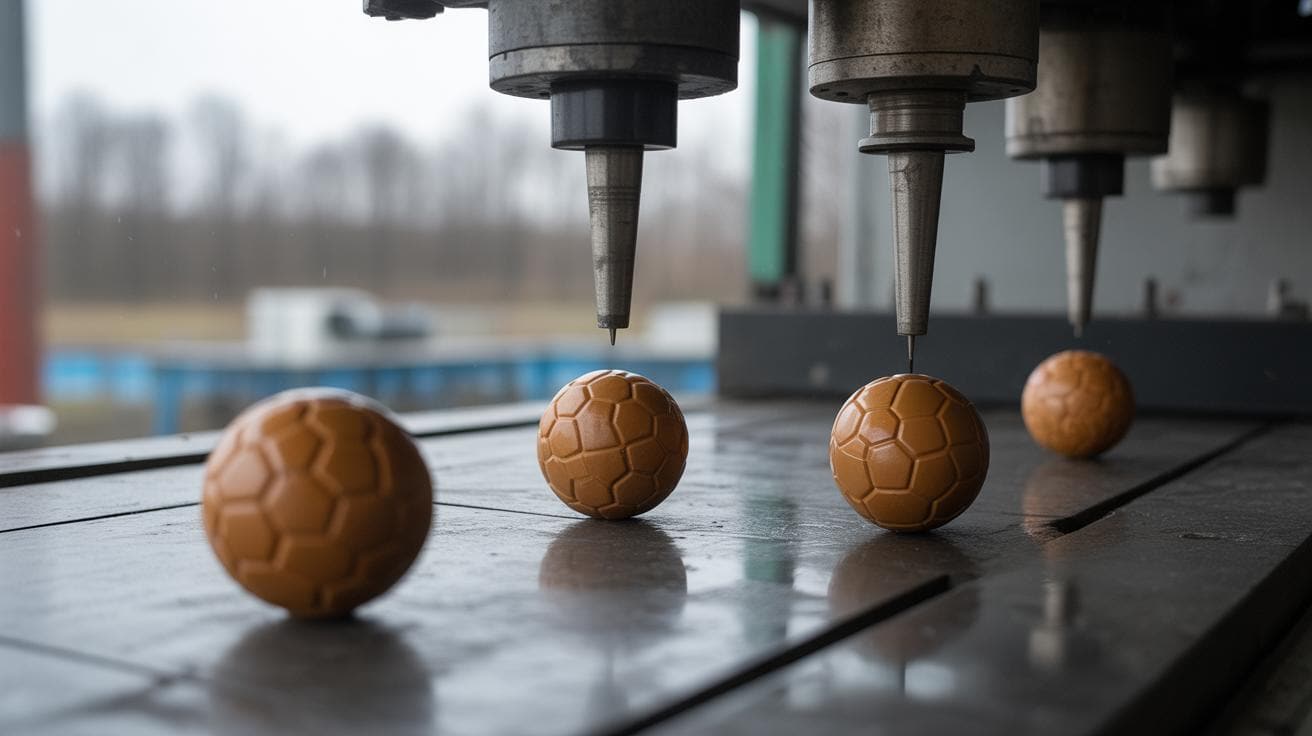
Toy makers pick the manufacturing route that fits the design and how the toy will be used. Injection molding, rotational molding, and compression or transfer molding with vulcanization (heat and chemical cure that toughens rubber) are the big three. Those choices change how durable the ball is, whether seams show up, if a bell can be fully sealed inside, and how much mold-release residue (a lubricant that helps parts pop out of molds) needs cleaning so curious kitties do not lick anything yucky. Fun fact: the right process can mean the difference between a toy that survives a week of pouncing and one that still looks new after months.
- Clamp mold and ready the machine.
- Load resin or elastomer into the hopper (resin is a plastic material; elastomer is a rubber-like material).
- Inject or transfer material into the mold cavities under pressure.
- Hold so the material flows and fills the gates.
- Cool or cure the part, timing depends on the material.
- Open the mold and eject the parts.
- Trim flash and inspect visually.
- Post-process with overmold (adding a second material over a part), ultrasonic weld, or assemble inserts.
Injection molding: basics and pitfalls
Injection molding forces melted plastic into a machined mold. The molds are CNC-machined (cut by computer-controlled tools) from steel or aluminum, which helps hit repeatable cycle times for big runs. Where you put the gate and vents guides the melt so seams stay strong; a poor gate location makes a weak spot where a cat might chew. Mold-release agents are kept in tight control to avoid residues that pets could lick. And tooling cost is driven by how many cavities you need and the steel grade you pick. Watch out for defects like short shots (incomplete fills) and sink marks (dents that form as thick areas cool); they’re common but fixable with tweaks.
Rotational molding and elastomer molding
Rotational molding heats resin inside a rotating hollow mold to make seamless, hollow balls. It’s slower, but you get a wobble-and-roll toy with no seam for claws to catch. For chew-resistant, rubbery shells, compression or transfer molding followed by vulcanization makes a crosslinked material (chemical bonds that make rubber tougher) that stands up to biting. Small-batch makers often try 3D-printed molds or soft tooling for prototypes before investing in full steel molds, because testing is cheaper than learning the hard way. Ultrasonic welding, careful heat-sealing, or minimal-use hot-melt adhesives (quick-setting glue) join multi-part items without leaving loose bits that could be swallowed.
Safety is a running priority. Encapsulating a bell or insert is great, but only if the seam and bonding method are solid. Clean mold-release residue off every surface. And test for common failure modes so the ball doesn’t come apart mid-pounce. Ever watched your cat launch at a toy and land with that proud, satisfied look? That’s the goal. Worth every paw-print.
How Are Unbreakable Cat Balls Made: Design Features That Make Them Resist Chewing and Impact
Think of the inside of an unbreakable cat ball like a tiny fortress. Internal ribbing, lattices, or honeycomb supports (honeycomb core: a web-like pattern that spreads loads) act like little shock absorbers. When your cat gives one big chomp, that single hard bite is turned into lots of smaller impacts so the outer shell stays whole. Rounded gate locations (the mold entry point that’s trimmed after molding) smooth out the seam so you don’t get a weak spot where the plastic could crack. It’s not about adding bulk. It’s about clever structure that handles force.
A honeycomb core really does the job – it breaks one fierce chomp into many small hits, so the shell keeps its shape.
Surface texture matters too. Tiny ribs, dimples, or a cross-hatch pattern spread bite forces across many points instead of one sharp spot. That works together with the toy’s Shore A rating (Shore A: the common hardness scale for soft plastics) to balance grip and puncture resistance. A softer Shore A with a pronounced texture gives your cat something to sink teeth into without focusing pressure on one tiny point. A harder Shore A with subtle texture rolls better and lasts longer. You can almost hear the satisfying thud of a ball that rolls true.
Before you buy, ask yourself:
- Does the design include internal ribbing, a lattice, or a honeycomb core?
- Is the surface texture described, and what Shore A hardness is listed – so the toy matches your cat’s chewing style?
- Is there an internal foam core (foam core: a soft cushion layer inside the shell) – great for cushioning but tricky for recycling and deep cleaning?
Internal foam cores lower peak bite stress by absorbing energy, so they help a lot with under-the-tooth durability. The trade-off is real: foam glued or molded to a different plastic makes recycling and thorough washing harder because the layers are tough to separate. If recyclability or easy cleaning matters to you, look for mono-material shells (all one material) or designs where the core can be removed and recycled separately.
Worth every paw-print.
Safety standards, testing protocols and compliance for unbreakable cat balls
Safety standards help tell you what serious makers test for, and what labels actually mean for shoppers. Think of them as useful checkpoints. They don’t always apply to pet toys exactly, but many brands follow them to show they’re checking small parts, chemicals, and mechanical strength.
Relevant standards and what they test
ASTM F963 (a consumer toy safety standard) covers mechanical hazards, small-part tests, and chemical limits that toy makers often use as a guide when designing cat toys. CPSIA (the Consumer Product Safety Improvement Act) adds tracking labels and strict limits for lead and some phthalates (plastic softeners), so CPSIA testing or tracking info is a good sign the maker checks for heavy metals and regulated chemicals. EN71 (European toy safety rules) looks at mechanical safety and flammability and overlaps with pet-toy concerns like choking or sharp edges.
These standards aren’t magic, but they’re a strong hint a product was built with safety in mind. Look for labels or test reports that reference them. They make it easier to trust a toy when you watch your cat pounce.
Practical test protocols manufacturers use
Bite tests use calibrated jaws or pendulum rigs that mimic a cat’s bite force, watching for punctures, tears, or layers coming apart. Small-part and choke tests mimic how cats mouth and chew things. Tensile and elongation testing measure strength and stretch (how much a material pulls before it rips), and Shore A checks measure surface hardness (a simple scale for how soft or firm a material feels).
Drop tests, repeated impact cycles, and accelerated aging – heat and UV exposure to simulate months of sun and play – check long-term toughness and whether colors fade. Dishwasher-safe claims get checked with repeated wash cycles. Saliva resistance tests look for chemical leaching when a cat slobbers on a toy.
Advanced quality control uses X-ray imaging (to spot hidden gaps) and ultrasonic inspection (to find poor bonds between layers). Automated visual systems scan seams and flash for cosmetic and safety flaws so nothing obvious gets missed.
Want a quick way to shop safer? Look for third-party reports, CPSIA tracking details, or a phthalate-free label. Those are the short cuts to buying something that’s fun and less likely to fall apart mid-pounce. Worth every paw-print.